





Ambassador Do Hung Viet highlights Vietnam's active, substantial contribution to the United Nations work
WVR - Ambassador Do Hung Viet, Head of Vietnam's Permanent Mission to the United Nations, discusses Vietnam's achievements and contributions to the UN in 2025 and outlines the work direction for 2026.
Latest
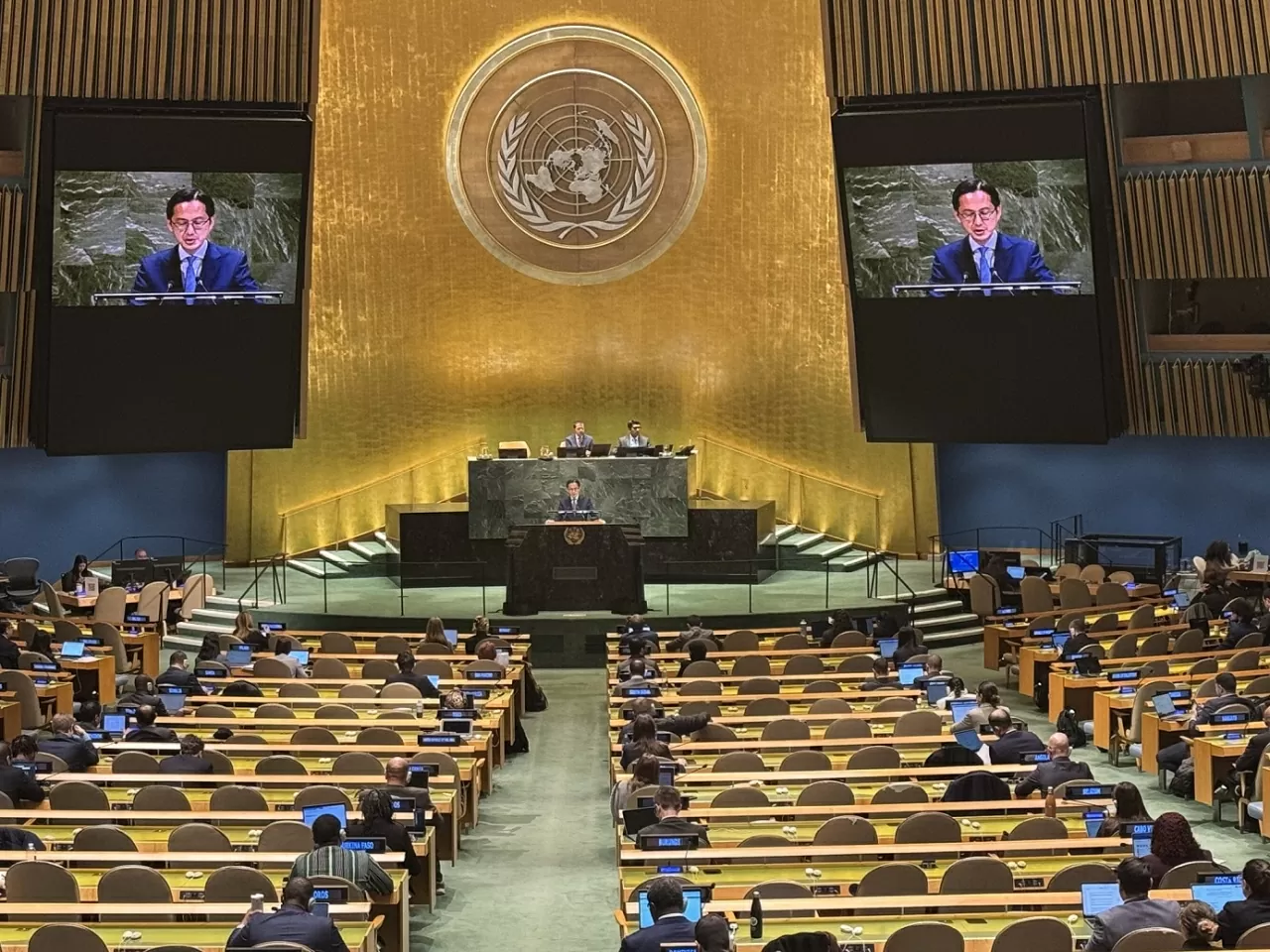 |
| The annual plenary discussion on Oceans and the Law of the Sea at the UN headquarters, December 2025. (Source: Vietnam's Permanent Mission to the United Nations) |
Ambassador, over the past year, as the world faces numerous upheavals and divisions, how do you perceive the intertwined opportunities and challenges for the UN's core objectives?
The year 2025 was marked by upheaval and challenges. Strategic competition among major powers, rising unilateralism, and power politics severely eroded the fundamental principles of international law. Many conflict hotspots continued to escalate, from Ukraine and Gaza to Sudan and Myanmar, while the arms race, including nuclear weapons, intensified.
Simultaneously, non-traditional security challenges such as climate change, natural disasters, humanitarian crises, and food security continued to rise, significantly impacting all nations, especially developing countries.
These common difficulties pose serious challenges for the UN, diverting attention and resources from its core activities, particularly in key areas like sustainable development, climate change response, disaster management, and peacekeeping operations.
The UN also faces greater division, most evident in recent developments at the UN General Assembly. While most resolutions were previously passed by consensus, in 2025, 75% required a vote.
Some resolutions were passed with support from only about one-third of member states, clearly lacking broad support and effectiveness in implementation.
However, amidst this gray picture, there are still bright spots and opportunities.
Firstly, we have witnessed significant progress by the UN in establishing and promoting global legal frameworks to address common challenges.
Notably, 72 countries signed the Convention on Cybercrime at the signing ceremony in Hanoi; the Agreement on the Conservation and Sustainable Use of Marine Biological Diversity of Areas Beyond National Jurisdiction (BBNJ) is expected to take effect in early 2026 after sufficient ratifications; and the Global Agreement on Pandemic Response was adopted at the World Health Organization General Assembly.
Secondly, amid declining resources and commitments from major powers, smaller and developing countries increasingly view the UN as an irreplaceable center for coordinating international cooperation efforts, promoting sustainable development, and addressing common challenges.
Thirdly, in times of difficulty and crisis, there are always opportunities for innovation and reform. This is precisely what the UN is currently pursuing. The "UN 80" initiative proposed by the UN Secretary-General is the most comprehensive reform effort to date, not only providing an opportunity for the UN to renew itself and strengthen its role but also promoting democratic, transparent, and effective reforms that better meet the needs and interests of member states, especially developing countries.
In summary, in a world full of upheaval and challenges, the UN is striving to adjust and adapt to maintain and enhance its central role in multilateral cooperation, seizing opportunities, overcoming challenges, and making practical contributions to international peace, security, sustainable development, and human rights protection.
It is evident that Vietnam is increasingly actively and substantially participating in the activities of many important UN agencies. Could you share the outstanding achievements of Vietnam at the UN over the past year? How have these results contributed to enhancing Vietnam's role, position, and image in the eyes of the international community, Ambassador?
Over the past year, we have effectively implemented the foreign policy of the Party and State at UN forums. We participated in hundreds of meetings at various levels, with a proactive, positive spirit, making substantial contributions and sharing common responsibilities. Through this, Vietnam continues to assert its role, reputation, and unique identity at the world's largest multilateral organization.
In this overall context, five notable highlights of Vietnam's participation at the UN in 2025 can be mentioned:
Firstly, the close attention and direct participation of our senior Party and State leaders in important UN activities conveyed Vietnam's strong messages about valuing peace, strengthening multilateral cooperation, addressing common challenges, and promoting sustainable development.
Notably, President Luong Cuong attended the high-level general debate of the 80th UN General Assembly, and Prime Minister Phạm Minh Chính participated in the 3rd Ocean Conference.
Secondly, Vietnam successfully hosted the signing ceremony of the Convention against Cybercrime, marking a historic milestone as Hanoi's name was associated with a global international treaty for the first time - the "Hanoi Convention". The signing by 72 countries during the two-day ceremony left a deep impression and a special highlight in multilateral cooperation in 2025.
Thirdly, Vietnam was one of the few countries to welcome UN Secretary-General António Guterres for a second visit during his term (October 2025), which was a special highlight. In discussions with our senior leaders, the Secretary-General affirmed that Vietnam is a great partner of the UN, a pillar of today's multipolar world, and believes that Vietnam deserves a stronger voice, representation, and role in the global governance system.
Fourthly, Vietnam was re-elected to the UN Human Rights Council with the highest number of votes among Asia-Pacific candidates. This result reflects the international community's trust in Vietnam's positive contributions to the Human Rights Council during the 2023-2025 term, as well as recognition of our efforts and achievements in protecting and promoting human rights.
In 2025, Vietnam also continued to successfully chair the 35th Meeting of the States Parties to the United Nations Convention on the Law of the Sea (SPLOS) and served as a member of the Executive Board of the UN Entity for Gender Equality and the Empowerment of Women (UN Women), as well as in many other UN agencies and mechanisms.
Fifthly, Vietnam began initiating and implementing its designated role as Chair of the 2026 Review Conference of the Treaty on the Non-Proliferation of Nuclear Weapons (NPT), through a series of consultations with countries in different regions, initially leaving a mark on Vietnam's role and ability to lead and coordinate a significant and meaningful process for international peace and security.
These results contribute to continuing the "Vietnam story" at the UN - a proactive, responsible Vietnam, a reliable partner, and an active member of the international community.
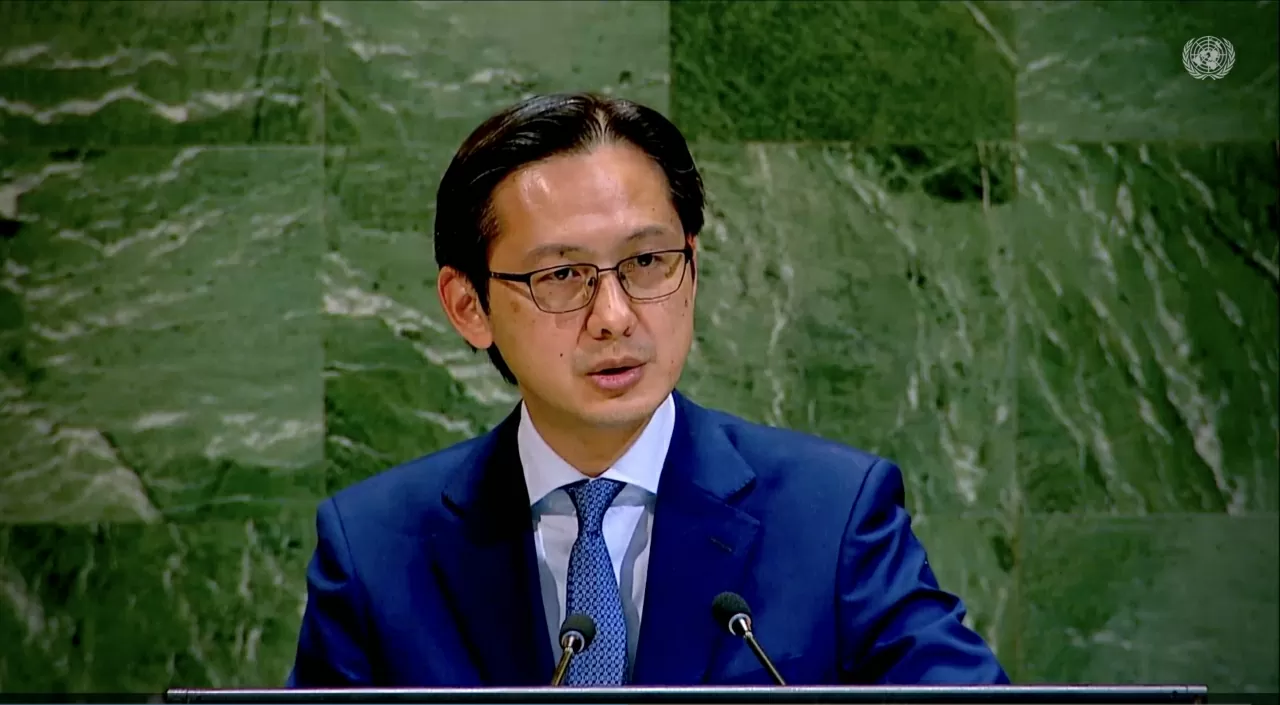 |
| Ambassador Do Hung Viet speaking at the plenary discussion on Oceans and the Law of the Sea. (Source: Vietnam's Permanent Mission to the United Nations) |
In the Draft Document of the 14th National Party Congress, for the first time, "foreign affairs and international integration" is placed on par with national defense and security, becoming a "key, regular" task.
Ambassador, from nearly 40 years of Vietnam's renewal and deep international integration, especially substantial contributions at the UN - the world's largest multilateral forum, what lessons demonstrate that foreign affairs and international integration have become a "key, regular" task?
The Draft Document of the 14th National Party Congress, for the first time, identifies foreign affairs and international integration as a "key, regular" task, reflecting a significant development in the Party's theoretical thinking about the position and role of foreign affairs. This affirms the importance of the strategic "tripod" of national defense, security, and foreign affairs - three inseparable pillars in protecting national interests and the homeland.
This shift also sets high expectations from the Party and State for foreign affairs and international integration: Not only accompanying national defense and security in the task of protecting the homeland from early on but also serving as a channel to attract resources and knowledge for national development, as well as enhancing Vietnam's position and voice on the international stage.
As General Secretary To Lam emphasized: "Vietnamese diplomacy must rise to new heights to fulfill new glorious responsibilities, worthy of being the vanguard force, the combined arm of the Vietnamese revolution".
At the UN, Vietnam has and will continue to comprehensively implement this direction. First, by contributing to creating a peaceful and stable environment for development, through leveraging and promoting the UN's central role in protecting and promoting the fundamental principles of international law and the UN Charter, thereby contributing to sustainable international peace and security.
Vietnam will also actively participate and contribute more proactively to the process of building rules and shaping multilateral institutions. Whereas previously we primarily adhered to established rules, now Vietnam needs to engage more deeply and vigorously in forming new norms and frameworks, especially in areas crucial to the country's future development, such as science and technology, cybersecurity, and global AI governance.
Additionally, Vietnam needs to effectively utilize the UN's role as a center for connecting global knowledge and experience, thereby attracting, filtering, and applying international intellectual resources directly to the country's development process.
With this approach, Vietnam's foreign affairs and multilateral cooperation activities at the UN will continue to play an increasingly substantial role, bringing concrete and long-term benefits to the nation and people.
With numerous achievements in 2025, could you share Vietnam's key tasks at the UN in 2026, a year of significant importance as Vietnam aims to strengthen its foreign policy and deep integration with the world?
The year 2026 marks the first year of implementing the Resolution of the 14th Party Congress, which identifies foreign affairs and international integration as a key and regular task. It is also a pivotal year in preparing to celebrate 50 years of Vietnam's membership in the UN (1977-2027). In this context, we have identified several key tasks:
First, focus on supporting Party and State leaders in participating in important high-level UN activities in 2026, notably the high-level general debate of the 81st UN General Assembly, along with major processes such as the UN Water Conference, the Summit on Artificial Intelligence, and the Conference on Sustainable Development Goal 16 on peace, justice, and strong institutions. These are all important events, and Vietnam has been actively contributing from the preparation stage.
Another focus is Vietnam's role as Chair of the 2026 Review Conference of the Treaty on the Non-Proliferation of Nuclear Weapons (NPT) in April-May 2026. This is a significant responsibility as it is the first time we chair a major mechanism in nuclear non-proliferation, disarmament, and ensuring nuclear security and safety.
The international community also expects Vietnam to contribute to promoting dialogue, building trust, and creating positive changes, reaffirming and strengthening the common commitment to nuclear disarmament efforts, nuclear non-proliferation, and the peaceful use of atomic energy.
In 2026, Vietnam will continue to participate and play a role in the mechanisms and multilateral organizations where we are members, including the UN Human Rights Council, the Executive Board of UN Women, and many other multilateral forums, actively campaigning for the candidacy of a Judge at the International Tribunal for the Law of the Sea (ITLOS), thereby continuing to affirm Vietnam's image as an active, responsible member making substantial contributions to the UN's common work and the international community's efforts.


