


A new era for the Education Sector (Final part): A call to action for a prosperous Vietnam
WVR - Resolution No. 71-NQ/TW is not just a political document; it is a strategic blueprint for the national education system. It affirms a truth: Without a strong education system, a nation cannot be prosperous.
Latest
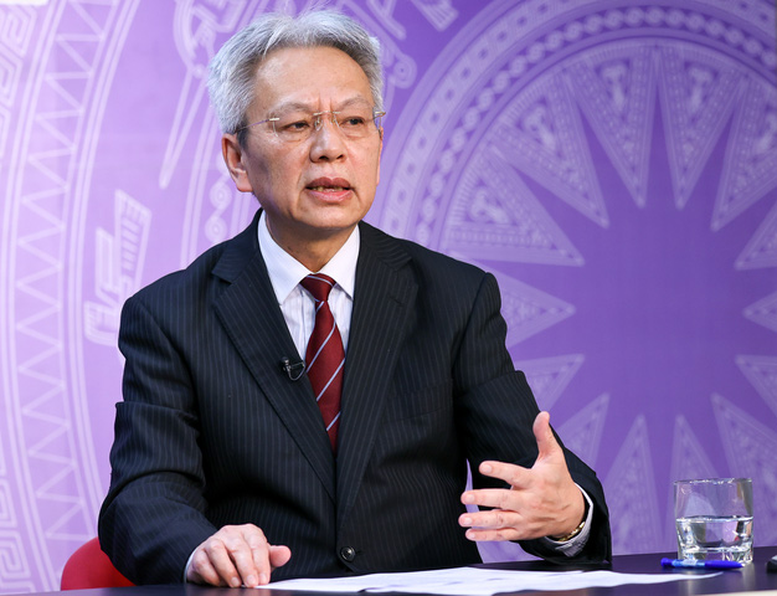 |
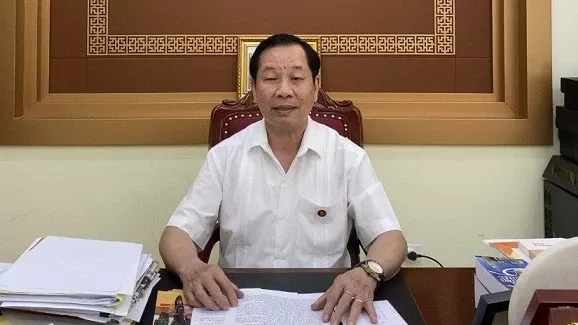
| Dr. Nguyen Si Dung shares his view that Resolution 71 affirms education as the decisive factor in the nation's destiny. (Source: VGP) |
On a highland morning, in a classroom with a dilapidated fibro roof, children sit closely together on crude wooden benches. Their eyes sparkle as they listen to the teacher talk about numbers and letters. In those eyes, one can see a burning desire for a better life. From such a humble classroom, the destiny of an entire nation can begin.
Therefore, on August 22, 2025, the Politburo issued Resolution No. 71-NQ/TW (Resolution 71) on breakthroughs in education and training development, affirming that education and training are not only the top national policy but also “the decisive factor in the nation's destiny”. This is not just a document; it is a call to action, placing education at the forefront of the journey to a prosperous Vietnam.
New context and requirements
Vietnam is entering a pivotal phase of development. To realize the aspiration of becoming a developed, high-income country by 2045, we need a high-quality workforce with creativity and global integration skills.
Meanwhile, the world is witnessing unprecedented changes: the Fourth Industrial Revolution, artificial intelligence, digital transformation, climate change, and global talent competition. Natural resources are depleting, leaving human resources as the only inexhaustible asset. Those who master knowledge, technology, and talent will own the future.
Vietnam's education has achieved many accomplishments: universal education, raising intellectual standards, international integration, and high achievements in international competitions. However, there are still many limitations, such as deep regional disparities, heavy exam pressure, inadequate facilities, and an uneven teaching workforce. Some students still study to pass exams rather than to become well-rounded individuals and creators. In this context, Resolution 71 was born with the spirit of not just technical improvements but institutional breakthroughs, innovative thinking, and creating superior mechanisms.
Breakthroughs from innovative thinking and institutional reform
Resolution 71 sets a long-term strategic vision for Vietnamese education with clear milestones: By 2030, preschool and general education must reach advanced levels in the region, while training a workforce capable of meeting the increasingly stringent demands of society and the economy. By 2035, the national education system must be modernized in structure, content, and methods, ensuring equitable access and comprehensive quality improvement. The ultimate goal is that by 2045, when Vietnam celebrates a century of independence, there will be a modern, equitable, and high-quality education system capable of placing the country among the top 20 nations globally in education.
| "Resolution 71 is not just a political document, but a strategic blueprint for the national education system. It affirms a truth: Without a strong education system, a nation cannot be prosperous. Every family, teacher, student, and citizen has a role in this endeavor". |
To realize this vision, the Resolution affirms foundational guiding principles. Learners are considered the center of all educational activities; teachers are the driving force for change; schools are the foundation for creating knowledge and values. The State plays a guiding and institutional role, but the educational mission is not solely the responsibility of the State; it requires the collective effort of the entire society.
 |
| Teacher Than Phuong Quyen and first-grade students at Kim Giang Primary School (Khuong Dinh Ward, Hanoi) on the first day of school. (Photo: Nguyet Anh) |
Particularly, innovative thinking and institutional reform are seen as breakthrough points, as only strong reforms in mechanisms and policies can create new development spaces for education. The Resolution also emphasizes the goal of building a comprehensive education system: Virtue – Intelligence – Physicality – Aesthetics, aiming to form a new era Vietnamese human value system, both nationally distinctive and internationally integrative.
From this vision and guiding principles, Resolution 71 proposes many specific breakthrough policies capable of creating immediate changes in essential areas. For instance, the policy of professional allowances for teachers, with a minimum of 70% for preschool and general education teachers, 30% for school staff, and 100% for teachers in particularly difficult areas, not only improves income but also sends a strong message: Society values and respects the teaching profession.
The roadmap for implementing a unified textbook from the 2026-2027 school year, progressing to free textbooks for all students by 2030, demonstrates a commitment to ensuring equitable access to knowledge and reducing the burden on parents. Additionally, policies to enhance foreign language teaching and learning, aiming to make English the second language, are intended to open the door to integration for the younger generation.
| "In the 2045 aspiration, each student today is a seed of the future, and each teacher is a sower of the nation's destiny. Investing in education is the highest-yielding investment, the most secure 'insurance' for the nation's longevity and development". |
Notably, the Resolution emphasizes reforming examination methods by applying modern technology: Organizing computer-based exams, building a national education and human resource database connected to the labour market.
This will help reduce pressure, increase transparency, and create a real link between training and employment. The entire reform process is based on comprehensive digital transformation, with the extensive application of artificial intelligence in management and teaching. This is a significant step forward, bringing Vietnamese education closer to the world and preparing the new generation of citizens with the adaptability needed in the digital era.
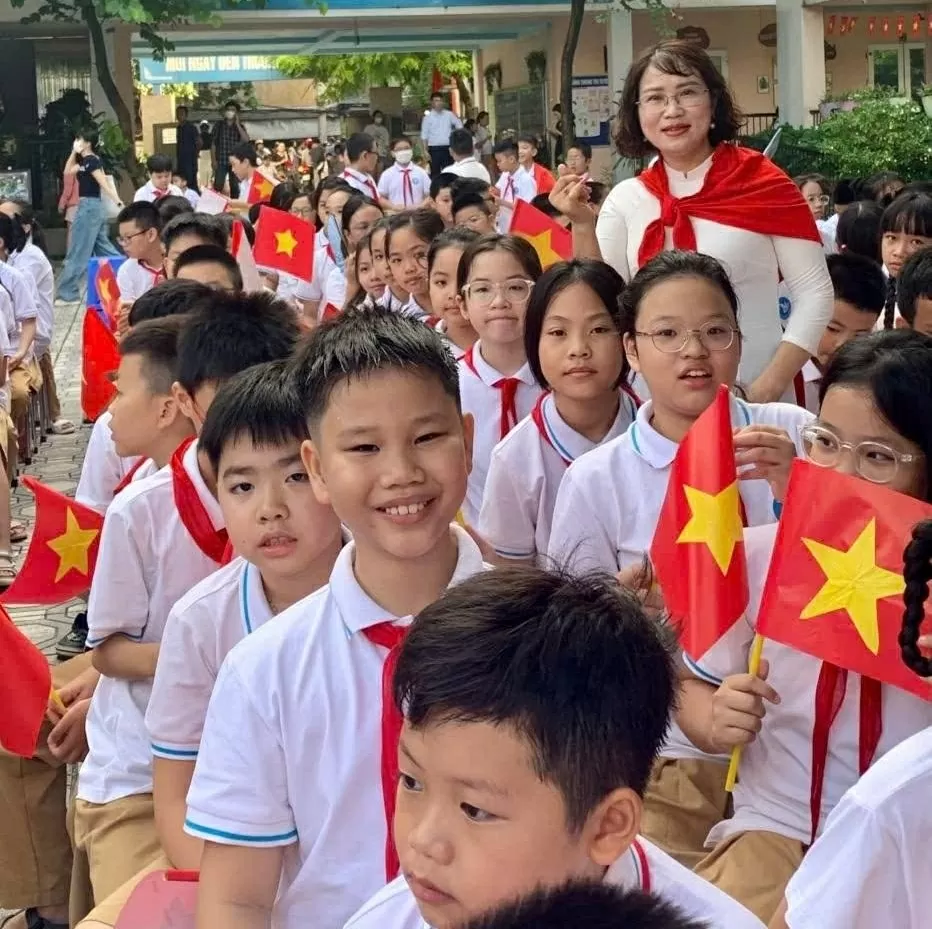 |
| Resolution 71 emphasizes that learners are considered the center of all educational activities; teachers are the driving force for change. (Photo: Pham Thanh Thuy) |
Resolution 71 is strategically significant as it elevates education from the position of "top national policy" affirmed by Resolution 29 (2013) to "the decisive factor in the nation's destiny". This change is not merely a matter of expression but reflects a major advancement in development thinking: A prosperous Vietnam can only be built on the foundation of a strong education system, where people are placed at the center of all policies.
In the 2045 aspiration, each student today is a seed of the future, and each teacher is a sower of the nation's destiny. Investing in education is the highest-yielding investment, the most secure "insurance" for the nation's longevity and development. Not only within the country, but the Resolution also opens the door to international integration: when English becomes the second language, when exams are organized transparently and modernly on computers, when education and human resource data are directly connected to the global labor market, the young generation of Vietnam will have enough preparation to confidently stand alongside peers worldwide.
| "Education is no longer just the business of schools but a shared mission of the entire nation".
|
To bring Resolution 71 to life and create real change, many challenges must be overcome, and necessary conditions must be met. First is investment resources: The budget for education already occupies a large proportion, but without transparent, effective allocation and waste prevention, fundamental changes will be difficult to achieve. Along with that, the teaching workforce needs to be placed at the center of reform, with policies to attract talent, retrain, and provide regular professional development to make the principle "teachers as teachers, students as students" a reality.
Another indispensable condition is infrastructure and technology: Not only in major cities but also in remote areas must have access to equipment, the Internet, and digital infrastructure, or else the inequality gap will widen.
Regarding institutions and policies, reforms must be strong enough to overcome the situation of "legislation by circular", ensuring stability, feasibility, and consistency, creating a favorable legal environment for creativity. More importantly, there must be a change in social thinking: Education must shift from chasing scores to developing competencies and qualities, from education for exams to education for creativity. Only by addressing these challenges comprehensively can Vietnamese education fully accomplish the mission set by Resolution 71.
Finally, Resolution 71 is not just a political document; but a strategic blueprint for the national education system. It affirms a truth: Without a strong education system, a nation cannot be prosperous. Every family, teacher, student, and citizen has a role in this endeavor. Education is no longer just the business of schools but a shared mission of the entire nation.
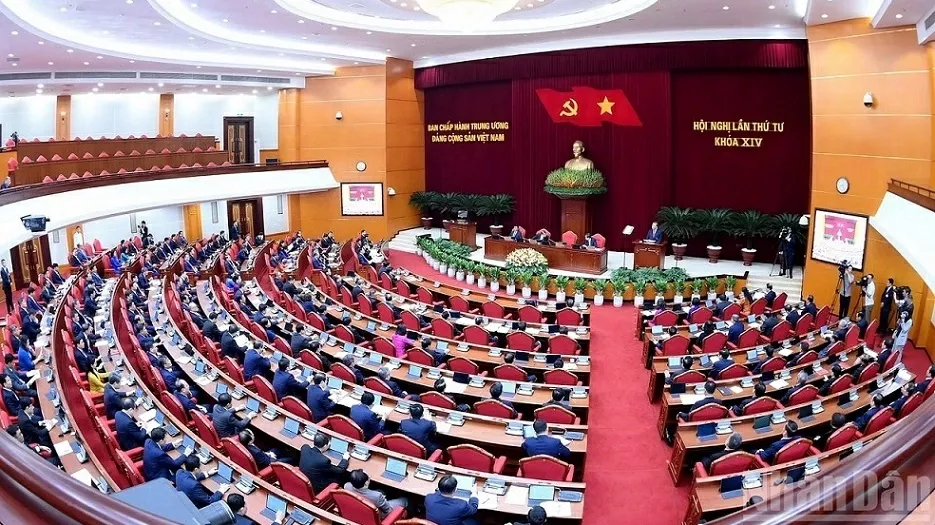
| At the National Conference on the Implementation of Four Resolutions of the Politburo, General Secretary Tô Lâm emphasized: Regarding Resolution 71: Clearly define education and training as the top national policy, the key driver for national development. Investing in education is investing in, nurturing, and enhancing the "national spirit", investing in the nation's future. This is the key area of all key areas, the fundamental driver of productivity growth, breaking through national competitiveness, nurturing the aspiration for development. Education and training follow the principle "Quality as the axis - teachers as the key - technology as the lever." Regarding solutions, there are eight main groups. First, build national output standards by educational level, profession; implement mandatory accreditation, public ranking linked to mission. Second, innovate curriculum and assessment, reduce achievement disease, combat rampant extra classes; implement standardized assessments, focus on core skills. Third, breakthrough in teaching staff: new professional standards, remuneration linked to effectiveness, scholarships to attract pedagogy, digital training, ensuring ethics and honor of teachers. Fourth, promote university autonomy with accountability; co-create programs with businesses; increase paid internships; build innovation centers. Fifth, upgrade vocational education linked to supply chains, real learning-real work in a dual model; recognize digital skills certificates; evaluation by businesses. Sixth, digital transformation in education: national open learning resources, lifelong electronic learning records, safe examination platforms, ensuring data security. Seventh, targeted educational finance: focus on supporting disadvantaged groups with appropriate solutions (not favoritism); skills development fund, training order mechanism according to regional-sector needs. Eighth, internationalization: recognize credits, joint programs, attract international experts, raise foreign language standards by sector. |