

80 years of National Day: The first Government and the message of peace and friendship
WVR - The first government of the nation was born from the great uprising of the people, bringing rights that had never before been granted to the masses, while also carrying out urgent tasks to safeguard independence and, in the long term, build the country. The Provisional Government also conveyed the very first messages of peace and friendship on behalf of the Vietnamese people.
Latest
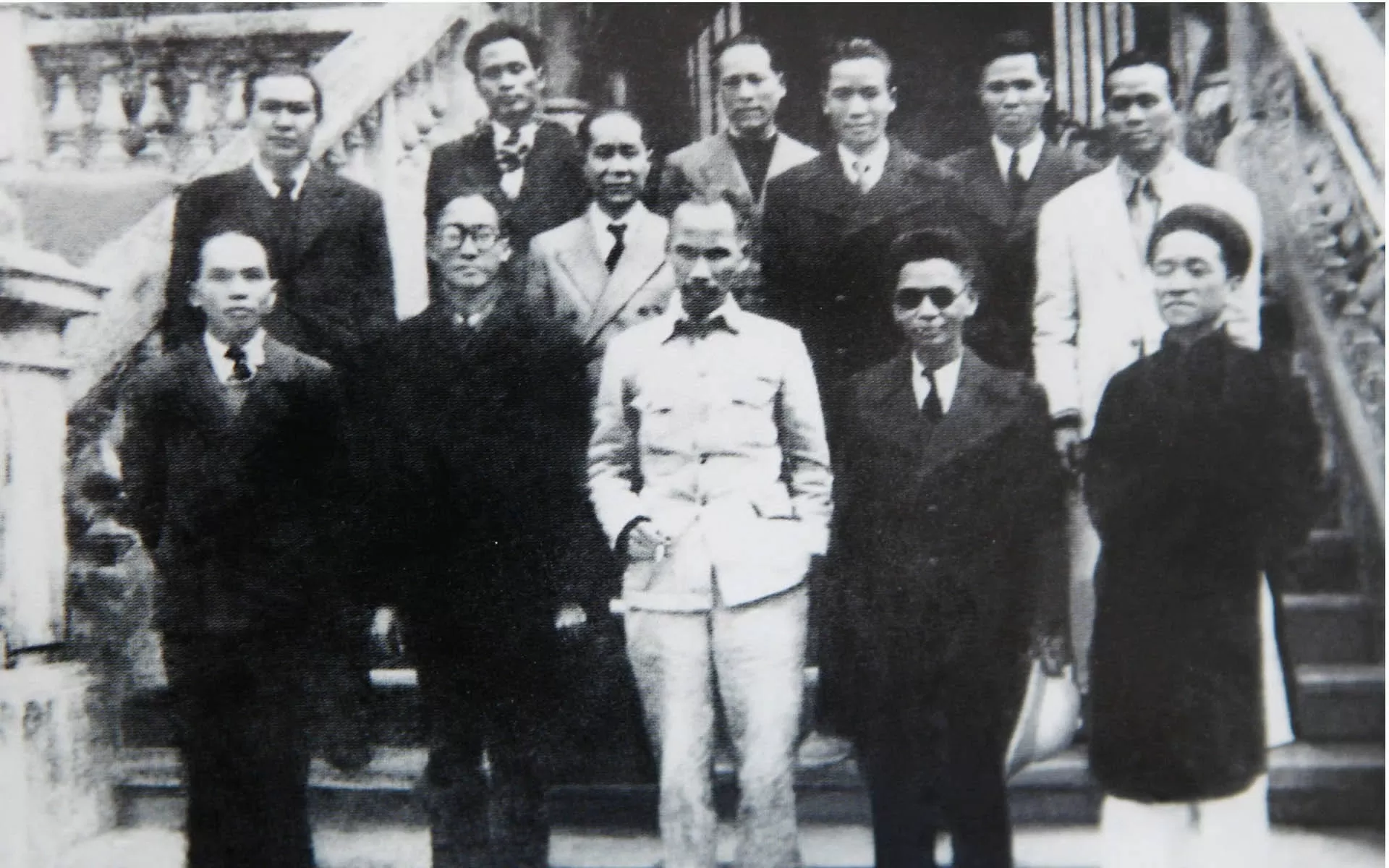 |
| President Ho Chi Minh and some members of the Provisional Government, September 1945. (Archival photo) |
Winning hearts and mobilizing national strength
In August 1945, the General Uprising for independence achieved a complete victory across the country. At the proposal of President Ho Chi Minh, the National Liberation Committee invited additional patriotic figures to participate “in order to shoulder the heavy responsibilities entrusted by the nation”, and reconstituted itself as the Provisional Government of the Democratic Republic of Vietnam.
The Provisional Government consisted of 15 people, with Ho Chi Minh serving as President and concurrently as Minister of Foreign Affairs, together with 14 other members. The Provisional Government’s Proclamation raised the slogans “National Unity” and “Strive for Complete Independence”, calling on all citizens to unite as one, to support the Government in safeguarding freedom and independence, and to transform and build the nation.
From its earliest days, the Provisional Government embodied the spirit of serving the people. Under the chairmanship of President Ho Chi Minh, only one day after declaring Vietnam’s independence, the Provisional Government convened to resolve urgent issues of the Democratic Republic of Vietnam[1]:
- Launch a campaign to boost production to combat famine.
- Launch a literacy campaign to eliminate illiteracy.
- Organize a general election under universal suffrage as soon as possible.
- Launch a campaign to instill the virtues of Diligence, Frugality, Integrity, Uprightness in order to eradicate the remnants of the old regime.
- Immediately abolish the head tax, market tax, ferry tax, and strictly ban opium smoking.
- Proclaim freedom of belief and solidarity between Buddhists and Catholics.
Just two weeks after the Provisional Government was formed, following President Ho Chi Minh’s call, the people demonstrated their determination to defend independence in concrete ways. During the “Gold Week” from September 17 to 24, 1945, the Government received 20 million Indochinese piastres and 370 kilograms of gold in contributions from the people to help overcome financial difficulties.
The new government also quickly and directly brought about civic, democratic, and human rights that Vietnamese people had never before enjoyed: abolition of the head tax (September 7, 1945); compulsory, free instruction in the national script (September 8, 1945); regulations for general elections (October 17, 1945); a 25% reduction in rent (November 20, 1945); and a 20% reduction in land tax (November 20, 1945).
The Provisional Government won the hearts of the people, mobilizing the nation’s strength to the highest degree for the struggle to defend independence and freedom and to safeguard the achievements of the August Revolution. The first government of the people brought together and harnessed the power of the great national unity bloc. Its stability provided the necessary foundation and driving force for the struggle to defend independence and freedom.
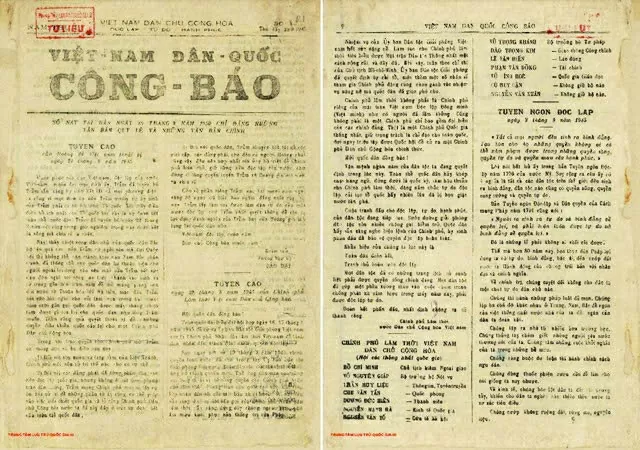 |
| Proclamation of August 28, 1945, by the Provisional Government of the Democratic Republic of Vietnam. (Source: National Archives Center III, Cong bao (Vietnam National Gazette) 1945, No. 1, pages 01 - 02) |
Upholding the banner of peace and friendship
In the complicated and dangerous circumstances of 1945–1946, the Indochinese Communist Party advanced the policy of “unity at home, seeking friends abroad”. The Party affirmed: “Our goal at this moment is freedom and independence. Our will at this moment is democracy and peace. Any country, nation or force in the world that shares these goals and this will is our friend” [2].
Immediately after its formation, the Provisional Government had to face more than 200,000 Chinese Nationalist troops flooding south of the 16th parallel, with the undisguised plot to “exterminate communists, seize Ho”. About 100,000 Japanese troops, not yet repatriated, still had to be supplied locally. Northern Vietnam, having just endured the terrible famine of the Year of the Rooster (1945), bore the food burden of some 30 foreign army divisions. More than 15,000 British-Indian troops entered the South to disarm the Japanese but assisted the French in returning to Indochina. Meanwhile, the Viet Quoc and Viet Cach parties, under the umbrella of Chinese forces, along with other political groups, also opposed the Viet Minh, demanding power-sharing from the Provisional Government.
On October 3, 1945, just one month after the “new Vietnam” was born, the Provisional Government issued a Communiqué on the foreign policy of the Democratic Republic of Vietnam. This was the first official state document on foreign relations, reflecting Vietnam’s open vision and strategic perception of fundamental changes in the nature of global relations. The Communiqué conveyed the Provisional Government’s foreign policy line, affirming the goal of striving for Vietnam’s “complete and permanent independence”. It declared: “The foreign policy of Vietnam is to carry out the struggle by every suitable means, based on the principles of the Atlantic Charter”. With neighbouring countries, the policy was one of equal cooperation to “advance side by side”, and with the “great powers”, the stance was readiness for friendly cooperation on the basis of equality and mutual support.
In the winter of 1946, with invasion imminent, on December 7, 1946, President Ho Chi Minh still declared: “My compatriots and I sincerely desire peace. We do not want war. I know that the French people do not want war. We wish to avoid this war by every possible means” [3]. Even while conducting the resistance to defend independence and striving for national reunification, “The aspiration of the Vietnamese people is to build a peaceful, unified, independent, democratic, and prosperous Vietnam, with friendly and equal relations with all countries of the world” [4]. In the period of Doi Moi (Renewal), Vietnam has consistently upheld the goodwill that “Vietnam is ready to be a friend, a reliable and responsible partner to all countries in the international community”.
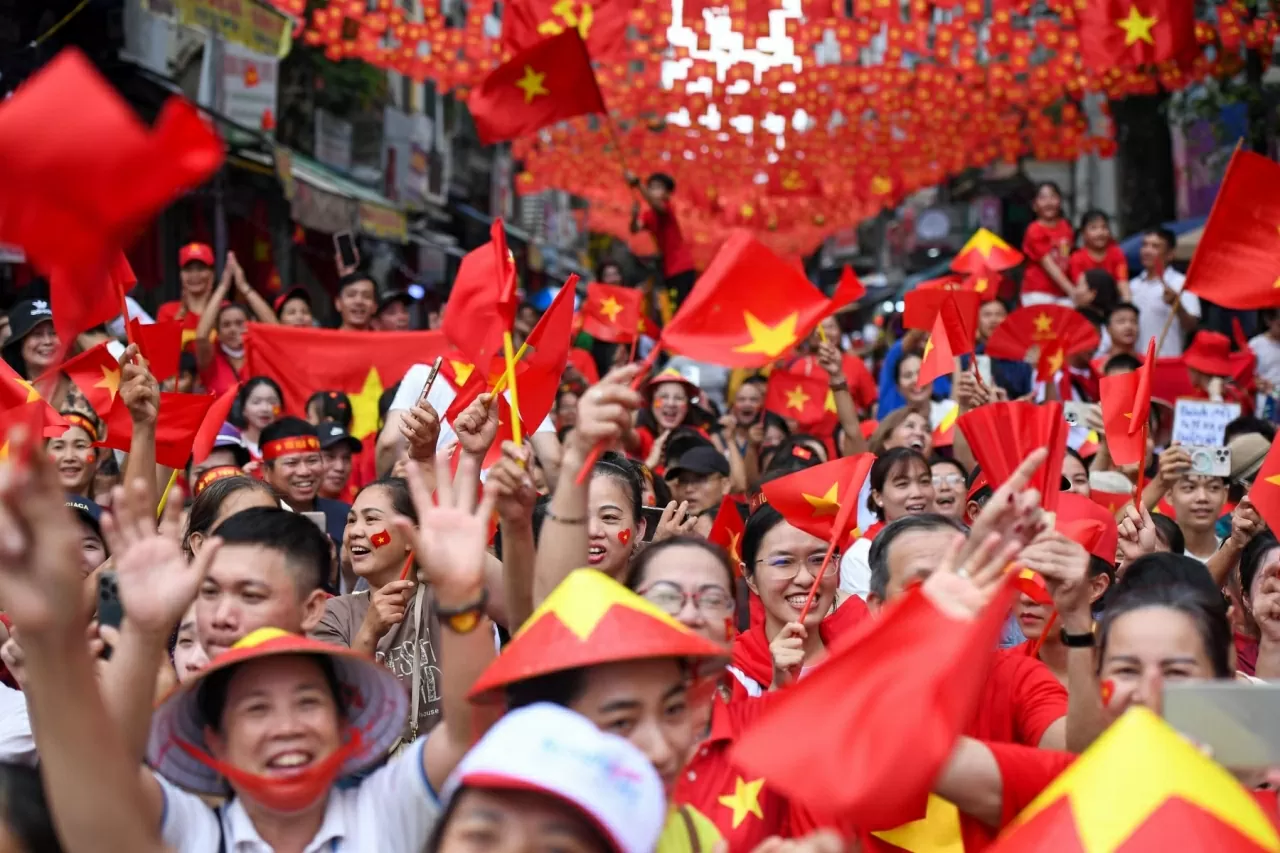 |
| People cheer as they watch the national-level parade in preparation for the Grand Celebration of the 80th National Day, August 27. (Photo: Nguyen Hong) |
Continuing the “Path of peace”
Today, Vietnam is proactively creating a favorable international environment, mobilizing external resources to accelerate industrialization, modernization, and socio-economic development. “From a land once unnamed on the world map, from a country devastated by war, Vietnam has risen to become a symbol of peace, stability, and hospitality, a destination for investors and international visitors.
From a once isolated country under blockade, Vietnam today maintains relations with 194 nations, has a network of 98 diplomatic missions (and continues to expand); enjoys comprehensive partnerships or higher with 38 countries—including all major powers and all five Permanent Members of the UN Security Council, 18 of the G20 members, and the entire ASEAN community. Our Party currently has ties with 259 political parties in 119 countries, including 63 ruling parties” [5].
A new international order based on rules of peaceful conduct among nations—principles of friendship, cooperation, and mutual respect—has even greater significance as humanity faces global challenges together. A world order of equality, democracy, and peace is necessary above all else, enabling nations to join forces in intellect, resources, and effort to address global problems for survival and development.
We continue today along the “path of peace” of earlier years, expanding friendly cooperation between the Vietnamese people and peoples worldwide—especially with neighboring and regional countries—to strengthen the struggle against poverty and backwardness, while also contributing to the resolution of global challenges, aiming toward peace and sustainable development.
References
[1] Ho Chi Minh (2011): Complete Works, Vol. 4 – National Political Publishing House, Hanoi, p. 6.
[2] “Our Policy” – Communist Party of Vietnam (2000): Complete Party Documents, Vol. 8 – National Political Publishing House, Hanoi, p. 437.
[3] Ho Chi Minh: Complete Works, ibid., Vol. 4, p. 526.
[4] Ho Chi Minh: Complete Works, ibid., Vol. 14, p. 354.
[5] Full text of the speech by General Secretary To Lam at the Ceremony marking the 80th Anniversary of the Founding of the Foreign Service – https://baoquocte.vn/toan-van-phat-bieu-cua-tong-bi-thu-to-lam-tai-le-ky-niem-80-nam-ngay-thanh-lap-nganh-ngoai-giao-325522.html