




80 years of Vietnamese diplomacy: A glorious journey in the cause of national struggle, defense, and nation-building
WVR - The World and Vietnam Report is honoured to present an article by Member of the Party Central Committee, Deputy Prime Minister, and Minister of Foreign Affairs Bui Thanh Son on the occasion of the 80th anniversary of Vietnamese diplomacy (August 28/1945- August 28/2025).
Latest
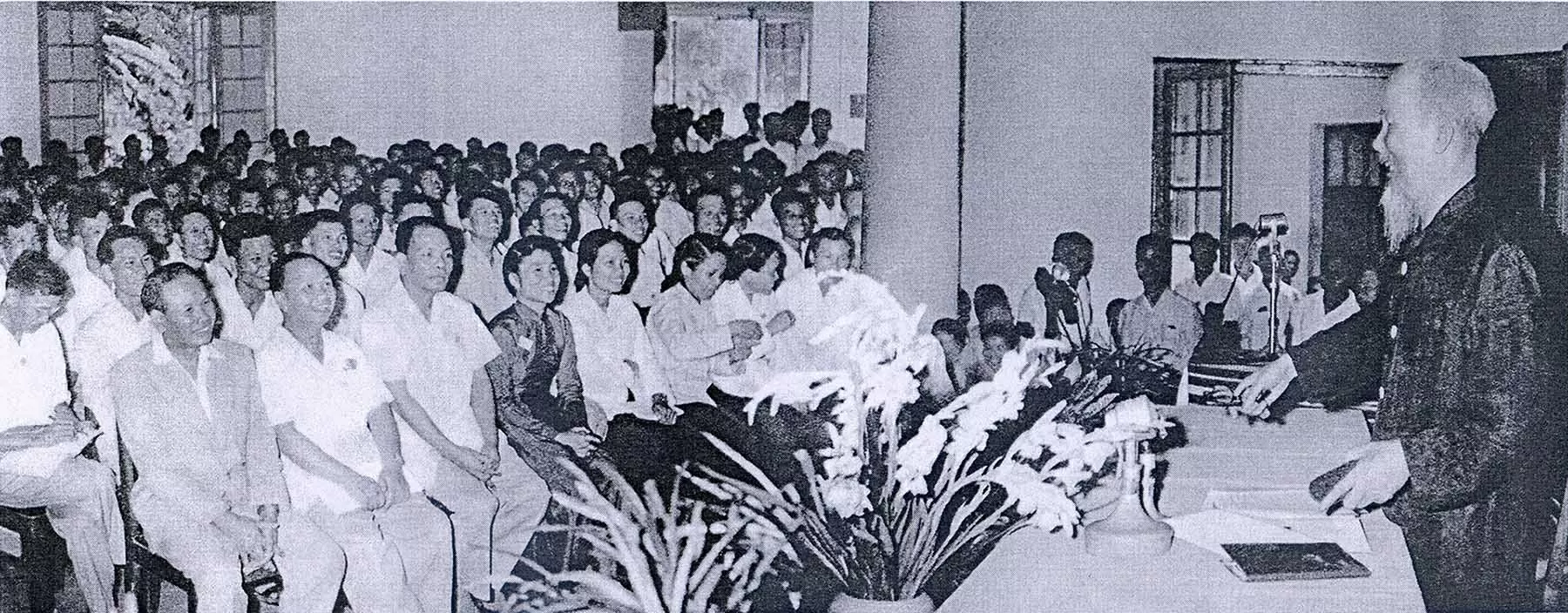 |
| 80 years of Vietnamese diplomacy: President Ho Chi Minh speaking with officials and staff of the Ministry of Foreign Affairs at the first Diplomatic Conference in March 1957. (Photo: Archives) |
Founded in the historic August of 1945, Vietnam’s diplomatic service is immensely honored and proud to have been directly established and laid the foundations by President Ho Chi Minh, a genius leader and an outstanding diplomat. Over the course of its 80-year journey of building and development, under the leadership of the Party and the direct guidance of President Ho Chi Minh, the first Minister of Foreign Affairs, Vietnamese diplomacy has steadfastly upheld its revolutionary spirit, carried forward its glorious tradition, served the nation, and contributed to the great victories of the Vietnamese revolution.
Vietnamese diplomacy has made significant contributions, leaving its imprint on every stage of the nation’s history—from the struggle for independence and its defense, to the resistance against colonialism and imperialism, the liberation of the South and national reunification, and the ongoing endeavors of nation-building and safeguarding the Fatherland.
Diplomacy in the struggle for national liberation and unification
From its inception, the Party and President Ho Chi Minh placed great importance on diplomacy as a crucial means to protect national interests. He once said: “The best use of the military is to fight with wisdom and strategy; the second is through diplomacy; and only the third is by force of arms.”*
During the struggle for national liberation and reunification, diplomacy played an important role and left a profound imprint on the nation’s glorious victories—from contributing to the attainment and preservation of independence in the early days of the revolutionary government, to the successful resistance against colonialism and imperialism, the liberation of the South, national reunification, and the post-war efforts of nation-building.
In the phase of defending the young independence of the country, when the nation was in a precarious situation, facing internal and external threats (1945-1946), diplomacy played a pioneering role in maintaining revolutionary achievements, preserving the people's government, and buying time to consolidate forces for the nation's prolonged resistance.
The most notable diplomatic victories of this period were the Preliminary Agreement on March 6, 1946, the Provisional Agreement on September 14, 1946, as well as diplomatic efforts at the Dalat and Fontainebleau Conferences. Diplomacy skillfully engaged with five major powers simultaneously, dealing with four foreign armies with over 300,000 troops on Vietnamese soil. This was an outstanding diplomatic move, positioning the country in the most optimal situation possible under the dire circumstances at the time.
Entering the resistance against French colonialism (1946-1954), diplomacy not only served the resistance but also actively worked to break the siege and isolation, expand external relations, and garner support and aid from international friends. Diplomacy contributed to forming a combat alliance with Laos and Cambodia, encouraging countries like China, the Soviet Union, and many socialist nations to recognize and establish official diplomatic relations with Vietnam, contributing to forming a significant second rear for the resistance.
Coordinating with the military front, Vietnam's diplomacy capitalized on significant battlefield victories, especially the historic victory at Dien Bien Phu, to intensify negotiations at the conference table, forcing world powers to sign the Geneva Agreements to end the war and restore peace in Indochina. The signing of the Geneva Agreements completely ended nearly 100 years of colonial domination in Vietnam, affirming Vietnam's fundamental national rights of independence, sovereignty, unity, and territorial integrity, serving as a crucial political and legal basis for political and diplomatic struggles in the liberation of the South and national unification later on.
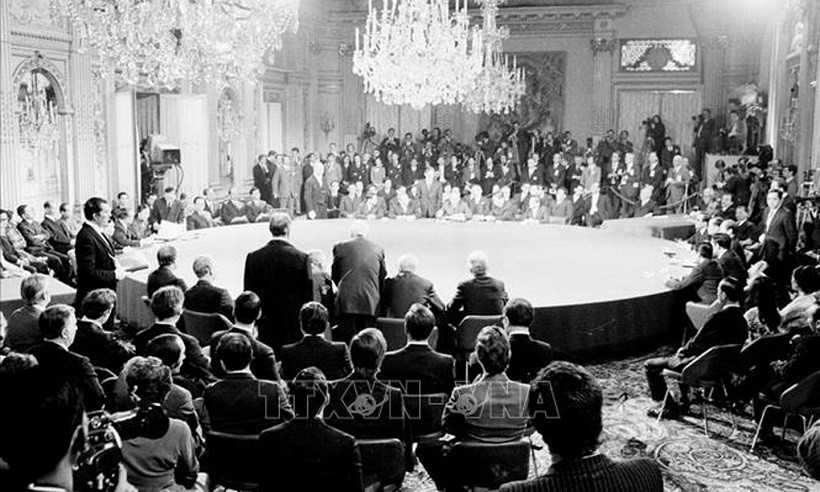 |
| The signing ceremony of the Paris Agreement at the International Conference Center in Paris, France, on January 27, 1973. (Source: VNA) |
In the struggle for the liberation of the South and national unification (1954-1975), facing the challenge of "using the weak to fight the strong", diplomacy became "an important front with strategic significance"**. Diplomacy leveraged the strength of three revolutionary currents, built solidarity and combat alliances with Laos and Cambodia, contributing to the victories of each country's revolution; garnered support and aid from socialist brother countries, especially the Soviet Union and China, and formed a broad international front supporting the just struggle of the Vietnamese people. The statement "For Vietnam, the Cuban people are ready to shed their blood" by President Fidel Castro became a slogan symbolizing the progressive humanity's support for Vietnam.
Particularly, diplomacy combined with military and political efforts to create a "fighting and negotiating" strategy, culminating in the Paris Peace Accords (Paris Agreement on Ending the War and Restoring Peace in Vietnam). The negotiation victories forced the U.S. to de-escalate and sign the Paris Agreement in 1973, compelling the withdrawal of all troops and weapons from South Vietnam, creating favourable conditions for revolutionary forces to consolidate, thereby changing the battlefield dynamics in favour of the revolution, paving the way for the complete liberation of the South and national unification.
In the phase of reconstruction, nation-building, and economic development after the war (1975-1986), diplomacy was a core, pioneering force in the struggle to lift the country out of political isolation and economic embargo. After the victory on April 30, 1975, diplomacy continued to clarify the legitimacy of Vietnam's noble international mission to help the Cambodian people escape the Pol Pot genocide; gradually broke the siege and embargo, contributing to the country's overcoming economic and social difficulties. Vietnam persistently restored friendly neighbourly relations with China and ASEAN countries, fought against the U.S. embargo, developed relations with nationalist and non-aligned countries, gradually expanded relations with developed capitalist countries and international organizations. This was also the period when Vietnam became a member of major international multilateral organizations and forums such as the Non-Aligned Movement (1976) and the United Nations (1977).
Diplomacy in the era of Doi Moi and international integration
In the Doi Moi (Renewal) period (1986 - present), diplomacy has played a pioneering role in fostering peace, safeguarding the Fatherland "early and from afar", thereby creating a favourable external environment for national construction and defence. The current foreign policy of independence, self-reliance, peace, cooperation, and development, multilateralization, diversification, proactive and active international integration, for national interests, is the culmination of the country's renewal and opening process in response to domestic and international changes and has achieved "important, historically significant results and achievements".
In the early years of the Doi Moi process, when the country faced both severe socio-economic difficulties at home and fierce opposition from hostile forces abroad, Vietnam’s diplomacy took the initiative to implement various measures. These included promoting a political settlement to the Cambodian issue and actively addressing the “boat people” problem, thereby reducing hostile pressures, restoring dialogue, and improving relations with major powers and regional countries. These efforts laid a new favourable foundation for the subsequent phase of international relations diversification and multilateralization.
From the 1990s, implementing the policy of "diversification and multilateralization", Vietnam expanded, upgraded, and elevated international relations with partners, especially neighbouring countries, major powers, and important partners. From a country under siege and isolation, Vietnam now has diplomatic relations with 194 countries, established a network of 38 countries with comprehensive partnerships or higher, including all permanent members of the United Nations Security Council, all ASEAN countries, all G7 members, 18 among 20 economies of G20, and is an active member of over 70 international organizations. Elevating and upgrading relations with key and important partners has contributed to creating a new strategic stature, deepening cooperation with partners, laying the foundation for long-term and sustainable relationship development, opening a more favorable foreign affairs landscape than ever for national construction and protection.
Together with national defense and security, diplomacy has contributed to maintaining a peaceful and stable environment, safeguarding the Fatherland early and from afar. Border issues with related countries have been gradually resolved, creating legal foundations and favourable conditions for building peaceful, friendly, cooperative borders, promoting economic and social development, while contributing to consolidating peace and stability in the region.
At the same time, effectively combating activities violating Vietnam's sovereignty, rights, and legitimate interests at sea; promoting negotiations and cooperation to resolve existing issues, fully implementing the Declaration on the Conduct of Parties in the East Sea (DOC), actively participating in building a substantive, effective Code of Conduct in the East Sea (COC) in accordance with international law, especially the 1982 United Nations Convention on the Law of the Sea (UNCLOS). Diplomacy has also actively participated in struggles in the fields of democracy, human rights, religion, and ethnicity, contributing to maintaining national security, order, and social safety.
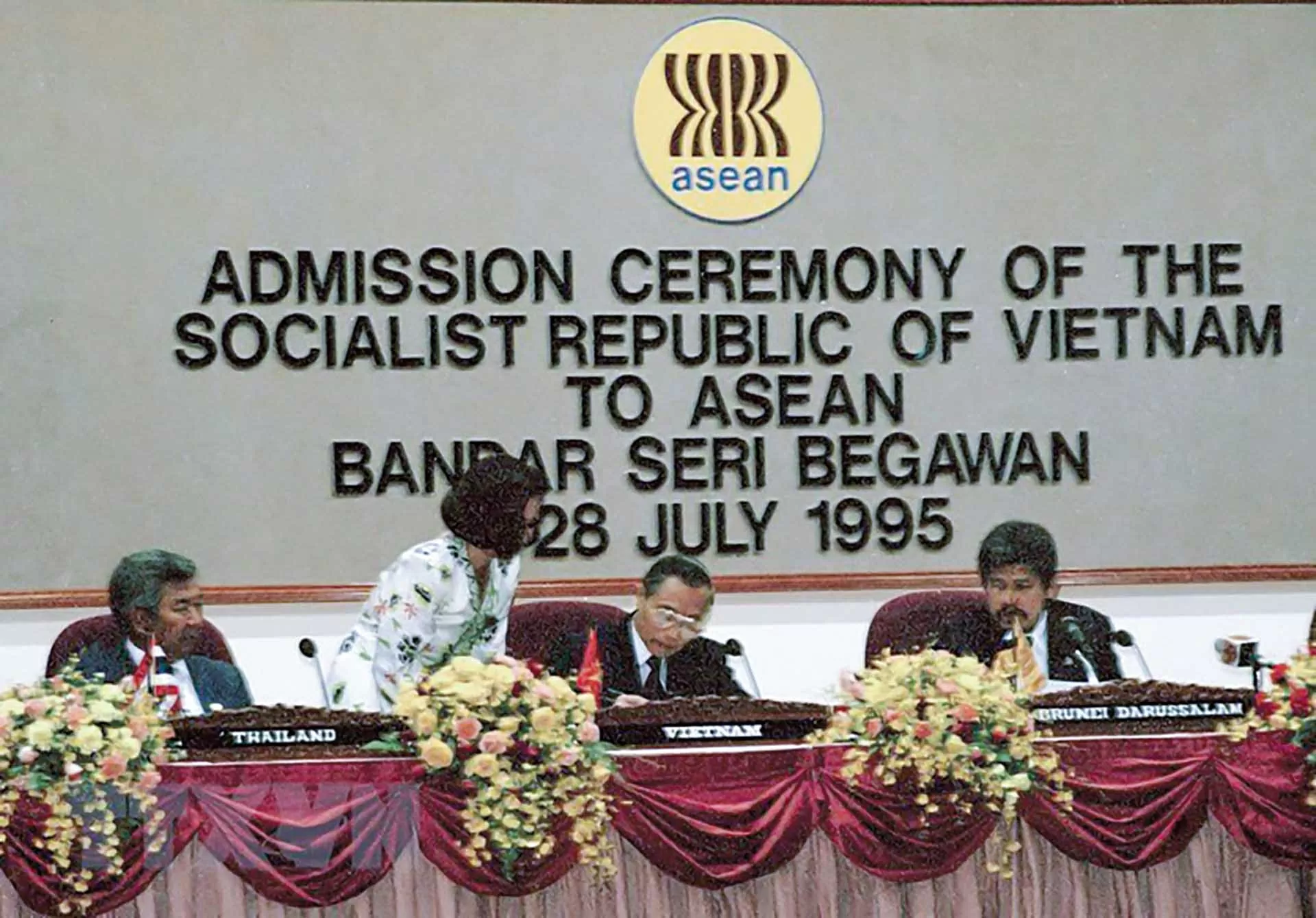 |
| Foreign Minister Nguyen Manh Cam signing the Declaration on Vietnam's accession to ASEAN, morning of July 29, 1995. (Source: VNA) |
Multilateral diplomacy enhances Vietnam's role and position, affirming Vietnam as an active and responsible member of the international community. Vietnam joined ASEAN, APEC, WTO, and gradually transformed in quality, from joining, participating to proactively and actively contributing substantively, being a responsible member at multilateral and international forums. We have initiated and shaped many new cooperation mechanisms such as ASEM, ADMM ...
Implementing Directive 25 of the Party Secretariat, Vietnam has shifted from participating to proactively promoting its role as a “responsible member.” It has fulfilled many major international responsibilities, taken part in shaping rules at important regional and global forums such as the United Nations Security Council, the United Nations Human Rights Council, the United Nations Economic and Social Council, the United Nations Educational, Scientific and Cultural Organization (UNESCO), Mekong sub-regional mechanisms, the Non-Aligned Movement, and the Francophonie, while also expanding its contributions to UN peacekeeping operations as well as international rescue and relief efforts.
Vietnam has twice served as a non-permanent member of the United Nations Security Council (terms 2008-2009 and 2020-2021), twice as a member of the United Nations Human Rights Council (terms 2014-2016 and 2023-2025), participating in 6/7 key governing mechanisms of UNESCO...
Economic diplomacy for development has played a crucial role in socio-economic development, realizing development goals and improving people's lives. From a backward country heavily devastated by war, Vietnam has now become an economy rising strongly, ranking among the top 32 economies in terms of GDP size.
Our international integration has shifted from mere economic integration to comprehensive and deep integration. To date, we have economic relations with over 230 countries and territories; signed and implemented 17 Free Trade Agreements (FTAs), including many new-generation FTAs.
Implementing Directive 15 of the Party Secretariat on economic diplomacy, external relations work and diplomacy have mobilized many important resources such as FDI, ODA, bringing Vietnam into the group of 20 countries with the largest trade scale and top foreign investment attraction in the world; becoming an important link in many economic connections through over 500 bilateral and multilateral agreements; mobilizing major partners in new fields such as green transition, digital transformation, innovation, participating in supply chains and improving Vietnam's position in the global value chain.
Various fields of foreign affairs continue to be effectively and comprehensively implemented. The work for overseas Vietnamese has effectively implemented the Party and State's policy of caring for nearly 6 million overseas Vietnamese, consolidating great national unity, mobilizing resources for development with thousands of investment projects and billions of USD in remittances annually.
Citizen protection work actively safeguards the security, safety, and legitimate rights and interests of Vietnamese citizens and businesses, especially in conflict, disaster, and unstable regions. External information and communication work strongly promotes the image of the country, people, culture, and Doi Moi achievements with creative content and methods. Cultural diplomacy successfully lobbied UNESCO to recognize 72 heritages and titles, thereby preserving national cultural values and mobilizing new resources for local economic, cultural, and social development.
Looking back over 80 years, the great achievements are due to the correct, wise, and talented leadership of our Party, led by President Ho Chi Minh and the Party's leaders. Alongside are the significant contributions of outstanding diplomats like Pham Van Dong, Le Duc Tho, Nguyen Duy Trinh, Xuan Thuy, Nguyen Thi Binh, Nguyen Co Thach…, who have become symbols of courage and intelligence in Vietnamese diplomacy.
Diplomacy has truly become a task of the entire political system, with the various pillars of foreign affairs leveraging comprehensive, coordinated strength and their unique advantages. State diplomacy is seamlessly combined with Party diplomacy and people-to-people diplomacy; parliamentary diplomacy provides close support to state diplomacy; defense and public security diplomacy are actively advanced; and local diplomacy complements central-level diplomacy.
However, in the implementation of foreign affairs, certain limitations remain, such as the utilization of favourable international factors has not been truly effective; established relationship frameworks have yet to be fully leveraged, particularly in the areas of economy and trade, defense and security, and science and technology. The implementation of international agreements still faces inadequaces, while research and advisory work is sometimes not astute or timely. These limitations arise partly from objective causes—such as the rapidly changing and unpredictable international situations and the emergence of unprecedented challenges that are difficult to address—but mainly from subjective causes, stemming from our own limited capacity.
These achievements and limitations leave many lessons for the implementation of extern and diplomacy in the future. It is the lesson of ensuring the highest national interests; throughout the 80-year journey, diplomacy has internalized President Ho Chi Minh's words at the 3rd Diplomatic Conference in 1964 that diplomacy "must always serve the interests of the nation".
It is the lesson of the Party’s unified and absolute leadership, its astuteness in assessing situations and seizing opportunities, and its decisiveness in formulating concrete policies and measures. It is the lesson of harmonizing internal with external strength, combining national power with the power of the times, and mobilizing the immense material and spiritual support of progressive humanity for Vietnam. It is the lesson of “to be firm in principles but flexible in their application” — remaining steadfast in principles while being flexible in strategies, depending on each issue and each moment.
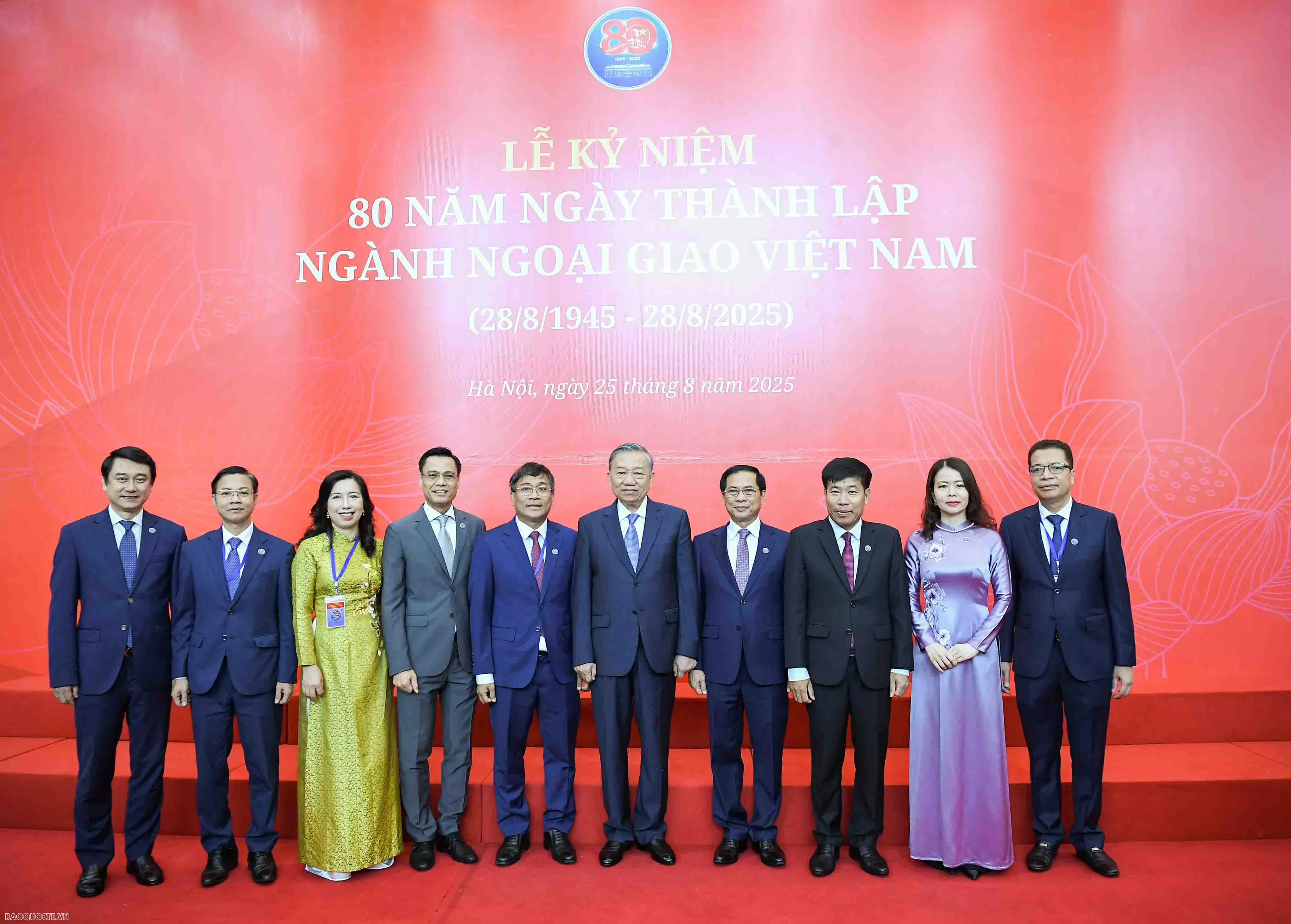 |
| General Secretary To Lam with Ministry of Foreign Affairs leaders at the celebration marking 80th Anniversary of the Founding of Vietnamese diplomacy, August 25. (Photo: Nguyen Hong) |
Promoting the "pioneering, essential, constant" role in the new era
In the coming years, the world situation is forecasted to continue to evolve unpredictably and complexly. The global landscape will continue to move towards a multipolar, multi-center, multi-layered structure with extensive political, security, economic, scientific, and military shifts. Local conflicts, border, territorial, and natural resource disputes are likely to continue with more multidimensional characteristics, occurring in new spaces and with diverse forms. The global economy is forecasted to grow unstably due to geopolitical tensions in many regions. Strategic competition between major powers continues to be fierce and comprehensive, leading to clear delineations and separations in many fields, impacting the interconnected security and development interests of nations.
Domestically, the upcoming phase is of pivotal importance — a decisive sprint toward achieving the development goals set for 2030, with a vision to 2045, ushering the nation into a new era. Epochal transformations present not only new opportunities and advantages but also numerous challenges, demanding revolutionary decisions. As General Secretary To Lam emphasized: “In the new era — the era of national rise — Vietnamese diplomacy must ascend to new heights to shoulder new, glorious responsibilities, worthy to its role as the pioneering force and a combined arm of the Vietnamese revolution.”
The draft documents of the 14th National Congress likewise affirm that “strengthening national defense and security, promoting foreign affairs, and advancing international integration are essential and constant tasks.”
Embracing that ideology, Vietnamese diplomacy will leverage timeless lessons from the 80-year revolutionary history, continuously innovate thinking to suit the situational context, actively and proactively contribute to the successful realization of the country's strategic goals. Among them, the important directions are:
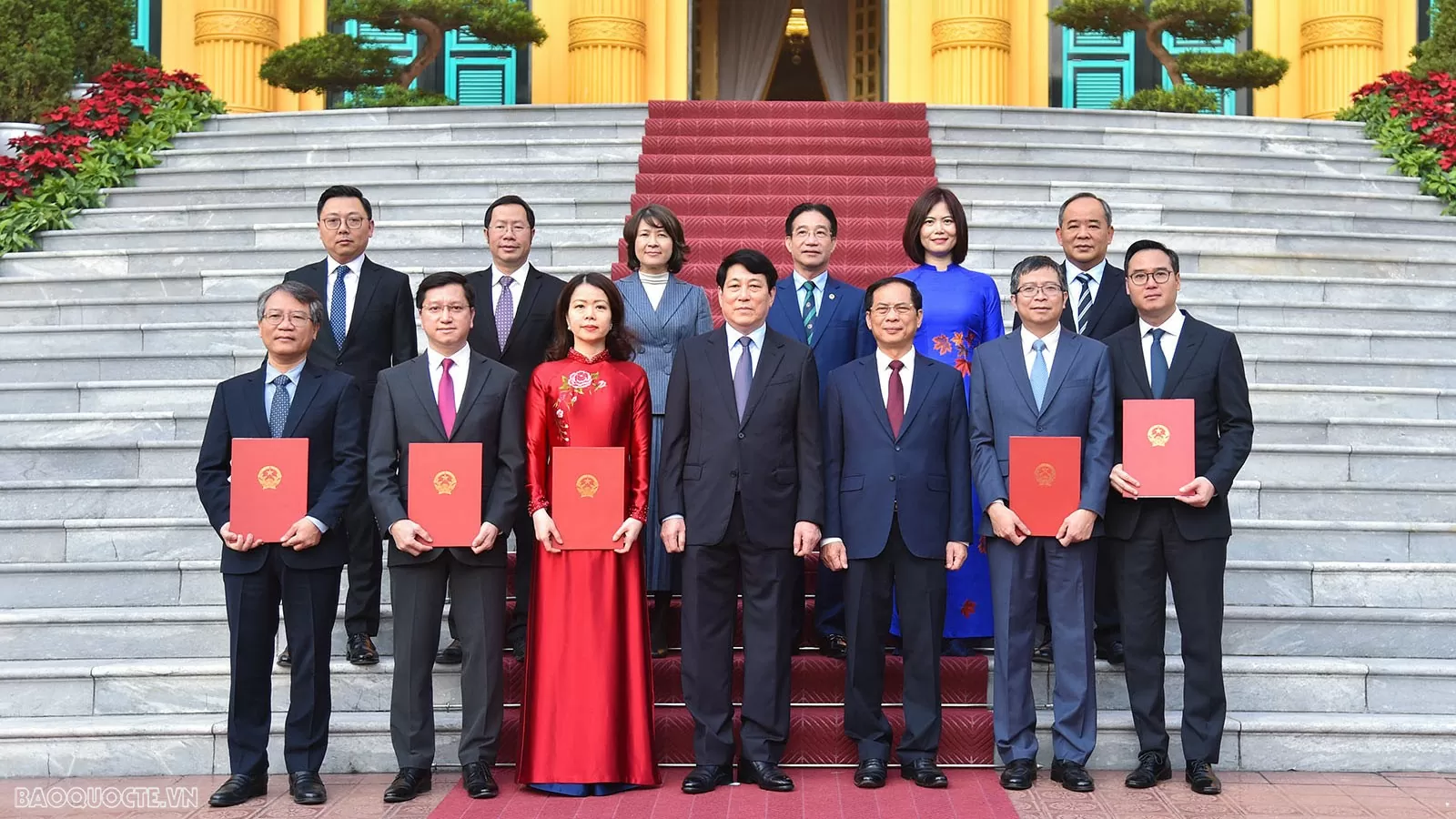 |
| President Luong Cuong presents the Ambassadorial Appointment Decision to five leaders and officials of the Ministry of Foreign Affairs, January 2, 2025. (Photo: Tuan Anh) |
Firstly, promoting the pioneering, "essential, constant" role in creating and consolidating a favourable external environment, achieving the three strategic goals of foreign affairs: security, development, and the country's position. The overarching goal is to maintain a peaceful, stable, favourable environment for national construction and defence; resolutely and persistently safeguarding independence, sovereignty, sovereign rights, territorial integrity, and our legitimate interests in accordance with international law; contribute to the implementation of strategic tasks in socio-economic development; enhance the country's role and position on the international stage.
This requires diplomacy to further enhance the effectiveness of foreign affairs activities, especially political, security, defense, economic, and cultural cooperation with countries; continue to deepen, stabilize, and effectively develop relations with partners with whom we have established frameworks, especially neighbouring countries and major powers; prioritize maintaining stability and momentum in relations, enhancing political trust, promoting cooperation in various fields, while addressing differences and emerging issues in a spirit of cooperation, controlling disagreements, based on international law.
Secondly, foreign affairs play a role in creating, driving, and opening new opportunities for the country, connecting internal strength with external strength, where internal strength is fundamental and long-term, and external strength is important and breakthrough. These are resources in trade, investment, development trends, and economic linkages, a multipolar, multi-center world order based on international law, the strength of the era of scientific and technological revolution, knowledge economy...
From the lessons of preceding countries, in the breakthrough phase, the task of foreign affairs is to position the country optimally in the main development trends and currents of the world; facilitate and connect cooperation with leading partners in breakthrough and strategic fields such as artificial intelligence, semiconductors...
As Prime Minister Pham Minh Chinh stated, economic diplomacy and technology diplomacy "must be the central task in the new development phase, becoming a driving force for rapid and sustainable national development"; effectively implementing the policy of proactive and active international integration, especially Resolution 59 of the Politburo on international integration in the new situation.
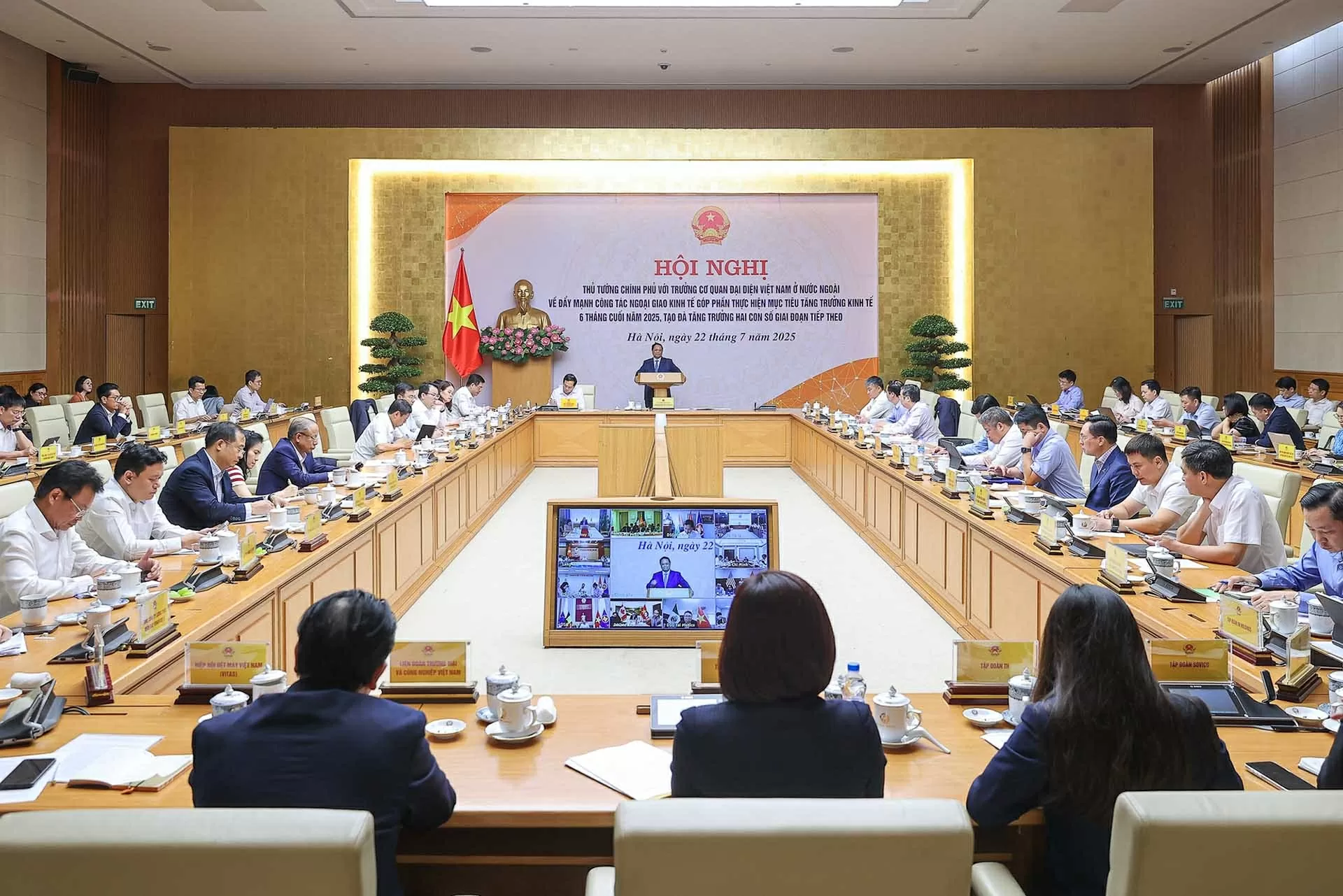 |
| Prime Minister Pham Minh Chinh chairs a conference with Heads of Vietnamese Representative Missions abroad. (Source: VGP) |
Thirdly, elevating Vietnam's contribution to peace, cooperation, development, and progress of humanity. The new position and strength of the country allow us to participate more deeply and responsibly in addressing common global issues.
As President Luong Cuog stated, "the future and destiny of the country are linked to the peace, stability, cooperation, and development of the region and the world", with a new foreign affairs approach from receiving to contributing, from learning to leading, Vietnam will actively participate in building and protecting a fair and equal international order based on international law; elevate Vietnam's contribution to common issues, not only participating in building and shaping multilateral institutions but also playing a core and leading role in important issues and mechanisms, in line with our interests and conditions.
Accordingly, Vietnam will further promote contributions at multilateral forums, especially by advancing new initiatives; demonstrate a core role in building the ASEAN Community and strengthening ASEAN's central role in regional security structures; actively participate in the framework of United Nations activities, especially in implementing sustainable development goals and participating in peacekeeping forces...
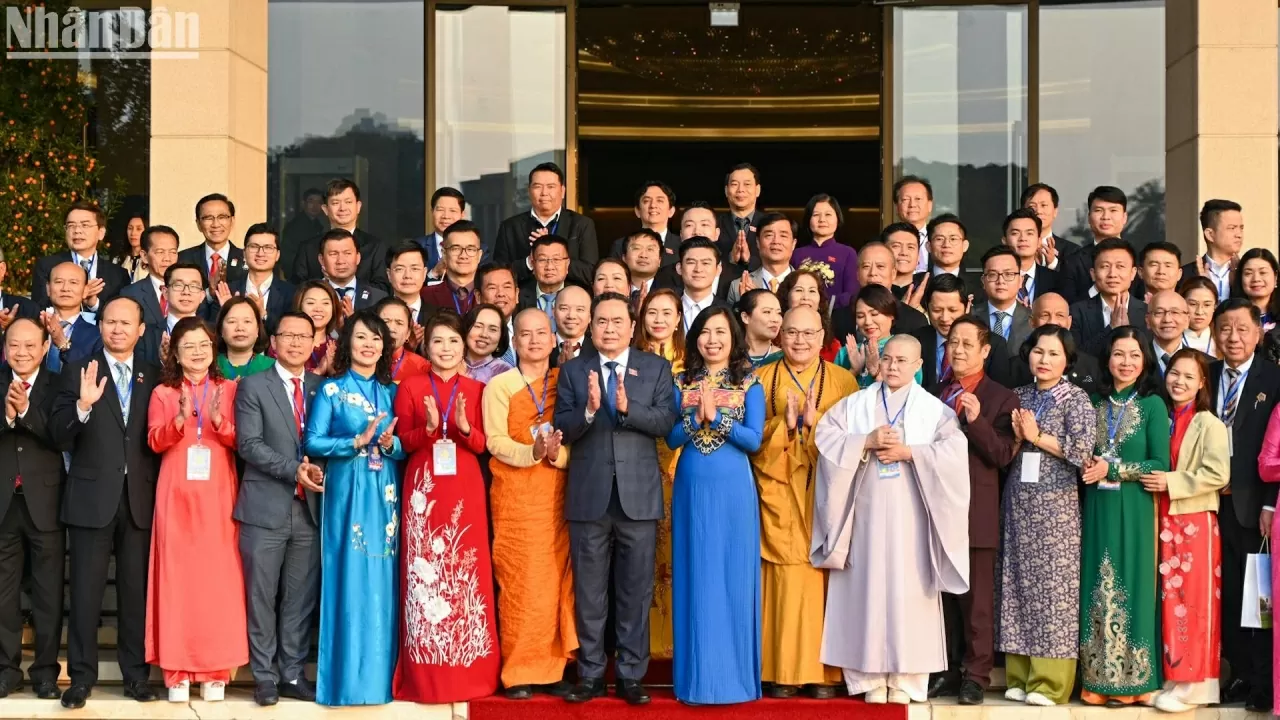 |
| National Assembly Chairman Tran Thanh Man meets with representatives from overseas Vietnamese community attending the "Spring Homeland" program in 2025 at the National Assembly House, on January 19. (Source: Nhan Dan Newspaper) |
Fifthly, enhancing the quality of research, forecasting, and strategic advisory in foreign policy formulation, contributing to deepening the theoretical foundation of the Party on foreign affairs. In today's volatile world, research and strategic forecasting play a crucial role in maintaining proactivity. Diplomacy needs to be astute, recognizing political, economic, cultural, and social trends in the region and the world, especially under the rapid impact of the Fourth Industrial Revolution, to effectively leverage international trends, accurately assess the movement trends in policies and relations between countries, especially neighbouring countries and major powers, to advise on appropriate foreign policy decisions and steps.
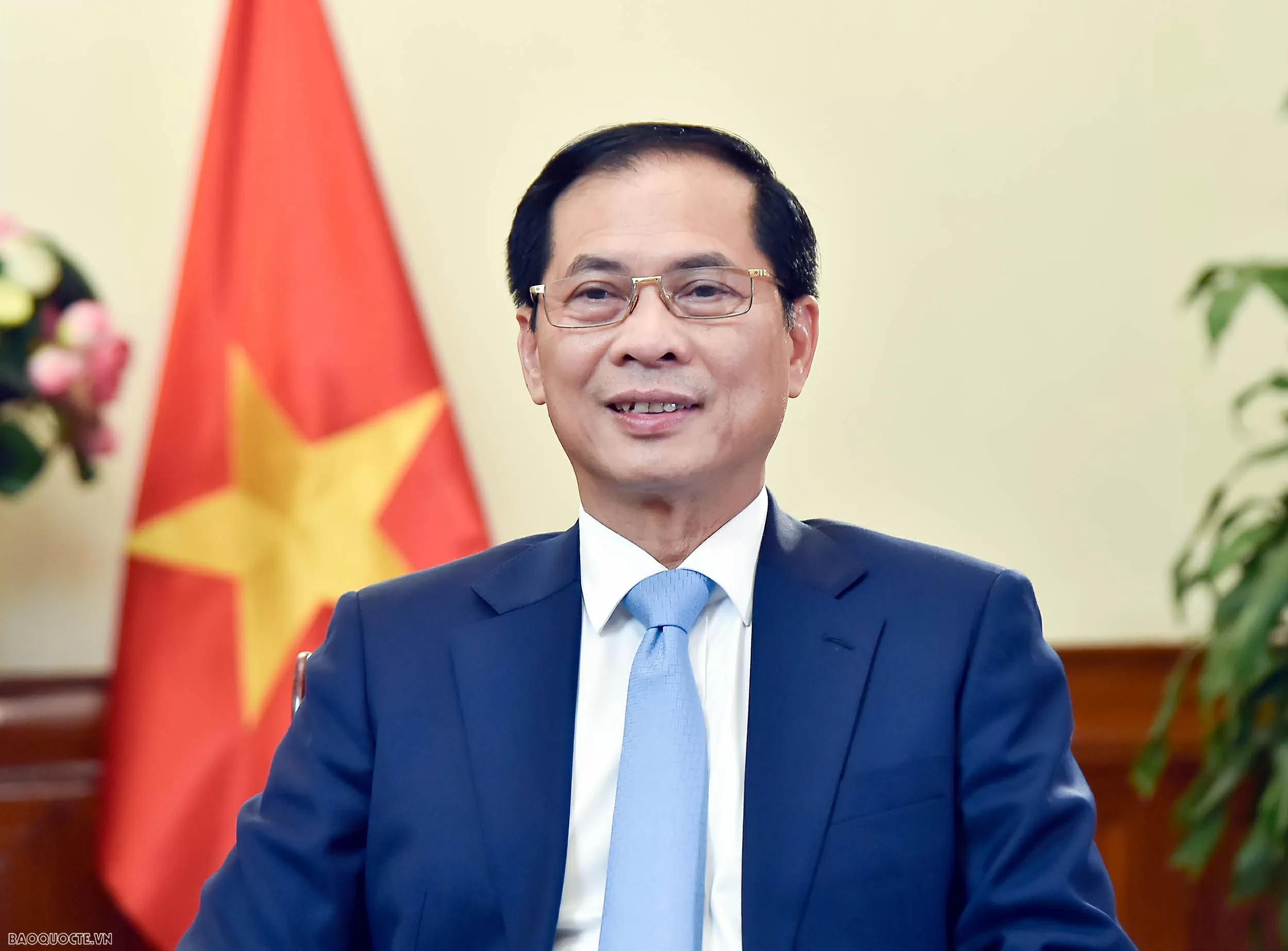 |
| Deputy Prime Minister, Foreign Minister Bui Thanh Son. (Photo: Nguyen Hong) |
Sixth, to build a comprehensive, modern, and professional Vietnamese diplomacy, capable of meeting the mission requirements of the new era. Party diplomacy, State diplomacy, parliamentary diplomacy, people-to-people diplomacy, and the diplomacy of sectors, fields, localities, and enterprises must advance to greater depth and sustainability. At the same time, it is necessary to allocate appropriate resources to ensure material conditions, infrastructure, and benefits on par with the regional average, and gradually approaching international standards.
Especially, as President Ho Chi Minh emphasized, “cadres are the root of all work,” personnel work must meet the requirements of the new era. Accordingly, the generation of cadres in this new phase must not only possess qualifications, capacity, and political steadfastness, but also dare to think, dare to act, and dare to innovate, becoming increasingly professional and on par with regional and global standards. At the same time, it is necessary to continue perfecting the theoretical foundation of foreign affairs, building the Ho Chi Minh era school of diplomacy on the basis of Vietnam’s diplomatic history and Ho Chi Minh’s diplomatic thought.
* * *
After 80 years of nation-building and 40 years of Doi Moi, under the wise leadership of the Party, our country has attained historic achievements, elevating Vietnam’s standing and bringing glory to the nation on the world stage. In every great victory of our people, there is the imprint of diplomacy’s important contribution.
Entering the new era of the nation, Vietnam’s diplomatic sector pledges to make every effort to continue writing the glorious history of Ho Chi Minh era diplomacy — wholeheartedly and devotedly serving the Fatherland and the people, upholding the pioneering spirit, proactively and actively creating momentum and position to help the country advance firmly to new stages of development.
*Ho Chi Minh, *Complete Works*, vol. 3 (Hanoi: National Political Publishing House – Truth, 2011), 562
**Communist Party of Vietnam, Resolution of the Politburo, April 1969.


