






30 years of Vietnam-U.S. relations: A solid foundation for future cooperation
WVR - The seminar “30 Years of Vietnam-U.S. Relations: Achievements and Prospects” acknowledges comprehensive achievements and opens up prospects for extensive cooperation between the two countries.
Latest
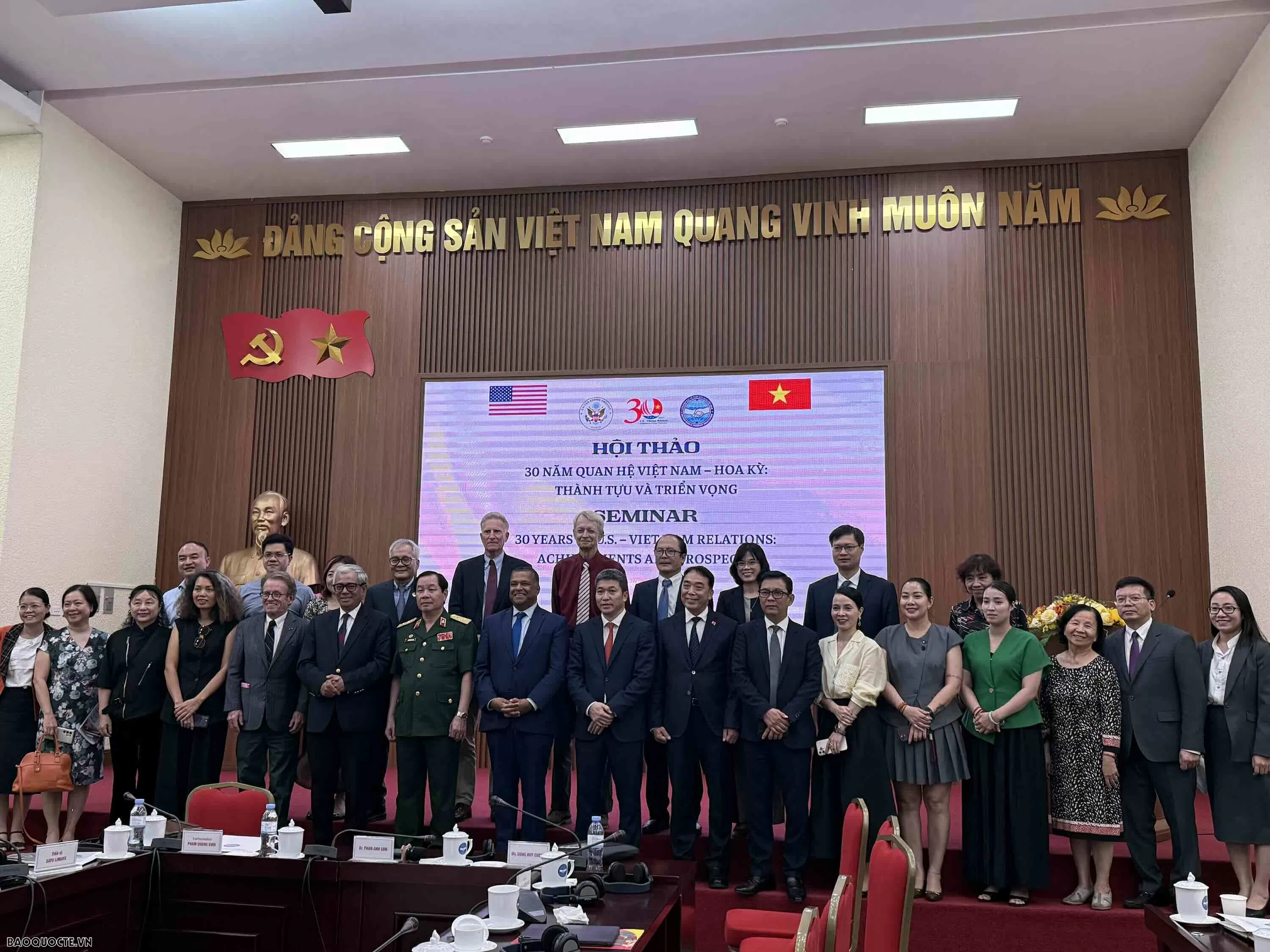 |
| Delegates attending the seminar “30 Years of Vietnam-U.S. Relations: Achievements and Prospects”. (Photo: Dieu Linh) |
On the afternoon of October 2 in Hanoi, the Vietnam Union of Friendship Organizations, in collaboration with the U.S. Embassy in Vietnam, organized the seminar “30 Years of Vietnam-U.S. Relations: Achievements and Prospects”.
The seminar was attended by President of the Vietnam Union of Friendship Organizations (VUFO) Phan Anh Son; Ambassador Pham Quang Vinh, former Deputy Minister of Foreign Affairs, former Vietnamese Ambassador to the U.S., and Chairman of the Vietnam-U.S. Society; Dr. Satu Limaye, Vice President of the East-West Center and Director of the East-West Center in Washington; Mr. James Carouso, Senior Advisor at the Center for Strategic and International Studies (CSIS) in Washington, along with representatives from various ministries, sectors, businesses, and socio-political organizations.
In his opening remarks, VUFO President Phan Anh Son emphasized that the seminar is part of a series of events commemorating the 30th anniversary of the establishment of Vietnam-U.S. diplomatic relations (1995-2025). This is an opportunity to comprehensively evaluate the results of bilateral cooperation over the past three decades across various fields, while analyzing opportunities and challenges for the next phase.
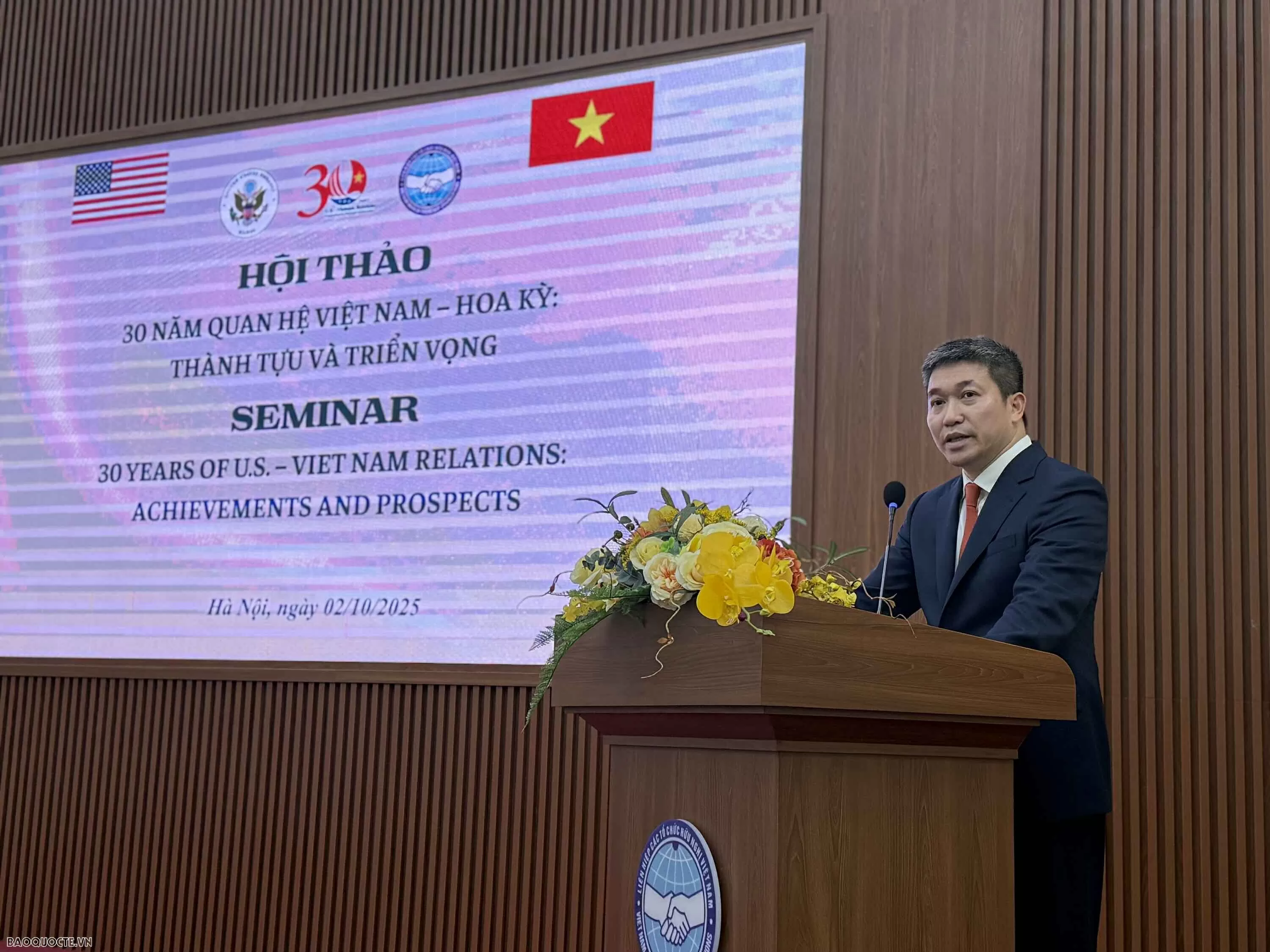 |
| President of the Vietnam Union of Friendship Organizations Phan Anh Son delivers the opening speech at the seminar. (Photo: Dieu Linh) |
Scholars, diplomats, and researchers exchanged and assessed the achievements of Vietnam-U.S. cooperation over the past 30 years in areas such as politics-diplomacy, economy-trade, defense-security, war aftermath resolution, science-technology, culture, education, and people-to-people exchanges. They also analyzed cooperation prospects, as well as opportunities and challenges impacting bilateral relations.
Achievements of 30 years of cooperation
In a welcome video clip to the seminar, U.S. Ambassador to Vietnam Marc Knapper affirmed that the two countries' relations have made significant strides. Bilateral trade turnover now exceeds 150 billion USD annually. Major corporations like Boeing, Apple, Qualcomm, and Citigroup have invested in Vietnam, creating jobs and strengthening the global supply chain, while Vietnamese goods increasingly assert their competitiveness in the U.S. market.
In the technology sector, both sides are enhancing cooperation in artificial intelligence, semiconductors, clean energy, and innovation. Universities and research institutes in Vietnam and the U.S. are expanding their partnerships.
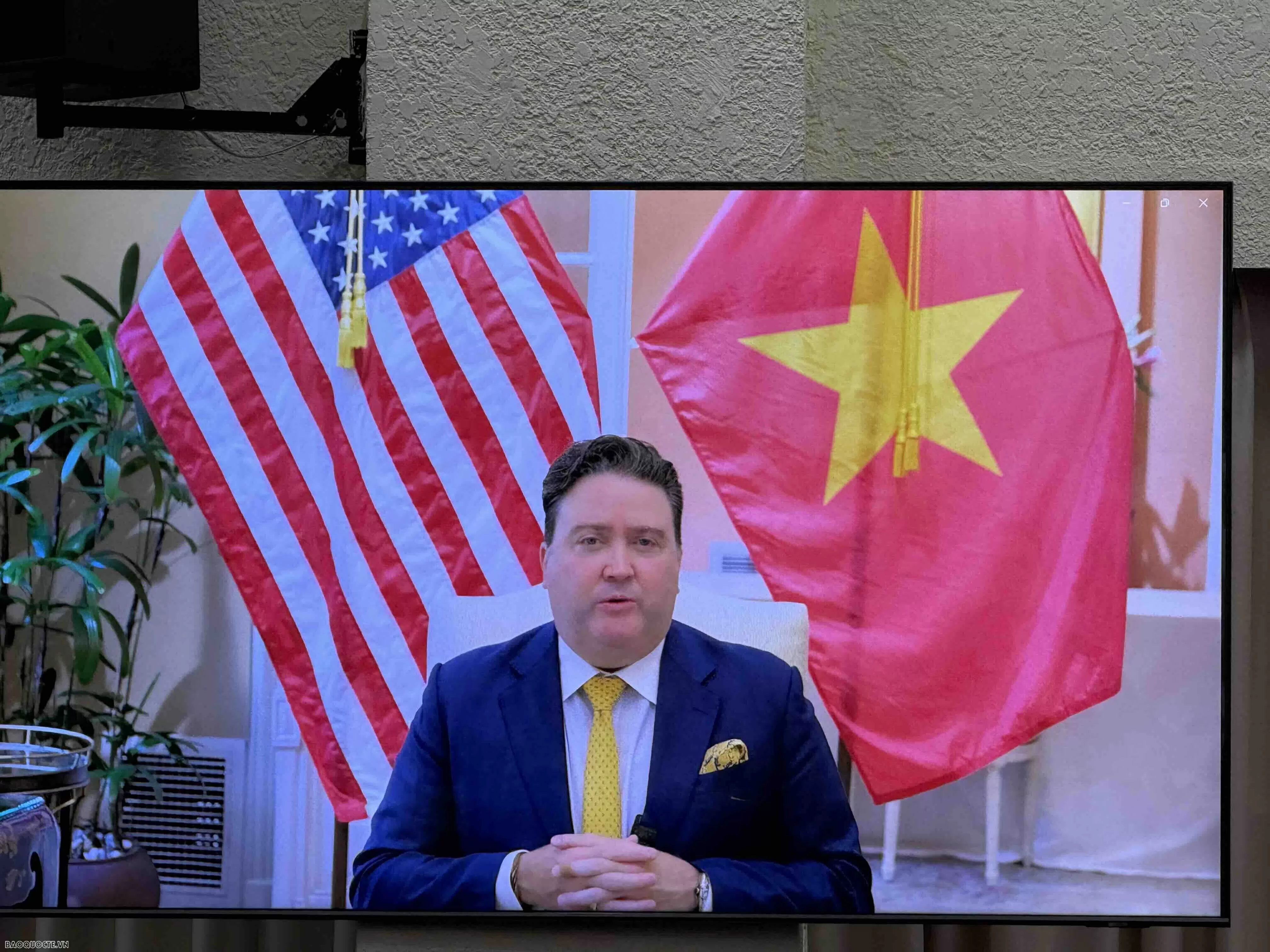 |
| U.S. Ambassador to Vietnam Marc Knapper delivers a welcome speech at the seminar. (Photo: Dieu Linh) |
Ambassador Marc Knapper also noted that Vietnam's position on the international stage is increasingly rising, and the U.S. always considers Vietnam a key partner in the region.
At the seminar, Dr. Satu Limaye, Vice President of the East-West Center and Director of the East-West Center in Washington, introduced the study “Vietnam is a Key Partner of the U.S., and the U.S. is a Key Partner of Vietnam”. He stated that diplomatic relations established in 1995 have been upgraded to a Comprehensive Partnership (2013) and a Comprehensive Strategic Partnership (2023), reflecting deep development in areas such as politics, trade, economy, defense-security, as well as science, technology, and innovation.
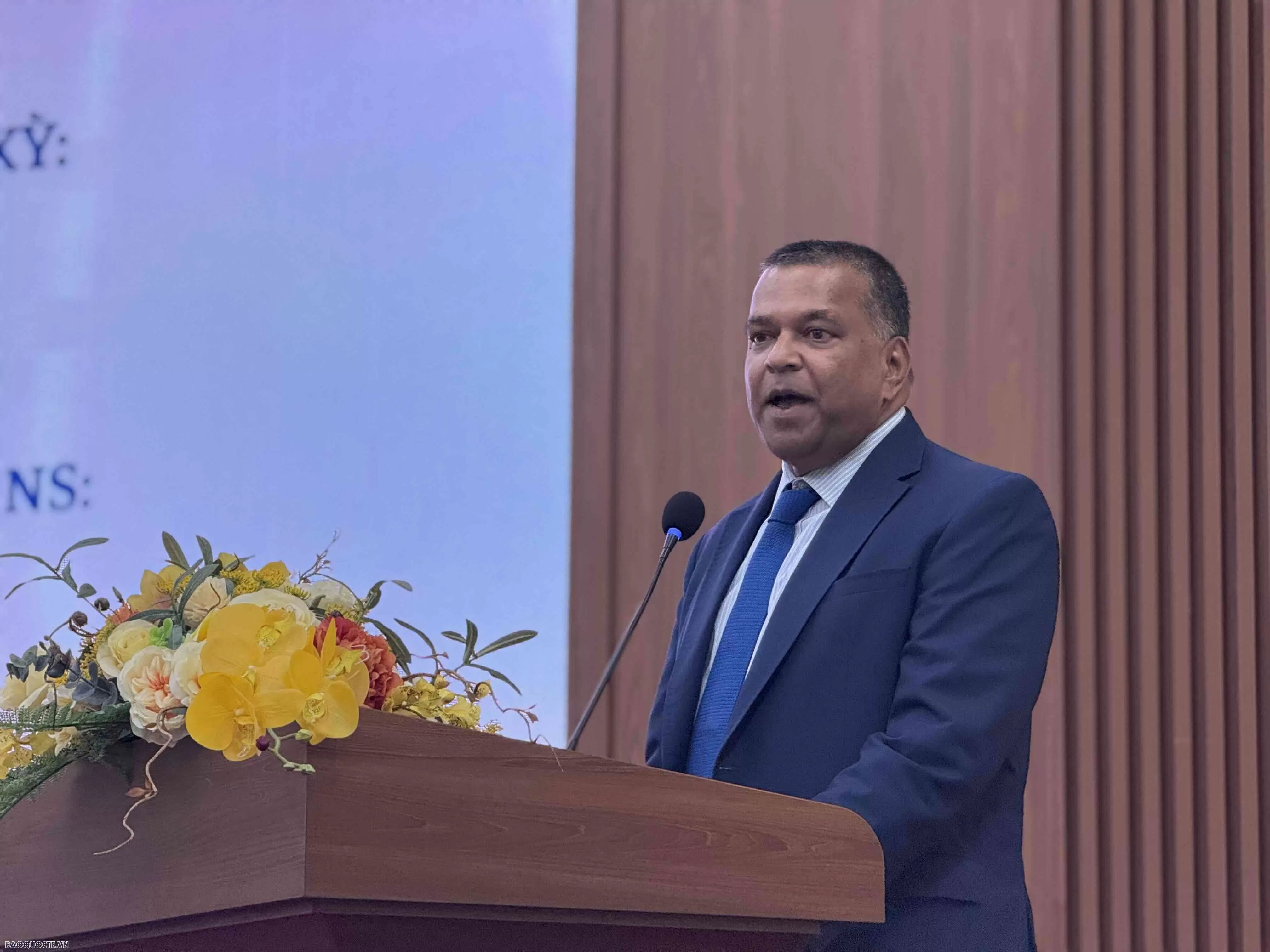 |
| Dr. Satu Limaye, Vice President of the East-West Center, Director of the East-West Center in Washington. (Photo: Dieu Linh) |
According to Dr. Limaye, Vietnam-U.S. relations have made great strides over the past three decades, marked by expanded trade, security cooperation, and shared regional goals. The U.S. is currently one of Vietnam's largest trading partners, while both sides benefit from increased investment, especially in high-tech sectors.
Beyond trade and security, the two countries collaborate on addressing common challenges such as disaster relief, healthcare, and war aftermath resolution. Academic exchanges and cultural interactions continue to strengthen people-to-people ties. Currently, over 30,000 Vietnamese students are studying in the U.S. (academic year 2023-2024), approximately 135,000 Vietnamese visited the U.S. in 2024, contributing 1.7 billion USD to the U.S. economy, while nearly 780,000 U.S. citizens visited Vietnam in the same year.
Drivers of bilateral relations
Ambassador Pham Quang Vinh, Chairman of the Vietnam-U.S. Society, noted that after 30 years, the two countries have built a solid foundation, providing a basis for further expanding cooperation in the future, bringing mutual benefits.
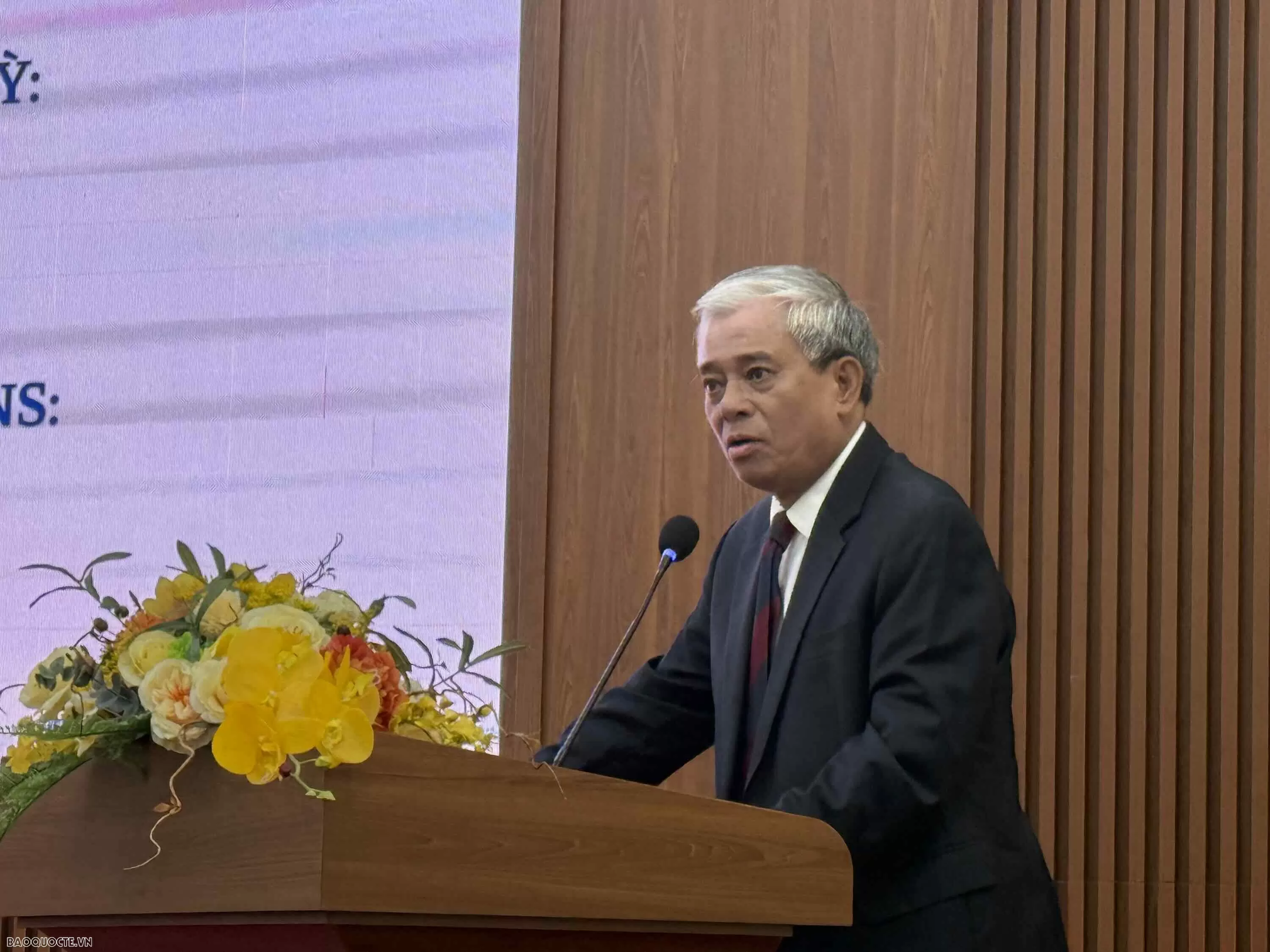 |
| Ambassador Pham Quang Vinh, former Deputy Minister of Foreign Affairs, former Vietnamese Ambassador to the U.S., Chairman of the Vietnam-U.S. Society. (Photo: Dieu Linh) |
The Ambassador highlighted that the two economies are complementary, with Vietnam exporting goods that the U.S. does not produce and importing products that meet domestic development needs.
Economic reforms have helped Vietnam integrate deeply into the global supply chain, with competitive products entering the U.S. market. Vietnam's favorable investment environment has attracted many U.S. corporations and companies.
The Ambassador pointed out that there is still much room for cooperation, especially in science-technology fields such as semiconductors, quantum technology, satellites and space, energy, and unmanned devices.
From a research perspective, Dr. Satu Limaye assessed that the Vietnam-U.S. partnership not only contributes to maintaining stability in the Indo-Pacific region but also promotes shared growth.
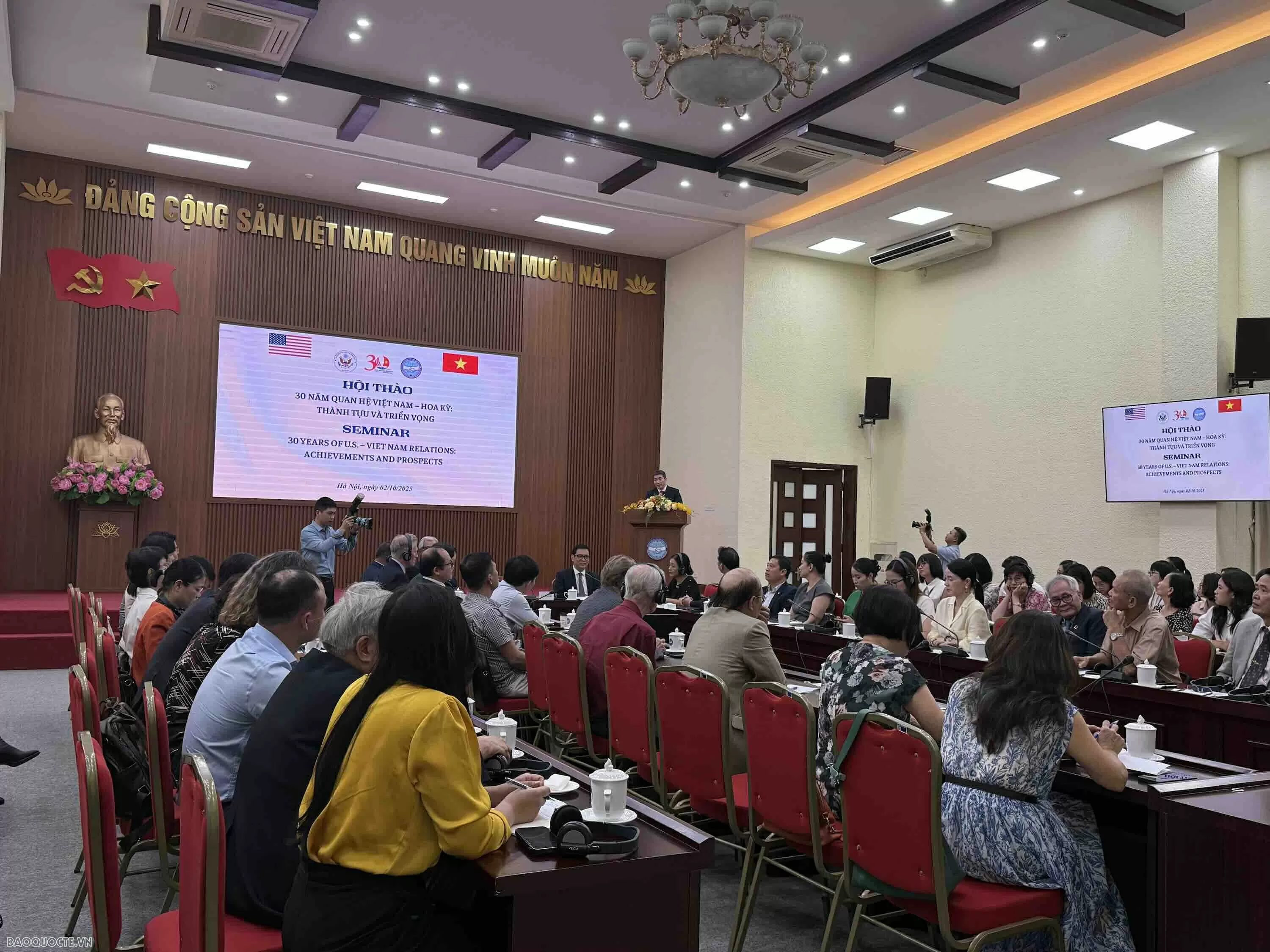 |
| Overview of the seminar. (Photo: Dieu Linh) |
Mr. Limaye affirmed that strengthening people-to-people connections will lay the foundation for long-term development. “By enhancing people-to-people exchanges, Vietnam-U.S. relations will contribute to consolidating shared prosperity, security, and stability for decades to come,” he emphasized.
He noted that the “Vietnam” brand in the U.S. has changed significantly over the past three decades. If cooperation previously focused on war aftermath resolution, it now needs to position a new image associated with tourism, education, and people-to-people exchanges to enhance connectivity.
He shared a story of a financial expert choosing to come to Vietnam because he believes the country is leading in a new era, while another researcher considers Vietnam as “the future”. According to Dr. Limaye, such stories show that bilateral relations are not only reflected in statistics but are also strengthened by direct interactions between the people of the two countries.
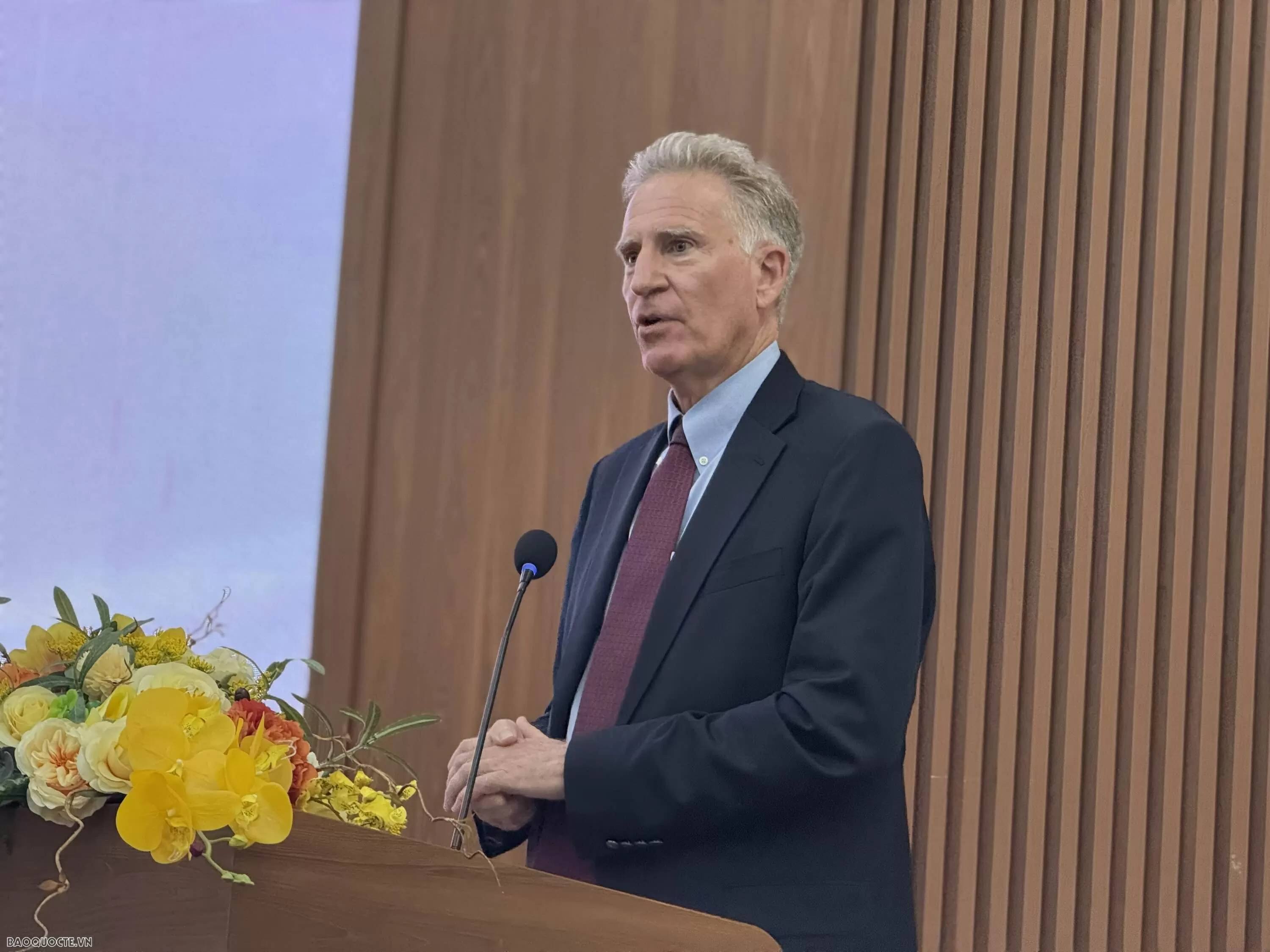 |
| Senior Advisor at the Center for Strategic and International Studies (CSIS) James Carouso. (Photo: Dieu Linh) |
Agreeing with Dr. Satu Limaye, Senior Advisor at the U.S. Center for Strategic and International Studies (CSIS) James Carouso affirmed that people-to-people diplomacy is a crucial factor in promoting Vietnam-U.S. relations, with cooperation in war aftermath resolution becoming a significant driver for bilateral cooperation.
He noted that in the context of younger generations in the U.S. having limited direct knowledge of the war, Vietnam needs to build an image associated with new fields such as tourism, education, and people-to-people exchanges to expand connections. Additionally, in light of changes in U.S. tariff policies, he suggested that ASEAN should strengthen coordination and seek consensus to have a unified voice and exert a stronger influence on Washington.
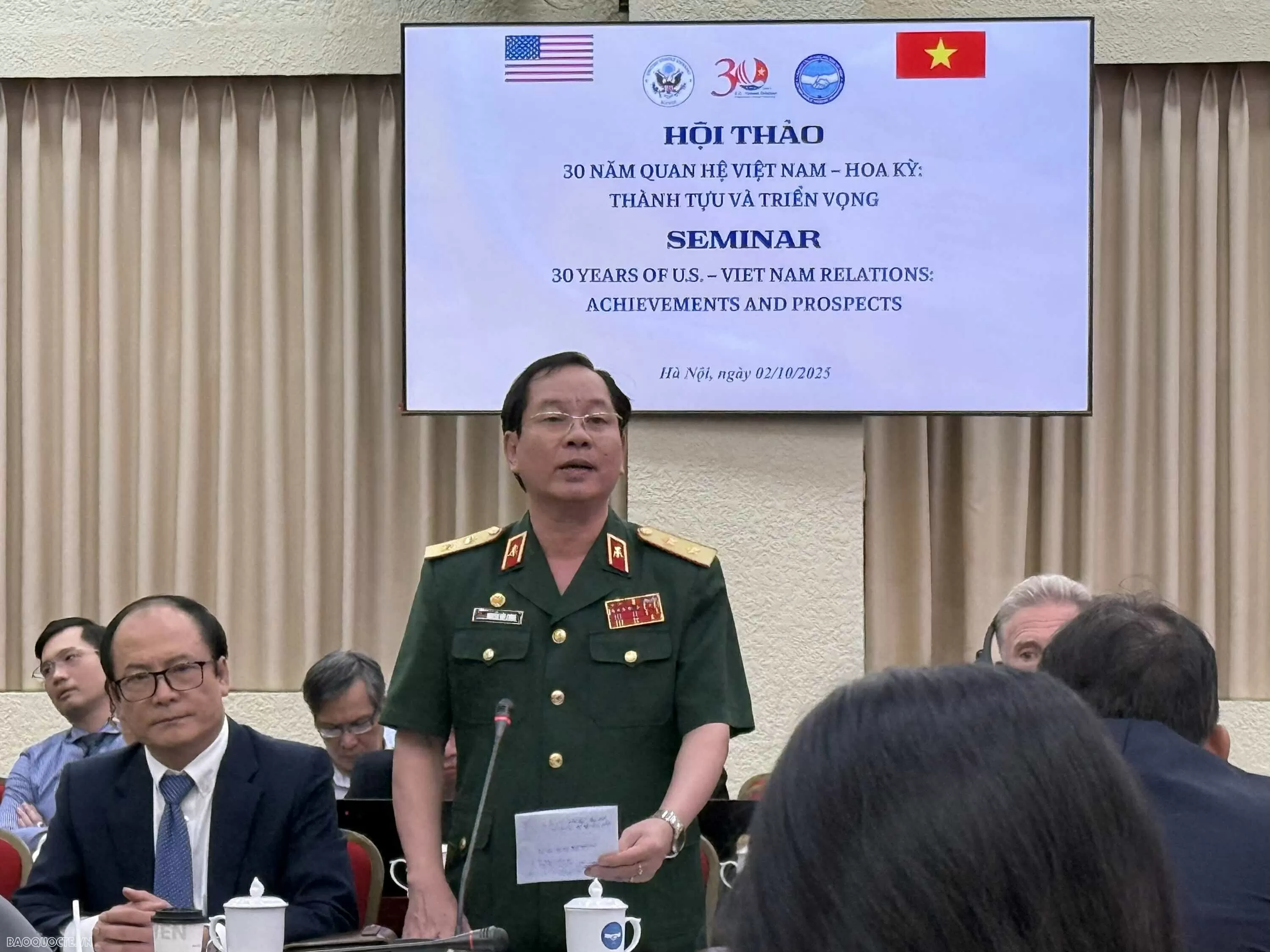 |
| Lieutenant General Nguyen Huu Chinh, Chairman of the Vietnam Association for Victims of Agent Orange/Dioxin, speaks at the seminar. (Photo: Dieu Linh) |
At the seminar, delegates exchanged and listened to opinions from domestic and international experts and scholars on Vietnam-U.S. relations across various fields, from politics-diplomacy, economy-trade, defense-security, war aftermath resolution, science-technology to culture, education, and people-to-people exchanges.
The analyses also pointed out new cooperation prospects, as well as opportunities and challenges impacting bilateral relations. Many agreed that after three decades, Vietnam-U.S. relations have achieved significant milestones and still have much room for development. Therefore, the two countries need to continue maintaining dialogue, enhancing substantive cooperation, and exploring new potentials to bring mutual benefits.


