


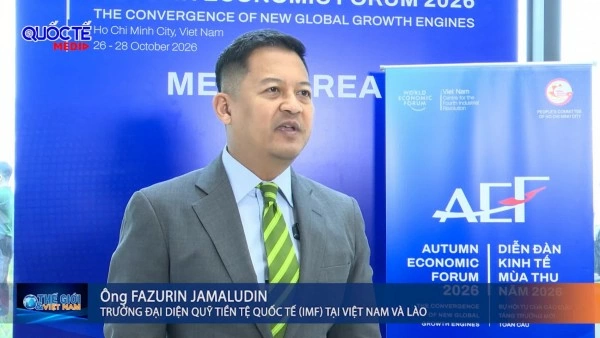


Vietnam's re-election to Human Rights Council is not a trophy, it is a profound responsibility: Ambassador Mai Phan Dung
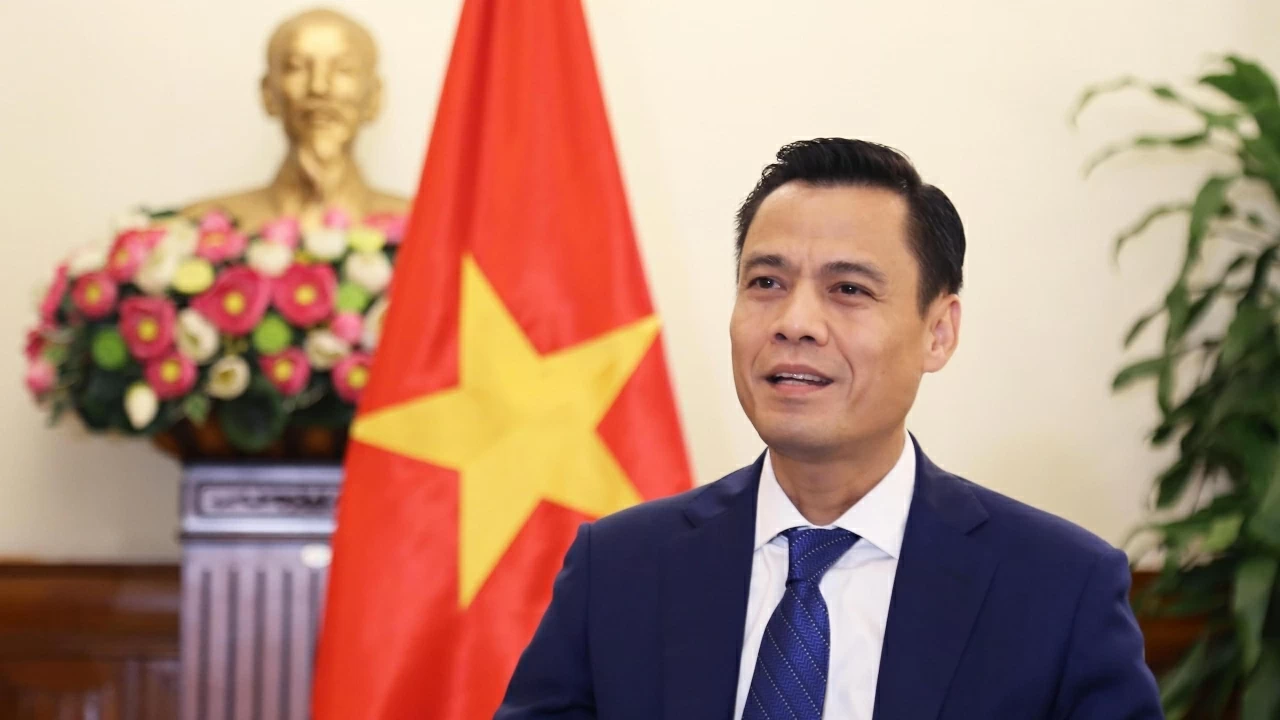
WVR - 'We are not starting the membership term 2026-2028 from zero, we are building on experience from previous terms, and we have strengthened coordination so that our engagement in Geneva remains timely, consistent, and focused', Ambassador Mai Phan Dung, Permanent Representative of Viet Nam to the UN, WTO, and other international organisations in Geneva (Switzerland) shared with the World and Vietnam Report about Viet Nam's re-election to the Human Rights Council for the term 2026–2028.
Latest
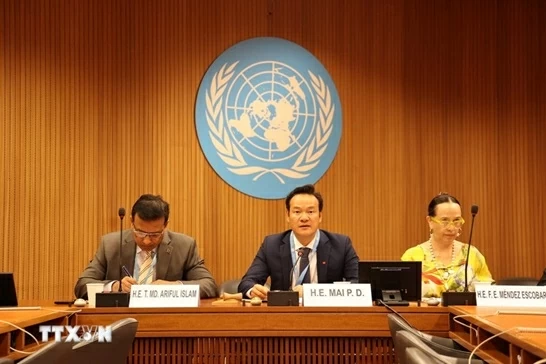 |
| Ambassador Mai Phan Dung, Permanent Representative of Vietnam in Geneva (centre), delivered remarks during a discussion session held in the framework of the Interactive Dialogue on Vietnam’s National Report on the implementation of the International Covenant on Civil and Political Rights (ICCPR) at the 144th Session of the Human Rights Committee in Geneva, Switzerland, July 2025. (Photo: VNA) |
Could you share the key activities and notable initiatives undertaken by our Mission during Vietnam’s recent term on the United Nations Human Rights Council? How did these efforts contribute to the overall success of the term and help pave the way for Vietnam’s re-election to the Council for the new term?
In Geneva, our Mission’s engagement with the Human Rights Council has always been guided by one consistent direction: be constructive, be consistent, and keep the Council focused on solutions that improve people’s lives.
First, we worked around a clear set of priorities, so our engagement was steady and predictable during the membership term.
Second, we invested in cross-regional cooperation and consensus outcomes, because in a divided world, trust is built when countries can still agree on practical steps. In that spirit, Vietnam tabled, on behalf of cross-regional core groups, Resolution on the commemoration of the seventy-fifth anniversary of the Universal Declaration of Human Rights and the thirtieth anniversary of the Vienna Declaration and Programme of Action, and Resolution on climate change and human rights focusing on just transition, both adopted by consensus with broad co-sponsorship.
Third, we led cross-regional joint statements, such as on accelerating SDG implementation to promote gender equality, and on immunization and human rights, to keep attention on cooperation, inclusion, and real-world needs.
Fourth, we also engaged through international panels and other Council-related activities to share experiences and learn from partners, which is essential for credibility.
Taken together, these efforts helped strengthen confidence that Vietnam can work with different regions, bridge differences, and contribute responsibly to common priorities.
Our re-election to the Council for the term 2026-2028, with the highest number of votes within the Asia-Pacific Group, was not only recognition of national progress, but also of our approach in Geneva: respectful, practical, and cooperative. We see it as trust earned through sustained work, and also as a responsibility to keep delivering in the next term. We will keep that same cooperative spirit, and we welcome partners to work with us on practical initiatives.
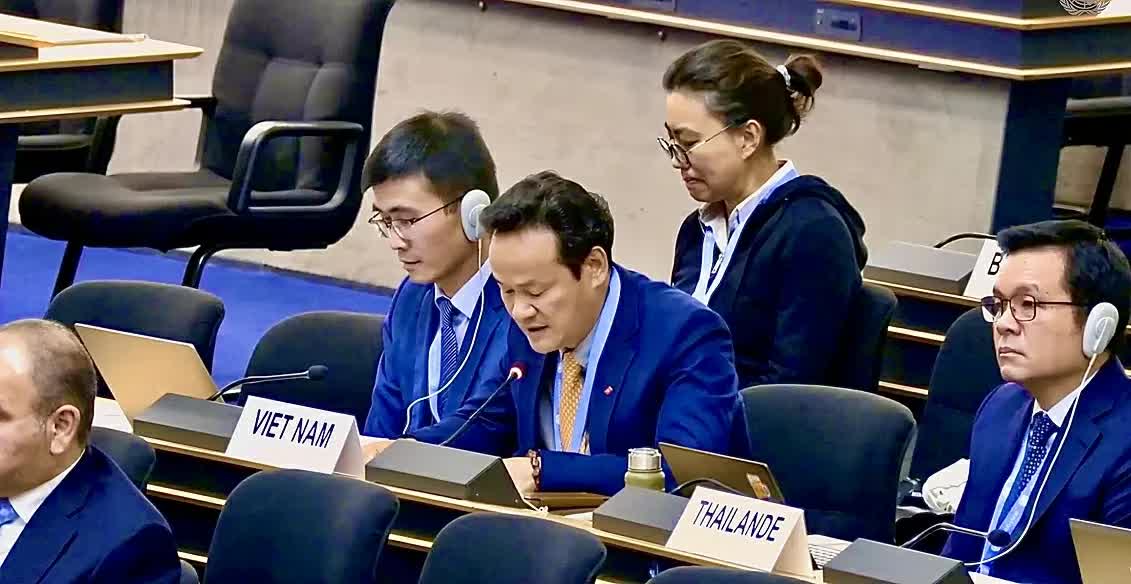 |
| Ambassador Mai Phan Dung delivered a number of important statements throughout the 60th Session of the United Nations Human Rights Council. (Photo: Chu Van) |
Looking back, in your view, Ambassador, what have been Vietnam’s most valuable lessons learned from its previous term on the United Nations Human Rights Council, and how will these lessons be carried forward and further applied in the coming term?
If I have to sum up our lessons learned from 2023–2025, they are captured in the motto that guided our work: “Respect and Understanding – Dialogue and Cooperation – All Human Rights for All.”
First, Respect and Understanding: trust at the Council starts with how we listen. Even when perspectives differ, showing respect, speaking with sincerity, and acknowledging each country’s circumstances helps create the space where progress becomes possible.
Second, Dialogue and Cooperation: early consultations and prioritization of solutions can unite, not divide. In practice, that means working across regions, keeping language balanced, and supporting technical cooperation, because sustainable outcomes are built through partnership, not pressure.
Third, All Human Rights for All: a comprehensive approach is essential. Civil and political rights, as well as economic, social, cultural, and right to development, reinforce each other in real life. This is also why we treat UN mechanisms, like the Universal Periodic Review (UPR), as tools for continuous improvement, and we continue engaging with treaty bodies and Special Procedures in a spirit of openness and responsibility.
In the 2026–2028 term, we will carry these lessons forward with humility, working with all partners to keep the Council effective, and focused on practical cooperation.
During the 2023–2025 term, Vietnam pursued eight priority areas. Could you share how these priorities will be carried forward and further advanced in the time ahead?
This is a very practical question.
These eight priorities are our “red thread” going into the next term: improving the HRC’s efficiency in tandem with the promotion of international law; addressing human rights in the context of climate change and digital transformation; combating violence and discrimination; strengthening protection for vulnerable groups; promoting gender equality; and advancing right to health, work, and quality education and human rights education.
With regard to the Council’s effectiveness and international law, we will continue supporting approaches that make the Council more practical and outcome-oriented, reducing duplication, prioritizing dialogue, and encouraging technical cooperation where countries request support.
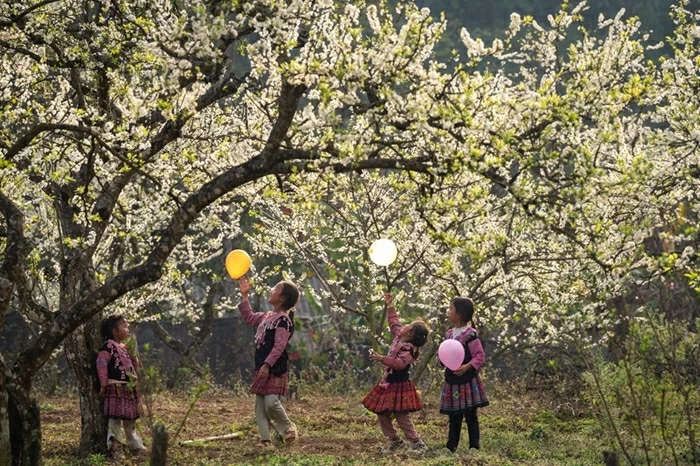 |
| Ethnic childre play under ancient plum trees in Moc Chau, the northern province of Son La. (Photo: Tien Phong) |
Relating to climate change and digital transformation, we will promote a balanced approach: protecting human rights during transitions, sharing experiences, and working with partners so that no one is left behind, especially communities that are more exposed or have fewer resources.
And on gender equality, vulnerable groups, combating violence and discrimination, and core social rights like health, work, and education, we will stay actively engaged, with a clear preference for initiatives that are inclusive and capable of building broad consensus across regions.
For us, these eight priorities are a commitment to contribute responsibly to shared global concerns, in the spirit of respect and understanding, dialogue and cooperation, and all human rights for all. We look forward to working with all partners to translate these priorities into practical cooperation and shared progress.
Could you please share Vietnam’s readiness for its new term on the United Nations Human Rights Council? From this important milestone, could you also convey a broader message about Viet Nam’s multilateral diplomacy, as well as its consistent commitment to the protection and promotion of human rights?
Readiness means continuity and seriousness.
We are not starting the membership term 2026-2028 from zero, we are building on experience from previous terms, and we have strengthened coordination so that our engagement in Geneva remains timely, consistent, and focused.
On the broader message: Viet Nam’s multilateral diplomacy is about being a reliable and responsible partner. We believe multilateralism is essential, especially now, when climate impacts, public health, inequality, and digital space create challenges that no country can solve alone.
And our human rights message is consistent: human rights are universal, but implementation must be practical and grounded in people’s lives. That is why we focus on rights that are closest to people’s daily lives, health and healthcare, education, and decent work, because effective implementation is what ultimately makes human rights real. Internationally, we continue to engage constructively with UN mechanisms, we are party to 7 of the 9 core human rights treaties and have ratified 25 ILO conventions.
So, re-election to the Human Rights Council for the term 2026–2028 is both an honor and a responsibility, and we intend to earn that trust through constructive work. We will continue working with all partners so that “all human rights, for all” is advanced through genuine dialogue and cooperation.
Finally, on the occasion of Human Rights Day, could you please share the key message you wish to emphasize on human rights, as well as your hopes and aspirations for a better world, one to which Viet Nam will continue to contribute positively and responsibly?
Human Rights Day is a reminder that human rights are universal aspirations and common values of humanity, and they are best protected when countries choose dialogue over confrontation, and cooperation over division.
For a better world, the hope is quite simple: fewer conflicts, more trust, and more practical solidarity, especially for those most at risk, including women, children, persons with disabilities, and communities vulnerable to climate impacts.
This is also why Vietnam has supported, and initiated, work at the Council linking human rights to real global challenges, including the consensus approach reflected in resolutions such as resolution on Commemoration of the seventy-fifth anniversary of the Universal Declaration of Human Rights and the thirtieth anniversary of the Vienna Declaration and Programme of Action; and Resolution on Climate Change and Human Rights focusing on just transition.
And finally, being elected to serve the Human Rights Council is not a trophy, it is a profound responsibility. Viet Nam will continue to contribute in the spirit we have consistently advocated: respect and understanding, dialogue and cooperation, and ensuring all human rights for all.
Thanks the Ambassador!