




Vietnam Teachers' Day (November 20): Educational reform begins with teachers
WVR - A strong education system cannot rely solely on teachers who only lecture but also those who listen to students, guide, inspire; respect differences; and use technology wisely...
Latest
 |
| To have a strong education system, there must be a strong team of educators. (Photo: Nguyet Anh) |
In the development journey of every nation, education is always a pillar that creates intrinsic strength, laying the foundation for forming generations of knowledgeable, courageous, and aspirational citizens.
The persistent, silent effort of teachers
Over the past 80 years, Vietnam’s revolutionary education has overcome countless difficulties but also achieved commendable accomplishments. In every transformation, the image of the teacher is always central. Educational reform, ultimately, does not begin with documents, resolutions, or infrastructure, but with people, primarily the teachers.
Looking back at the long journey of Vietnamese education to date, one can clearly see the persistent, silent yet incredibly strong efforts of generations of teachers. From humble bamboo schools to today's smart classrooms, teachers have always been a step ahead, adapting, learning, and renewing themselves to meet the developmental demands of society.
Today, as human knowledge increases exponentially and technology continuously evolves, teaching is no longer a profession of outdated lectures or fixed molds. Teachers must become "lifelong learners", renewing methods, updating knowledge, mastering technology, while preserving and promoting the core values of the teaching profession: Character, love, and responsibility.
These changes are not easy. Reform is not just about doing things differently but changing mindsets, habits, and even sacrificing job security. But it is precisely this that has created true transformation in education. Each teacher reforms a little, each classroom changes a bit, and the entire system changes significantly. Reform from teachers through voluntary personal efforts is the cornerstone of all educational reform.
A "new land" for educational development
The introduction of the Teachers' Law is not only a recognition and honor but also a strong commitment from the State to protect and develop the teaching workforce. The Teachers' Law comprehensively regulates rights, obligations, policy regimes, career development pathways, training – fostering, and conditions ensuring professional activities... All are designed for teachers to be "illuminated", given maximum conditions to unleash their abilities, intellect, and dedication.
For many years, teachers have faced numerous pressures, from programs, reforms to societal expectations, administrative work... The Teachers' Law provides a legal mechanism to alleviate unnecessary burdens, returning teachers to their rightful central position in the educational process.
When teachers are protected and supported, when they are recognized, listened to, and given opportunities to learn, research, and create, they will be stronger to "illuminate" students – the future owners of the country.
The year 2025 marks a special milestone for the Education sector. The Politburo issued Resolution No. 71-NQ/TW on breakthrough development in education and training, for the first time affirming "education and training as the top national policy, determining the nation's future", showcasing an unprecedented vision, directive perspective, and positioning for education and training.
Alongside this, Resolution No. 57-NQ/TW on the development of science, technology, innovation, and national digital transformation creates a "new land" for educational development. Education – science – technology are the three mutually supportive pillars of a modern nation's progress.
These two resolutions create a complete policy ecosystem: Placing education in a pivotal position; creating motivation for reform; opening unprecedented development opportunities. Especially, it requires each teacher to change in line with the expectations of the Party and the people.
Great opportunities always come with great challenges. Education is amidst a strong wave of transformation: Digital transformation, curriculum reform, changes in assessment methods, requiring new capabilities and mindsets. In this context, teachers bear the responsibility not only to impart knowledge but also to inspire, unlock potential, and nurture character.
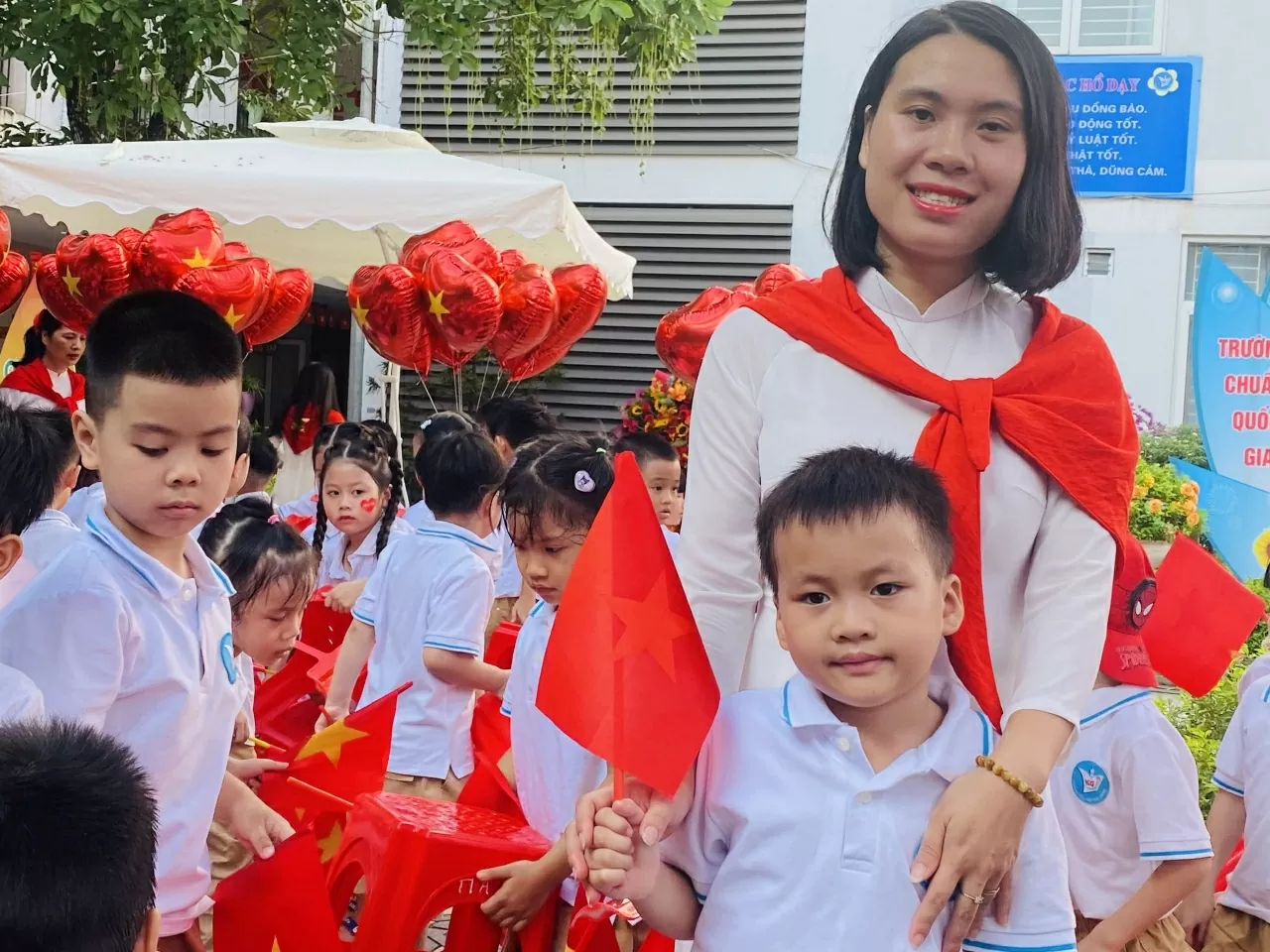 |
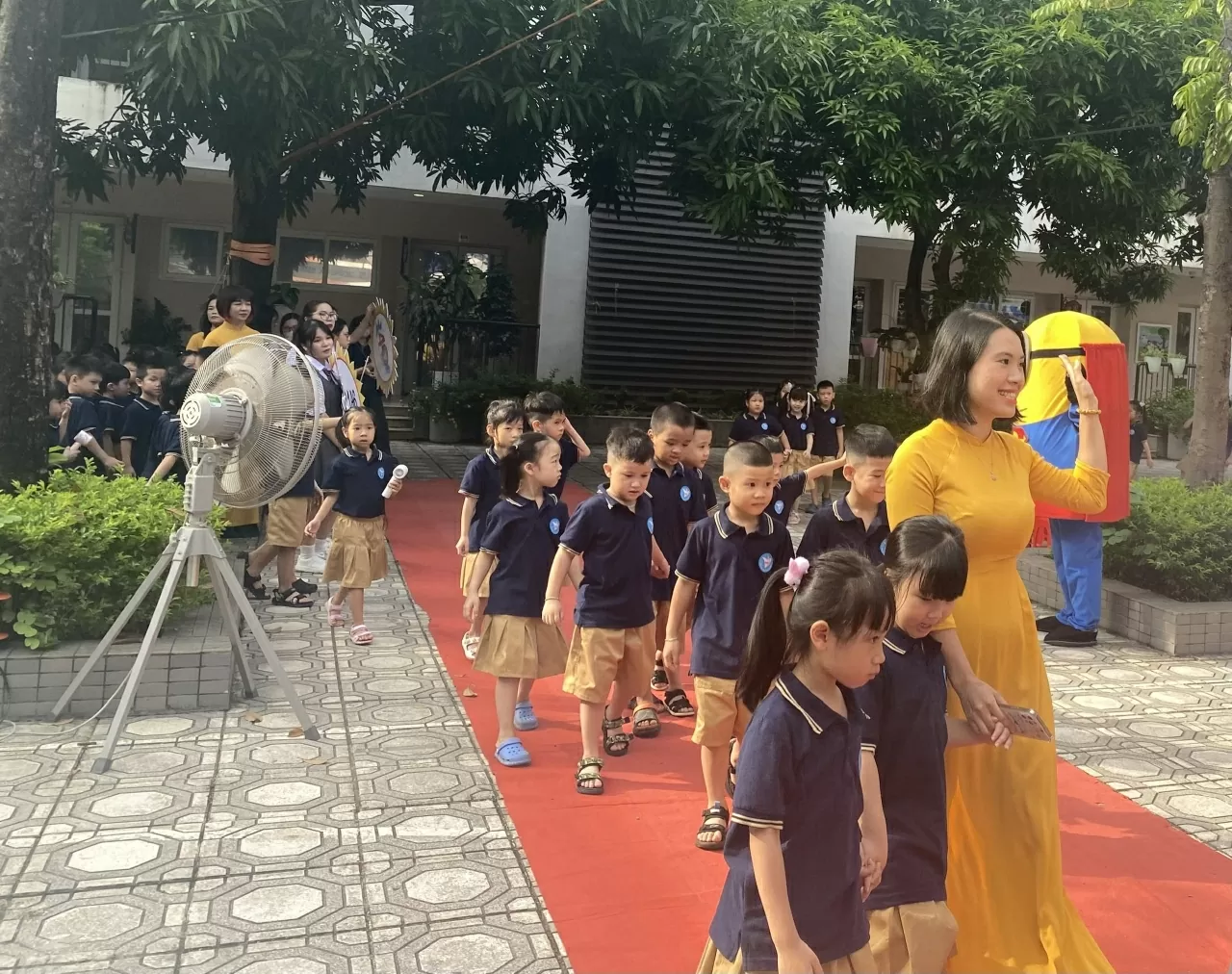
| Teacher Than Phuong Quyen and students from Kim Giang Primary School (Khuong Dinh, Hanoi City). (Photo: Nguyet Anh) |
A strong education system cannot rely solely on teachers who only lecture but also those who listen to students, guide, inspire; respect differences; and use technology wisely. Most importantly, they must maintain the flame of their profession.
Educational reform cannot be achieved solely through policies, resolutions, or financial investments. It succeeds when each teacher, with their intellect, love for the profession, and character, creates change in every lesson, every pedagogical act, every care for students.
A reformed lesson can inspire a classroom. A change in assessment methods can unlock a student's potential, but a timely word of encouragement can change a child's life. Therefore, educational reform does not start with grand gestures but with small, persistent, and heartfelt changes from teachers.
A strong Vietnam cannot exist without a strong education system
In a recent sharing, former Vice President Nguyen Thi Binh stated that in the new development phase of the country, the demand for high-quality human resources is increasingly urgent, making the task of the Education sector heavier than ever. She expressed her concerns and discussions with Minister of Education and Training Nguyễn Kim Sơn on key issues, such as how to develop the younger generation comprehensively in terms of physical, moral, and character; the crucial role of higher education in training high-quality human resources; the development of the teaching workforce; and the need for state policies to create job opportunities to encourage overseas students to return home and contribute.
Particularly, former Vice President Nguyen Thi Binh emphasized that the Education sector is receiving profound attention from the Party and the State, clearly reflected in Resolution No. 71-NQ/TW, which identifies "education and training as the top national policy, determining the nation's future". Sharing the responsibilities and challenges of the sector, the former Vice President expressed hope that the entire sector will continue to strive and be more effective to deserve the great trust and attention of the Party and the State; she also wished the Education sector strong development to meet the increasing demands of the country.
In the era of global competition, the strength of each nation is not only measured by GDP, military potential, or natural resources. That strength is measured by the quality of human resources – individuals with thinking, capability, aspiration, and courage. To have strong human resources, there must be a strong education system. To have a strong education system, there must be a strong team of educators. And to have a strong team, it must begin with reform from each teacher.
A strong Vietnam cannot be built by generations of students who memorize, lack creativity, lack critical thinking, and lack aspiration. A strong Vietnam must be built by individuals who are inspired, whose potential is unlocked, and who are taught by dedicated, intelligent, and responsible teachers.
Looking ahead, Vietnamese education stands before a historic opportunity. But that opportunity will only become reality with the joint effort of the entire society and especially the strong, persistent reform from the teaching workforce. The Teachers' Law has been enacted, strategic resolutions have been issued, policies are changing, but the most important thing remains the change within each teacher.
Educational reform does not begin with macro-level plans. It begins with the loving gaze when teachers enter the classroom, with the preparation of a more lively lesson, with small shares with students who face many difficulties, with the belief that education can change a person's life.
And from these simple changes, the future of a strong Vietnam will be shaped.