



Vietnam-Sri Lanka Buddhism: Opening the way for spiritual tourism development (Part 3)
WVR - On the map of Asia's Buddhist heritage, Vietnam and Sri Lanka are bound together by sacred relics and a current of cultural exchange that has endured for thousands of years. Buddhist tourism opens up not only economic value but also becomes a bridge connecting people, history and spiritual values that transcend all borders.
Latest
2026 marks a clear upturn for the tourism industry in both Vietnam and Sri Lanka. According to Vietnam's National Tourism Administration, in the first five months of the year Vietnam welcomed roughly 10.6 million international visitor arrivals, up 14.9% year-on-year, with total tourism revenue reaching around VND 470 trillion - the highest figure ever recorded for the period.
Meanwhile, according to a February 2026 report from the Sri Lanka Tourism Development Authority (SLTDA), the country also entered a period of impressive growth, with international arrivals in the first two months rising nearly 13%, February alone recorded more than 279,000 arrivals, the highest monthly figure since the country began compiling tourism data.
Behind these numbers lie journeys that carry far more meaning than an ordinary holiday. It might be the footsteps of a young Vietnamese traveller heading to Sri Lanka to pay homage at Buddhist relics and feel the peace in every ritual and every warm smile of the local people. It can also be told through the lens of researchers examining how Buddhism weaves a transnational heritage network, becoming a sustainable channel of people-to-people diplomacy between the two nations.
Journey to the “Land of the Buddha”
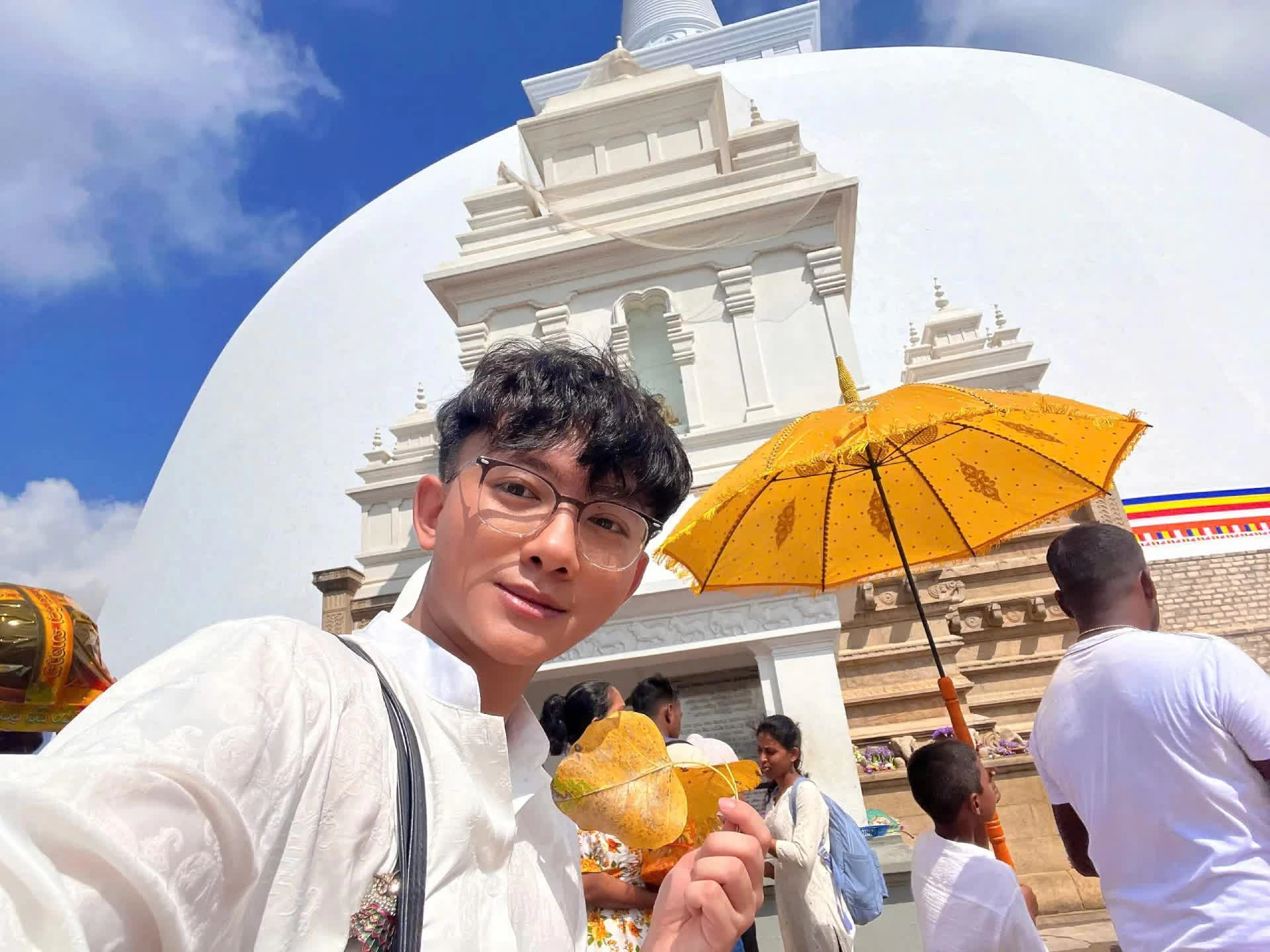 |
| Young traveller Le Nhat Nam visits the ancient city of Anuradhapura, Sri Lanka. (Photo: Courtesy of the interviewee) |
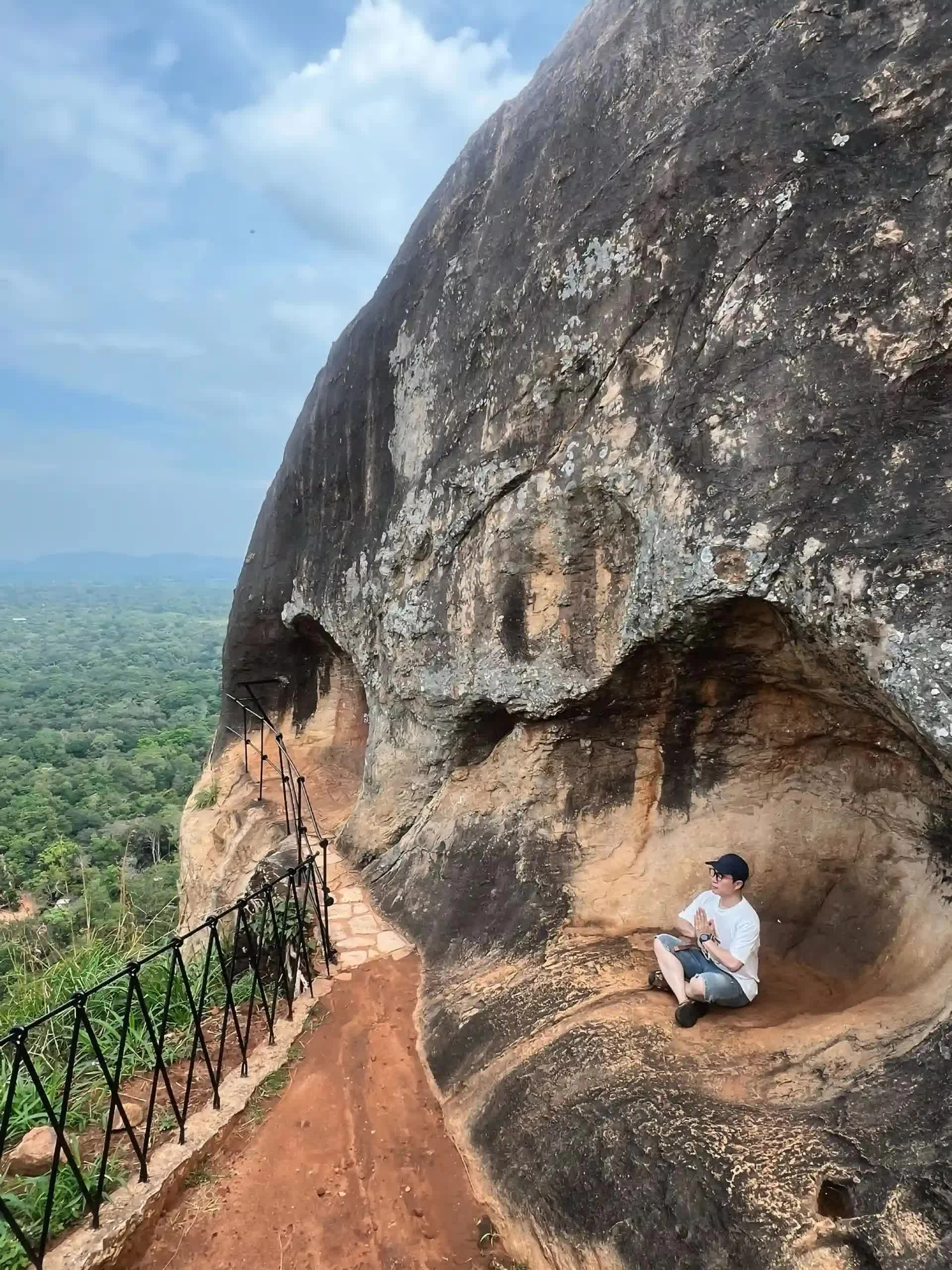
In late 2025, after a flight lasting more than eleven hours from Hanoi to Bandaranaike International Airport in Colombo, young traveller Le Nhat Nam and his tour group landed on the beautiful island nation of Sri Lanka, beginning a journey to explore the “Land of the Buddha”.
Mr. Nam's connection to Buddhism began at the age of nine, and he has spent many years since studying and practising its teachings. For him, the trip to Sri Lanka was seen as a journey back to values that had long been quietly nurtured within him.
Contrary to his expectations of an international airport awash with advertising and information screens, what first struck Le Nhat Nam was a statue of Shakyamuni Buddha placed in a position of honour.
“I saw many passengers stop and press their palms together in front of the statue. At that moment, one thought was very clear in my mind: every path leads back to the Buddha”, he recalled.
That impression grew even stronger over the week he spent in Sri Lanka. On the road from Colombo to the ancient capital of Anuradhapura, Mr. Nam found Buddha statues in front of almost every house, present in people's living spaces and daily routines. “At one point I tried counting how many houses with Buddha statues I passed, but I gave up after just a few minutes because almost every house had one”, he said.
During his week-long stay in Sri Lanka, Mr. Nam had the chance to live directly within a temple's daily life and to meet with monks in the ancient capital of Anuradhapura.
One memory that has stayed with him is the warm welcome extended by the monks from his very first hours in Sri Lanka. Even though it took many hours to travel from the temple to Colombo airport to collect his group and then return to Anuradhapura, the monks stayed up until nearly two in the morning preparing accommodation, arranging meals and checking in on every member of the group.
“What moved me was the sincerity in the way the monks treated us. Even though we came from two different countries, we were welcomed like friends”, he shared.
Many of the monks' fluency in English meant the language gap was almost erased. Conversations flowed openly and naturally, ranging from Buddhist teachings to culture, daily life and everyday stories. Through this, Mr. Nam clearly felt a spirit of Buddhism that was warm and deeply humane, one that placed great value on human connection.
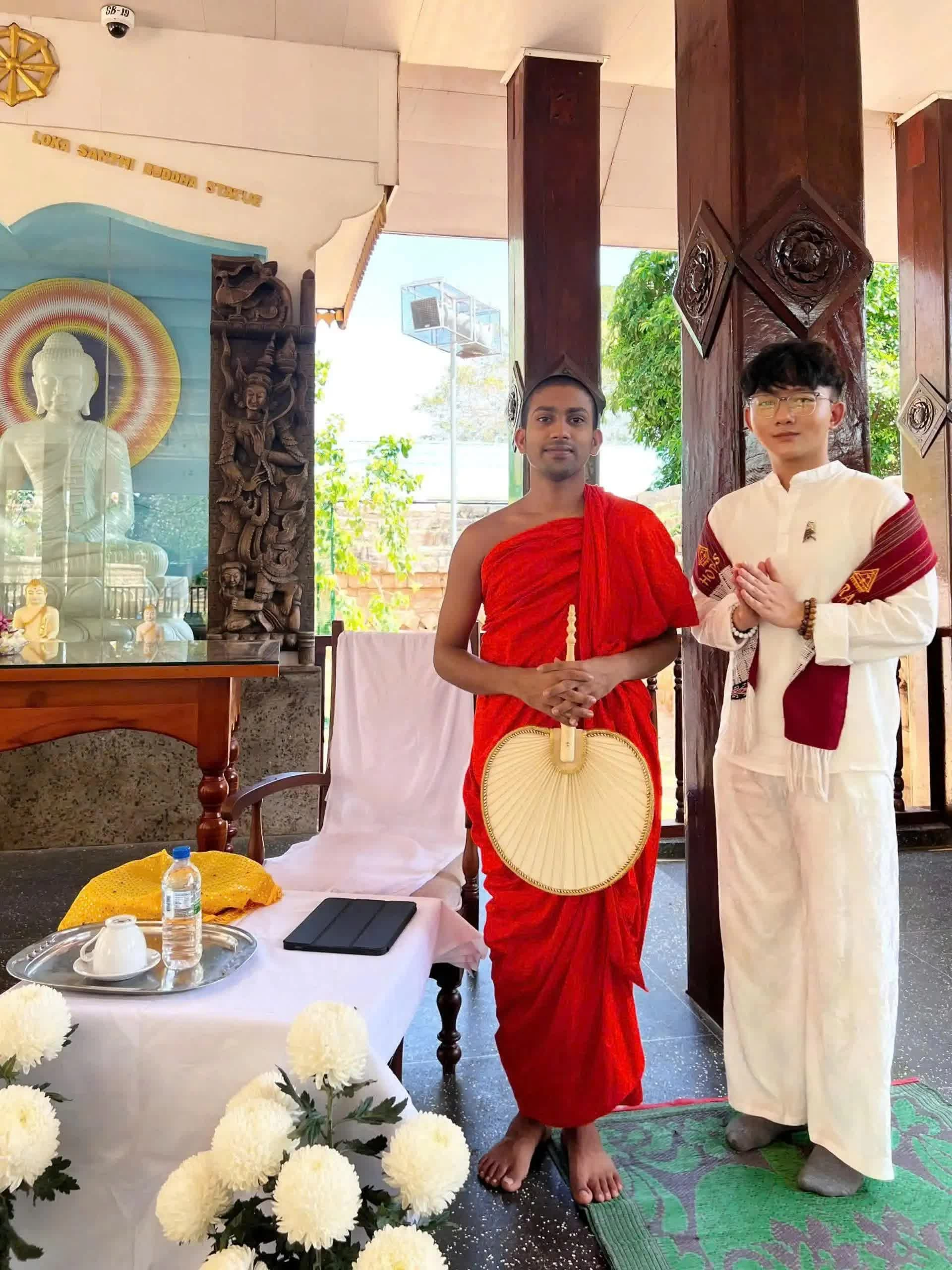 |
| Le Nhat Nam meets Sri Lankan Venerable Thibbatuwewe Wajiragnana. (Photo: Courtesy of the interviewee) |
Moreover, true to its name as the “Land of the Buddha”, Buddhism in Sri Lanka has deeply permeated everyday life. During his stay, Mr. Nam spent much time observing how local people carry out pilgrimages at sacred sites.
Under the fierce sun, everyone walked barefoot as required, quietly offering flowers, paying homage to the Buddha and maintaining a solemn dignity.
Extending the bridge of friendship
According to Mr. Nam, the differences between Sri Lankan and Vietnamese Buddhism lie mainly in outward form including temple architecture, rituals and monastic dress.
Yet behind these differences, the same core values remain fully preserved: “No matter which country it is practised in, Buddhism always guides people toward awakening, tolerance and a life of goodness”.
Over the course of his stay in Sri Lanka, Le Nhat Nam found that Vietnam was no stranger to many of the monks and Buddhists there.
Over the years, pilgrimage groups from Vietnam have regularly travelled to Sri Lanka to venerate its sacred relics, learn about Buddhist tradition and exchange with the local Buddhist community. That sustained connection created a sense of familiarity from the very first days the group set foot in the South Asian island nation.
Vietnam's image here was conveyed not through introductions or diplomatic remarks, but through the openness with which local people and monks welcomed Vietnamese pilgrims.
“No one told me directly what they thought of Vietnam or Vietnamese Buddhism. But sometimes, the way someone treats you is far more honest than any comment. Through my own experience, I could feel the goodwill and respect they held for Vietnamese people”, Mr. Nam shared.
Buddhism, it seems, has gradually forged a natural bond between the peoples of the two countries. Despite differences in language and culture, every distance seems to narrow when people share the same faith and common values: “When we stand together before a stupa, offer the same flower, or press our palms together before the Buddha, what remains is not our differences but a sense of harmony among people who all strive toward goodness”.
According to Mr. Nam, it is precisely these pilgrimages, academic activities and exchanges among monks, nuns, scholars and Buddhists that have helped both sides understand each other's cultures better, contributing to the friendship between the two nations.
Travelling to return to oneself
Looking back on the trip, Le Nhat Nam says the most valuable thing he gained was a different perspective on other people, and on himself.
The value of Buddhism, he found, is not something distant, it is expressed through how people treat one another with sincerity, compassion and respect in the simplest of moments.
“There was a big shift in my awareness after this trip. Before, when I looked at someone, I think I tended to focus mostly on their strengths or their shortcomings. But Sri Lanka taught me to look at each person's imperfections with a more tolerant heart. Everyone has their limits and things that remain incomplete. When we learn to accept our own imperfections, we also find it easier to be tolerant of others”, he shared.
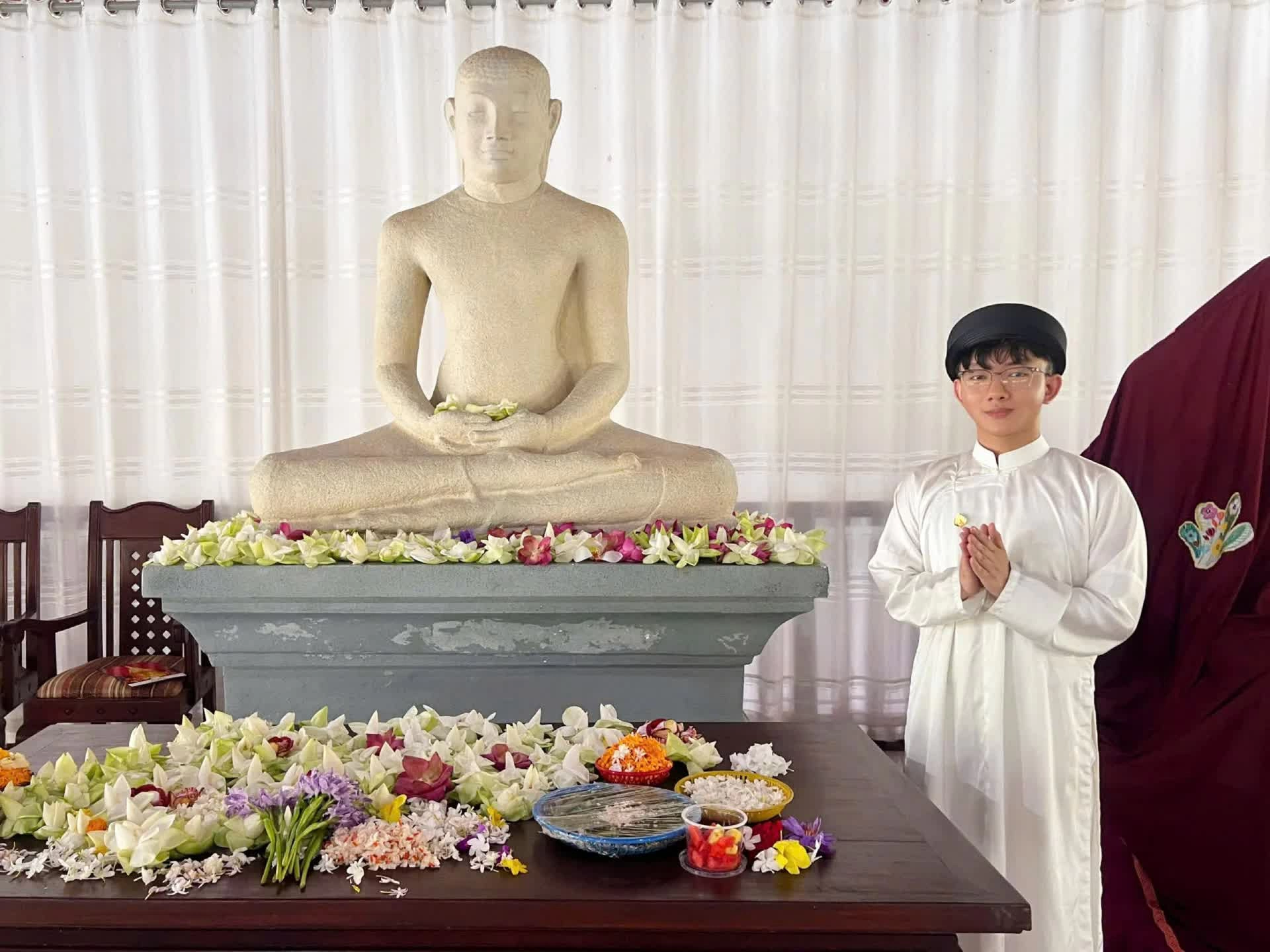 |
| Le Nhat Nam's journey in Sri Lanka is a beautiful testament to how Buddhism has become a natural bond. (Photo: Courtesy of the interviewee) |
For Mr. Nam, the journey also helped him feel more clearly the meaning of cultural exchange and connection between the peoples of the two nations. Despite differences in language, history and cultural identity, Vietnam and Sri Lanka still find harmony through values nurtured across generations: compassion, a spirit oriented toward goodness, and the aspiration to build a compassionate community.
Mr. Nam said: “Trips like this help us understand another country better, and in turn bring people closer together. Perhaps that is the greatest gift Sri Lanka has given me”.
Le Nhat Nam's journey in Sri Lanka is a beautiful testament to how Buddhism has become a natural bond, strengthening the friendship between the peoples of Vietnam and Sri Lanka.
From shared affinities in faith and virtuous values, the trip opened up hopes for an ever-deeper relationship of cultural exchange, one in which mutual understanding and tolerance continue to weave bridges of friendship that transcend geographic distance.
From these seemingly personal stories, how can Buddhism become a foundation for developing spiritual tourism and connecting heritage between Vietnam and Sri Lanka? To answer this question, the World and Vietnam Report spoke with Dr Trinh Le Anh - lecturer at the Faculty of Tourism Studies, University of Social Sciences and Humanities, Vietnam National University, Hanoi about the role of Buddhism in developing tourism between the two countries and shaping a transnational heritage network.
Three dimensions of Buddhism's connective role in Asian tourism
From the perspective of a tourism and heritage researcher, Dr Trinh Le Anh argues that Buddhism can be seen as an important cultural-religious frame of reference connecting many countries across Asia. This connection lies not only in shared religious faith but is also expressed through historical currents of movement, art, architecture, ritual, pilgrimage and everyday practice.
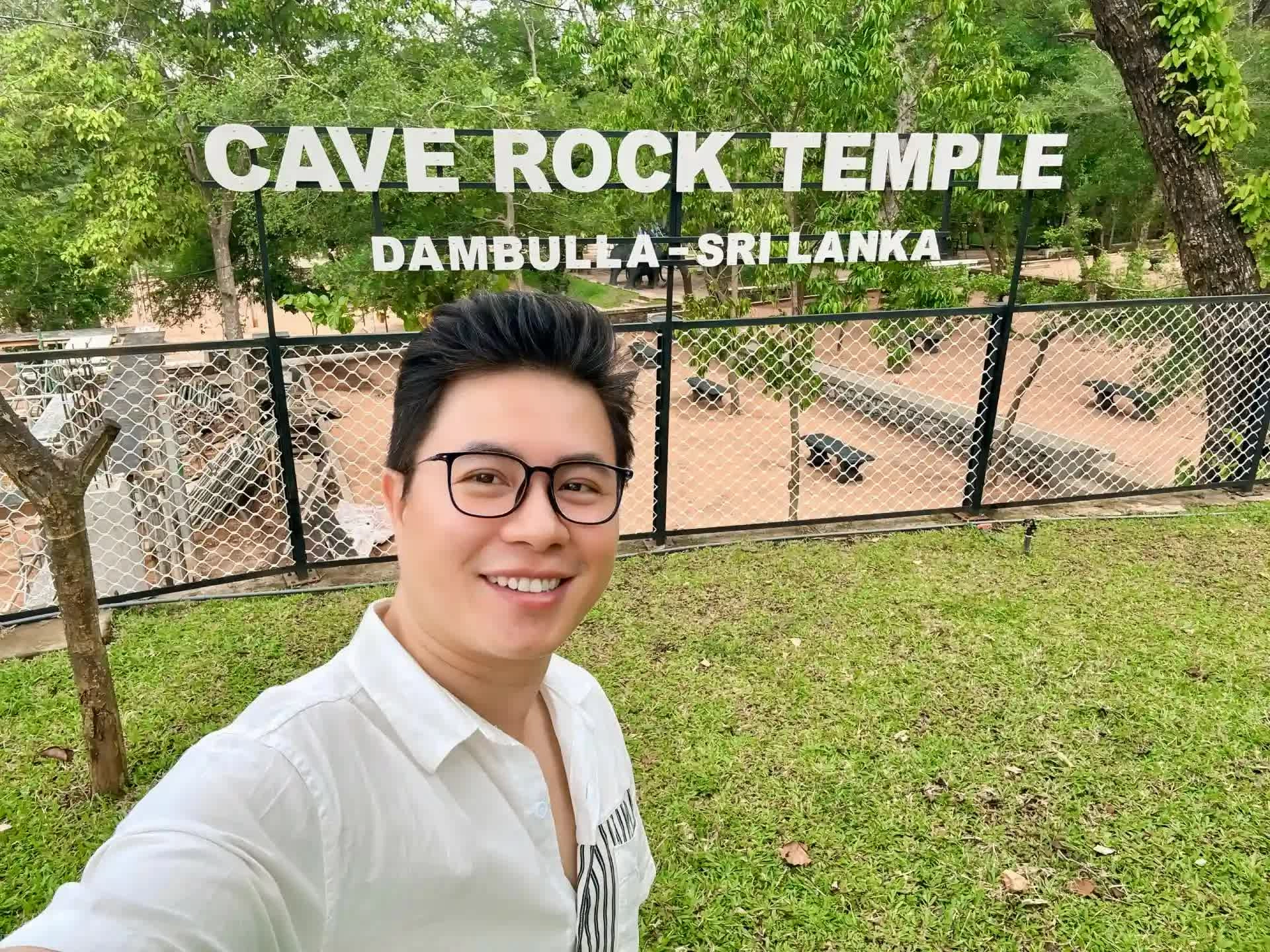 |
| Dambulla Cave Rock Temple - Sri Lanka’s renowned cave temple, where mountain rock, Buddha statues and murals come together to create a uniquely sacred space. (Photo: Courtesy of the interviewee) |
| “For centuries, Buddhism spread along trade routes, through monastic-academic centres, through royal patronage and through networks of monastic orders. As a result, across Asia we can recognise heritage structures that are interlinked: the Bodhi tree, stupas, relics, Buddha statues, Buddhist caves, monasteries, festivals, flower-offering rituals, pilgrimage and codes of conduct within sacred spaces. These elements create a shared recognisability between destinations, even as each country has developed its own form of Buddhism according to its own historical, cultural and social context”. |
According to Dr Trinh Le Anh, viewing Buddhist destinations within their transnational connections carries particular significance for tourism development. Rather than being seen as isolated attractions, sites such as Bodh Gaya (India), Anuradhapura and Kandy (Sri Lanka), Bagan (Myanmar), Ayutthaya (Thailand), Borobudur (Indonesia), or Yen Tu, Huong Pagoda and Bai Dinh (Vietnam) can all be placed within the broader network of Asian Buddhist heritage.
However, Dr Trinh Le Anh stresses that interconnection does not mean uniformity. Differences between Theravada, Mahayana and Vajrayana Buddhism have produced diverse expressions in architecture, ritual, art, monastic life and pilgrimage practice.
“It is precisely this blend of shared and distinct elements that gives Buddhist tourism in Asia its depth: visitors not only recognise familiar symbols, but also have the opportunity to understand how each local community has indigenised Buddhism into its own memory, landscape and way of life”.
Dr Trinh Le Anh identifies three notable dimensions through which Buddhism's connective role in Asian tourism can be understood.
First is the historical dimension: Buddhism travelled alongside the spread of ideas, trade, monastic orders, royal power and cultural exchange.
Second is the spatial dimension: sacred sites, monasteries, stupas, Bodhi trees and pilgrimage routes together form a heritage map that transcends national borders.
Finally, there is the human dimension: visitors who enter Buddhist spaces with understanding and respect have the opportunity to engage with values such as compassion, restraint, respect for life and awareness of impermanence.
In other words, Buddhism connects destinations not only through monuments but also connects communities through memory, practice and values capable of cross-cultural dialogue. If well managed, Buddhist tourism can become not merely a tourism product line but a meaningful channel of cultural exchange among Asian nations.
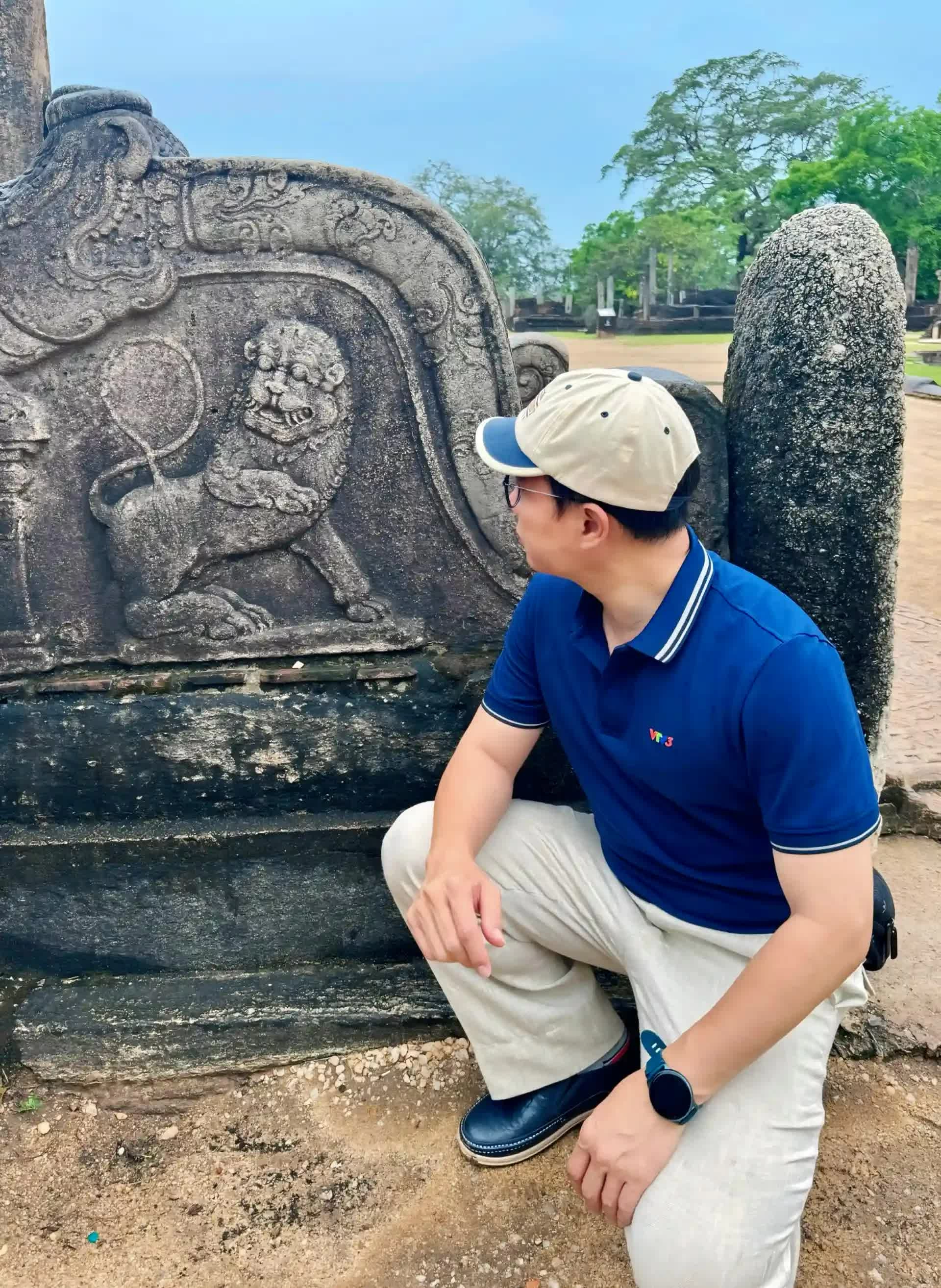 |
| Audience Hall, Polonnaruwa - beside the stone lion in the palace complex of King Parakramabahu I. While not a direct Buddhist sacred site, it is part of the ancient capital where royal power and Buddhism were closely intertwined in medieval Sri Lankan history. (Photo: Courtesy of the interviewee) |
Sri Lanka and Vietnam both have long-standing Buddhist foundations, but follow two different traditions: Theravada and Mahayana. Dr Trinh Le Anh explains that this difference stems above all from the underlying Buddhist tradition and the way Buddhism has entered social life in each country. Sri Lanka is one of the key centres of Theravada Buddhism in South Asia. Vietnamese Buddhism, meanwhile, has mainly developed within the Mahayana tradition and has also blended quite deeply with folk beliefs including the worship of the Mother Goddesses, ancestor veneration, the veneration of national heroes, and local historical memory.
“Because of this difference, the way spiritual tourism experiences are organised also carries its own distinct character. In Sri Lanka, at destinations such as Anuradhapura, Polonnaruwa or Kandy, the sacred and pilgrimage-based nature of the sites is clearly emphasised. Buddhist spaces there are typically linked to the Bodhi tree, stupas, relics, Buddha statues, processions of pilgrims dressed in white, flower-offering rituals, walking barefoot, and fairly strict codes of conduct within sacred areas. This gives visitors the sense of entering a religious space that is still actively practised, rather than simply a heritage site to view”.
Looking from Sri Lanka toward Vietnam's spiritual tourism
Assessing spiritual tourism in Vietnam, the lecturer from the Faculty of Tourism Studies at the University of Social Sciences and Humanities, Hanoi, says Vietnamese spiritual tourism is usually set within a broader cultural structure, where a destination is not just a pagoda but also mountains, forests, festivals, legends, villages, cuisine, New Year pilgrimages, prayers for peace and prosperity, and commemoration of ancestors. He cites Yen Tu as an example - a Buddhist space also tied to the Buddha King Tran Nhan Tong, the Truc Lam Zen tradition, national history and the mountainous landscape of the north-east. “It is precisely this interweaving that gives Vietnamese spiritual tourism its highly integrative character”, he notes.
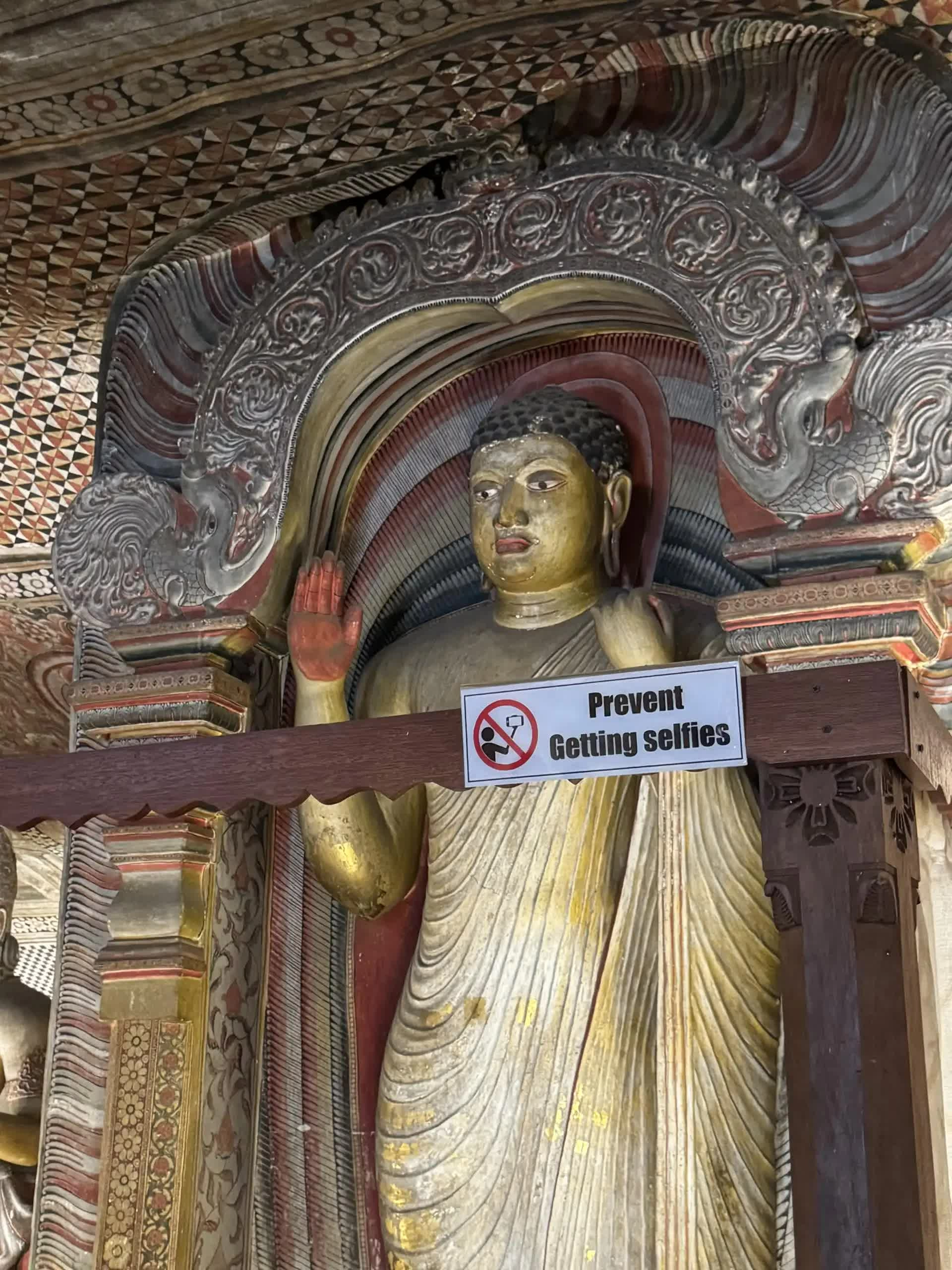 |
| Dambulla Cave Temple - inside the cave temple, a small sign reading “Prevent Getting Selfies” serves as a clear reminder: before Buddha statues, visitors should know where to draw the line out of respect. (Photo: Courtesy of the interviewee) |
According to Dr Trinh Le Anh, the spiritual tourism traditions of Vietnam and Sri Lanka should not be seen as two opposing models but as two different expressions of Buddhist heritage in tourism. Where Sri Lanka demonstrates the strength of preserving sacred boundaries where visitors must adjust their behaviour to fit the religious space, Vietnam has an advantage in integrating Buddhism with landscape, history, festivals, folk beliefs and community life.
From a tourism-product development perspective, Sri Lanka can offer Vietnam a lesson in restraint and solemnity within sacred spaces. Conversely, Vietnam demonstrates the capacity to develop spiritual tourism complexes as a broader cultural-landscape-community ecosystem. The challenge for both countries is how to widen visitor access without diminishing religious meaning, and without turning sacred spaces into mere sites for consuming images.
Overall, Dr Trinh Le Anh emphasises that although Sri Lanka and Vietnam differ in their Buddhist traditions, the two countries can complement one another in their thinking on spiritual tourism development. “One side emphasises sacred relics, pilgrimage and codes of conduct; the other stands out in its ability to blend Buddhism with history, landscape and local culture. If well managed, these differences need not create distance between the two countries, instead they can add further depth to Buddhist tourism exchange between them”.
| "From what I observed during my trip to Sri Lanka, major Buddhist sacred sites such as Anuradhapura or Kandy are managed first and foremost as religious spaces still in active practice, not merely as tourist attractions. This is a notable point. Visitors are allowed access, can tour the sites and take photographs in appropriate areas, but must adjust their behaviour to the norms of a sacred space: dressing modestly, removing footwear, walking barefoot, maintaining order, not turning their backs to pose in front of Buddha statues, and not treating religious symbols as casual photo backdrops. Such rules can create some inconvenience for visitors, especially international tourists unfamiliar with local culture. But from the standpoint of religious heritage management, this controlled inconvenience carries real meaning. It reminds visitors that they are entering a place that holds the spiritual life of a community, where visiting must come together with respect. In other words, in Sri Lanka, tourism is allowed to exist within sacred space, but should not overwhelm it. Turning to Vietnam, the strong growth of spiritual tourism in recent years has brought many positive effects. Complexes such as Yen Tu, Bai Dinh, Tam Chuc and other destinations have helped improve infrastructure, expand access to heritage sites, extend visitor stays, create local livelihoods, and bring religious, historical and cultural values closer to the public. Many young people, families and international visitor groups have come to know Vietnam's Buddhist spaces precisely through these tourism products". |
However, Dr. Trinh Le Anh notes that when construction scale becomes too large, service density too dense, visitor flow too heavy, or when publicity places too much emphasis on grandeur, the sense of sacredness can be diminished. He observes that if a destination becomes known chiefly for its cable cars, car parks, service zones, photo-check-in spots or records for scale, religious heritage can easily be pushed from its central place into merely one component of a tourism-consumption package.
To identify signs of excessive commercialisation at spiritual tourism destinations, Dr Trinh Le Anh points to several indicators worth noting:
First, whether the sacred core is protected: areas for rituals, worship, meditation and prayer need their own rules on dress, noise, photography, crowd flow and conduct. Second, whether commercial activity is clearly zoned: stalls, souvenirs, food services, events and advertising should not encroach on the sacred area. Third, whether visitors are given adequate explanation: a “prohibited” sign is usually less effective than helping visitors understand why they should move quietly, speak softly, dress appropriately, or avoid posing inappropriately in front of Buddha statues. Fourth, whether the local community and religious bodies have a genuine voice in the governance of the destination. Finally, whether tourism revenue is reinvested in conservation, the environment and community livelihoods.
Still, he stresses that the issue should not be framed as an opposition between “the spiritual” and “the commercial”. In his view, spiritual destinations still need synchronised infrastructure, professional services, safety, hygiene, the capacity to receive visitors, and financial resources for conservation. What matters is setting the right limits and the right order of priorities. “Commerce can serve heritage, but it should not lead the way people experience that heritage. Services can support pilgrimage, but they should not blur the spirit of pilgrimage”.
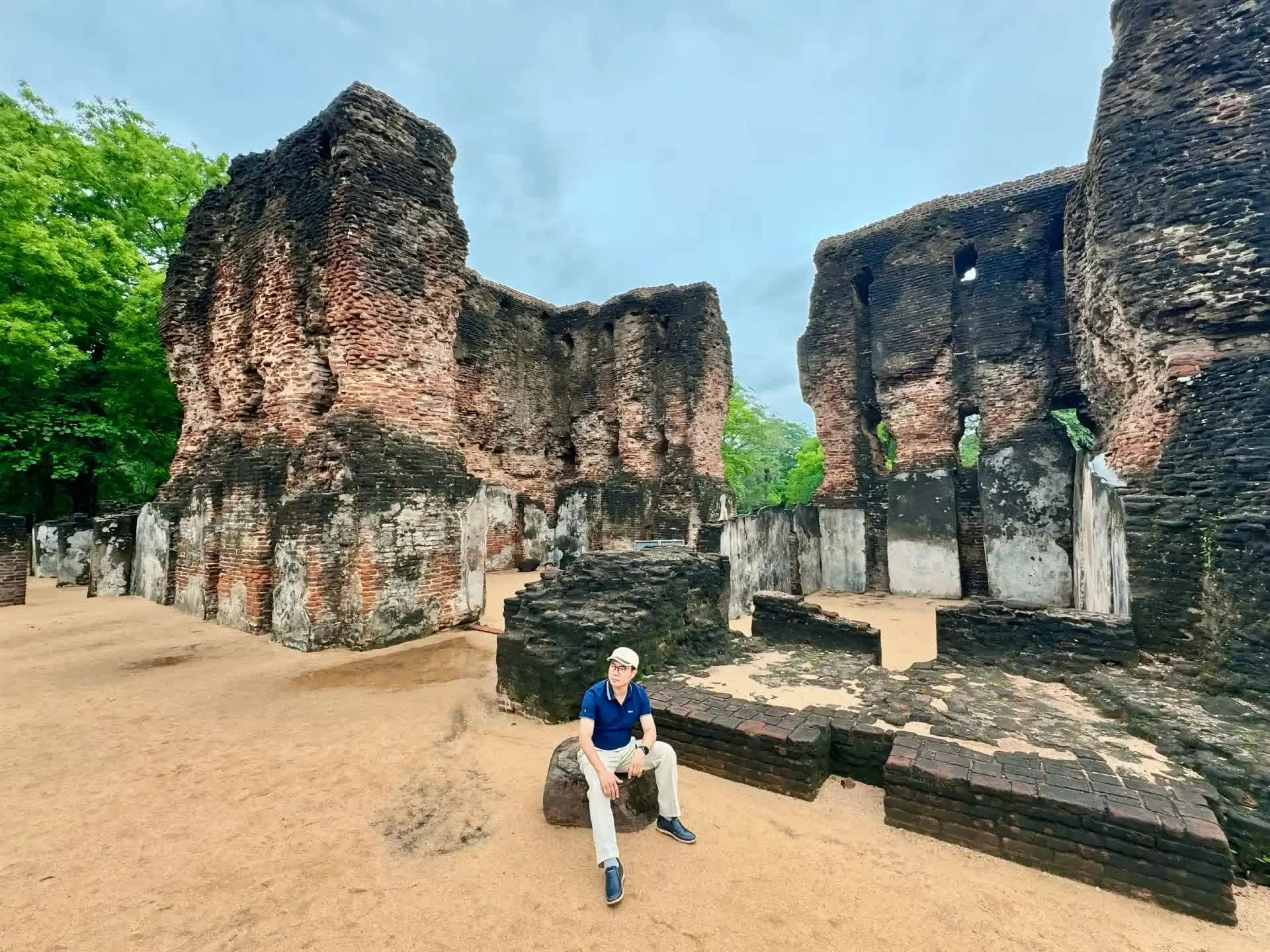 |
| Amid the ancient brick walls of Polonnaruwa, history is not a distant story, but a space that still invites those who pass through to slow down. (Photo: Courtesy of the interviewee) |
Placing Sri Lanka and Vietnam side by side, he says Vietnam could draw on Sri Lanka's approach to maintaining behavioural boundaries within sacred spaces. Rules such as walking barefoot, dressing appropriately, avoiding inappropriate poses with Buddha statues, and keeping quiet within ritual areas are not merely matters of etiquette, they are a way of educating visitors through direct experience. Vietnam could strengthen the zoning of space: sacred core, sightseeing zone, service zone and commercial zone, while also enhancing cultural interpretation so visitors understand why such conduct matters.
Conversely, Sri Lanka could also draw lessons from Vietnam in certain aspects of modern tourism organisation. Vietnam has experience in developing access infrastructure, organising tour routes, managing visitor flows, building products that combine landscape, culture and festivals, and applying relatively dynamic destination communications. For its major sacred sites, improving the quality of guided interpretation, multilingual signage, services for elderly and disabled visitors, public sanitation, visitor-flow management and digital transformation in heritage presentation are directions Sri Lanka could continue to develop.
The doctor offers a shared lesson for both countries: spiritual tourism cannot be measured only by visitor numbers or revenue. It must be assessed by its ability to protect the dignity of sacred spaces, the degree of participation and benefit for local communities, the quality of cultural interpretation, environmental impact, and its capacity to send visitors away with deeper understanding. If a spiritual destination draws more visitors while behaviour becomes coarser, the community is heard less, the environment bears heavier strain, and religious value is diluted, that cannot be considered successful development.
Therefore, the key question is not choosing between conservation and development, but designing a development model that places conservation at its foundation. Sri Lanka offers experience in preserving restraint and respect for sacred space, while Vietnam shows the potential to organise spiritual complexes as part of a broader tourism ecosystem. He concludes that, approached objectively and harmoniously, the two models can complement each other, helping to improve the effectiveness of sustainable spiritual tourism development.
For spiritual tourism to truly contribute to people-to-people diplomacy
Looking beyond destination management, the doctor says spiritual tourism can become a very natural channel of people-to-people diplomacy between Vietnam and Sri Lanka, given the many points of convergence the two countries share in cultural history, Buddhist life and communal consciousness.
“Relations between nations are not built through state diplomacy, trade or investment alone, but also through soft contact between people. In such contact, religion and spiritual heritage often have the power to create deep closeness, because they touch on faith, memory and the way a community views life.”
Sri Lanka has especially important Buddhist relics such as Anuradhapura, Kandy, Polonnaruwa, the Bodhi tree, the Temple of the Sacred Tooth Relic, and pilgrimage spaces that remain vividly practised. Vietnam has Yen Tu, Huong Pagoda, Bai Dinh, Tam Chuc, Hue, Ninh Binh, a network of village pagodas, and many Buddhist centres tied to national history. Dr Trinh Le Anh believes that, if connected sensibly, these destinations could form Vietnam-Sri Lanka Buddhist exchange routes, not only for pilgrims, but also for scholars, monks and nuns, students, tour guides, heritage managers and local communities.
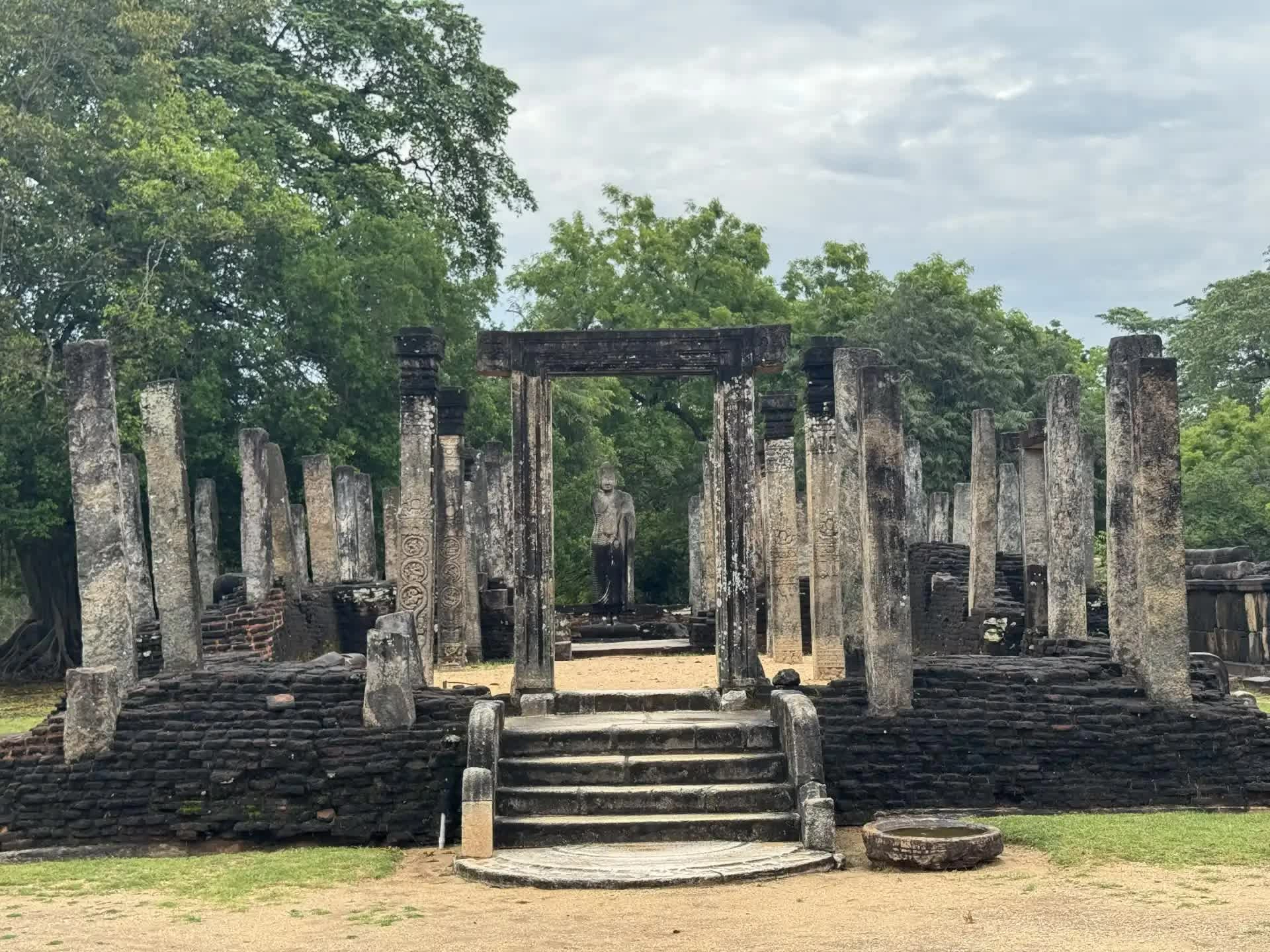 |
| Atadage, Sacred Quadrangle, Polonnaruwa - the surviving stone columns of a structure once associated with the veneration of the Buddha’s Tooth Relic, where royal power and Buddhism coexisted in medieval Sri Lankan history. (Photo: Courtesy of the interviewee) |
The first contribution of spiritual tourism is direct cultural understanding. A Vietnamese visitor who removes their shoes to enter the Temple of the Sacred Tooth Relic in Kandy, and watches Sri Lankans dressed in white offering flowers, comes to understand Theravada Buddhism not through textbook concepts but through concrete experience. Conversely, a Sri Lankan visitor to Yen Tu, hearing the story of Buddha King Tran Nhan Tong and the Truc Lam Zen tradition, will see how deeply Vietnamese Buddhism is bound to national history, engaged thought, and mountain-forest landscapes. Such experiences help both sides recognise difference without estrangement, and closeness without sameness.
The second contribution is the expansion of cultural and educational cooperation. From spiritual tourism, the two countries can develop exchange programmes on Buddhist heritage conservation, sacred-site management, specialised guide training, comparative research on Theravada and Mahayana Buddhism, photo exhibitions, cultural weeks, academic conferences, and exchanges between tourism training institutions. These are sustainable forms of people-to-people diplomacy, since they do not stop at bringing visitors to a site but instead build networks of knowledgeable people capable of sustaining the connection further.
The third contribution is helping to build national image. A country known through its spiritual heritage tends to be seen not just as a market or a holiday destination, but as a culture of depth. For Sri Lanka, that means the image of a gentle island nation with a long Buddhist life and sites of major importance to Asian Buddhism. For Vietnam, it means the image of a country whose Buddhist tradition is woven into history, community, landscape and humanist spirit. When these two images meet, tourism can help bring the bilateral relationship closer in the eyes of the public.
 |
| Royal Palace of King Parakramabahu I, Polonnaruwa - amid the ancient brick walls, traces of a once-thriving capital remain clearly visible. (Photo: Courtesy of the interviewee) |
For spiritual tourism to genuinely contribute to people-to-people diplomacy, he stresses, religion must not be turned into a mere promotional tool. If Buddhist symbols are used only to create products, sell tours or organise events without cultural understanding, the effect can backfire. Spiritual tourism must be built on respect: respect for ritual, respect for practising communities, respect for differing traditions, and respect for the limits of sacred space.
He also proposes several concrete directions for cooperation between Vietnam and Sri Lanka: developing specialised Buddhist tourism routes, strengthening exchanges between managers of spiritual destinations, developing bilingual interpretive materials, connecting training and research institutions, and encouraging the participation of monks, nuns, scholars, artisans and guides in heritage interpretation. According to him, these initiatives would not only help attract visitors but also promote the exchange of knowledge and deepen goodwill and mutual understanding between the two peoples.
Dr Trinh Le Anh points out that the effectiveness of people-to-people diplomacy is sometimes built from small but meaningful experiences such as behaving appropriately within a spiritual space, or showing genuine respect for local culture. He believes that, if conserved and developed sustainably, spiritual tourism between Vietnam and Sri Lanka can become a cultural bridge, helping to deepen bilateral relations through mutual understanding and respect.
In sum, as tourism increasingly moves toward experiences of greater depth, Vietnam and Sri Lanka have considerable room to jointly develop spiritual tourism routes, connect heritage, and promote people-to-people exchange. When preserved and developed sustainably, these sacred lands will not only tell the story of the past but will continue to open new encounters in the present so that every traveller, after journeying so far, returns home with a deeper understanding of another culture, and with peace within themselves.
From the journey of young traveller Le Nhat Nam through the land of the Buddha in Sri Lanka, to Dr Trinh Le Anh's analysis of a transnational Buddhist heritage network, it is clear that spiritual tourism has touched on a journey of connecting people through understanding, respect and shared cultural values. When sacred lands are preserved with respect and connected through knowledge, tourism will not only connect travellers, it will also nurture mutual understanding and friendship between Vietnam and Sri Lanka.