





Love for President Ho Chi Minh: The flame that forged Vietnam-Sri Lanka friendship (Part I)
WVR - The enduring friendship between Vietnam and Sri Lanka was born of a shared aspiration for national liberation. Brought together by history, the two nations have cultivated a close friendship that has stood the test of time for more than half a century.
Latest
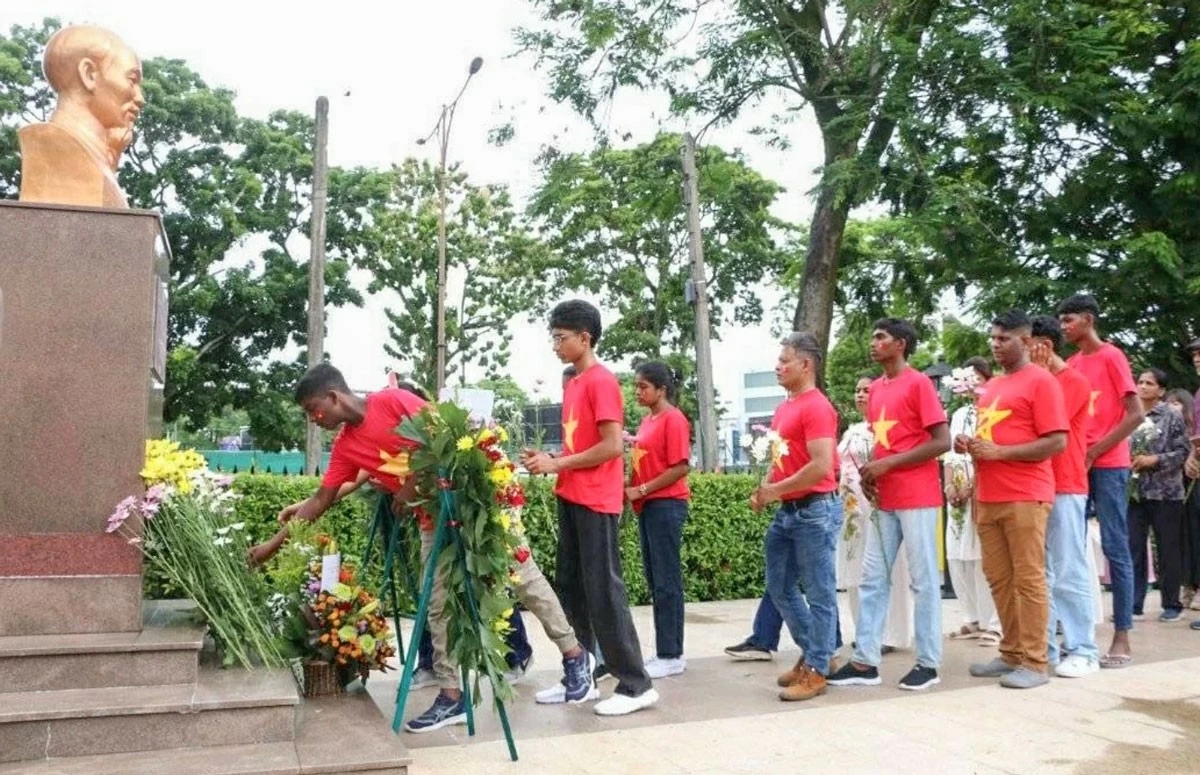 |
| Students of the Vietnamese language class lay wreaths at the statue of President Ho Chi Minh in Colombo to commemorate the 135th anniversary of his birth. (Source: Embassy of Vietnam in Sri Lanka) |
A bond forged by history
Historical records show that the ties between Vietnam and Sri Lanka began long before the establishment of diplomatic relations. On 30 October 1911, during his journey in search of a path to national salvation, the young Nguyen Tat Thanh (later known as President Ho Chi Minh) arrived at the Port of Colombo. The letters he sent to his father through the British colonial authorities, which are still preserved in the archives of the French intelligence service, constitute the earliest documentary evidence of the future Vietnamese leader's encounter with the “Pearl of the Indian Ocean”.
President Ho Chi Minh returned to Sri Lanka in 1928 and again in 1946, steadily strengthening bonds of solidarity with the country's progressive people and with movements advocating peace and national independence, both in Sri Lanka and across the wider world.
During this period, President Ho Chi Minh forged a close friendship with Sri Lankan revolutionary leader and national hero Hon. Philip Gunawardena. It was a meeting of aspirations for national liberation, of the shared determination to fight against colonialism and imperialism in pursuit of independence and freedom. From that point onwards, a special affection for Viet Nam began to take root among the people of Sri Lanka.
Throughout Vietnam's resistance war against the United States, the people of Sri Lanka organised numerous large-scale demonstrations in Colombo in solidarity with the Vietnamese people's just struggle for national independence.
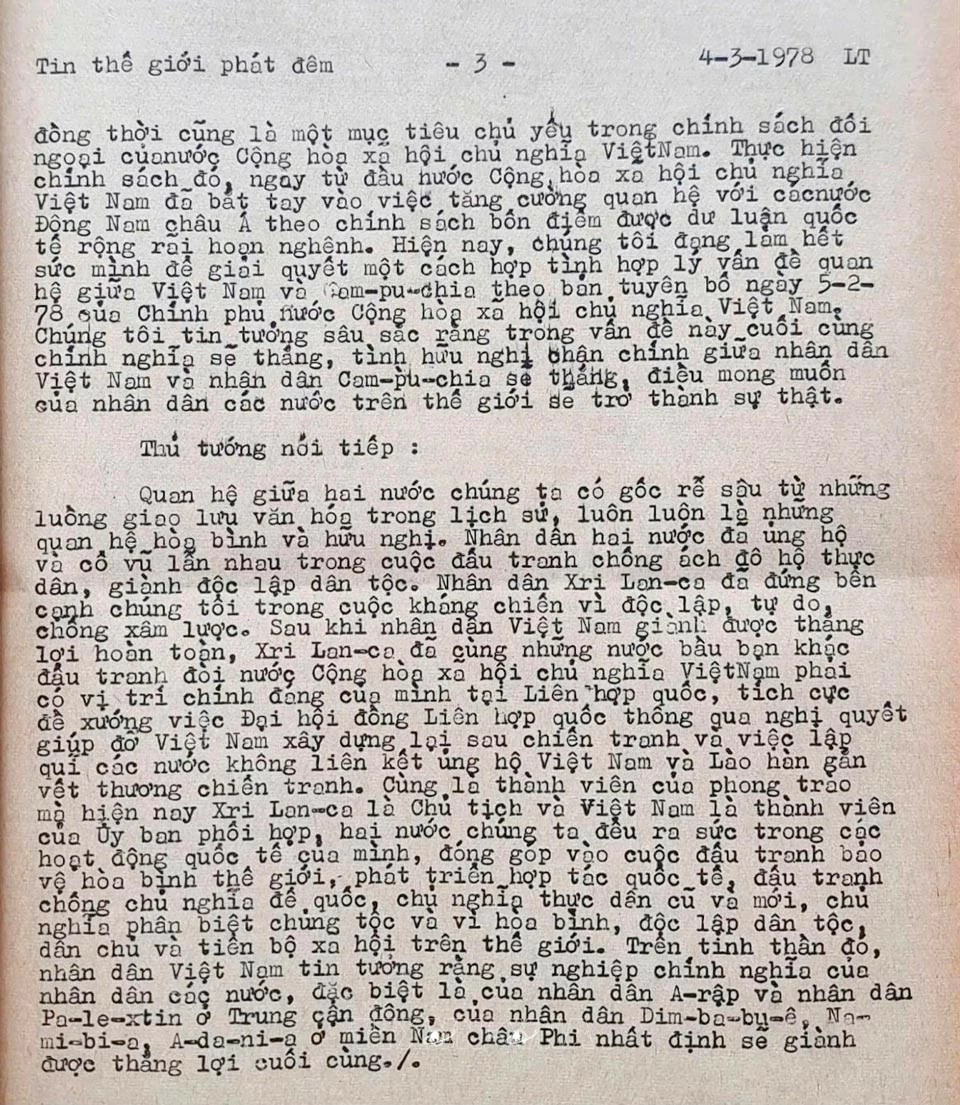 |
| Prime Minister Pham Van Dong's response to President J. R. Jayewardene, excerpted from the Vietnam News Agency's World News evening bulletin of 4 March 1978. (Source: VNA) |
Following the establishment of diplomatic relations on 21 July 1970 and the opening of Vietnam's Embassy in Colombo in 1971, the friendship between the two countries continued to deepen. During his official visit to Sri Lanka in March 1978, at the invitation of President J.R.Jayewardene, Prime Minister Pham Van Dong remarked:
“The relationship between our two countries is deeply rooted in the cultural exchanges that have existed throughout history. It has always been one of peace and friendship”.
He further noted that the people of Sri Lanka had stood firmly alongside Vietnam throughout its struggle for national independence and had continued to support the country in international forums following national reunification.
More than half a century later, that spirit of friendship continues to be cherished and passed on to new generations. Inaugurated in 2013, the President Ho Chi Minh Monument in Colombo not only commemorates his visits to the island nation but also stands as a lasting symbol of the Sri Lankan people's admiration for Vietnam's revered leader and of the enduring friendship between the two peoples.
Affection taking root in the S-shaped land
In December 2025, a musician from the distant island nation of Sri Lanka travelled to Vietnam, bringing with him songs that celebrate love and express hope for a peaceful and harmonious world. The World & Vietnam Report had the honor of meeting him after one of his compositions was awarded Third Prize at the 11th National External Information Service Awards.
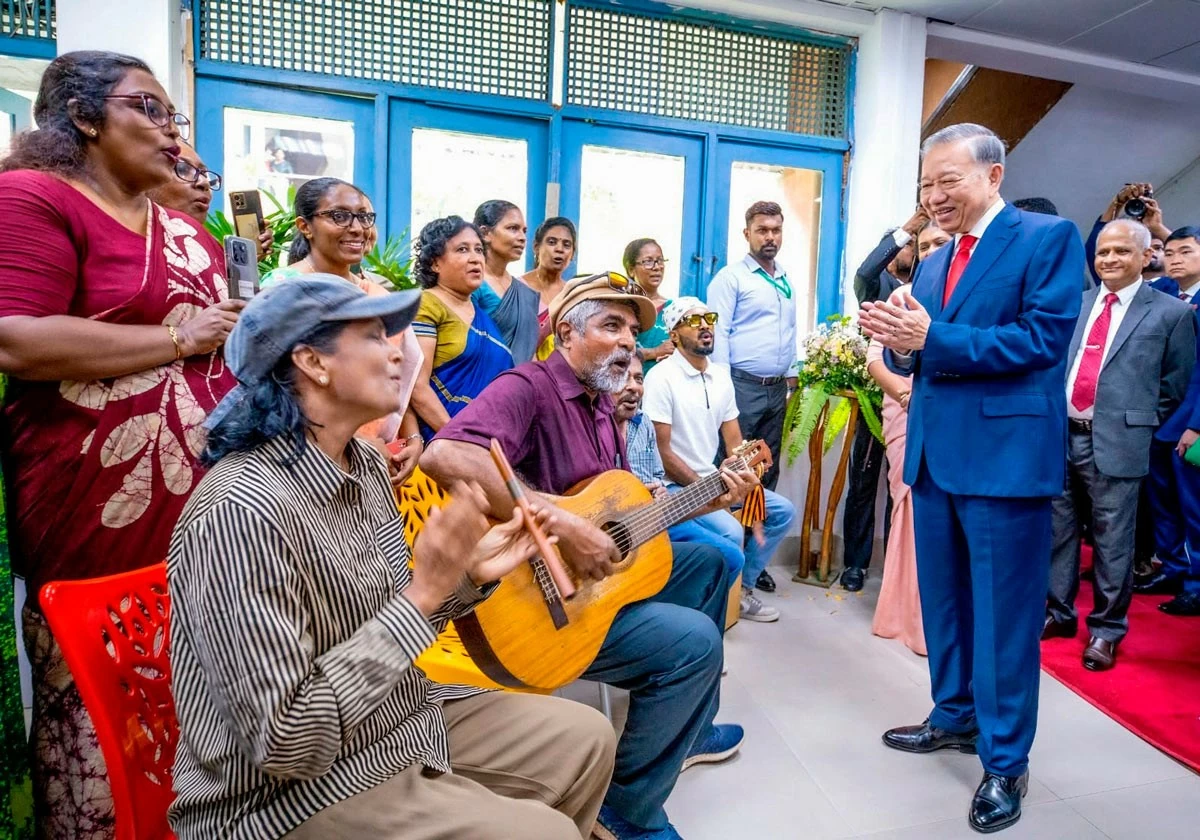 |
| General Secretary of the Communist Party of Vietnam and State President To Lam, together with the Vietnamese and Sri Lankan delegations, listens to musician Mohamed Hanifa Mohamed Iqbal perform ‘Ho Ho Ho Chi Minh’. (Source: The Vietnam & World Foreign Affairs Agency - VWF) |
He is Mohamed Hanifa Mohamed Iqbal. Trained originally as a geologist, he later pursued music and came of age through Sri Lanka's youth movement. As a young man, he joined anti-war demonstrations and actively voiced his support for the Vietnamese people's just struggle.
Born into a family where his father worked as a postman and his mother was a homemaker, Mr. Iqbal did not come from a revolutionary background. Nevertheless, he grew up listening to family discussions about Vietnam, Palestine, the Middle East and Cuba. His family consistently expressed sympathy for, and support towards, peoples around the world striving for independence and freedom.
Now in the later years of his life, Mr. Iqbal vividly recalls the emotions he felt when he first learned about President Ho Chi Minh. At the time, he was still a schoolboy, regularly reading reports on the Vietnamese people's struggle published in newspapers such as The Attha and Forward, both affiliated with the Communist Party of Sri Lanka.
“Through those newspapers, President Ho Chi Minh came to symbolise, in my mind, the determination to achieve national liberation, the aspiration for independence and freedom, and the hope for a peaceful and reunified Vietnam after years of unwavering struggle”, he recalled.
One memory remains particularly vivid. In 1978, during the visit to Sri Lanka by Prime Minister Pham Van Dong at the invitation of President J.R.Jayewardene, Mr. Iqbal heard many stories highlighting the similarities between the two nations, from rice-growing agricultural traditions and a shared reverence for Buddhism to, above all, their long histories of resisting colonial rule. Those invisible bonds, he said, fostered within him a profound sense of affinity with Vietnam.
Always standing side by side
Returning to his artistic journey, Mr. Iqbal spoke of Víctor Jara - a Chilean guitarist and cultural activist who held a deep affinity for national liberation movements and consistently expressed his admiration for President Ho Chi Minh and the Vietnamese people's just struggle. In his renowned song El derecho de vivir en paz (The Right to Live in Peace), Jara paid tribute to President Ho Chi Minh with the lyrics:
“Poet Ho Chi Minh, who gave the right to live in peace, from Viet Nam to all humanity”.
The song resonated widely across Latin America, becoming a musical symbol of the struggle for peace and international solidarity.
It was this very spirit that shaped Mohamed Hanifa Mohamed Iqbal's artistic path, inspiring him to use music as a voice for peace, friendship and the aspiration for a world free from conflict.
In 2012, in what he describes as a remarkable twist of fate, Mr. Iqbal met Ton Sinh Thanh, Vietnam's first Ambassador to Sri Lanka after the reopening of the Embassy. During a guitar festival that he had founded in Colombo, Ambassador Ton Sinh Thanh, having listened to the band perform songs dedicated to Víctor Jara, suggested that Mr. Iqbal compose a song about President Ho Chi Minh.
The proposal struck a chord with the musician, whose long-cherished wish had been to introduce the image of Vietnam's beloved leader to a wider international audience.
“It was a wonderful opportunity”, he recalled.
On 12 May 2012, his composition Ho Ho Ho Chi Minh was premiered, quickly attracting widespread public attention. Its influence continued to grow in 2013, when its melody echoed across Colombo and at the University of Peradeniya in Kandy, bringing the image of President Ho Chi Minh closer to the hearts of the Sri Lankan public.
Mr. Iqbal noted that this was the first time the image of a Vietnamese revolutionary had been portrayed and introduced to the Sri Lankan public through music. The song recounts the Vietnamese people's long and determined struggle against French colonial rule and American intervention to achieve national independence and reunification.
“Its message is immensely powerful. In our country, it is regarded as a revolutionary song”, Mr. Iqbal said.
He expressed deep pride and emotion that the song had become a major success, adding that every Vietnamese Ambassador to Sri Lanka has invited him to perform it.
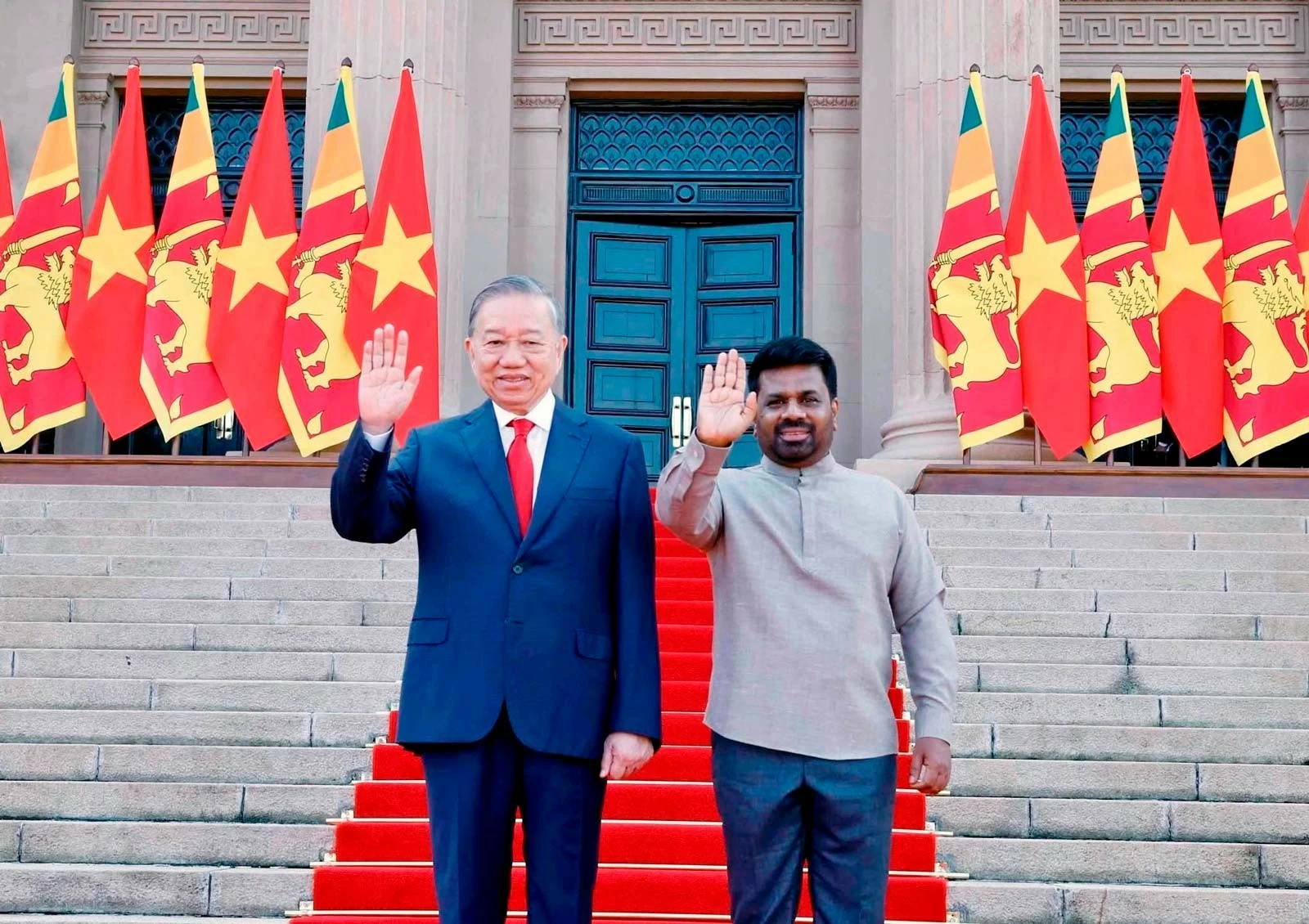 |
| General Secretary, President To Lam with Sri Lankan President Anura Kumara Dissanayake. (Source: VNA) |
In May 2026, during the State visit to Sri Lanka by General Secretary, President To Lam, Mr. Iqbal had the honour of performing Ho Ho Ho Chi Minh before the leaders and official delegations of both countries.
For him, it was far more than a musical performance but a responsibility of profound significance. In preparation for the occasion, he devoted considerable time to bringing together members of his band and rehearsing meticulously, determined to deliver the song in the most meaningful way possible.
Recalling the occasion, he spoke of the anxiety he had felt beforehand, the joy of receiving warm applause from the two delegations, and the overwhelming happiness that he regarded as “a precious gift”.
With deep emotion, Iqbal believes that General Secretary, President To Lam's visit carried particular significance for Sri Lanka at a time when the country was striving to overcome economic challenges.
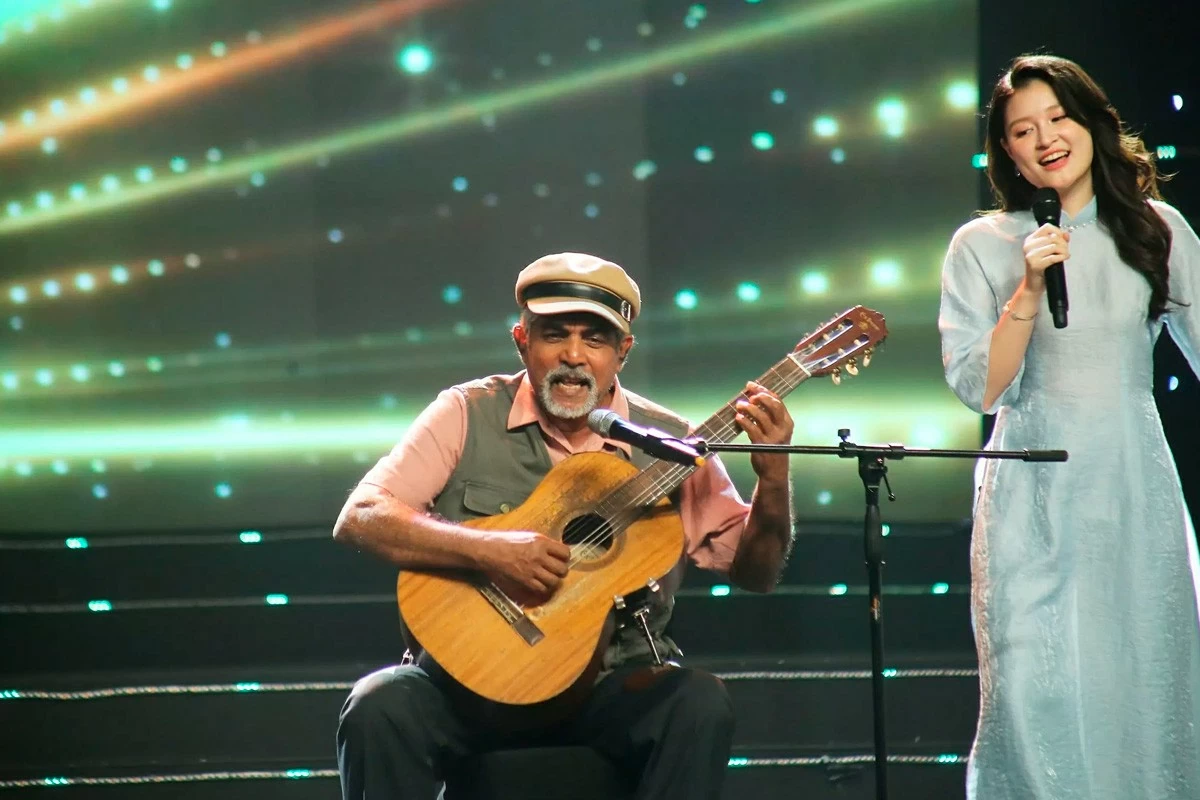 |
| Musician Mohamed Hanifa Mohamed Iqbal performs Song of Love, Peace and Friendship at the 11th National External Information Service Awards. (Photo: Thanh Long) |
| "The visit by General Secretary and President To Lam marked a historic milestone for us. Vietnam gave Sri Lanka renewed strength at a time when we were facing tremendous difficulties. With a population of more than 100 million, Vietnam came to reaffirm its readiness to stand with us and extend its support. That is the greatest gift your country has offered Sri Lanka. It has strengthened our belief that Sri Lanka is not alone, and that our two peoples will always stand side by side”, he affirmed. |
Before concluding our conversation, Iqbal spoke warmly of the affection that his two children have developed for the S-shaped land. Although they have pursued different careers in medicine and law, both have forged a special connection with Vietnam through its literature.
“Both of my children have had the opportunity to discover Vietnamese literature. They have always hoped that one day our whole family will be able to visit your beautiful country”, he shared.
That aspiration, cherished by Iqbal and his family, is itself a testament to the enduring bridge of friendship between Vietnam and Sri Lanka - one that will continue to grow stronger as its shared values and ideals are passed from one generation to the next.


