





Viet Nam is new ASEAN champion
Who would have thought that three decades after joining, Viet Nam would become one of the most dynamic driving forces in ASEAN?
Latest
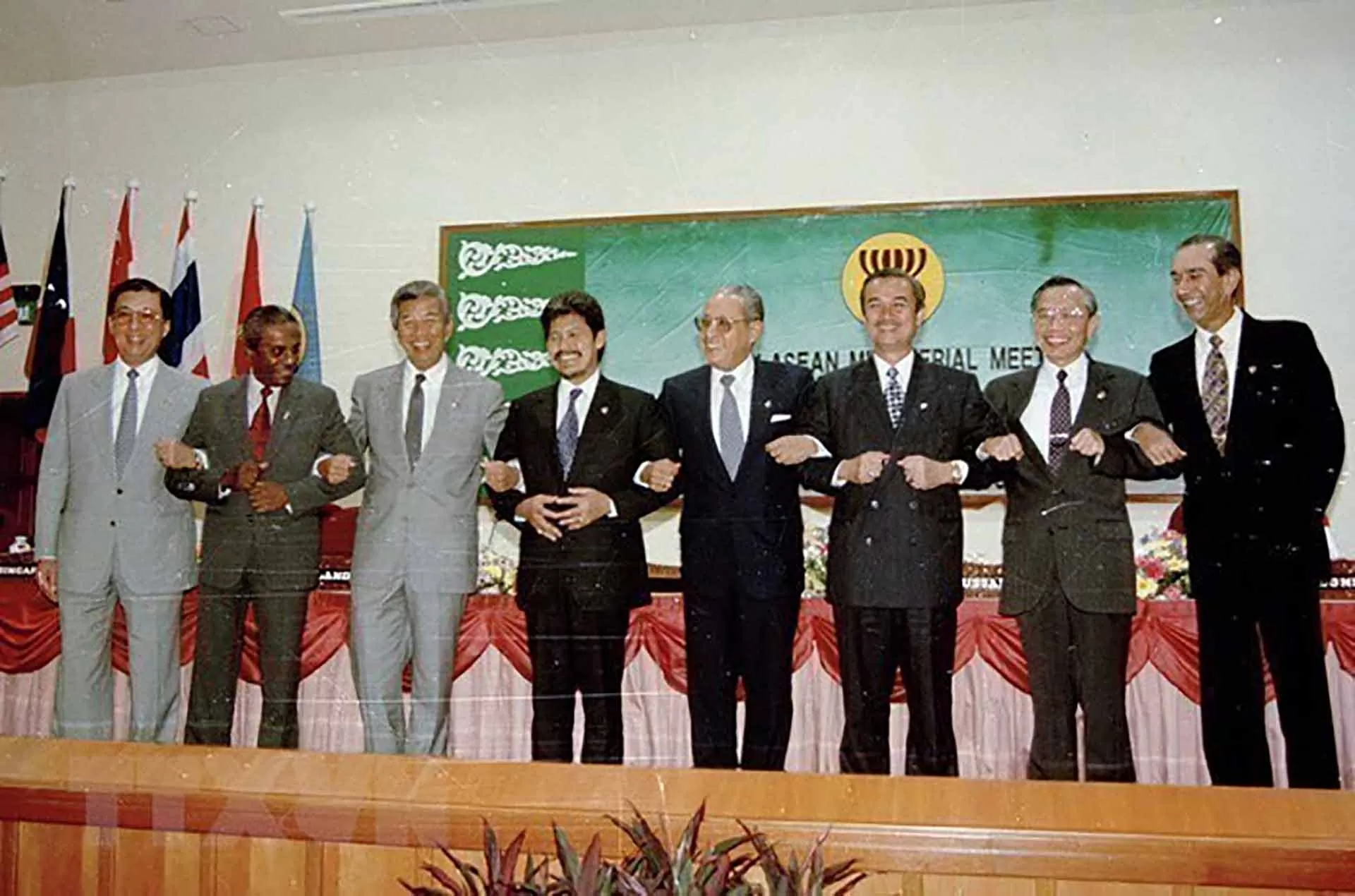 |
| Vietnamese Foreign Minister Nguyen Manh Cam (second from right), ASEAN Secretary-General, and ASEAN Foreign Ministers at the meeting admitting Vietnam to ASEAN in Brunei, July 28, 1995. (Source: VNA) |
Twin goals - economic growth and strategic peace
When the country entered the bloc in 1995, uncertainty loomed. Few could predict whether it would be able to fully integrate and actively participate in the ASEAN family. Today, Viet Nam stands tall as a new champion of economic integration and strategic autonomy—an emerging leader shaping the future of the regional architecture.
In the post-war era, Viet Nam’s entry into ASEAN was guided by two clear objectives. The first was economic development - to lift its people out of poverty and catch up with the rest of the region. The second was to secure peace and stability in a rapidly transforming Asia.
For the first few years, Viet Nam had to undergo significant internal restructuring and capacity-building in order to align with ASEAN’s complex frameworks and obligations. It took time and resolve before Hanoi could maximize the privileges and advantages that came with ASEAN membership.
By the second decade, however, Viet Nam had become adept at aligning its domestic economic policies with ASEAN-wide programs and regional integration efforts. Hanoi embraced ASEAN’s economic community pillars and began to outperform several member states in terms of investment attraction, manufacturing competitiveness, and export capacity. The country steadily evolved into one of the most open and business-friendly economies in the region.
For Viet Nam, a peaceful regional environment has always been indispensable to its development path. That explains why Hanoi has consistently supported ASEAN-led mechanisms, from the ASEAN Regional Forum (ARF) to the East Asia Summit (EAS), the ASEAN Defense Ministers’ Meeting Plus (ADMM-Plus), and the ASEAN Outlook on the Indo-Pacific (AOIP). These platforms not only promote inclusive dialogue and regional stability but also reinforce ASEAN centrality - something Viet Nam deeply values as a safeguard against great power rivalries.
These twin goals - economic growth and strategic peace - have also propelled the scope and pace of Viet Nam’s integration into ASEAN and the global system. By embedding itself in regional and global value chains, Viet Nam has become a major beneficiary of trade liberalization and investment flows.
Foreign companies, particularly in high-tech sectors and green manufacturing, now view Viet Nam as a preferred destination. Under the leadership of the Party General Secretary To Lam, Viet Nam has accelerated domestic reforms aimed at promoting transparency, efficiency, and good governance - signals that reassure investors and diplomatic partners alike.
In recent weeks, Viet Nam made global headlines as the second country to conclude tariff negotiations with the Trump administration. This was not merely symbolic. It demonstrated Viet Nam’s economic agility, its diplomatic pragmatism, and its capacity to absorb external shocks, be it from the U.S.-China trade rivalry or changing global supply chain patterns. By maintaining stable macroeconomic fundamentals while expanding its bilateral and multilateral trade relations, Viet Nam has shown the ability to punch above its weight in uncertain times.
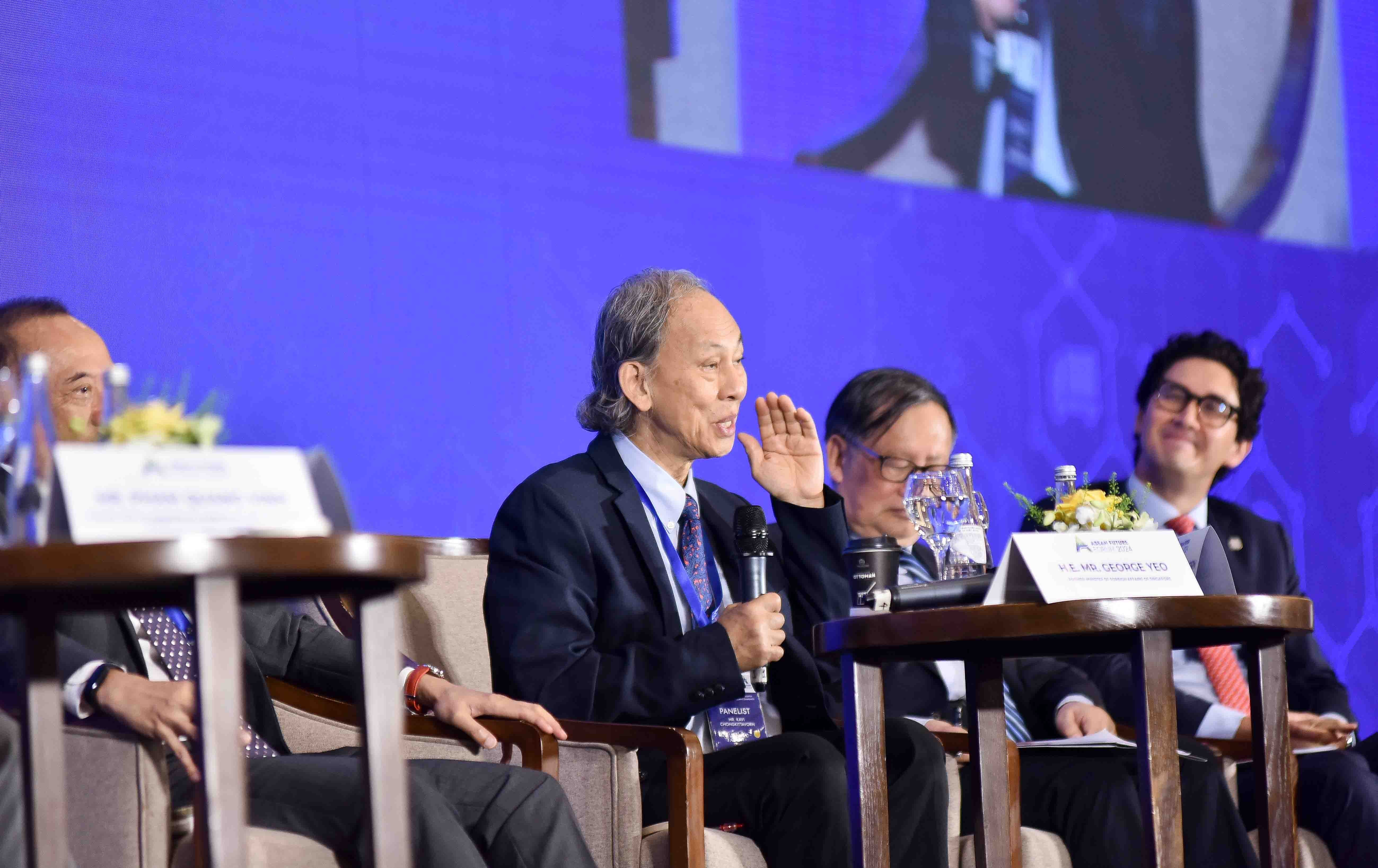 |
| Mr Kavi Chongkittavorn shared in the ASEAN Future Forum 2024. (Photo: Nguyễn Hồng) |
Clear aspirations to lead the regional agenda
As Viet Nam enters its fourth decade in ASEAN, Hanoi shows no sign of slowing down. The country now has clear aspirations to lead the regional agenda. Viet Nam seeks to uphold ASEAN’s relevance in an era of intensifying geopolitical contestation.
It can play a crucial role in strengthening ASEAN’s centrality, bridging the development gaps among older and newer member states, and advancing deeper economic and political integration across the bloc, all for the sake of the 675-million-strong ASEAN community.
With its open and increasingly liberalized economy, Viet Nam is also an active participant in mega trade pacts like the Regional Comprehensive Economic Partnership (RCEP), the Comprehensive and Progressive Agreement for Trans-Pacific Partnership (CPTPP). These overlapping frameworks allow Viet Nam to diversify its trade, avoid overreliance on any single power, and promote an inclusive, rules-based order that reinforces ASEAN’s people-centered and forward-looking identity.
At the 58th ASEAN Foreign Ministers’ Meeting held on July 9, 2025, the Joint Communiqué recognized the importance of Viet Nam’s ASEAN Future Forum. This platform, initiated by Hanoi, was praised for encouraging strategic foresight, policy innovation, and deeper regional cooperation. The communiqué noted that the forum aligns well with ASEAN 2045: Our Shared Future, emphasizing inclusivity, sustainability, and the enduring centrality of ASEAN.
Looking ahead, Viet Nam—armed with high economic growth, a young and dynamic workforce, and a carefully crafted strategic profile—will continue to play a pivotal role in building a stronger, more resilient, and more autonomous ASEAN Community. As global uncertainties deepen, Hanoi’s pragmatic leadership and ASEAN-first trajectory could serve as stabilizing forces in a region searching for balance and peaceful co-existence.
It is not an over statement to say that Viet Nam is now the new champion of ASEAN which never knew it needed.
*The article reflects the author's personal views.


