



Vietnam’s accession to ASEAN: Three decades, one shared journey
WVR - Vietnam’s 30-year journey with ASEAN serves as a valuable foundation of experience and lessons learned, enabling bold ideas and breakthrough actions as the country moves forward with ASEAN into a new era.
Latest
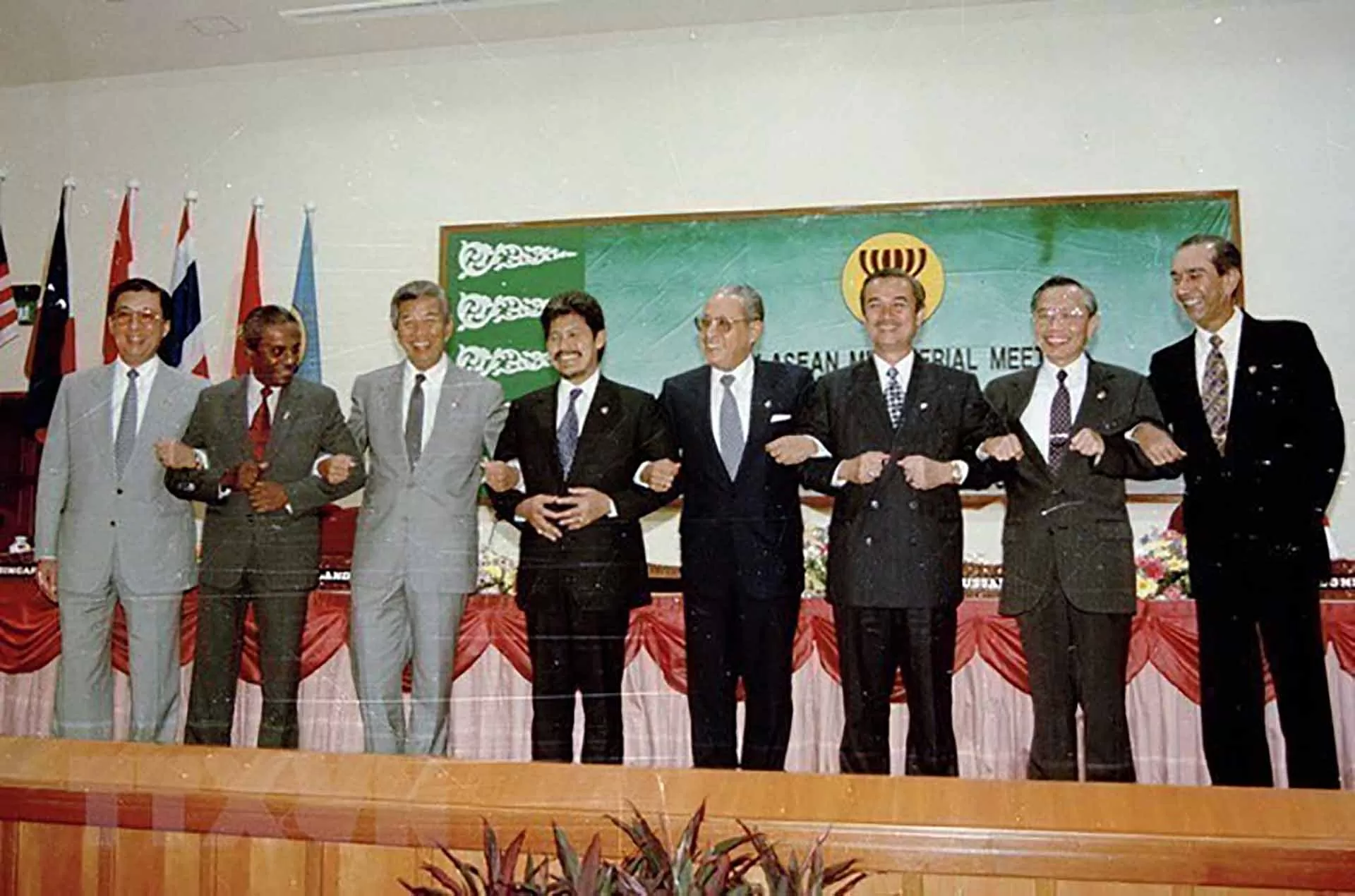 |
| Minister of Foreign Affairs Nguyen Manh Cam (second from right), the ASEAN Secretary-General and ASEAN Foreign Ministers at the meeting admitting Vietnam into ASEAN in Brunei, 28 July 1995. (Source: VNA) |
Close and paramount engagement
On 28 July 1995, Vietnam officially became the seventh member of ASEAN on the occasion of the 28th ASEAN Foreign Ministers’ Meeting held in Brunei. Over the past three decades, this milestone has proven to be a timely, historic and strategically significant decision by the Party and State of Vietnam.
Joining ASEAN enabled Vietnam to overcome the constraints of economic blockade and political isolation at the time. It helped address longstanding issues in relations with several regional countries, bringing an end to division and confrontation, and ushering in a new era of qualitatively enhanced relations among Southeast Asian nations.
In his policy address during the ceremony marking the 30th anniversary of Vietnam’s accession to ASEAN at the ASEAN Secretariat (10 March), General Secretary To Lam emphasised: “Since the beginning of our process of opening up and integration, we have always regarded ASEAN as a multilateral cooperation mechanism of direct and paramount importance to Vietnam”. Since becoming a member in 1995, “Vietnam has consistently given top priority to strengthening ties with neighbouring and regional countries and has made every effort to contribute to building a united, strong and resilient ASEAN Community, thus affirming its international position as a member of the ASEAN family”.
This commitment has been reflected in concrete policies. Shortly after joining ASEAN, the Prime Minister issued several directives, including the establishment of the National Committee on ASEAN and the implementation of regional cooperation initiatives.
When the ASEAN Charter entered into force in December 2008, the Prime Minister issued Decision No. 142/QD-TTg dated 31 January 2009 on working regulations and coordination mechanisms among agencies involved in ASEAN cooperation, aimed at enhancing inter-agency efficiency and standardising operations under the Charter.
Following the formal establishment of the ASEAN Community on 31 December 2015, the Prime Minister approved the national action plan on Vietnam’s engagement with ASEAN through 2025, setting out clear goals, orientations and measures to improve the country’s performance within the bloc.
To build upon these achievements and respond to new circumstances, the Politburo issued Conclusion No. 59-KL/TW on 8 August 2023, outlining Vietnam’s ASEAN engagement strategy through 2030. The document affirms: “ASEAN is a multilateral cooperation mechanism of direct and foremost importance to Vietnam”.
Vietnam’s participation in ASEAN is aimed at preserving peace and stability, optimising opportunities and benefits from ASEAN cooperation and its partnership network, and further enhancing the country’s international reputation, strategic role and standing, especially in relations with major powers.
Promoting consensus and sustaining unity
Throughout three decades of engagement with ASEAN, Vietnam has consistently upheld the spirit of being “proactive, positive and responsible”, making substantive contributions to the Association’s growth and maturity.
At the heart of these efforts lies Vietnam’s persistent commitment to consolidating intra-bloc unity and cohesion, a key factor underpinning ASEAN’s vitality, standing, and adaptability amid ever-evolving global and regional dynamics.
At the Second ASEAN Future Forum in February 2025, Prime Minister Pham Minh Chinh highlighted the importance of solidarity through a familiar Vietnamese proverb: “A single tree does not make a hill; three trees together form a high mountain”. According to the Prime Minister, unity and cohesion are fundamental to building an ASEAN that is independent, resilient and forward-looking in its path of integration and development.
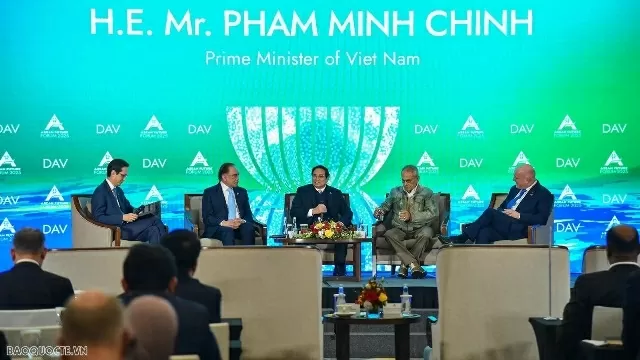 |
| Vietnam’s Accession to ASEAN: Prime Minister Pham Minh Chinh shared insights and answered numerous questions on key regional and global issues, at the high-level plenary of the 2nd ASEAN Future Forum (AFF 2025) that took place in Hanoi on February 26, 2025. (Photo: Tuan Anh) |
Vietnam has remained steadfast in realising this strategic orientation through consistent messaging and concrete actions across all periods, mechanisms and initiatives. During its three ASEAN Chairmanships (1998, 2010 and 2020), Vietnam left a clear and lasting imprint, making important contributions to key documents and agreements such as the ASEAN Vision 2020, the ASEAN Charter and the ASEAN Community Vision 2025, along with their accompanying blueprints and community-building roadmaps.
Vietnam has also championed a people-centred, people-oriented and people-driven approach, rooted in humanistic values, throughout the ASEAN Community-building process. This approach has been enshrined as a core guiding principle in the ASEAN Community Vision 2045, adopted at the 46th ASEAN Summit, marking a milestone in the institutionalisation of Vietnam’s inclusive vision.
Amid increasingly complex and unpredictable developments, Vietnam remains committed to working with fellow ASEAN member states to build consensus and reinforce the Association’s principled positions on regional and international issues. From the South China Sea and Myanmar to the Korean Peninsula, the Middle East and the Russia–Ukraine conflict, Vietnam has played an important role in fostering ASEAN’s balanced and harmonious approach, with the overarching goal of safeguarding peace, stability and security in the region and beyond.
Shaping a cooperative space with ASEAN at the centre
At the 46th ASEAN Summit held in Malaysia this May, Prime Minister Pham Minh Chinh underscored that ASEAN’s success hinges on its ability to safeguard a strategic space of independence and autonomy in shaping regional decisions. He emphasised that ASEAN must reaffirm its centrality not merely in words but through concrete action.
With a strong sense of responsibility and proactiveness, Vietnam has, since joining ASEAN, put forward numerous initiatives and made substantial contributions to upholding the Association’s core goals and principles, thereby reinforcing ASEAN’s leading role in maintaining peace and fostering development in the region.
Vietnam has also left a clear imprint in promoting and expanding ASEAN’s relations with external partners. As ASEAN Chair in 2010, Vietnam advocated for the expansion of the East Asia Summit (EAS) to include Russia and the United States. Vietnam also initiated the establishment of the ASEAN Defence Ministers’ Meeting Plus (ADMM+), comprising ASEAN and its partners. The country successfully served as coordinator for ASEAN’s relations with China (2009-2012), the European Union (2012-2015), India (2015-2018) and Japan (2018-2021). In 2021, Vietnam hosted the ASEAN High-Level Forum on Sub-Regional Cooperation for Inclusive Growth and Sustainable Development. Currently, Vietnam is coordinating ASEAN’s relations with New Zealand (2024-2027) and the United Kingdom (2022-2025).
In recent years, adhering to the consistent principle of balance, harmony and mutual benefit, Vietnam and fellow ASEAN members have successfully advanced the establishment and upgrading of relations with key partners, from initiating a Dialogue Partnership with the United Kingdom to elevating ties with Australia, India, China, the United States, Japan, Canada and the Republic of Korea. Most recently, at the ASEAN-Gulf Cooperation Council (GCC) Summit and the ASEAN-China-Gulf Cooperation Summit (Malaysia, 27 May), Prime Minister Pham Minh Chinh proposed several breakthrough ideas to unlock the potential of new inter-regional strategic cooperation spaces.
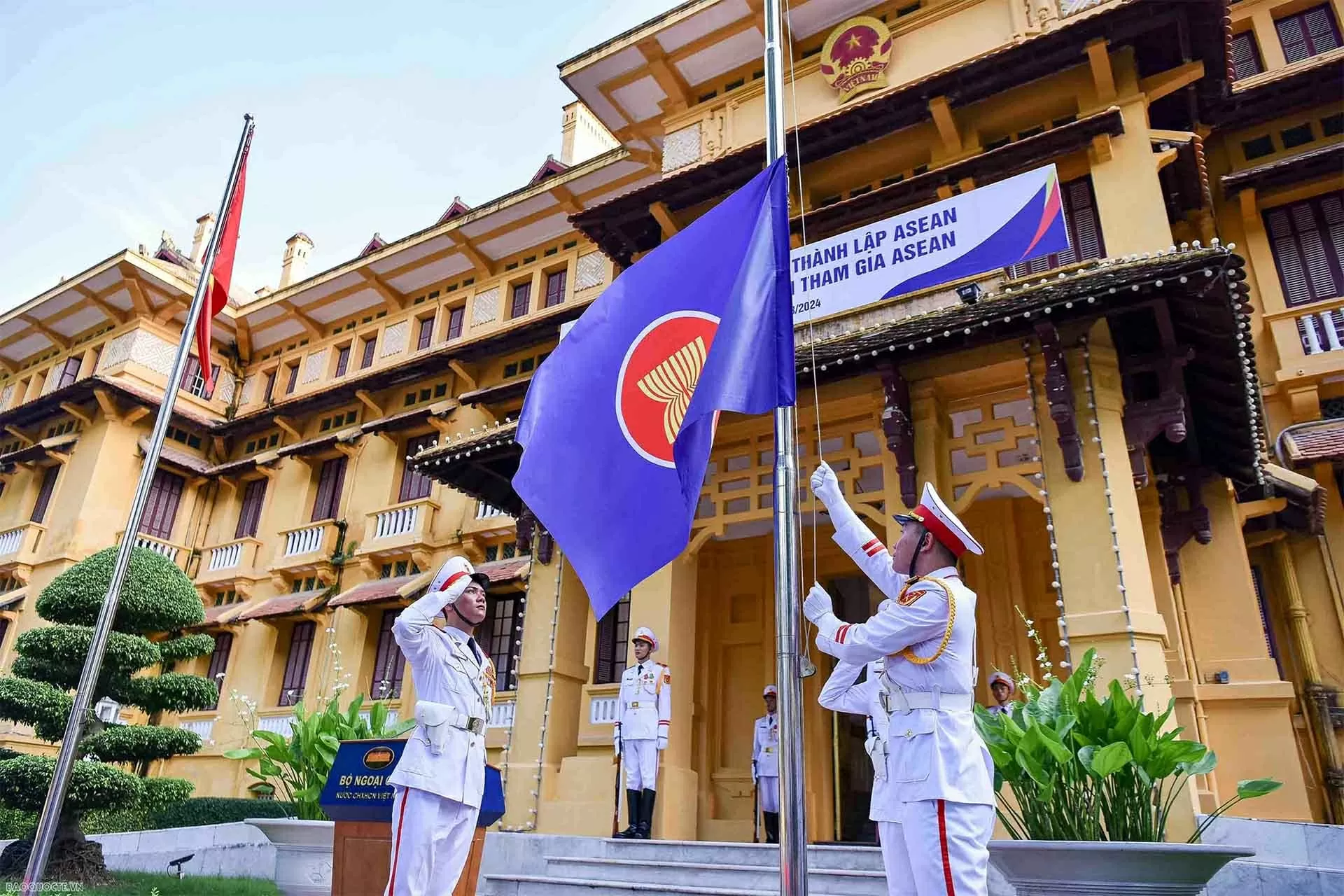 |
| The year 2025 marks the 30th anniversary of Vietnam’s accession to ASEAN (28 July 1995 - 28 July 2025). (Photo: Nguyen Hong)
|
Notably, under Prime Minister Pham Minh Chinh’s initiative, Vietnam has successfully hosted the ASEAN Future Forum over the past two years, leaving a strong impression as an inclusive and open platform that connects policymakers, scholars and experts within and beyond the region. This effort reflects Vietnam’s sincere commitment to building a truly ASEAN-led and ASEAN-owned forum for dialogue and cooperation.
Advancing together into a new era
In a recent interview with The World & Vietnam Report, leading Thai ASEAN expert Mr. Kavi Chongkittavorn observed that as Vietnam enters its fourth decade of ASEAN membership, its remarkable efforts show no sign of slowing down. “Vietnam is nurturing an ambitious aspiration to help shape the region’s agenda”, he noted.
As General Secretary To Lam underscored in his address at the ASEAN Secretariat: “At this historic juncture, Vietnam and ASEAN are jointly striving toward bold and aspirational goals. In the journey ahead, with new expectations placed upon ASEAN, Vietnam is ever more aware of its responsibility to actively engage and contribute to the common cause, guided by innovation in mindset, renewal in approach, flexibility in execution, efficiency in delivery and determination in action”.
The Politburo’s Resolution No. 59-NQ/TW, dated 24 January 2025, on “international integration in the new context”, affirms that integration is a critical driver propelling Vietnam into a new era, one of prosperity and strength. In this light, Vietnam’s engagement with ASEAN must also rise to meet new demands: being more proactive, responsible, innovative and ready to make greater contributions to building a united and resilient ASEAN Community.
With steadfast resolve and the wealth of experience accumulated over the past three decades, Vietnam stands ready to work hand in hand with fellow ASEAN members to realise the Association’s historic mission and to share its success stories with the world.