



Two key contributions of Vietnam in ASEAN: Indonesian Ambassador
WVR - Since its accession to ASEAN in 1995, Vietnam has consistently demonstrated its commitment and contributions to the region’s peace, stability, and prosperity. Among its many efforts, two key contributions stand out: Vietnam’s role in promoting regional peace and stability, and its leadership within ASEAN.
Latest
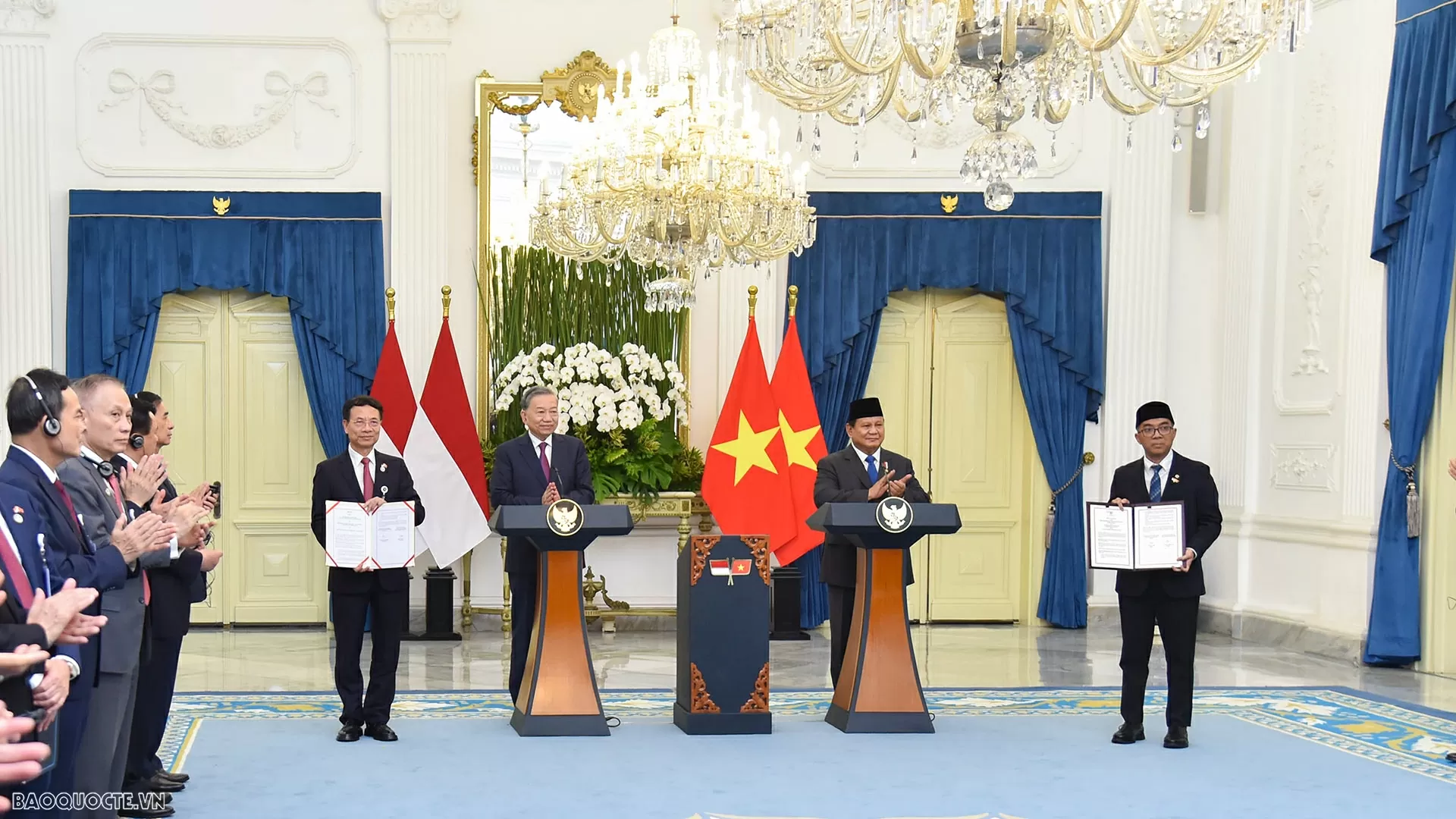 |
| General Secretary To Lam and Indonesian President Prabowo Subianto witnessed the exchange of cooperation documents during the State visit to Indonesia, during which both sides agreed to elevate the bilateral relationship to the Comprehensive Strategic Partnership in March 2025. (Photo: Tuan Anh) |
Promoting regional peace and leadership
Vietnam has been steadfast in promoting peace, stability, and prosperity in the region through dialogue, cooperation and multilateralism. It has consistently underscored the importance of maintaining regional stability and upholding international law, particularly the 1982 United Nations Convention on the Law of the Sea (UNCLOS).
Vietnam has also played a proactive role in strengthening relations among ASEAN Member states, as well as ASEAN’s engagement with its dialogue partners – through various mechanisms such as the ASEAN Regional Forum (ARF), and East Asia Summit (EAS).
Vietnam’s impressive economic growth - recording an average rate of 6.3% over the past 10 years, larger than the ASEAN average of 3.63% - has reinforced its position as an engine of growth, driving the region’s economic development.
Vietnam has also displayed its remarkable leadership in ASEAN. In 1998, just 3 years after joining ASEAN, Vietnam made immediate impacts to the organization through the convening of the sixth ASEAN Summit in Hanoi. Amid a challenging global financial crisis and vulnerable regional economic conditions, the summit adopted the Hanoi Plan of Action, a milestone document containing Vietnam’s ideas and proposals to narrow the development gap among ASEAN Member States.
In 2020, during its ASEAN chairmanship themed “Cohesive and Responsive ASEAN”, Vietnam successfully united the region in navigating through the early and most challenging phases of the COVID-19 pandemic. Its strong leadership laid a foundation for ASEAN to be adaptive, responsive and collaborative in the face of crises.
More recently, Vietnam’s forward-looking initiatives - such as the ASEAN Future Forum— has become a valuable platform for strategic discussions to equip ASEAN with better capabilities in anticipating and responding to emerging and future global challenges. Such initiative will position ASEAN not merely as a bystander to global shifts, but as a proactive and influential global actor.
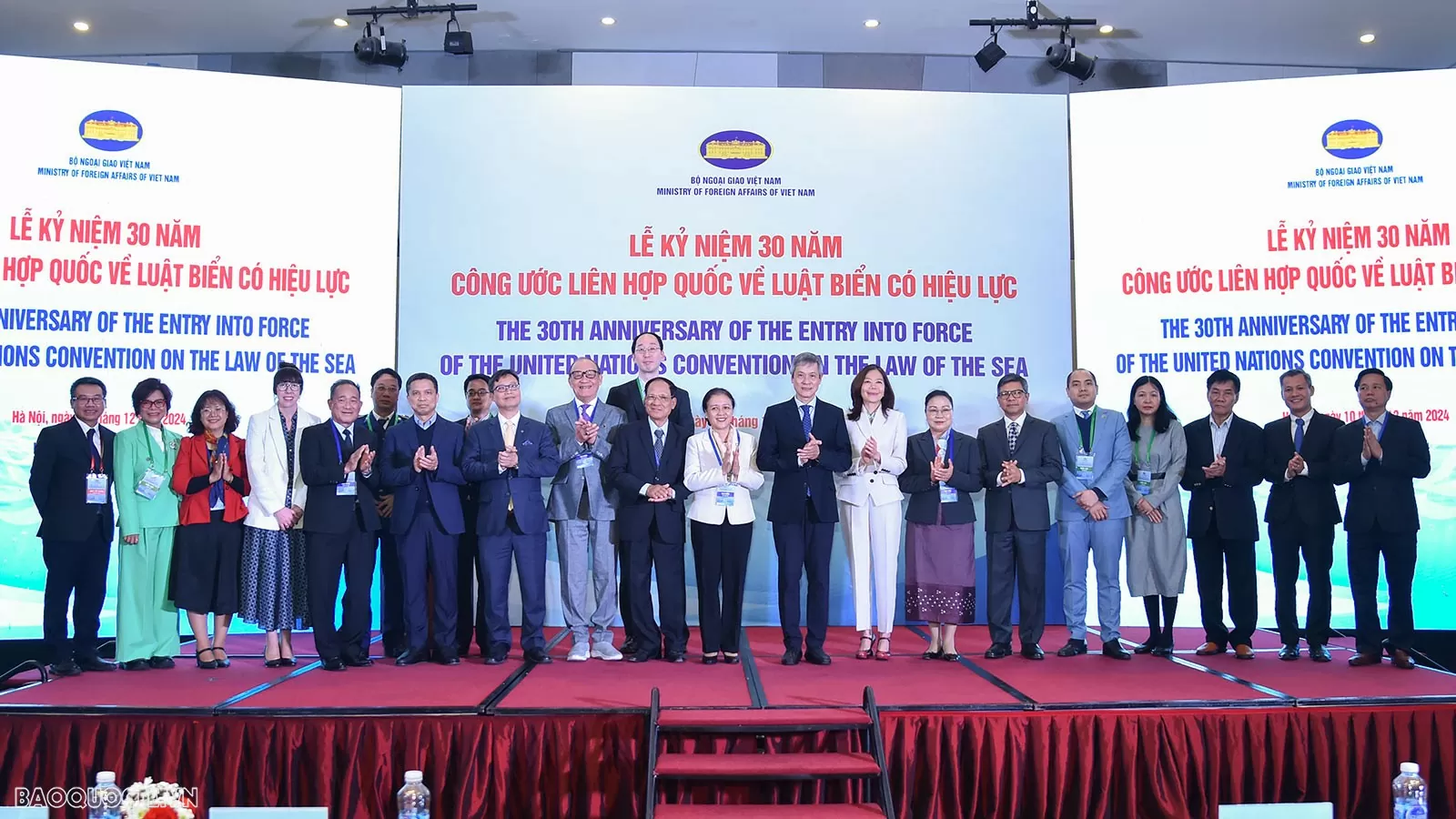 |
| Ambassador Denny Abdi (sixth from the right) attended the ceremony commemorating the 30th anniversary of the entry into force of the United Nations Convention on the Law of the Sea (UNCLOS), hosted by the Ministry of Foreign Affairs in December 2024. (Photo: Tuan Anh) |
Balance, firm, yet flexible approach
On top of traditional challenges in development, the world today faces a growing array of complex issues—from heightened geopolitical tensions and trade frictions to the urgent demands of sustainability. For ASEAN to address such current and future challenges, three key priorities must be upheld: unity, centrality, and institutional capacity.
In this context, Vietnam has been consistent in promoting efforts towards these key priorities.
Vietnam has also demonstrated its active and strategic role in addressing complex regional challenges, guided by its foreign policy of independence, self-reliance, and “bamboo diplomacy”. This balance, firm, yet flexible approach has helped to maintain balance in ASEAN, particularly in its constructive engagement with external partners.
Looking ahead, Vietnam must continue this role-championing ASEAN centrality and fostering deeper solidarity among member states, particularly in addressing regional and global challenges such as the South China Sea, the situation in Myanmar, and other non-traditional security issues.
Vietnam’s visionary initiatives such as the ASEAN Future Forum (AFF) are deeply appreciated as it offers a valuable platform for policymakers, experts, and businesses across the region to engage in forward-looking dialogue, confront emerging challenges, and explore new opportunities for cooperation.
 |
| Ambassador Denny Abdi (far right) posed for a photo with fellow ambassadors at the flag-raising ceremony marking the 58th anniversary of ASEAN’s founding on August 8, 2025. (Photo: Facebook page of the British Embassy in Vietnam) |
Key drivers to realize Vision 2045
The ASEAN Community Vision 2045 serves as a strategic roadmap in translating aspiration into action and in strengthening ASEAN to navigate global uncertainties and respond to emerging international challenges.
More than just a concept, ASEAN Community Vision 2045 affirms ASEAN’s aspiration to be an influential and responsible global actor. It reflects the strong longstanding commitments of ASEAN member states to position the ASEAN Community as an epicentrum of growth in the Indo-Pacific and a global partner for peace, stability, and prosperity. ASEAN envisions a shared future in 2045 that is resilient, innovative, dynamic, and people-centered.
Within this context, the shared aspiration of Indonesia and Vietnam to achieve high-income status by 2045 not only aligns with the goals of ASEAN Community Vision 2045, but will also be its key drivers.
As two of the region’s most dynamic and rapidly growing economies – together accounting for 55% of ASEAN’s population, Indonesia and Vietnam’s progress will significantly bolster regional peace and stability, deepen economic integration, and enhance people-to-people connectivity – ultimately propelling ASEAN towards its 2045 vision.
The collaboration between Indonesia and Vietnam will thus be critical to ASEAN’s success particularly in strategic sectors such as food security, digital economy, sustainability/circular economy, as well as high-tech industries. By working closely together, both countries can help shape a more resilient and integrated ASEAN Community.