




‘The Appeal’ of ASEAN lies not only in potential but also in resilience and identity: Ambassador Ton Thi Ngoc Huong
WVR - The 47th ASEAN Summit and related high-level meetings are set to take place in Kuala Lumpur, Malaysia. Prime Minister Pham Minh Chinh will lead the high-level Vietnamese delegation attending the Summit. On this occasion, Ambassador Ton Thi Ngoc Huong, Head of the Vietnamese Delegation to ASEAN, shares with TG&VN about the “appeal” and central role of ASEAN in the current context.
Latest
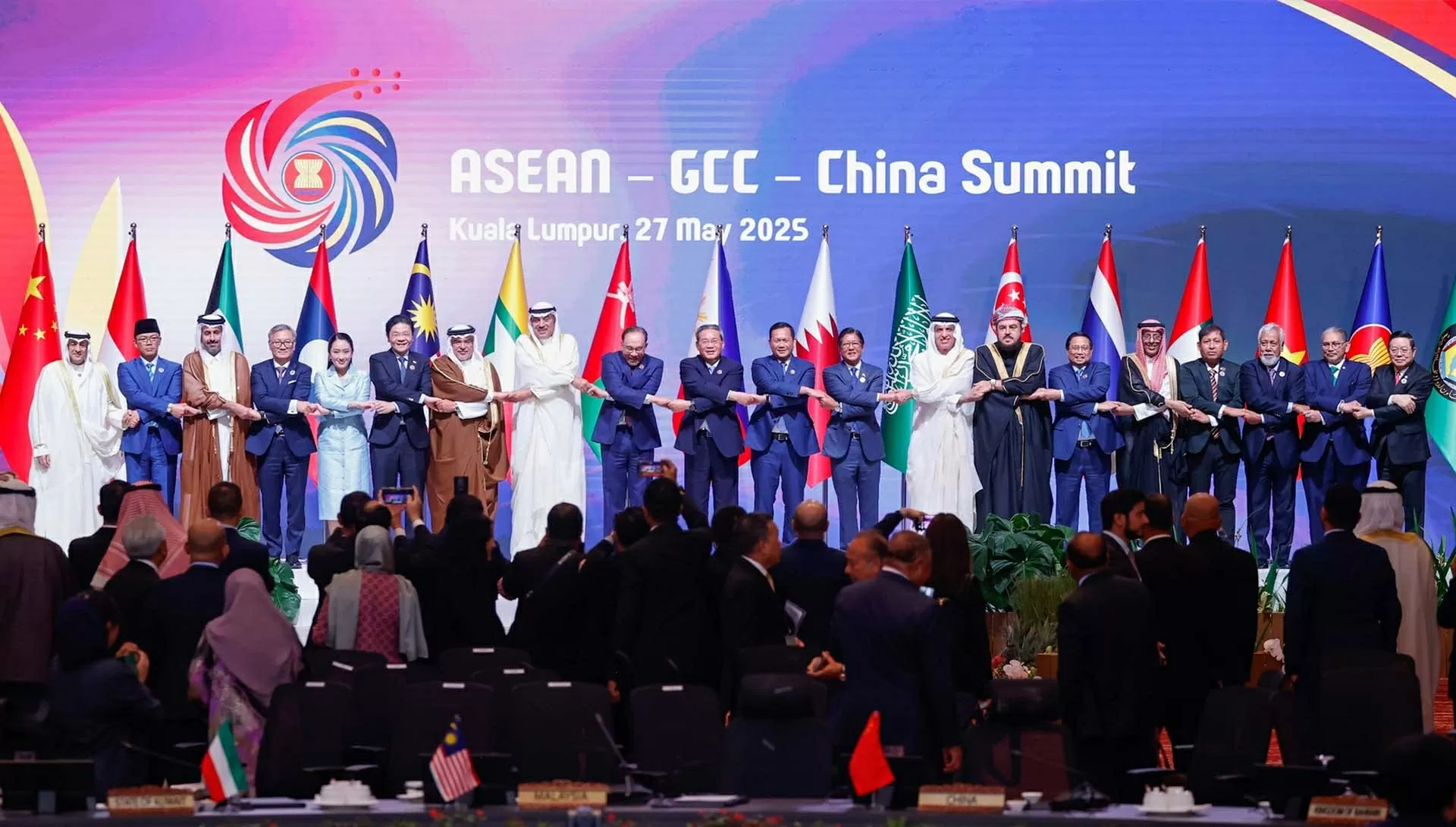 |
| The ASEAN-GCC-China Summit within the framework of the 46th ASEAN Summit, May 27 in Malaysia. (Source: VGP) |
The 47th ASEAN Summit and related meetings are attracting the attention of many ASEAN partners, with the participation of numerous high-level leaders from partner countries. How do you assess the “appeal” of ASEAN that has been shaped, strengthened, and promoted over time?
In the context of profound regional and global changes, from strategic competition among major powers and non-traditional security challenges to the need for cooperation in recovery and sustainable development, partners increasingly wish to closely associate with ASEAN. This reflects the reality that, amidst the complex geopolitical landscape, ASEAN remains a cornerstone for dialogue, cooperation, and stability.
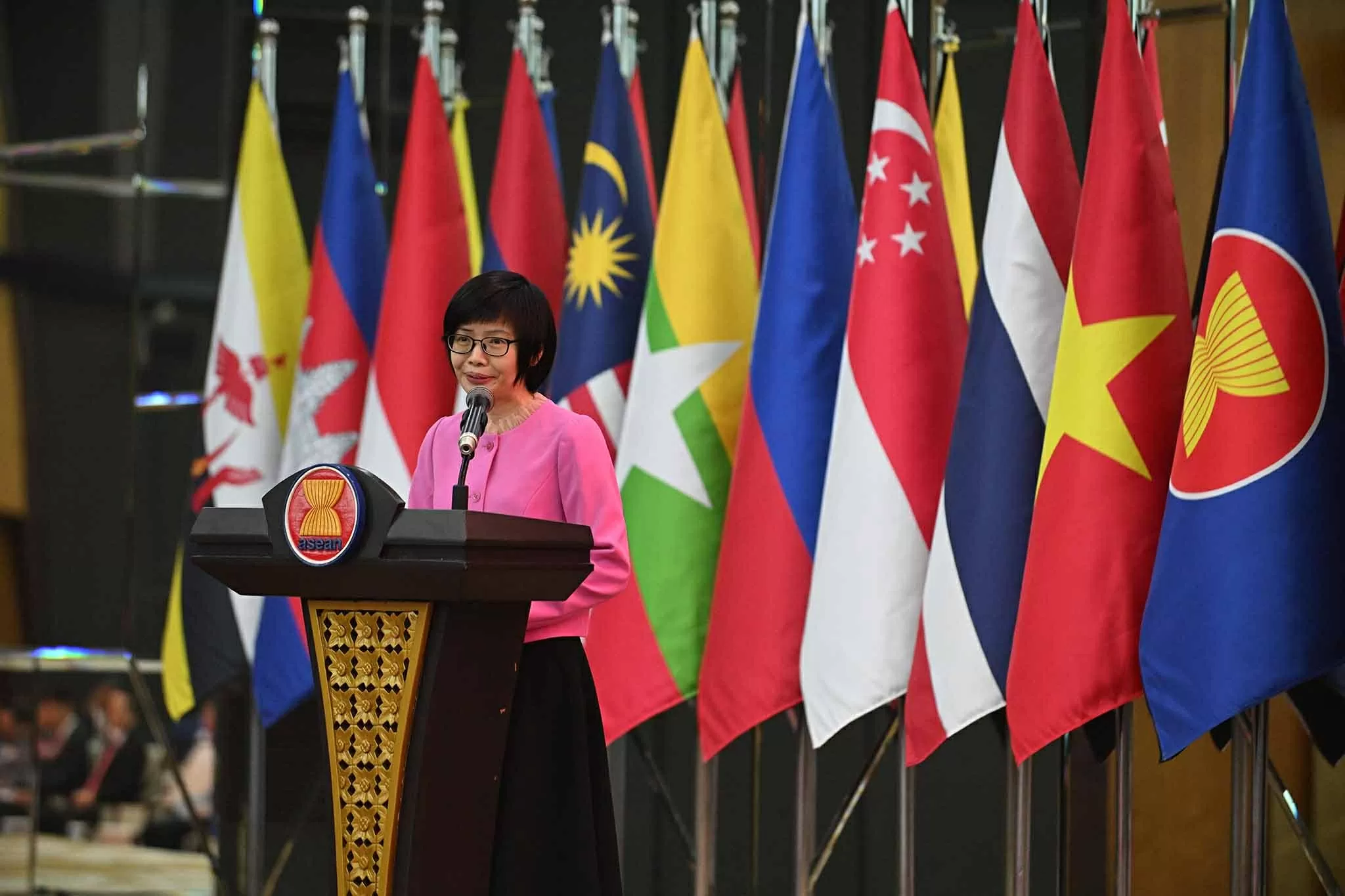 |
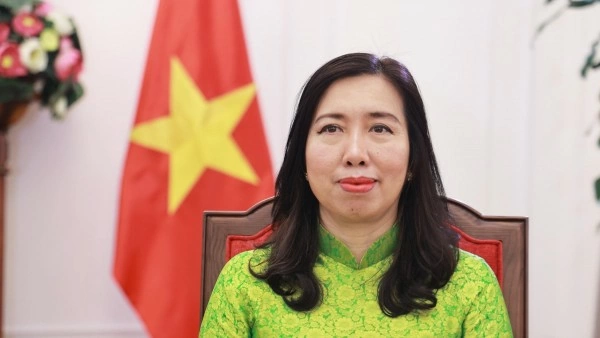
| Ambassador Ton Thi Ngoc Huong, Head of the Vietnamese Delegation to ASEAN. (Source: Vietnamese Delegation to ASEAN) |
The “appeal” of ASEAN stems from various factors. Firstly, ASEAN is one of the most dynamically developing regions in the world, with a young population, a vast market, and sustainable economic growth potential.
More importantly, ASEAN has become a driving force for dialogue and cooperation, contributing significantly to maintaining a peaceful, stable, and prosperous development environment in the region, something many other places are striving to achieve.
ASEAN also stands out for its ability to unite and reconcile the interests of partners, creating a dialogue space based on trust, respect for international law, and the ability to adapt flexibly to regional and international environmental changes, promptly capturing and embracing new trends.
This steadfastness in core values combined with agile adaptability has helped ASEAN affirm its central role in the evolving regional architecture, making partners view ASEAN not only as an economic partner but also as a reliable friend, a trustworthy coordinator, and an effective partner in addressing challenges impacting regional peace and stability.
The network of intra-ASEAN economic linkages and FTAs between ASEAN and partners, such as the RCEP Agreement, accounting for 30% of the global population and 30% of global GDP, is another significant appeal of ASEAN, linking the needs and interests of partners in an expanding economic space in one of the world's fastest-growing regions.
It can be said that the “appeal” of ASEAN lies not only in its potential but also in its resilience and identity, an ASEAN that is cohesive, proactively adaptive, and always striving to contribute to peace, cooperation, development, and prosperity in the region and the world.
This “appeal” further underscores ASEAN's central role. How should ASEAN's central role be promoted in the current intra-regional, regional, and international context to contribute to creating common peace and stability?
ASEAN's central role results from the spirit of ASEAN solidarity, consensus, and skillful handling of relations with partners. For over half a century, ASEAN has proven that a region can maintain peace and stability not through power but through dialogue, trust, and mutual respect. These values have helped ASEAN become a unifying factor, reconciling interests and promoting cooperation among countries within and outside the region.
Today, as the regional and international environment undergoes profound changes, promoting the central role becomes strategically significant. To achieve this, ASEAN must first maintain intra-regional solidarity and unity, which forms the foundation for the Association's credibility and common voice.
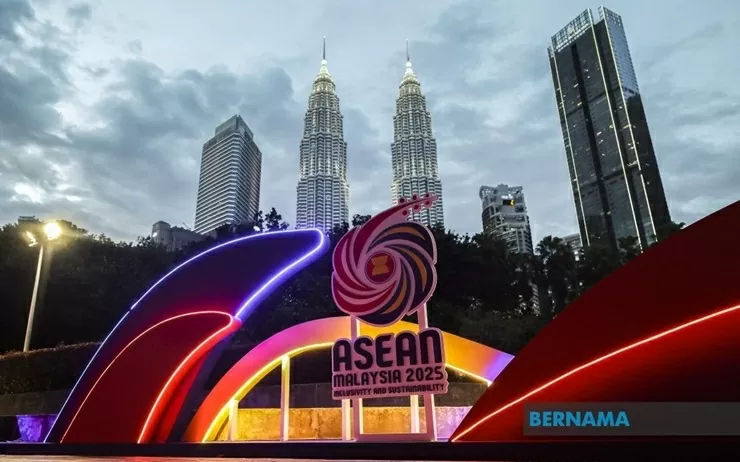 |
| The 47th ASEAN Summit and related meetings are set to take place in Malaysia. (Source: BERNAMA) |
At the same time, ASEAN must enhance its adaptability, being both principled and flexible in its approach, strengthening and improving the effectiveness of ASEAN-led mechanisms to effectively cooperate in addressing challenges from strategic competition, security hotspots, and non-traditional security issues such as natural disasters, pandemics, climate change, and transnational crime.
Moreover, ASEAN should continue to be an open and inclusive dialogue space where partners can exchange and cooperate based on respect for international law, sharing acknowledged values and standards, and aiming for common benefits. By maintaining a common stance and a spirit of responsibility, ASEAN will not only maintain its central role but also continue to make substantial contributions to the peace, stability, and sustainable development of the region.
The ASEAN Community Vision 2045 reflects ASEAN's commitment to sustainable, long-term, inclusive resilience and continued cooperation with external partners. To ensure this “sustainability, longevity, inclusiveness, and continuity”, which aspects should ASEAN strengthen, especially in the current context?
The ASEAN Community Vision 2045 embodies the shared aspiration of member states for a strong, resilient, and inclusive Community – where ASEAN continues to be the central link of the region and a reliable partner of international friends. In a world undergoing rapid and unpredictable changes, this vision is even more meaningful as it reflects ASEAN's determination not only to recover from crises but also to develop sustainably, long-term, leaving no one behind.
To realize this vision, ASEAN needs to continue placing people at the centre of the development process, enhancing intra-regional resilience, boosting economic integration, and promoting green and digital transformation to create new growth drivers. Simultaneously, ASEAN must maintain solidarity, strengthen a common voice, and institutional capacity, as only with a solid internal foundation can the Association effectively address external challenges.
In relations with partners, ASEAN needs to play the role of a bridge, reconciling interests among partners, while also being a resilient entity, guiding cooperation in ways that align with the region's common interests and principles. This means ASEAN must maintain an independent, objective, and balanced stance while continuing to affirm its central role in an open, transparent, and rules-based regional architecture.
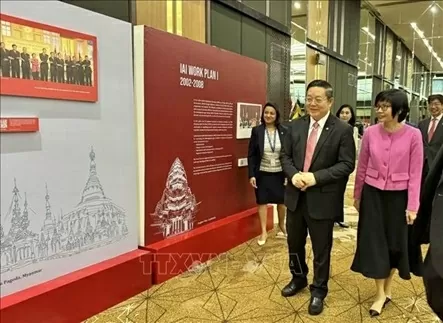 |
| Ambassador Ton Thi Ngoc Huong, Head of the Vietnamese Delegation to ASEAN, and ASEAN Secretary-General Kao Kim Hourn at the “25 Years of Integration” photo exhibition on August 11. (Source: VNA) |
How can Vietnam contribute to fostering ASEAN's readiness in realizing development roadmaps on the new journey?
Vietnam always considers ASEAN as one of the key pillars of its foreign policy, a strategic environment directly and importantly ensuring security, development interests, and enhancing the country's position. On the path towards the ASEAN Community Vision 2045, Vietnam is ready to join member countries in building a proactive, confident, and adaptive ASEAN to effectively respond to changes and rise strongly in the new era.
Firstly, Vietnam will continue to play an active role in strengthening intra-regional solidarity and unity, promoting consensus-building within ASEAN. With deep and extensive friendships and cooperation with all member countries, Vietnam consistently strives to be a bridge, promoting dialogue and seeking common ground, especially on issues with diverse viewpoints. By proactively proposing reconciliatory and constructive directions, Vietnam has repeatedly contributed to narrowing differences, creating a common consensus, thereby strengthening intra-regional solidarity and enhancing ASEAN's position in addressing regional and global challenges.
Vietnam also strives to make substantial contributions to essential areas of cooperation, particularly those where it has interests, strengths, and needs, from digital economic development, green transformation, supply chain connectivity to cooperation in addressing climate change and non-traditional security challenges, infrastructure connectivity, and people-to-people exchanges. Vietnam aims to share experiences and jointly build practical initiatives to help the ASEAN Community develop sustainably and inclusively, with people at the center.
Simultaneously, in its role as a reliable partner and active bridge, Vietnam will continue to contribute to deepening friendly, reliable, and effective cooperation between ASEAN and its partners. In this spirit, Vietnam will actively implement its rotating roles in the coming time, including coordinating ASEAN-UK and ASEAN-New Zealand relations (2024-2027), continuing to make practical contributions to maintaining ASEAN's central role and enhancing its international reputation.
Thank you very much, Ambassador!