


Thanh Tri Rice Paper Making recognized as National Intangible Cultural Heritage
WVR - On March 18, Vinh Hung Ward (Hanoi) held a ceremony to announce the decision to list “Thanh Tri Rice Paper Making” in the National Intangible Cultural Heritage category. The event marks a significant step in preserving and promoting the traditional culinary heritage of Thanh Tri.
Latest
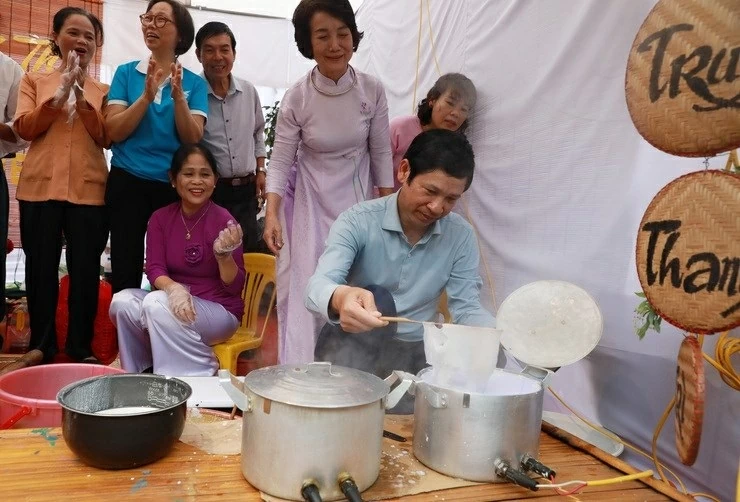 |
| Deputy Minister of Culture, Sports and Tourism Ho An Phong experiences making Thanh Tri rice paper. (Source: Bao Van Hoa) |
At the ceremony, on behalf of the Minister of Culture, Sports and Tourism, Deputy Minister Ho An Phong presented the recognition decision to local authorities and residents.
Earlier, Deputy Director of the Department of Cultural Heritage Nguyen Viet Cuong announced Decision No. 2228/QD-BVHTTDL dated June 27, 2025, officially listing Thanh Tri rice paper making as a national intangible cultural heritage.
Speaking at the event, Deputy Minister Ho An Phong praised the close collaboration between the Hanoi People's Committee, specialized agencies, and Vinh Hung Ward authorities in preserving and promoting the values of this traditional craft village.
According to the Deputy Minister, in the current context, culinary culture not only meets daily needs but also becomes a vital resource for socio-economic development, contributing to building the nation's “soft power”.
Quoting Ho Chi Minh's thoughts on the role of culture, the Deputy Minister emphasized that preserving and promoting traditional values is a continuous task.
He urged government levels to continue raising community awareness, effectively implement heritage protection solutions, and actively promote Thanh Tri rice paper as a highlight in Hanoi's culinary space, serving a wide range of domestic and international tourists.
Local government representatives stated that being recognized is a great honor and pride for the Party Committee, government, and people of Vinh Hung Ward, especially for families tied to the traditional craft. At the same time, it is a responsibility to preserve, maintain, and promote the heritage's value.
In the future, the locality will continue to work with relevant agencies to implement practical solutions such as supporting the teaching of the craft to younger generations, building craft village experience models, and investing in facilities and product introduction spaces.
Linking traditional craft preservation with tourism development is identified as a crucial direction to enhance economic value and promote the local cultural image.
The recognition of “Thanh Tri Rice Paper Making” as a national intangible cultural heritage not only honors a long-standing culinary essence of the capital but also motivates the development of craft village tourism, creating sustainable livelihoods for residents, while enriching Hanoi's cultural identity in the integration process.