




Awakening heritage resources for the cultural industry to take off
WVR - In the context where the cultural industry is identified as a new growth driver, cultural heritage is not only a value to be preserved but also a crucial creative resource contributing to the sustainable development of the country.
Latest
 |
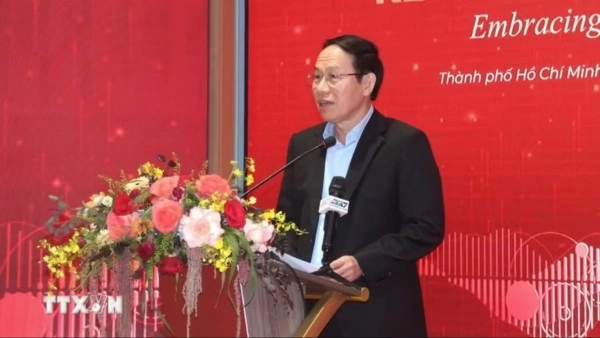
| Prof. Dr. Từ Thị Loan, cultural expert, President of the Vietnam Community Cultural Development Association |
Prof. Dr. Tu Thi Loan, a cultural expert and former Acting Director of the Vietnam National Institute of Culture and Arts, President of the Vietnam Community Cultural Development Association, believes that heritage values will not only be sustainably protected but also become an intrinsic motivation, contributing to economic value creation, national identity, and competitiveness in the creative era.
According to Professor, in the context where the cultural industry is identified as a new growth driver, what role does cultural heritage play in forming, nurturing, and developing current cultural industries, from content creation, design, performing arts, to cultural tourism?
From my perspective, in the context where the cultural industry is identified as a new growth driver, cultural heritage is not only a "foundational resource" but also a "living inspiration" for the formation, nurturing, and development of current cultural industries.
Firstly, heritage provides unique and non-replicable creative materials for the content industries.
From myths, beliefs, festivals, folk music, traditional art to architectural spaces, historical landscapes... all can be restructured, interpreted, and transformed into movie scripts, video games, music products, applied arts, or digital content on new platforms. This is the competitive advantage of Vietnam's cultural industry in the globalized flow.
Furthermore, heritage is the origin of local design thinking and aesthetics. The motifs, symbols, life philosophies, and value systems embedded in heritage help industries like fashion design, graphic design, space design, and high-end handicrafts create products that are both modern and carry the "Vietnamese imprint", meeting the increasing demands of domestic and international markets.
In addition, in the fields of performing arts and cultural tourism, heritage plays a connecting role between creativity - experience - economy. When staged with contemporary artistic language and new technology, heritage forms can become professional performance products, cultural experience tours, night economy, or creative tourism, contributing to extending the value chain and increasing added value.
However, for heritage to truly become a driving force of the cultural industry, a balanced approach is needed: preservation based on creativity, creativity based on respecting the core values of heritage, along with appropriate policies to encourage businesses, artists, and communities to participate. Then, heritage will not only be "preserved" but also "lived", "spread", and "create new value" in contemporary life.
In reality, many cultural heritage values have not been effectively exploited to create cultural products and services with high economic value. According to you, what "bottlenecks" need to be addressed for heritage to become a resource for the cultural industry?
The fact that many cultural heritage values have not been effectively exploited to become cultural products and services with high economic value stems from several systemic bottlenecks that need to be recognized and addressed comprehensively.
Firstly is a bottleneck in the approach to heritage. In reality, heritage is often viewed primarily as an object to be preserved, even "framed", rather than a resource that can be creatively and regeneratively valued. The mindset of fearing mistakes, fearing "renewal" leads to either rigid preservation or spontaneous, unplanned exploitation, making it difficult for heritage to enter the value chain of the cultural industry.
Secondly is the "bottleneck" in institutions and policies. Currently, the legal framework related to the rights to exploit, copyright, image use, and traditional knowledge of heritage is unclear, not motivating businesses and creative entities to invest long-term. Public-private cooperation mechanisms and sandbox mechanisms for creative models based on heritage are still limited.
Thirdly is the "bottleneck" in creative capacity and intermediary human resources. The gap between heritage holders, managers, and cultural creators and businesses is still quite large. The lack of "bridges" that understand both heritage and the market makes it difficult for many good ideas to be transformed into attractive, competitive products.
Fourthly is the "bottleneck" in the market and storytelling of heritage. Many cultural products are still heavy on performance, display, lacking brand-building strategies, and lacking the application of digital technology and contemporary language to reach young audiences and international markets.
Therefore, to address these bottlenecks, it is necessary to shift from a "heritage management" mindset to managing heritage as a development resource, perfecting institutions, nurturing a creative ecosystem, and investing in storytelling, design, and technology. When these links are connected, heritage will truly become a sustainable resource for the cultural industry.
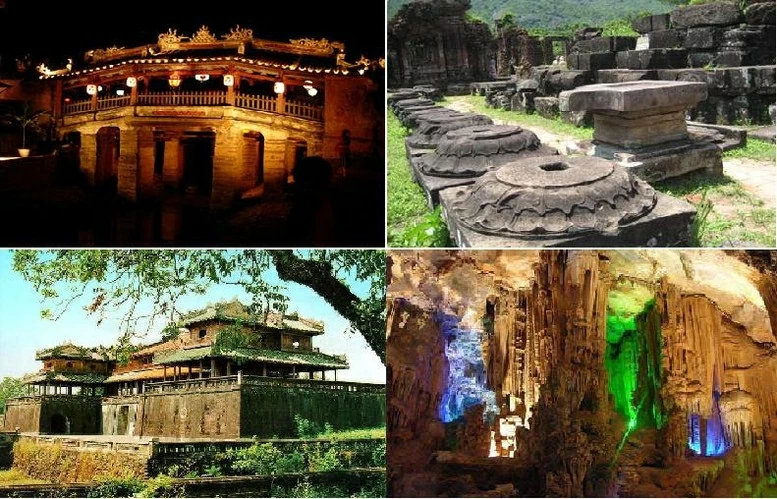 |
| Cultural heritage is not only a "foundational resource" but also a "living inspiration" for the formation, nurturing, and development of current cultural industries. |
One of the challenges is how to preserve the originality and core values of heritage while exploiting and promoting it to serve the development of the cultural industry. According to you, what principles and solutions should be approached to ensure harmony and avoid eroding heritage values?
In my opinion, the challenge of balancing the preservation of the originality of heritage and its exploitation for the development of the cultural industry should not be approached with the logic of "preservation or exploitation", but rather with the spirit of "preservation in development and development on the foundation of preservation". To achieve this, several key principles and solutions need to be upheld.
First is the principle of respecting the core values and authenticity of heritage. All exploitation and creative activities must be based on clearly identifying what the "immutable part" is that needs to be preserved - such as historical values, symbolic meanings, traditional rituals - and what is the "mutable part" that can be creatively interpreted with contemporary language. Without establishing this boundary, it is easy to fall into the trap of extreme commercialization or distortion of heritage.
Next is the principle of placing the community and heritage holders at the center. Heritage holders and practitioners should not only be "preservation subjects" but must become co-creators and co-beneficiaries. When the community participates in the process of product design, performance, tourism, or heritage communication, the original values will be better protected, while creating motivation for heritage to continue being passed down.
Finally, the principle of interdisciplinary approach and tiered exploitation. Heritage preservation should be carried out with scientific standards, while exploitation for the cultural industry can occur at different "levels": from interpretation, storytelling, space re-enactment, to creating derivative products. This tiering helps avoid direct, crude interventions into the original heritage.
In terms of solutions, it is necessary to perfect the legal framework and evaluation criteria for the impact of heritage exploitation projects; encourage controlled experimental models; enhance the advisory role of experts and artisans; and apply digital technology to store, digitize, and spread heritage values without harming its essence.
Only when preservation and creativity are placed in a harmonious, principled, and controlled relationship can cultural heritage be sustainably preserved and become a vibrant resource for the development of the cultural industry.
To form a sustainable heritage value chain linked with the cultural industry, what mechanisms and policies need to be perfected to encourage, attract businesses, artists, creators, and communities to invest in and create cultural products based on heritage, while ensuring harmonious benefits among the related parties?
To form a sustainable heritage value chain linked with the cultural industry, the key issue is not just "what to exploit", but designing mechanisms and policies that are open, transparent, and fair enough for all parties to participate, create, and benefit together.
Firstly, it is necessary to perfect the legal framework regarding access and exploitation rights of heritage. This includes clear regulations on the right to use images, data, and traditional knowledge of heritage; benefit-sharing mechanisms between the State, heritage community, and businesses; as well as protecting copyright and related rights for creative products based on heritage. When the "rules of the game" are transparent, businesses and creators can confidently invest long-term.
Secondly, it is essential to build focused financial incentives and support mechanisms. The State can play the role of "seed capital" through cultural development funds, tax incentives, soft credit, or commissioning cultural products. Particularly, public-private partnership models and creative enterprises linked with local communities should be encouraged.
Thirdly, it is necessary to establish inter-sectoral coordination mechanisms and policy experimentation spaces. Developing a heritage value chain requires close coordination between culture, tourism, education, technology, and media. Experimental models for cultural products and services based on heritage will help test new ideas within a controlled scope, minimizing risks to heritage values.
Fourthly, investment in human resources and intermediary ecosystems is needed. This includes producers, curators, designers, storytellers, and cultural managers - the "bridges" between heritage, creativity, and the market. Additionally, policies for training and nurturing the heritage community to participate more deeply in the value chain are necessary.
Finally, all mechanisms and policies must aim to ensure harmonious benefits and sustainable development: heritage is protected, the community is empowered and benefits, artists and businesses have creative space and markets, and society enjoys rich cultural values. When these links are connected, the heritage-cultural industry value chain will operate effectively and sustainably.
Thank you very much!
(Source: VGP)