






Hanoi Convention: A strategic 'Roadmap' for building digital trust
WVR - The Hanoi Convention is considered a turning point in cyberspace governance, laying the foundation for Vietnam's sustainable digital economic development.
Latest
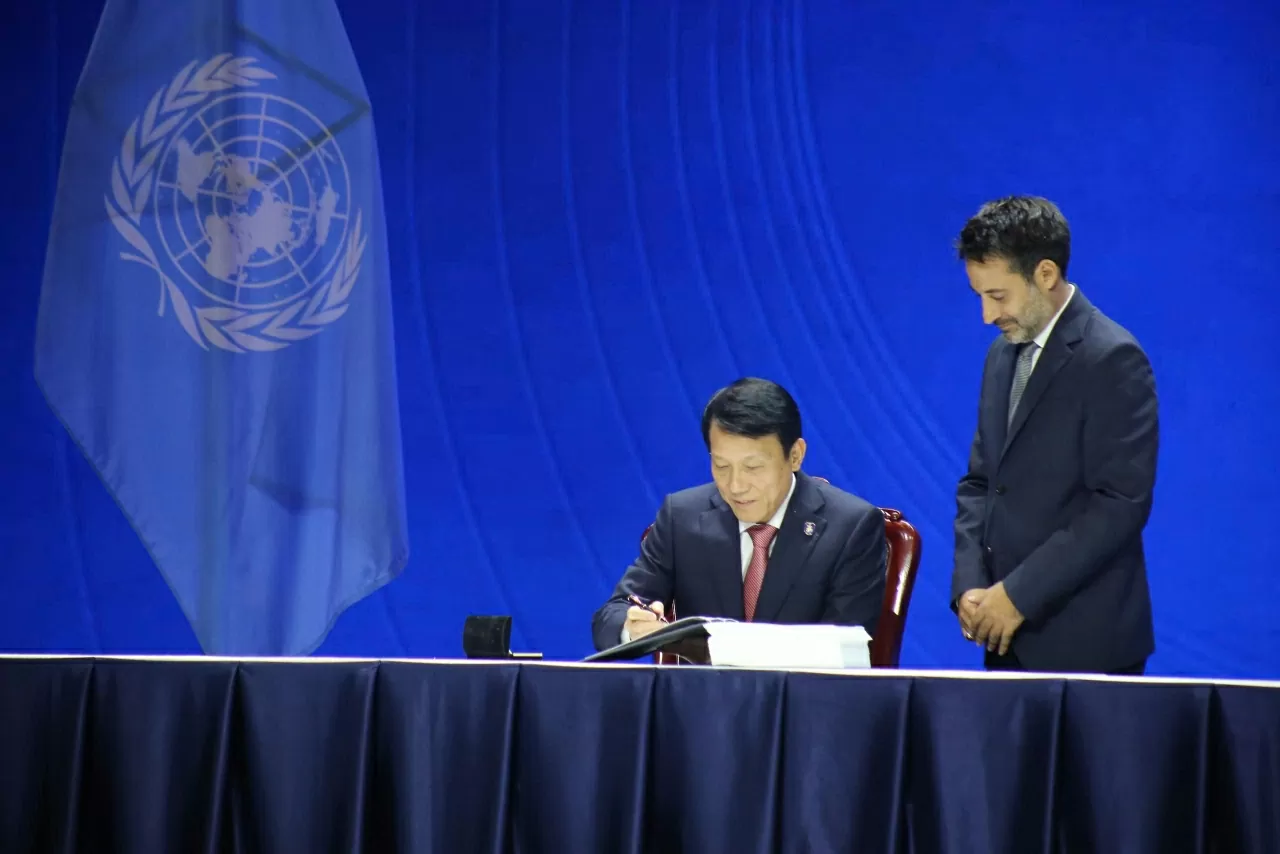 |
| Vietnamese delegation signs the Hanoi Convention on October 25. (Photo: Thanh Long) |
From his perspective, Bung Tran, co-founder of AI Edu group and head of the Google Digital Teachers Community (GEG Vietnam), asserts that the Hanoi Convention is not just a legal document but a strategic roadmap for building digital trust, a foundational element for sustainable growth.
The Hanoi Convention is seen as a significant milestone in global cyberspace governance. From the perspective of digital transformation and digital economic development, how do you evaluate the impact of this Convention on creating a safe and reliable digital environment – a foundation for Vietnam's sustainable growth?
The Hanoi Convention is not merely a legal document; it is a strategic roadmap for building digital trust – a foundational element for sustainable growth.
 |
| Expert Bung Tran believes the Hanoi Convention is a foundational element for sustainable growth. (Photo Courtesy by author) |
Currently, the costs of risks from cybercrime and legal instability have significantly hindered the pace of digital transformation. The Convention addresses this by establishing global legal uniformity and transparency regarding the definition of cybercrime, investigation mechanisms, and electronic evidence collection.
For Vietnam, this commitment sends a strong signal: First, reducing risk costs. With a clear legal environment, businesses, especially foreign companies and major Fintech projects, will see a significant reduction in transaction risk management costs. They will feel more secure knowing their assets and data are protected by an international framework.
Simultaneously, it activates sustainable growth. This assurance will transform into user trust. Citizens and businesses will use digital services more, directly boosting the number of transactions and digital economic activities. This is the driving force to realize Vietnam's digital economic and social goals. The Convention acts as a "premium insurance" for our digital transformation journey.
In the context where digital sovereignty and cybersecurity have become core elements of national sovereignty, how can Vietnam leverage the opportunities from the Hanoi Convention to ensure information safety while promoting innovation and attracting high-tech investments?
This is a delicate balancing challenge, and the Hanoi Convention has provided a gold standard to address many critical issues in the process of global integration.
Firstly, positioning digital sovereignty. The Convention allows Vietnam to assert its digital sovereignty by integrating international legal standards into the national system, rather than closing off. We protect national data and information through a mechanism recognized and supported by the international community.
Secondly, attracting high-quality investment. Major investors, particularly in pioneering and sensitive fields like artificial intelligence (AI) or digital financial services (Fintech), require a clear and fair legal framework for data security and evidence retrieval.
Thirdly, protecting digital assets. The Convention effectively criminalizes offenses related to digital assets for the first time. This helps Vietnam establish a safe legal foundation for developing new industries like Web3 and Blockchain, minimizing risks of money laundering and cross-border fraud, thereby promoting responsible innovation.
Vietnam's hosting and participation in signing the Hanoi Convention not only demonstrates a pioneering role but also opens up extensive international cooperation mechanisms on cybersecurity. In your opinion, how can this help Vietnam enhance technological capabilities, standardize digital infrastructure, and integrate more robustly into the global value chain?
Vietnam's hosting and being one of the first signatories is a statement of digital diplomatic status. It affirms that we are not just technology consumers but participants in shaping the global digital economy.
First, accessing technological resources: The Convention establishes a 24/7 global cooperation network for cybercrime investigation experts. Vietnam has the right to join this network, proactively accessing the most advanced digital investigation technologies, international standard electronic evidence processing procedures, and in-depth training opportunities.
Second, standardizing legal and technical infrastructure: To comply with the Convention, we must review and harmonize national laws with global standards, from defining crimes to protecting privacy. This standardization process creates a legal and digital system compatible with developed economies, driving global digital economic integration.
Third, integrating into the global value chain: When Vietnamese businesses can demonstrate they operate under a safe, internationally recognized legal framework, we can meet the stringent security standards of global partners. This helps us transition from a role of outsourcing to a higher value link in the global technology supply chain.
An important aspect of the Convention is protecting users and promoting a culture of responsible behaviour in cyberspace. How do you perceive the Convention's impact on forming a healthy digital culture, helping content creators, businesses, and citizens confidently develop in a safer digital environment?
This is the aspect I am most concerned about because it directly relates to the quality of digital life for each citizen. The Hanoi Convention sends a clear message: The internet environment is not a "gray area".
Additionally, protecting personal rights and dignity: The Convention for the first time strongly recognizes and criminalizes the non-consensual distribution of sensitive personal images and online child sexual abuse. This action reflects deep empathy, prioritizing human dignity, especially for vulnerable groups.
Simultaneously, establishing ethical and legal standards: When irresponsible, defamatory, or fraudulent behaviors are criminally prosecuted according to international standards, it will establish a new social conduct standard in cyberspace. Citizens will become more aware of their legal and ethical obligations when interacting in the digital environment.
I believe this Convention will boost the growth of innovative business activities. This safety is a driving force for the cultural industry and inventors, creators, and innovators. They can confidently invest effort and finances to develop products and brands without the threat of plagiarism, fraud, or cyberattacks. This forms a healthy and responsible digital culture.
To realize the spirit of the Hanoi Convention, what key solutions should Vietnam focus on to both protect digital sovereignty and encourage digital economic development and responsible digital citizenship?
Macro experts have shared more comprehensive insights on this issue, including harmonizing the national legal framework, enhancing technical capabilities and in-depth investigation, and promoting multi-stakeholder governance: Strengthening public-private cooperation (State, technology enterprises, educational institutions) to share threat information, jointly invest in cybersecurity infrastructure, and develop high-quality human resources.
From the perspective of someone working in education, prioritizing the education of responsible digital citizenship for students is essential. We need to formalize the teaching and dissemination of "responsible digital citizenship" knowledge and culture throughout the entire education system, from primary to university. This is a long-term strategy to create a generation of proactive users with legal and ethical awareness in cyberspace.
As someone directly involved in training teachers and students on the "Be Internet Awesome" adventure, Digital Applied Skills, and most recently the Experience AI program for students from grades 6 to 12 in Ho Chi Minh City with Google, we believe that providing a digital understanding and capability platform for all students is necessary.
Recently, the Ministry of Education and Training also issued Circular 02 related to this content, and Google for Education has presented its commitment to accompany Vietnam's education sector in enhancing digital capabilities, including online conduct culture and information safety for students, preparing for the formation of an internationally integrated digital citizen generation.
| "We have entered the cyberspace, where every data line, every technological operation, every digital interaction can profoundly impact the security, economy, development, and future of nations. Cyberspace is both a new space for development and a new front for global security, where opportunities and challenges intertwine, where technological progress must go hand in hand with ethics and responsibility... To truly bring the Convention to life, we need not only political will but also resources for implementation. International cooperation in training, technical support, and technology transfer will help enhance the capabilities of nations, contributing to building a safe and stable cyberspace", stated President Luong Cuong at the opening session of the signing ceremony and the High-Level Conference of the United Nations Convention on combating cybercrime. |