



Shaping supply chains amid global turbulence: People as a strategic priority
In the context of continuous global supply chain fluctuations and increasingly stringent international standards, Vietnamese enterprises are compelled to change their development mindset. The challenge is not only to optimise costs but to build adaptive, transparent, and sustainable capabilities, with human factors considered the key element.
Latest
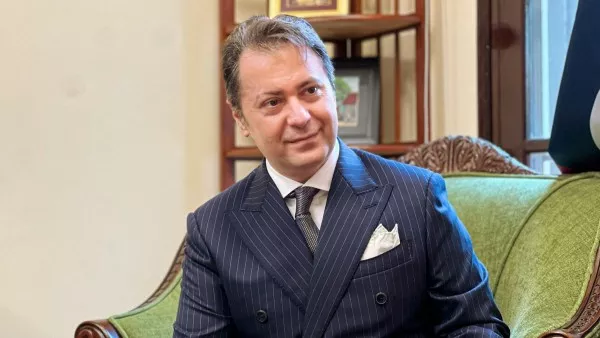
To gain insights into this issue from a business perspective, The World and Vietnam Report had a conversation with Ms. Ngoc Nguyen, founder of Vietnam Supply Chain Network (VSCN). We present this to our readers.
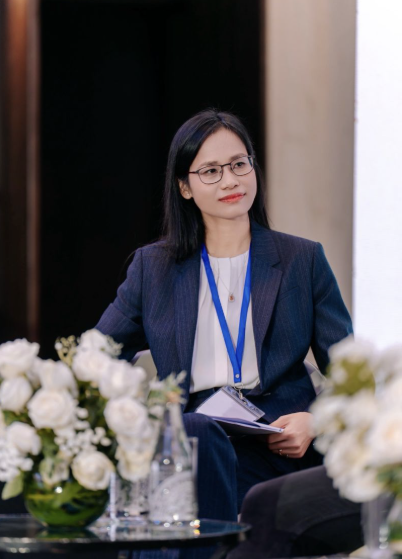 |
| Ms. Ngoc Nguyen, founder of Vietnam Supply Chain Network (VSCN) |
Thank you for taking the time to speak with The World and Vietnam Report. In your view, how does the Vietnam Supply Chain Network 2026 Forum, recently held in Ho Chi Minh City, aim to "shape the future" of the supply chain sector?
In the context of significant global supply chain fluctuations and increasingly stringent international market demands – especially new regulations from Europe - businesses can no longer focus solely on cost and efficiency as before.
Instead, there is a need to shift towards building resilient, adaptable, transparent, and sustainably developed supply chains.
In this process, digital transformation plays a foundational role, helping businesses enhance visibility, manage data, and make quicker, more accurate decisions.
What is the biggest change in the global supply chain that Vietnamese businesses need to adapt to immediately?
The global supply chain is shifting from cost optimisation to prioritising risk control and enhancing adaptability. A prominent trend is relocating production closer to consumption markets and diversifying supply sources.
This presents an opportunity for Vietnam to become an alternative destination in the global supply chain.
However, it also poses challenges as businesses must quickly upgrade their capabilities, increase transparency, and meet international standards.
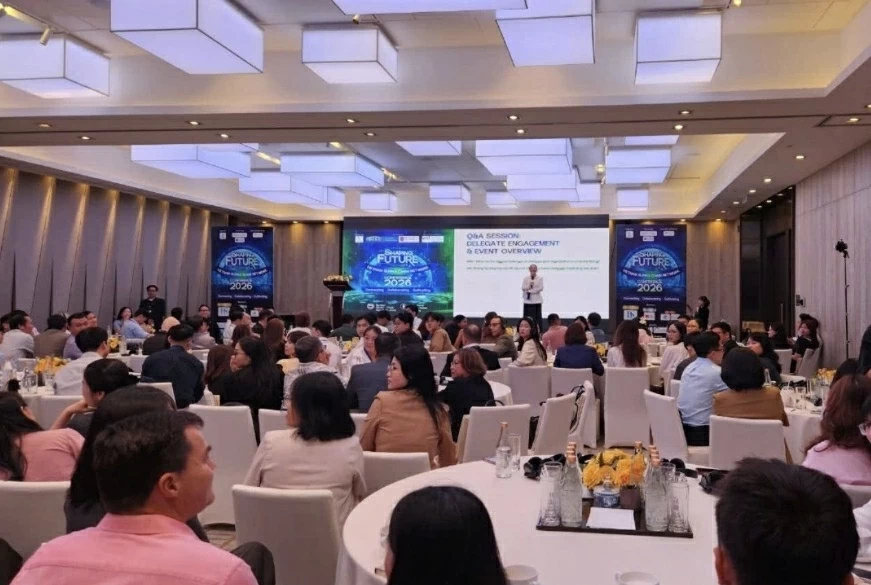 |
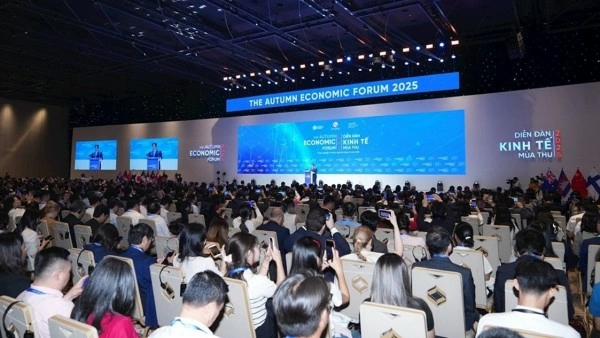
| The Vietnam Supply Chain Network 2026 Forum, organised by Vietnam Supply Chain Network on March 22, attracted a large number of participants. (Photo: Thanh Nam) |
From your personal perspective, what is the biggest bottleneck in Vietnam's supply chain today?
I believe the biggest "bottleneck" currently lies in the lack of transparency and data connectivity throughout the entire supply chain.
When data remains fragmented among parties, businesses face difficulties in tracking the flow of goods, forecasting, and making timely decisions.
This not only reduces operational efficiency but also limits adaptability in the face of frequent fluctuations.
Where do Vietnamese businesses currently stand in digital transformation and sustainable development compared to the region and internationally?
Regarding digital transformation, many businesses have begun implementing systems and experimenting with new applications such as AI. However, there are still many challenges related to investment resources, implementation capacity, and ensuring practical effectiveness.
In terms of sustainable development, most businesses are currently only meeting market and partner requirements, without truly transforming it into a long-term competitive advantage.
The goal of VSCN is not only to build a community but also to enhance the industry's capacity and Vietnam's position in the global supply chain.
If you had to choose one strategic priority, what should the Vietnamese logistics and supply chain industry do right now to enhance competitiveness?
If I had to choose one strategic priority, I would say it is enhancing human capacity.
Technology or systems can be invested in, but to operate effectively, connect the entire chain, and make the right decisions, a team with end-to-end thinking, understanding of international markets, and mastery of data is needed.
When people are capable, businesses will know how to leverage technology and adapt to all fluctuations.
In your opinion, what unique value does VSCN bring to the logistics and supply chain community?
VSCN is a place that connects those working in or interested in logistics and supply chains, creating a space for meeting, sharing, and supporting one another.
Here, members exchange knowledge and experiences, learn from each other, and motivate and support each other's development.
Not only limited to individuals or businesses, but VSCN also contributes to creating a competitive advantage for the entire ecosystem and further for Vietnam in the global supply chain.
What specific values has VSCN brought to the community after its period of operation?
After a period of operation, VSCN has gradually formed a community with real value and extensive connections.
We have connected over 7,000 members domestically and internationally, and organised more than 20 webinars, workshops, and classes on various topics, mainly sharing practical knowledge from those directly in the profession.
Additionally, VSCN provides professional support for student competitions at major universities, including National Economics University, the University of Economics Ho Chi Minh City, and Foreign Trade University, bringing practical knowledge closer to the younger generation.
We also collaborate with international organisations like ISCEA, offering global certification programs to enhance professional capacity and access international knowledge.
Moreover, VSCN connects with international organisations and partners such as the Swiss Logistics Association and the University of Science & Technology Malaysia, opening up opportunities for advanced training.
The greatest value does not lie in numbers but in creating an ecosystem of connection, learning, and development for individuals, businesses, and the entire industry.
 |
In your opinion, how can networks like VSCN play a role in connecting Vietnamese businesses with the international community?
One of VSCN's missions is "bringing the world to Vietnam and taking Vietnam to the world".
We not only connect domestically but also expand internationally through webinars featuring Vietnamese experts abroad and international experts.
At the offline conference on March 22, VSCN also brought international speakers to Vietnam to share and connect in person.
In the future, we will continue to take members abroad, creating opportunities for exchange, learning, and real-world connections with global markets.
VSCN is not only an information bridge but also a two-way bridge, helping to integrate more deeply into the global supply chain.
From VSCN's practical activities, how do you assess the role of the Ministry of Foreign Affairs and Vietnamese representative agencies abroad in supporting businesses?
In my opinion, the Ministry of Foreign Affairs and Vietnamese representative agencies abroad play a very important, strategic role in supporting businesses in international integration.
They not only provide information on markets, policies, and standards but also help connect suitable partners and build trust.
If there is close coordination between businesses, networks like VSCN, and the diplomatic system, we can advance more quickly and steadily in the global supply chain.
In the next 3–5 years, what role do you expect VSCN to play in the regional supply chain ecosystem?
In the next 3–5 years, I expect VSCN to become a reputable supply chain connection platform in the region, not just in Vietnam.
The goal is not only to build a community but also to enhance the industry's capacity and Vietnam's position in the global supply chain.
Do you have any messages you would like to send to the business community and young people in the logistics and supply chain sector?
I believe there are three important things:
First, view the supply chain not just as an operational function but as a strategic competitive advantage.
Second, in a world full of fluctuations, the important thing is not to avoid risks but to build adaptability and continuous learning.
Finally, for young people, this is an industry with many opportunities but requires real learning, real work, and deep practical engagement.
If you are persistent and continuously upgrade yourself, the supply chain will be a very worthwhile journey to pursue.
Thank you very much for your interview.
| Vietnam seeks priority passage for vessels through Strait of Hormuz According to the administration, 19 vessels owned by Vietnamese enterprises are currently operating in the Middle East, including four flying the Vietnamese flag and 15 ... |
| Vietnamese Youth Forum in Kyushu 2026: Connecting knowledge, shaping the future WVR - Amid the vibrant atmosphere of Youth Month 2026, and in celebration of the 95th anniversary of the Ho Chi Minh Communist Youth Union, ... |