




PCI 2025: Phu Tho ranks 2nd nationwide in the resource accessibility index, among top 5 localities
WVR - According to the announcement by the Vietnam Chamber of Commerce and Industry (VCCI), Phu Tho province is among the Top 5 localities with the best economic governance quality nationwide in 2025. Notably, Phu Tho ranks second nationwide in the resource accessibility index and is among the leaders in constructive government and business support policies.
Latest
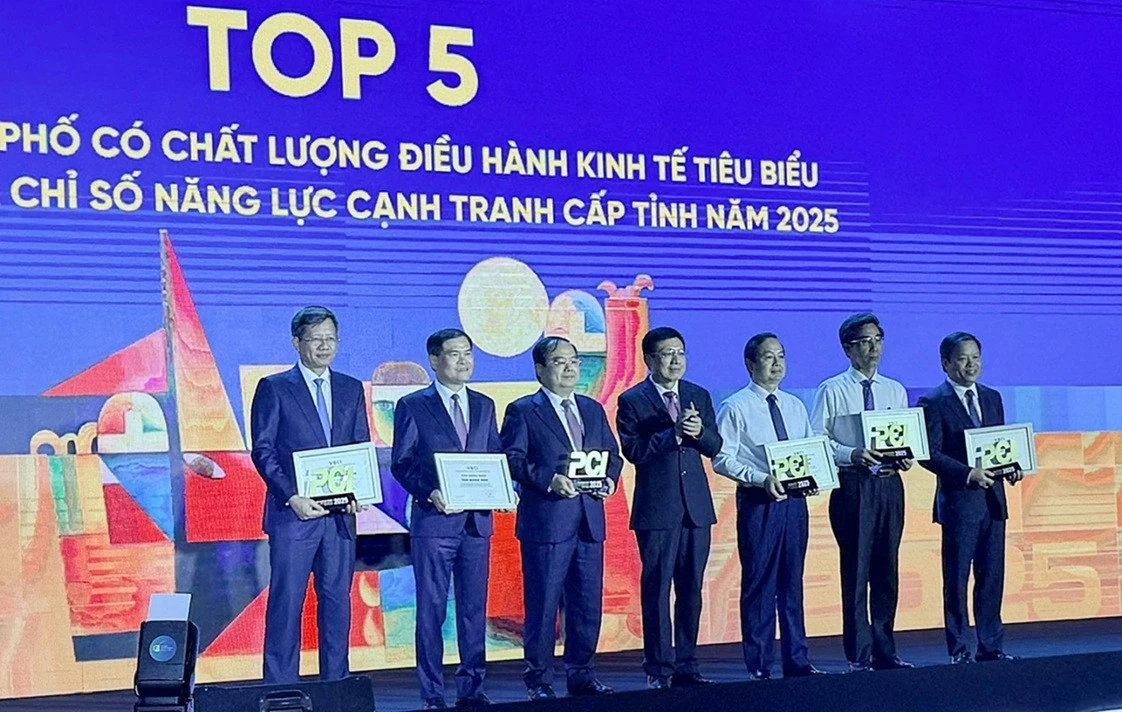 |
| Vice Chairman of Phu Tho Provincial People's Committee Phan Trong Tan receives the Commemorative Medal and Certificate of Award. (Photo: Duc Hien) |
On May 15, in Hanoi, VCCI organized the Announcement Ceremony of the Vietnam Private Economic Report 2025 and the Provincial Competitiveness Index 2025 (PCI 2025).
The event coincides with the one-year anniversary of the Politburo's Resolution No. 68-NQ/TW on private economic development, amidst the country's implementation of three historic reforms: merging provincial-level administrative units from 63 to 34 provinces and cities; transitioning to a two-tier local government model; and institutionalizing the orientation of making the private economy a crucial driver of the national economy.
Attending the ceremony on behalf of Phu Tho province was Member of the Provincial Party Standing Committee, Vice Chairman of the Provincial People's Committee Phan Trong Tan.
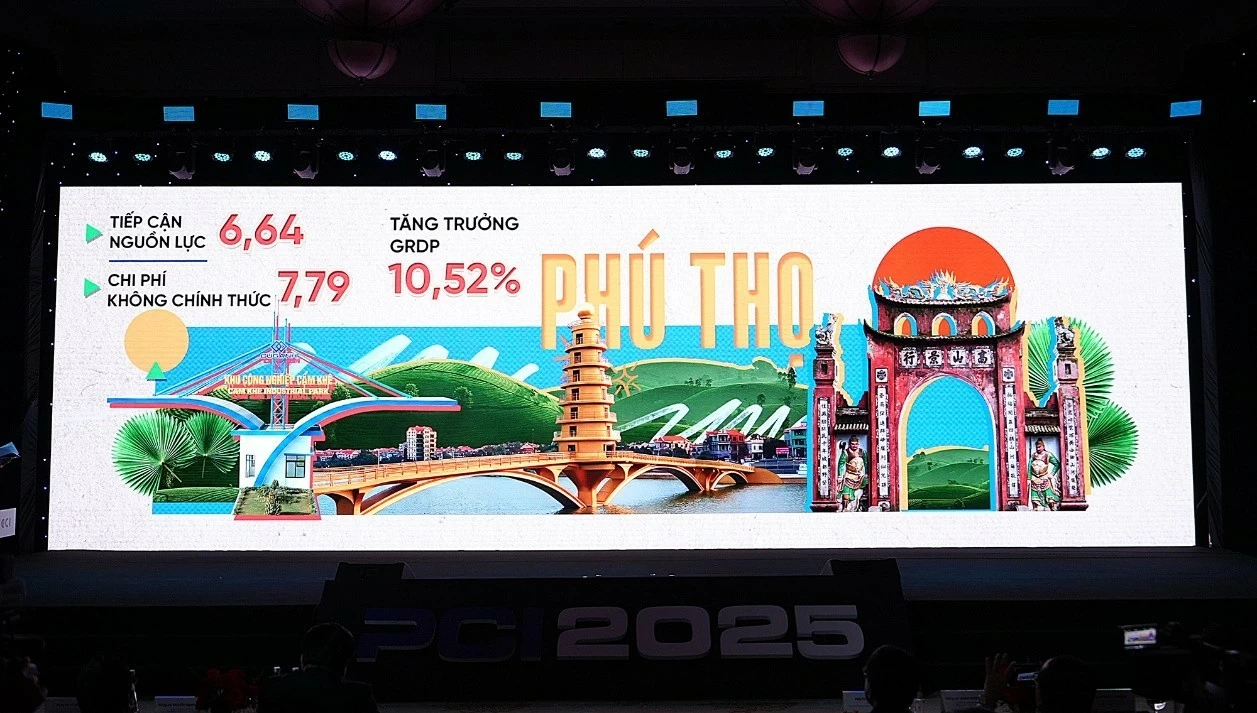 |
| Phu Tho ranks among the top 5 provinces with the best economic governance quality. (Photo: Duc Hien) |
The report honors the 5 most outstanding localities: Bac Ninh, Da Nang, Hai Phong, Phu Tho, and Quang Ninh. A common feature of the leading group is a balanced governance structure, with at least 5 out of 9 component indices in the Top 10 nationwide.
Among them: Bac Ninh leads in Constructive Government (6.67 points) and Administrative Procedure Compliance Costs (8.93 points); Da Nang leads nationwide in Market Entry with 8.70 points; Hai Phong impressively stands out with 7 out of 9 component indices in the top 10 localities; Phu Tho ranks second nationwide in Resource Accessibility; Quang Ninh continues to maintain a high position in Equal Competition and Constructive Government.
Phu Tho province stands out for its ability to unlock resources for businesses, ranking second nationwide in resource accessibility.
Additionally, Phu Tho ranks fifth in Constructive Government and is among the top 10 localities in indices such as Business Support Policies and Informal Costs. This score structure highlights Phu Tho's strength in combining the ability to clear business inputs with a proactive governance apparatus that supports business operations.
After 21 consecutive years of implementation, the 2025 report marks the largest methodological upgrade to date, introducing the PCI 2.0 version and launching the Business Performance Index (BPI) for the first time. The report is built from a large-scale empirical survey involving 3,546 domestic private enterprises, 586 foreign-invested enterprises (FDI), and 1,001 business households across all 34 provinces and cities. This is one of the most comprehensive and in-depth investigations of the Vietnamese private economic sector in recent years.
By the end of 2025, the country has more than 1 million operating enterprises, an increase of 6.6% compared to 2024. Along with approximately 6.1 million business households, the private sector currently creates jobs for about 26 million workers, equivalent to 50.2% of the total employment nationwide.
In 2025, the number of businesses entering the market reached a record 297,500, an increase of 27.4% compared to the previous year. Up to 85.7% of businesses reported maintaining or expanding their scale of operations, reflecting a cautious but positive mindset of the business community after the challenging period of 2023 and 2024.
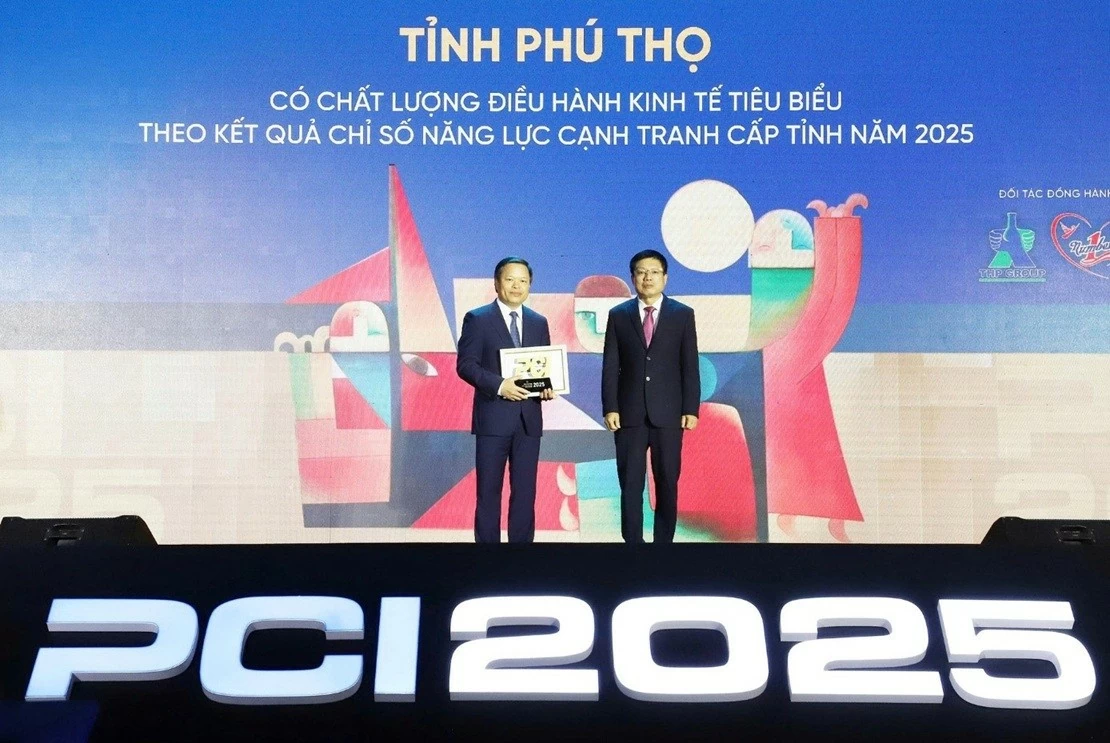 |
| Vice Chairman of Phu Tho Provincial People's Committee Phan Trong Tan receives the Commemorative Medal and Certificate of Award. |
Speaking at the event, Associate Professor, Dr. Ho Sy Hung, Chairman of VCCI, emphasized: “The Vietnamese private economic sector has moved beyond the defensive phase, accumulating internal strength and is ready to break through if market, capital, and policy transparency bottlenecks are decisively addressed in the next 12 to 18 months.
PCI 2.0 along with BPI will help measure more deeply the quality of governance and the creative capacity of local governments in the new phase.”
The VCCI Chairman also affirmed that to realize the goal of 2 million enterprises by 2030, policies need to shift strongly from a management mindset to a companion mindset, from reducing procedural burdens to creating competitive capacity for businesses.