





Ministry of Foreign Affairs introduces Digital Architecture Framework, laying foundation for digital diplomacy development
WVR - On the afternoon of January 13, in Hanoi, a conference was held to introduce the digital architecture framework of the Ministry of Foreign Affairs. Secretary of the Party Central Committee and Minister of Foreign Affairs Le Hoai Trung attended and delivered a directive speech at the conference.
Latest
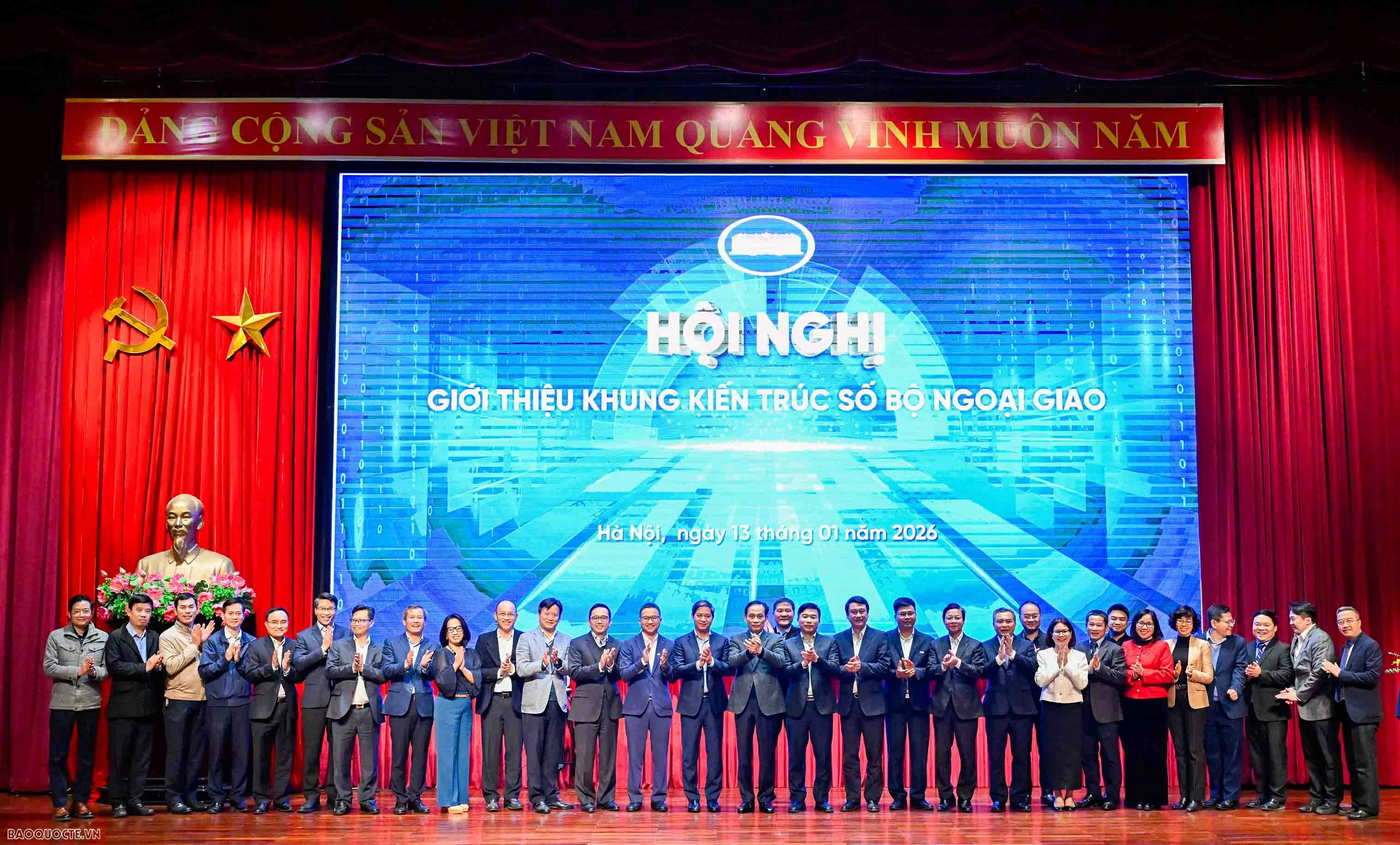 |
| Delegates attending the conference introducing the digital architecture framework of the Ministry of Foreign Affairs. (Photo: Nguyen Hong) |
The conference was attended by Major General Nguyen Huu Hung, Deputy Head of the Government Cipher Committee; Dao Van Thanh, Deputy Director of the Digital Transformation-Cipher Department, Central Office of the Party; representatives from the National Digital Transformation Department, Ministry of Science and Technology; representatives from FPT Group and Viettel Group.
From the Ministry of Foreign Affairs, Deputy Minister Le Anh Tuan, Deputy Minister Ngo Le Van, and all staff from various departments and Vietnamese representative agencies abroad were present.
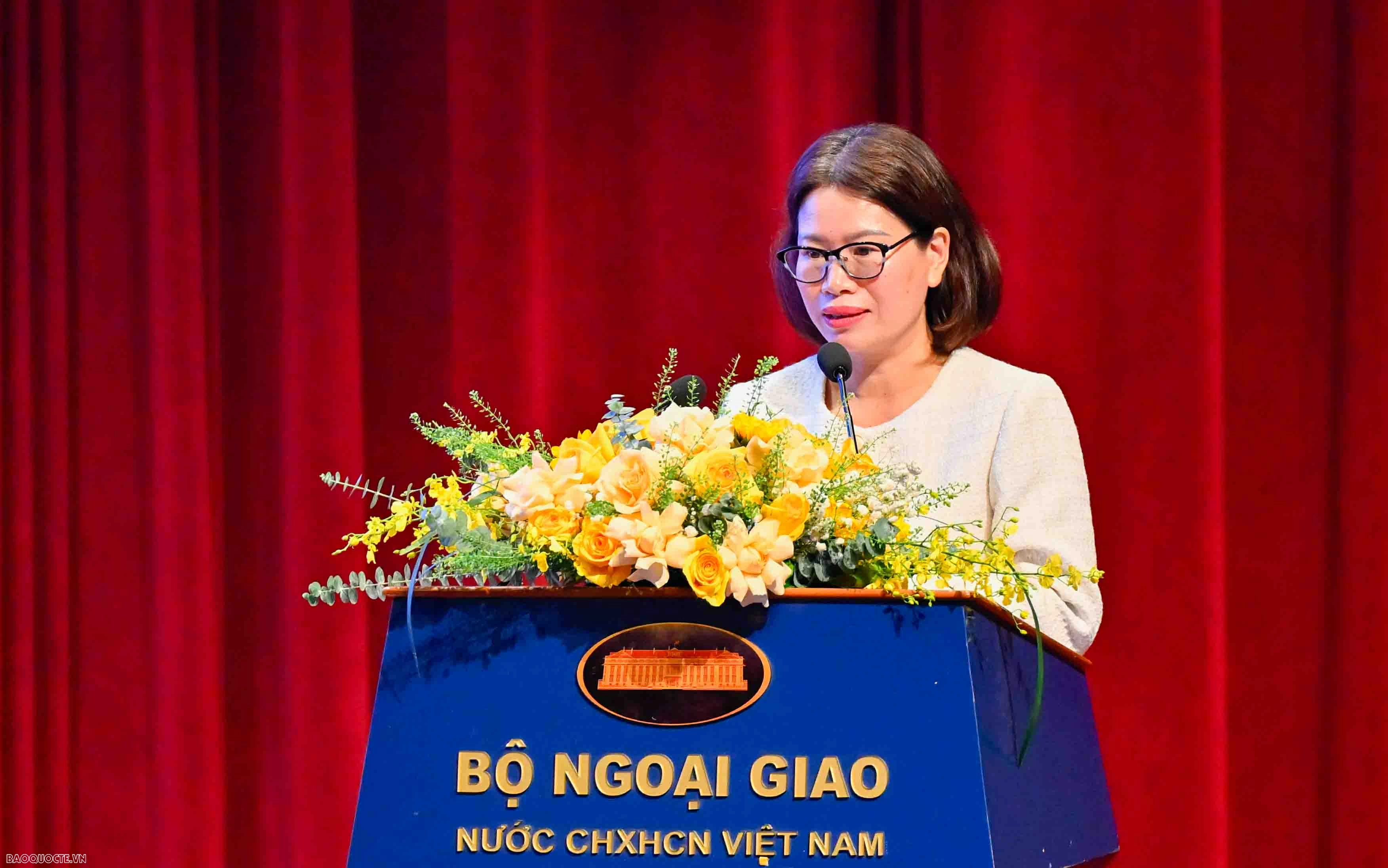 |
| Mai Thuy Ngan, Director General of the Digital Government Technology Center, National Digital Transformation Department, Ministry of Science and Technology. (Photo: Nguyen Hong) |
At the conference, Mai Thuy Ngan, Director General of the Digital Government Technology Center, National Digital Transformation Department, Ministry of Science and Technology, provided an overview of Digital Transformation and the National Digital Architecture Framework.
The National Digital Architecture Framework is issued to create a unified foundation for building and operating a digital nation. It is considered a "master blueprint" that enables the entire political system to connect, share data, and use a common digital infrastructure, aiming towards a comprehensive and sustainable development of a digital government, digital economy, and digital society. Additionally, the National Digital Architecture Framework marks a historic shift in the national digital transformation journey—from administrative management to development governance based on data and artificial intelligence.
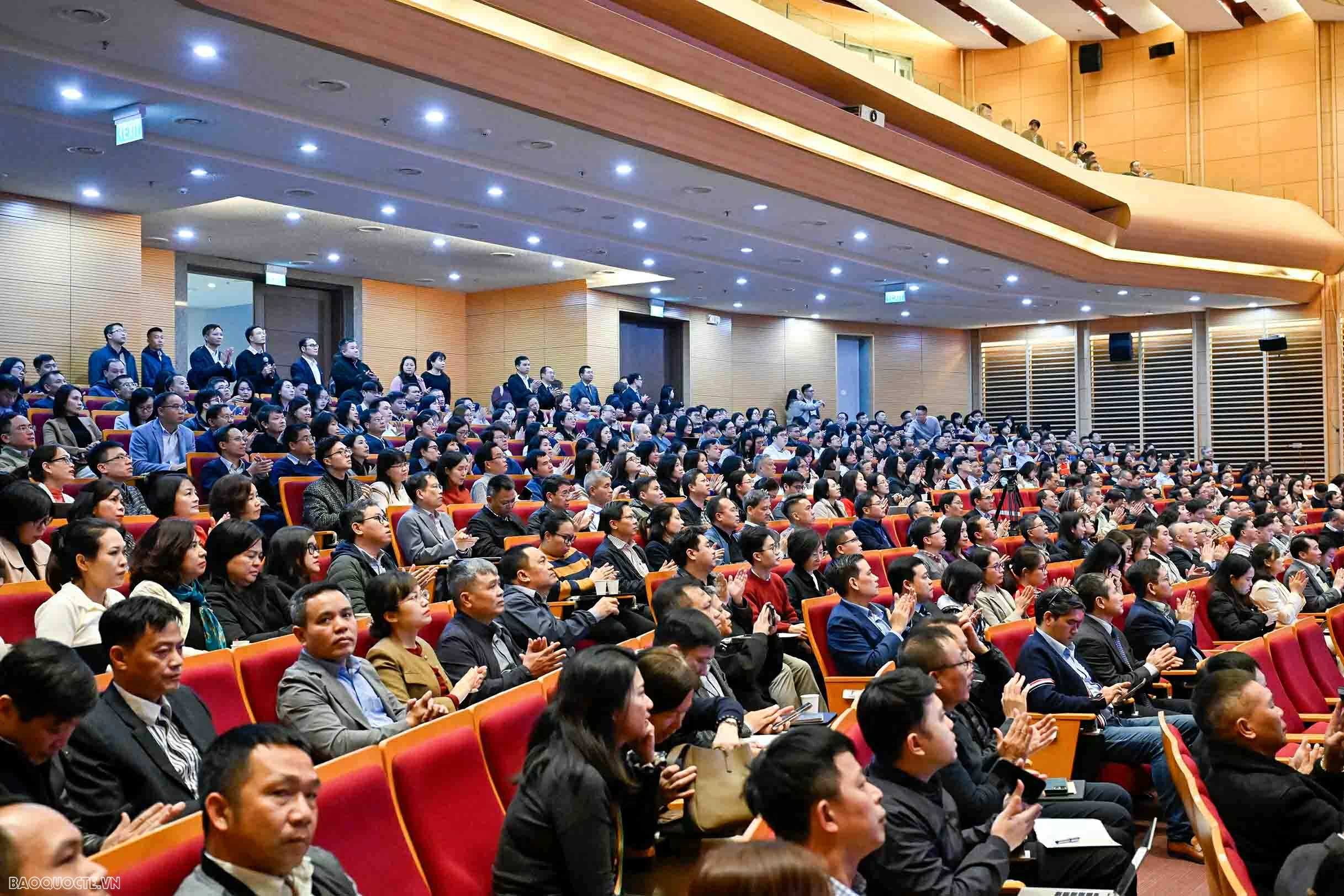 |
| The conference was attended by a large number of staff from various departments within the Ministry. (Photo: Nguyen Hong) |
The National Digital Architecture Framework is applied across ministries, ministerial-level agencies, government agencies; provinces and centrally-run cities; Party agencies at central and local levels; National Assembly agencies; the Central Committee of the Vietnam Fatherland Front; the Supreme People's Court; the Supreme People's Procuracy and political-social organizations. Other agencies and organizations can refer to it for implementation.
On this basis, the Ministry of Foreign Affairs' Digital Architecture Framework is a specific adaptation of the National Digital Architecture Framework, designed specifically for the diplomatic sector, ensuring compliance with national standards while meeting the unique requirements of foreign affairs activities.
A representative from the Cipher-Information Technology Department, Ministry of Foreign Affairs, stated that the Ministry's Digital Architecture Framework aims to build a modern, flexible, and secure digital environment; effectively serving the state management function in foreign affairs; serving the public and businesses; and clearly identifying shared components within the Ministry and between the Ministry and other agencies in the political system, ensuring connectivity, sharing, and common use of resources and data, avoiding duplication.
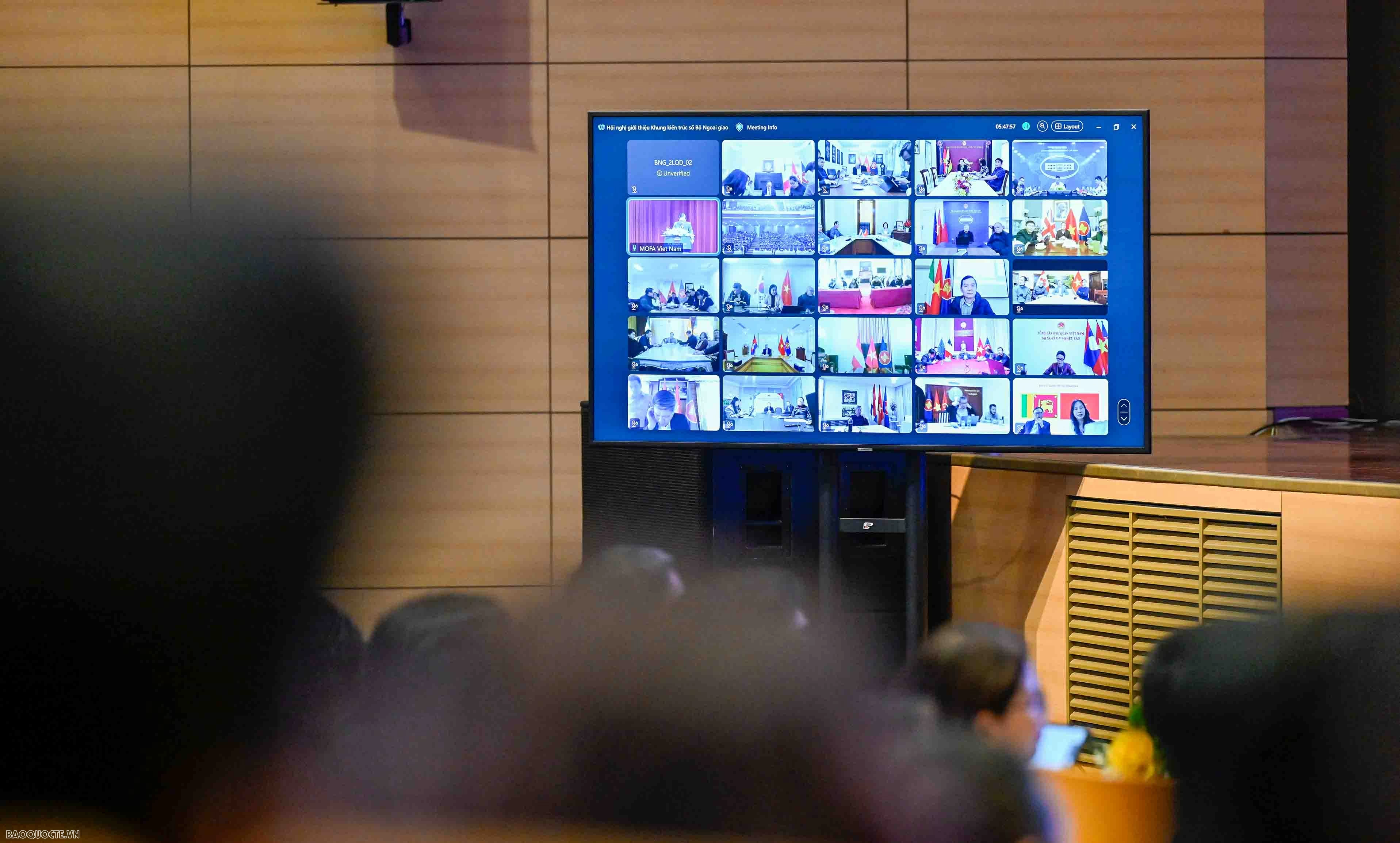 |
| The conference introducing the Ministry of Foreign Affairs' digital architecture framework was held in a hybrid format, combining in-person and online participation with Vietnamese representative agencies abroad. (Photo: Nguyen Hong) |
The Ministry of Foreign Affairs has set its vision for digital diplomacy by 2030 to build a modern, efficient digital diplomacy system that operates seamlessly from central to local levels and Vietnamese representative agencies abroad; treating data as a core asset; applying digital technology to enhance analytical and forecasting capabilities, supporting foreign policy in the nation's era of growth.
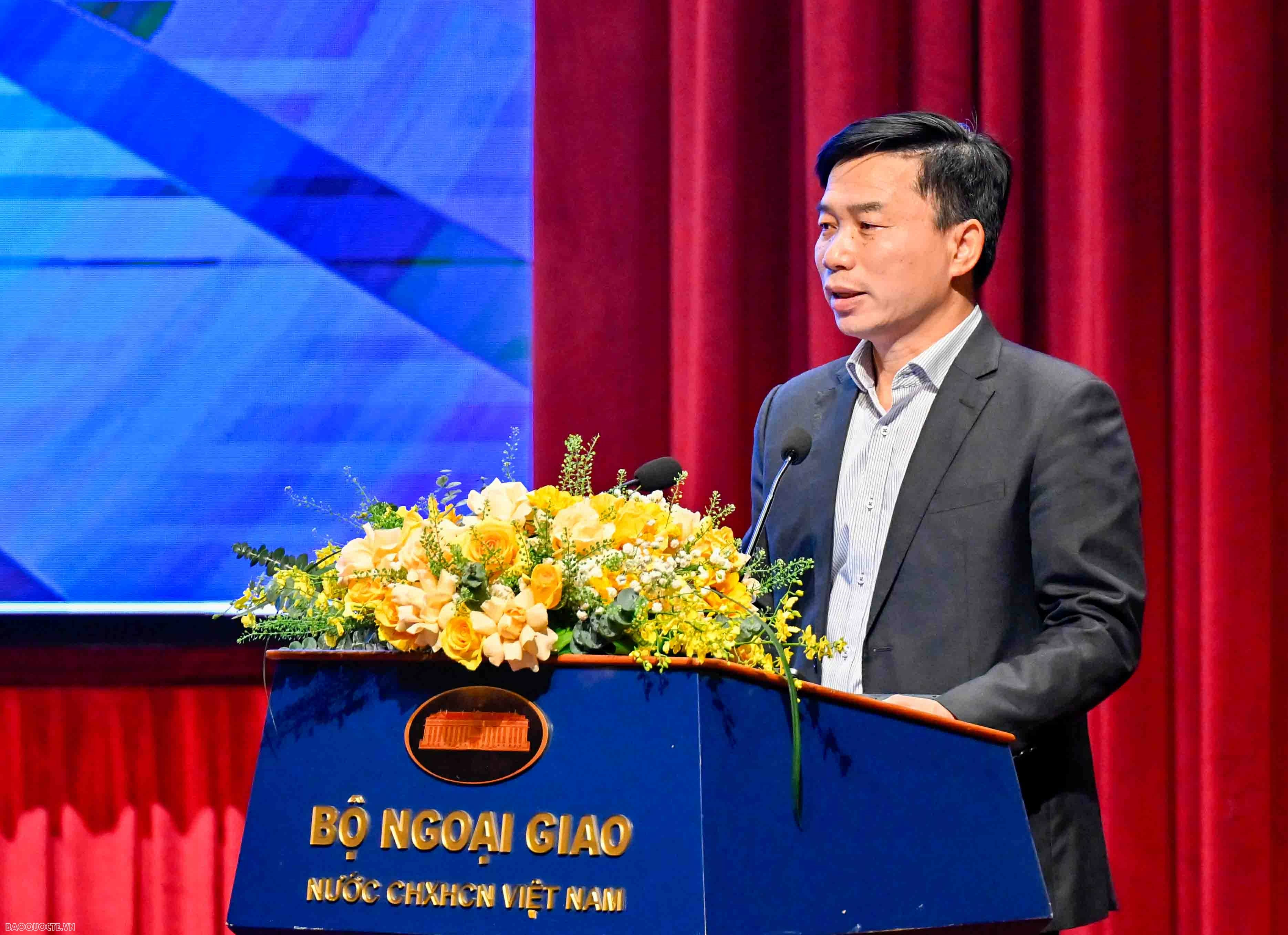 |
| Dao Van Thanh, Deputy Director of the Digital Transformation-Cipher Department, Central Office of the Party. (Photo: Nguyen Hong) |
Sharing at the conference, Dao Van Thanh, Deputy Director of the Digital Transformation-Cipher Department, Central Office of the Party, highlighted some experiences in implementing digital transformation within Party agencies. He emphasized the need for unified leadership and direction from the Party committee and leaders; regulations must precede; business process restructuring should be central; prioritize common platforms and data; link digital transformation with information security; implement according to a suitable roadmap, using effectiveness as a criterion for evaluation.
According to Dao Van Thanh, digital transformation is not solely a task for the technology department but a responsibility of the entire system and each official and civil servant; it must be practically used and yield specific results in daily work. The digital system only proves effective when used regularly; functions are only completed with user feedback. Therefore, users should be considered as participants in system improvement, following the principle of simultaneous deployment, operation, and adjustment.
He also emphasized the decisive role of the Party committee and leaders, requiring leaders to directly direct, set an example in using digital systems, and be accountable for the digital transformation results of their agencies, avoiding formality.
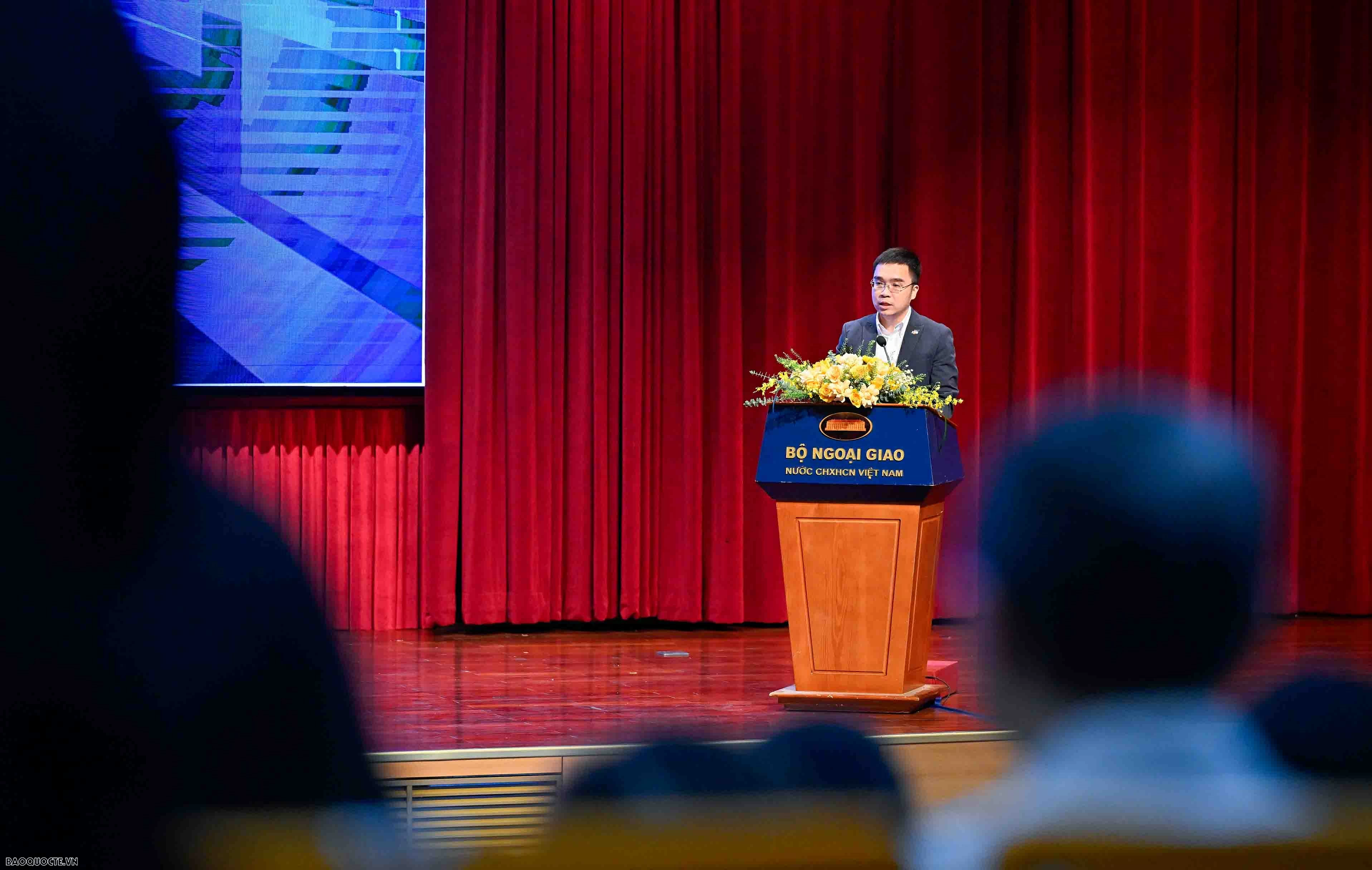 |
| FPT Group representative speaking at the conference. (Photo: Nguyễn Hồng) |
At the conference, an FPT Group representative suggested that to complete the Ministry of Foreign Affairs' Digital Architecture Framework, it is essential to focus on building critical databases; developing digital infrastructure and common platforms, with a focus on shared cybersecurity infrastructure; a shared data repository for command and control; a shared consular platform; and a digital archive management system meeting the requirements for storing confidential and top-secret documents. Information security and cybersecurity should be identified as a consistent pillar, while prioritizing an "AI first" approach, gradually integrating artificial intelligence into operational activities, especially in information security monitoring, early detection of data leakage risks, supporting compliance assessment, and data exploitation for advisory and forecasting tasks.
The FPT representative emphasized that the digital transformation of the Ministry of Foreign Affairs can only achieve sustainable effectiveness when data is created, exploited, and protected safely and reliably; information security is not just a technical requirement but a prerequisite for protecting national interests and digital sovereignty.
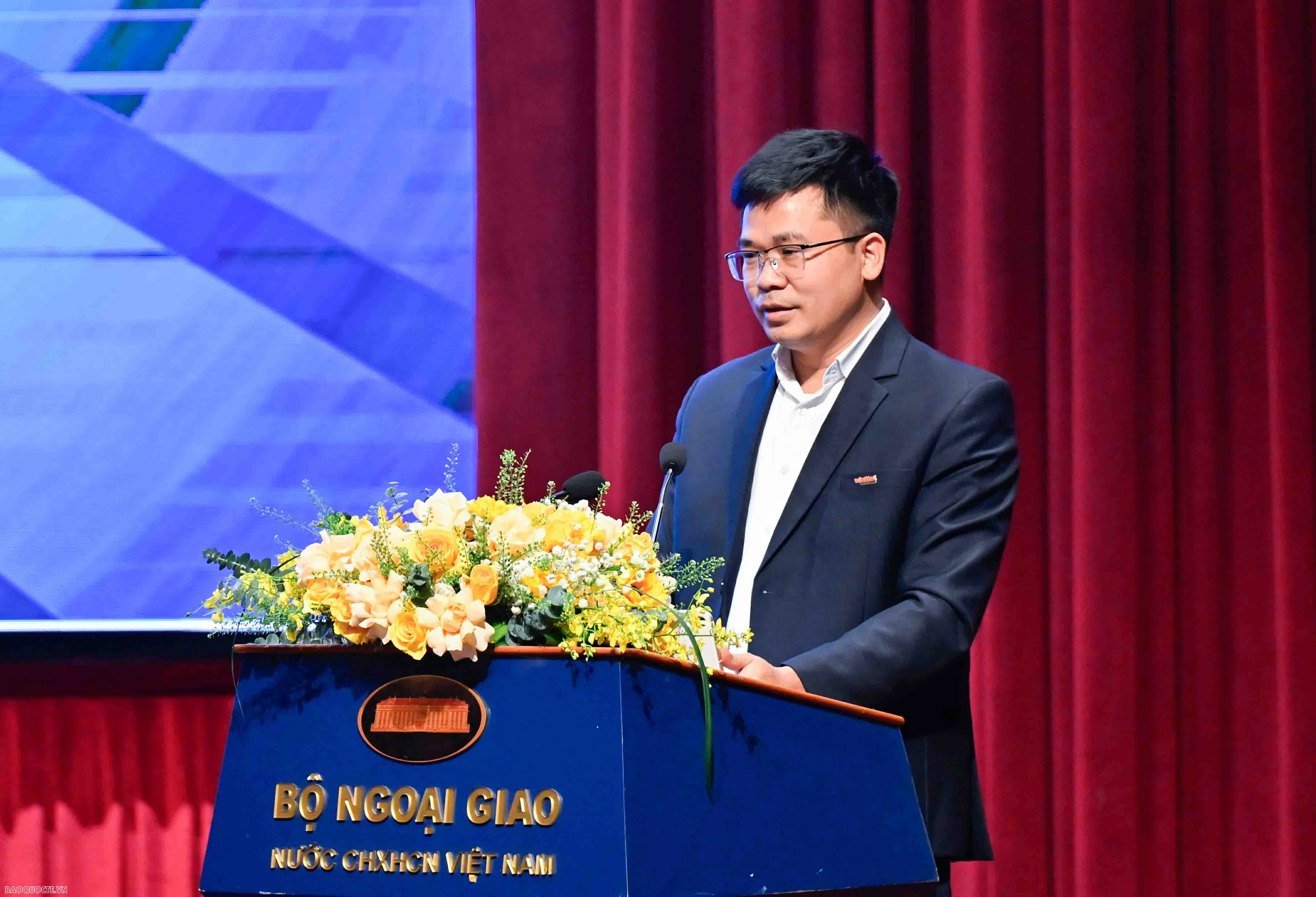 |
| Viettel Group representative speaking at the conference. (Photo: Nguyen Hoong) |
A representative from Viettel Group affirmed their commitment to closely accompany the Ministry of Foreign Affairs in advising, planning, and implementing comprehensive IT application and digital transformation activities; focusing on developing digital communication solutions, online platforms to promote the national image, enhance interaction with the international public, and effectively convey Vietnam's foreign policy messages. Viettel also proposed deeper involvement in the Ministry of Foreign Affairs' specific professional tasks, approaching new technology, AI-first, and data-driven governance.
In his concluding remarks at the conference, Le Hoai Trung, Secretary of the Party Central Committee and Minister of Foreign Affairs, highly appreciated the quality of reports and presentations, stating that the conference clarified core issues in building the Ministry of Foreign Affairs' Digital Architecture Framework, as well as the requirements and tasks for digital transformation in political system agencies. The Minister acknowledged the serious preparation of the organizing unit, the responsible and candid participation of specialized agencies and technology partners, and affirmed that the conference is an important step, demonstrating the Ministry of Foreign Affairs' systematic and methodical approach to digital transformation.
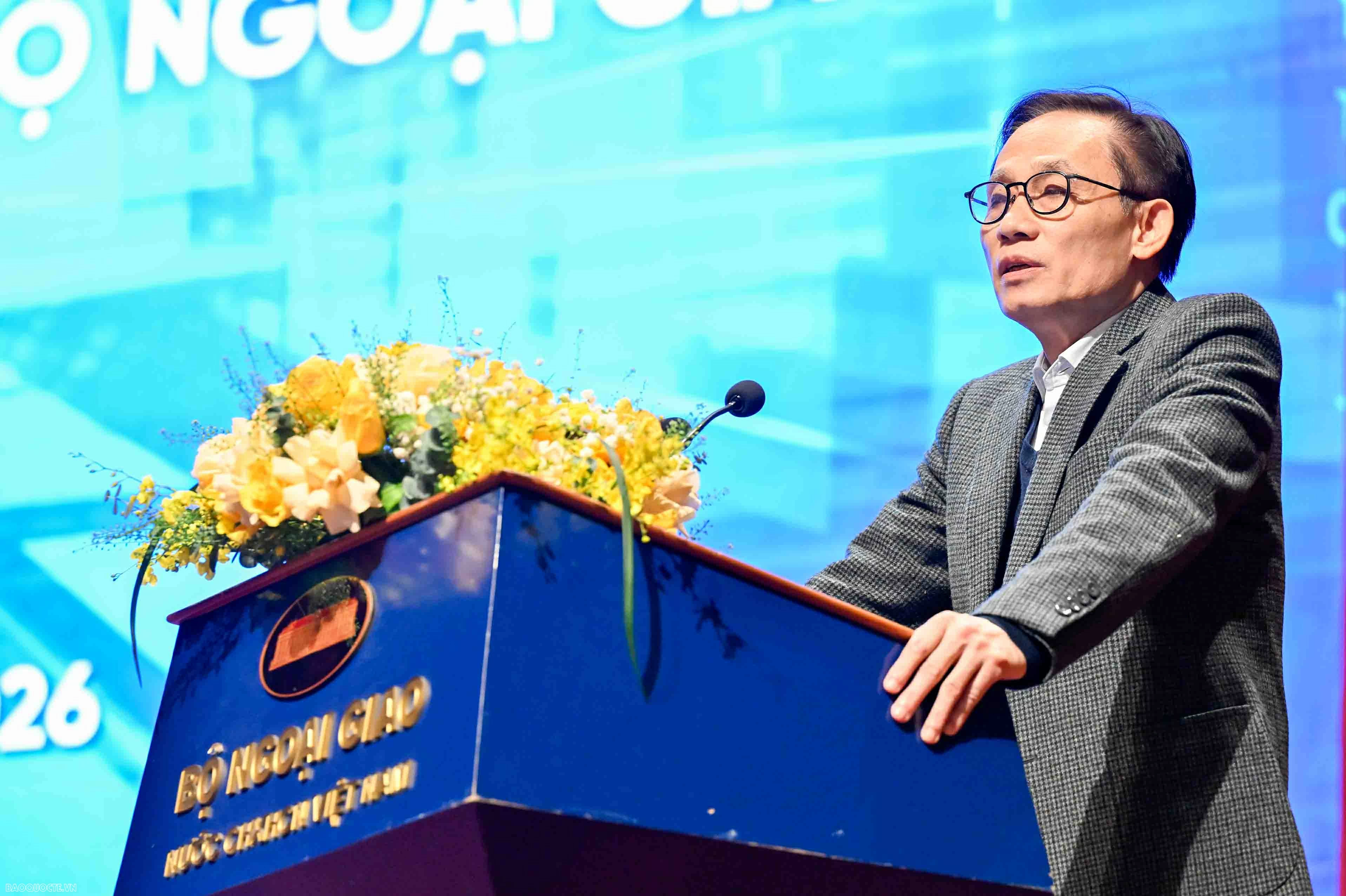 |
| Le Hoai Trung, Secretary of the Party Central Committee and Minister of Foreign Affairs, delivering the concluding remarks at the conference introducing the Ministry of Foreign Affairs' digital architecture framework. (Photo: Nguyen Hong) |
Based on this, the Minister directed the Ministry's units to focus on unifying awareness and approach to digital transformation; strictly adhere to the Digital Architecture Framework in all investment activities; prioritize building and exploiting shared data; promote digitization linked with business process restructuring; cautiously and controlledly apply new technologies, including artificial intelligence; strengthen cybersecurity and network security; focus on training digital human resources and prioritize financial resources for digital transformation efforts.
The Minister emphasized that the above orientations only truly hold significance when translated into clear changes in the daily work of the Ministry of Foreign Affairs. Accordingly, digital transformation should focus on three key areas: Administrative procedure reform linked with service efficiency; enhancing command and control efficiency based on data-driven management; and improving the quality of research, advisory, and forecasting.
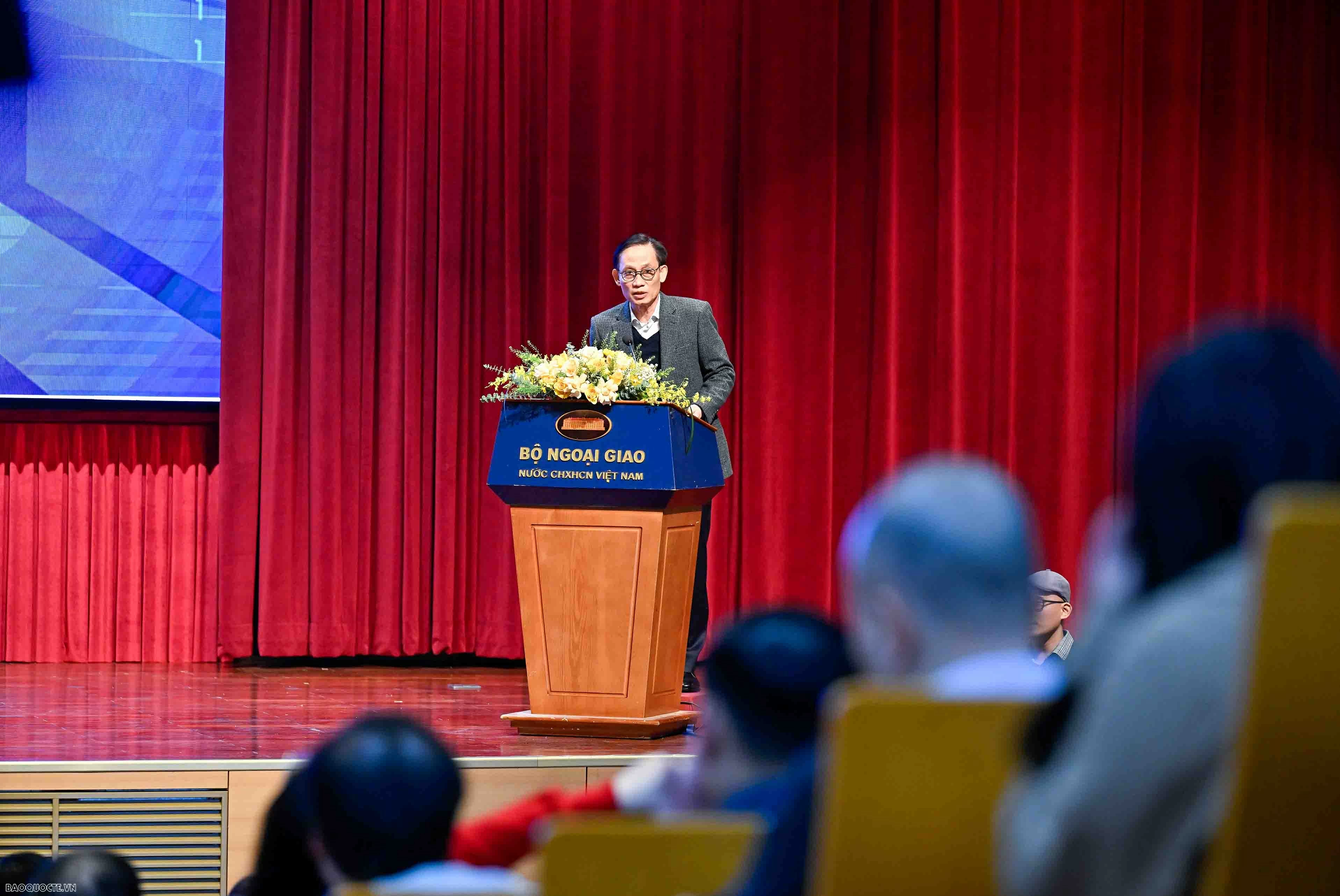 |
| Minister of Foreign Affairs Le Hoai Trung directing the Ministry's units to focus on unifying awareness and approach to digital transformation (Photo: Nguyen Hong) |
The Minister requested that the implementation work be carried out seriously, synchronously, with clear accountability at each level and unit; also expressing the desire for FPT Group and Viettel Group to continue accompanying the Ministry of Foreign Affairs in building data frameworks, data management, deploying information systems, and online public services, contributing to realizing the goal of building a modern, efficient, and sustainable digital diplomacy.


