








Innovations and breakthroughs simplifying electric vehicle ownership
Although electric vehicle (EV) sales are rapidly increasing, studies show that many people remain concerned about charging speed, driving range, and cost.
Latest
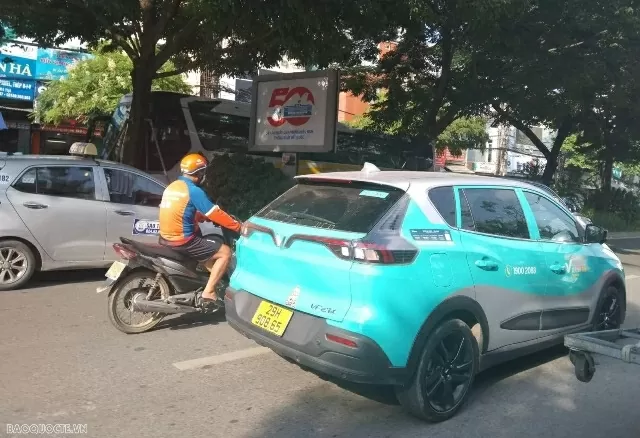 |
| Innovations and breakthroughs simplifying electric vehicle ownership: Electric vehicles are gradually becoming a popular transportation choice for many people. (Photo: N. N) |
Below are several ways the EV industry is innovating to address these concerns.
Battery-swapping service
Not everyone can install an EV charging point at home. Therefore, battery-swapping services are among the recent innovations that aim to make EV ownership more convenient for many people.
Battery-swapping allows users to quickly replace depleted batteries with fully charged ones. This service typically operates on a subscription basis and offers multiple benefits to users.
First is convenience. Companies in this sector claim that swapping a battery takes about 5 minutes, roughly equivalent to the time it takes to refuel a gasoline car.
Additionally, customers may only need to purchase the vehicle itself and rent the battery, reducing the initial cost of buying an EV. Battery-swapping also allows batteries to be charged more slowly, which can extend their lifespan.
This service also benefits the power grid, as swap stations can reduce energy demand by charging batteries during off-peak hours.
The concept of battery-swapping is not new, but until recently, it hadn’t been widely adopted. Companies like China’s Nio are changing this trend. It is now operating thousands of battery-swap stations worldwide.
Battery Technology
Advances in battery technology can further accelerate EV adoption. Currently, the most widely used type of EV battery is the lithium-ion battery, which offers benefits such as high power-to-weight ratio and good energy efficiency.
Experts are working to improve battery technology to increase capacity, shorten charging time, reduce costs, and address concerns over the supply of critical materials such as cobalt and lithium.
One promising alternative to lithium-ion batteries, aimed at improving driving range and reducing charging time, is solid-state batteries. Developed by companies like Nissan, solid-state batteries use a solid electrolyte instead of a liquid one.
This design allows for greater energy density in a smaller space, potentially extending driving range and enabling faster charging due to more efficient charge transfer.
Nissan says this technology could double the range of EVs with a battery half the size but twice the energy output.
Meanwhile, sodium-ion batteries, which use sodium instead of lithium, cobalt, or nickel, don’t improve performance but can reduce costs because they rely on more abundant materials.
Investment in Public Charging Infrastructure
An equally important factor is public charging infrastructure. A recent World Economic Forum report titled “Scaling Up Investment in EV Charging: A Policy Roadmap for Cities” states that although EV sales are surging globally, public charging networks in many cities are not expanding fast enough to meet demand.
The report notes that investment in EV charging infrastructure will require cooperation between governments and the private sector.
One example is the U.S.-based startup It’s Electric, which produces curbside EV chargers powered by nearby buildings rather than being directly connected to the grid.
This approach can help cities overcome challenges in expanding public charging infrastructure, such as high building density and limited grid capacity.
By collaborating with property owners to identify suitable buildings and city authorities to obtain necessary permits, the company aims to build a network of chargers that could help the U.S. meet the expected surge in demand for Level 2 chargers—commonly used at homes and public locations.
Other innovative public charging solutions include repurposing old telecom cabinets in Scotland and installing pole-mounted chargers in cities like London (UK) and Los Angeles (USA), which utilize existing utility poles and streetlight infrastructure.
Fast-Charging Stations
Within the public charging system, the growth of fast-charging stations is outpacing that of slow-charging stations.
China leads this trend, accounting for more than 85% of the world’s fast-charging stations. Ultra-fast stations in Beijing can serve up to 700 EVs per day.
These stations can charge 6–8 vehicles simultaneously and fully recharge fast-charging-capable cars in about 10 minutes.
Beijing plans to build a network of such stations with a total capacity to charge more than 8,000 vehicles daily.
Electrified Roads
Finally, electrified roads are seen as an ideal solution for the future of EVs. In a world where cars can be charged while driving, “range anxiety” would become a thing of the past, and electrified roads could make this vision a reality.
There are three ways to create such roads: overhead power lines, suitable for heavy vehicles such as buses; conductive charging, where vehicles charge through a metal strip in contact with a rail embedded in the road; Inductive charging, which uses equipment beneath the road surface to transfer power to a coil in the vehicle—similar to wireless charging for smartphones.
Electrified roads can be powered by the grid, batteries, or renewable sources like solar panels.
Experts say this “dynamic charging” would allow drivers to travel longer distances with smaller batteries, avoiding wait times at charging stations—particularly in rural areas and high-traffic zones.
Although the initial goal of electrified roads is to charge heavy-duty vehicles like buses, a recent study in Sweden revealed an unexpected benefit for private cars.
Specifically, combining home charging with travel along these roads could reduce EV battery size by up to 70%.
Recognizing this potential, Sweden is pioneering several projects, including the construction of the world’s first permanent electrified highway.
Meanwhile, the U.S. is also planning its first similar project in Detroit, Michigan.