





IFAD and Vietnam: Collaborating to shape a green, sustainable, and inclusive future
WVR - On October 15, the Independent Office of Evaluation (IOE) of the International Fund for Agricultural Development (IFAD) in collaboration with the Government of Vietnam organized the National Roundtable Discussion on the Country Strategy and Program Evaluation (CSPE) in Hanoi.
Latest
The event marks a significant milestone in over 30 years of effective collaboration between IFAD and Vietnam, bringing together representatives from ministries, sectors, development partners, local authorities, and communities to jointly evaluate the outcomes of IFAD-supported programs from 2012–2024. It also aims to chart a new strategic cooperation direction for the upcoming phase, focusing on inclusive, modern rural development that adapts to climate change.
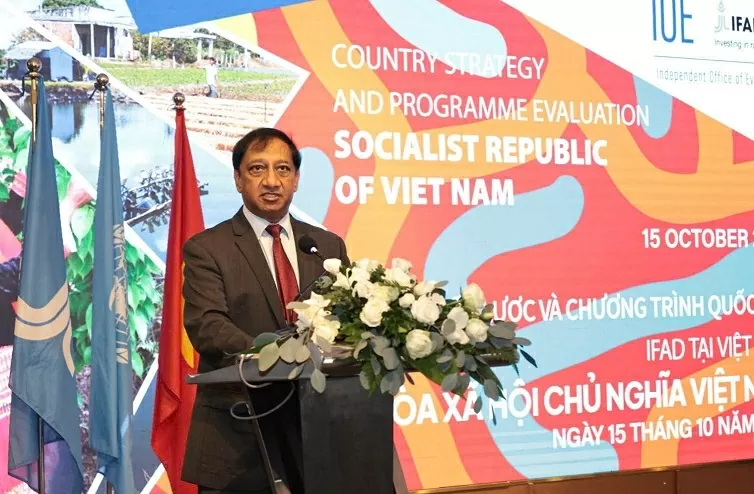 |
| Dr. Indran A. Naidoo kicks off the National Roundtable Discussion with a strong message on cooperation, innovation, and action for sustainable rural areas. (Source: Organizing Board) |
The independent evaluation results indicate that IFAD's investments have made a lasting impact on rural livelihoods, helping small-scale farmers enhance productivity, diversify livelihoods, and increase resilience to climate and market fluctuations.
“The evaluation report highlights Vietnam's achievements in rural development, rooted in proactive, innovative local initiatives and inclusive cooperation,” emphasized Dr. Indran A. Naidoo, Director of IOE at IFAD.
Mr. Paolo Silveri, Head of the IFAD Evaluation Team, stated: “The next phase will focus on scaling up effective models, including climate adaptation, digital transformation, and inclusive value chain development, while continuing to place women, youth, and ethnic minorities at the centre of change.”
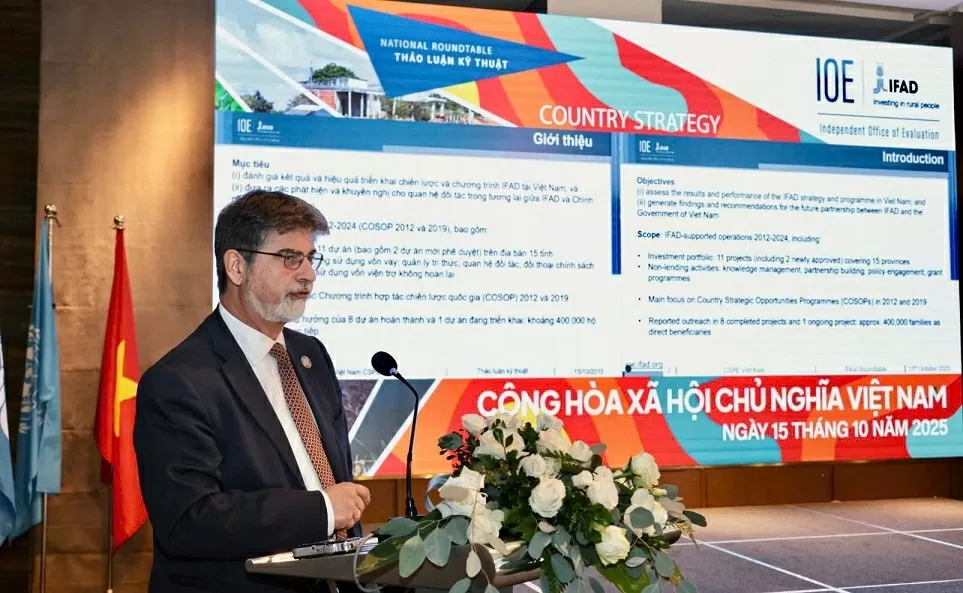 |
| Mr. Paolo Silveri shares evaluation results and calls for concrete actions to expand impact and enhance climate adaptability. (Source: Organizing Board) |
Before the discussion, the IFAD delegation conducted field visits in the Mekong Delta, witnessing firsthand the tangible outcomes of IFAD projects.
In Tra Vinh, the delegation visited RYNAN Technologies to explore climate-smart agricultural solutions such as salinity measurement buoys and automated irrigation systems.
In Ben Tre, the delegation met with coconut growers and processors developing sustainable value chains with IFAD's support. These models demonstrate how innovation, cooperation, and community leadership are turning rural adaptation into measurable outcomes.
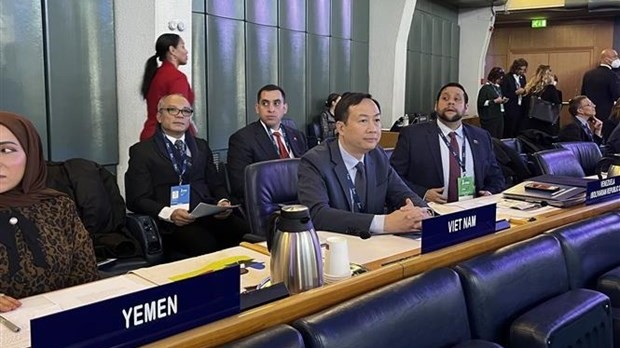
The Government of Vietnam reaffirmed its commitment to strengthening cooperation with IFAD to enhance investment efficiency and expand the positive impact of programs.
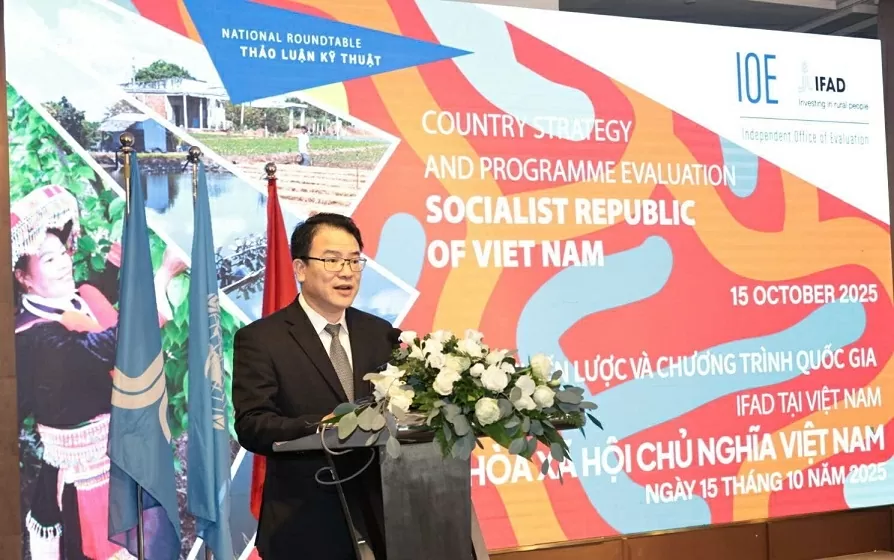 |
| Deputy Minister of Finance Tran Quoc Phuong affirms Vietnam's determination with IFAD to replicate successful models and promote rural innovation. (Source: Organizing Board) |
Mr. Tran Quoc Phuong, Deputy Minister of Finance, shared: “IFAD has been a trusted partner in Vietnam's rural transformation journey for over three decades. IFAD projects demonstrate that focused investments, aligned with local ownership, can create exceptional impacts.
Our common goal is to replicate successful models, mobilize additional resources for innovation, climate adaptation, and enhance rural competitiveness, enabling rural communities to thrive in a changing world.”
From a local perspective, delegates emphasized that coordination, inclusivity, and community ownership are key factors in sustaining results.
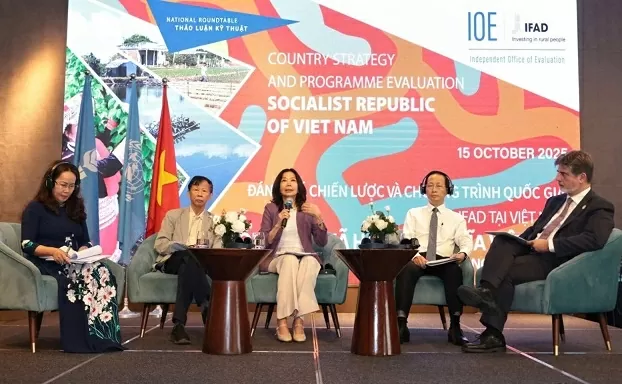 |
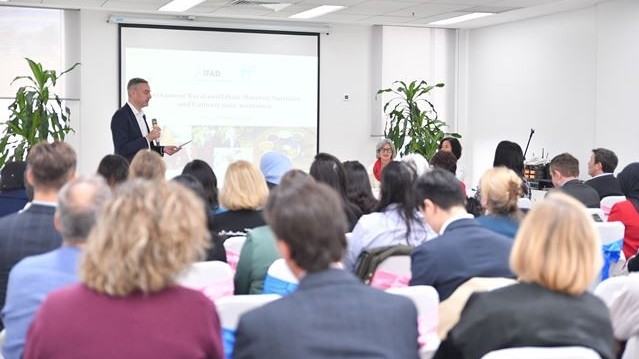
| A lively discussion atmosphere at the National Roundtable – where over 100 delegates join hands to share future recommendations for Vietnam's rural development. (Source: Organizing Board) |
Mr. Nguyen Truc Son, Vice Chairman of Vinh Long Provincial People's Committee, stated: “IFAD's support has connected farmers, businesses, and authorities in a single value chain.
After Vinh Long, Ben Tre, and Tra Vinh merged into one administrative unit, we see more opportunities to replicate successful models.
The strength of this cooperation lies in people – empowering communities to lead development, strengthening cooperatives, and promoting inclusive, sustainable rural growth.”
Ms. Reehana Raza, IFAD's Asia-Pacific Regional Director, emphasized: “The Country Strategic Opportunities Program (COSOP) is the foundation guiding cooperation between IFAD and Vietnam, ensuring strategic investments align with the country's evolving rural development needs.
This is a testament to our shared commitment to inclusive growth, climate adaptation, and innovation, continuing to empower rural communities and contribute to national development priorities.”
The National Roundtable Discussion gathered over 100 delegates, including the Ministry of Finance, Ministry of Agriculture and Environment, provincial authorities, mass organizations, and international development partners.
Discussions focused on maintaining and expanding IFAD's impact, closely linked with the national strategy for green growth, digital transformation, and rural modernization.
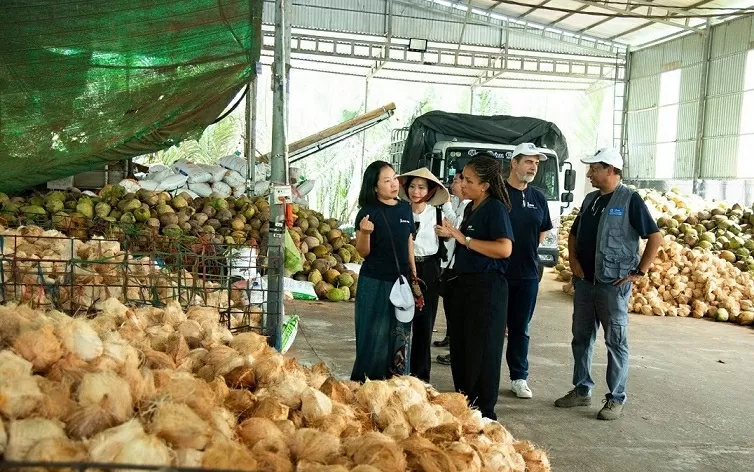 |
| The evaluation team meets with farmers and coconut enterprises in Ben Tre – where innovation and community cooperation are turning climate adaptation into practical action. (Source: Organizing Board) |
The evaluation results also affirm Vietnam's growing role as a leader in sharing knowledge and experience in rural transformation.
IFAD's support has helped scale local lessons to national policy, fostering inter-provincial cooperation and regional learning exchanges.
Delegates also discussed the Agreement at Completion Point (ACP) – a joint commitment between IFAD and the Government of Vietnam to integrate evaluation findings into the development of new strategies and investment programs, ensuring lessons from practice guide future projects.
“Vietnam and IFAD share a common vision: to build a prosperous, inclusive, and sustainable rural area where no one is left behind,” stated Dr. Indran A. Naidoo.
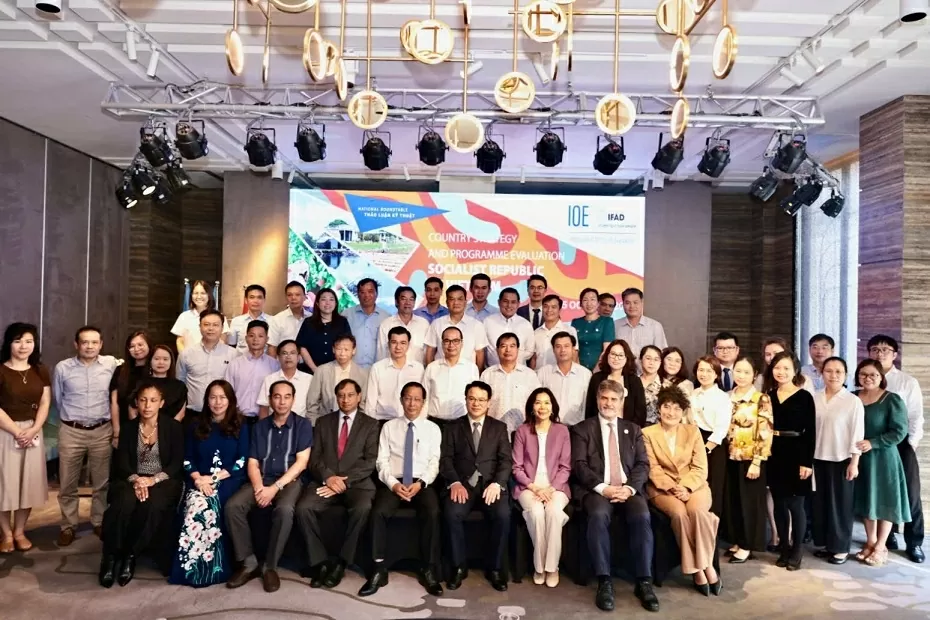 |
| Delegates look towards the future – concluding the National Roundtable with a commitment to continue the journey for a prosperous rural area, leaving no one behind. (Source: Organizing Board) |
| IFAD is an international financial institution and a specialized agency of the United Nations, with a mission to eradicate hunger, reduce poverty, and promote sustainable rural development. IFAD collaborates with governments, communities, and the private sector, investing in rural people to build inclusive, resilient, and sustainable food systems. For over three decades, IFAD has closely cooperated with Vietnam through various projects, helping hundreds of thousands of rural people improve livelihoods, strengthen food systems, expand market opportunities for farmers, and promote innovative initiatives nationwide. Findings from the evaluation report and field visits in the Mekong region show that Vietnam's locally-led, climate-adaptive, and inclusive rural development model can serve as an example for other countries aiming for sustainable growth. |