



A classroom without barriers: British students inspire hearing-impaired learners in Vietnam
WVR - Amid the bustling pace of Hanoi, there are special lessons for hearing-impaired children that has become an unexpected meeting place for young people from two different cultures. A group of students from the United Kingdom not only brought engaging English lessons to Vietnamese pupils, but also gained meaningful lessons in empathy, understanding and human connection.
Latest
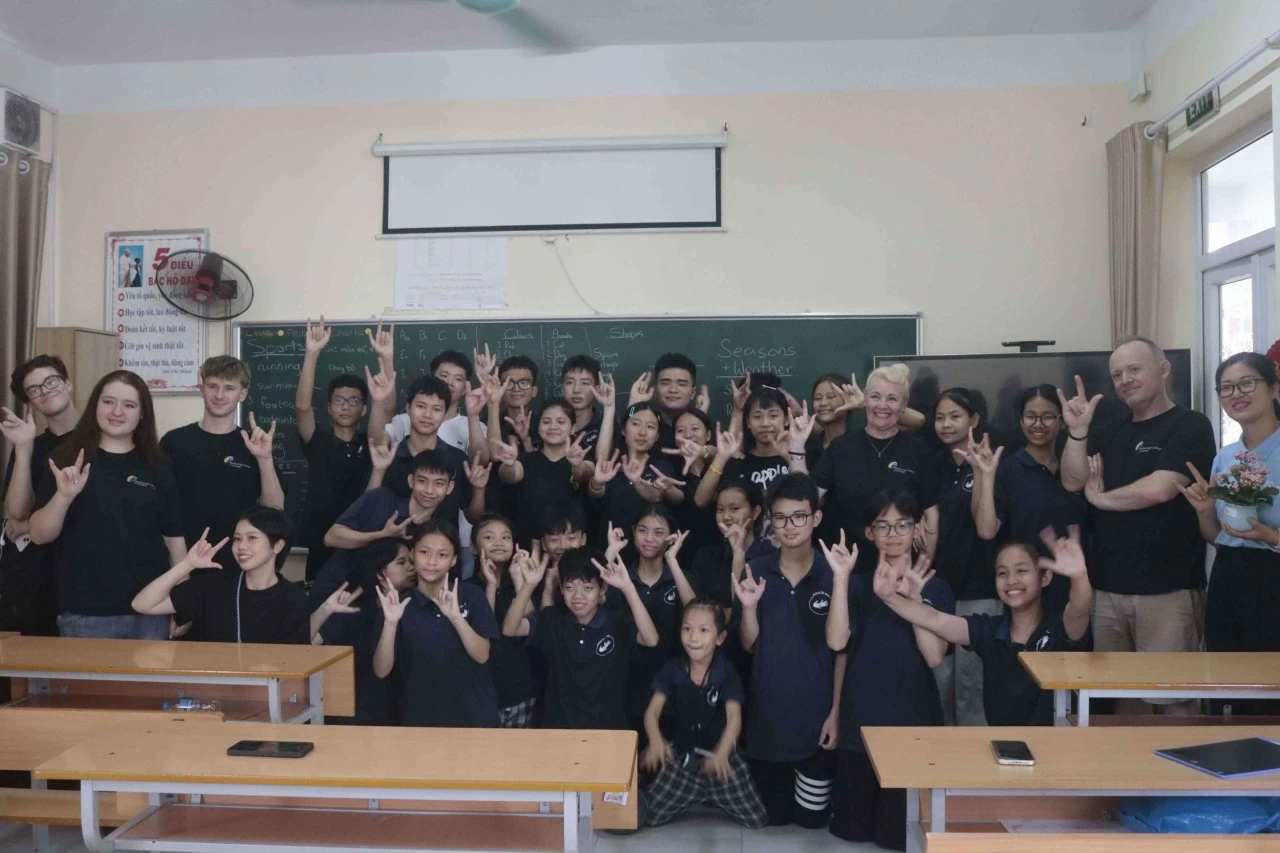 |
| Beyond the barriers of spoken language, smiles and sign language brought Vietnamese hearing-impaired pupils and visiting British students together in a classroom defined by connection and understanding. (Photo: Ngoc Linh) |
As part of their educational and cultural experience in Vietnam, students from Farnborough College of Technology in the United Kingdom had an opportunity to teach English to hearing-impaired students at the Support Center for Inclusive Education Development, located at the campus of the National College for Education.
The three-day teaching activity took place before the British students embarked on a hands-on learning programme exploring Vietnamese cuisine. In these unique classrooms, international volunteers and hearing-impaired students participated in vocabulary games, creative activities and interactive lessons of visual aids and body language.
Concerns before entering a special classroom
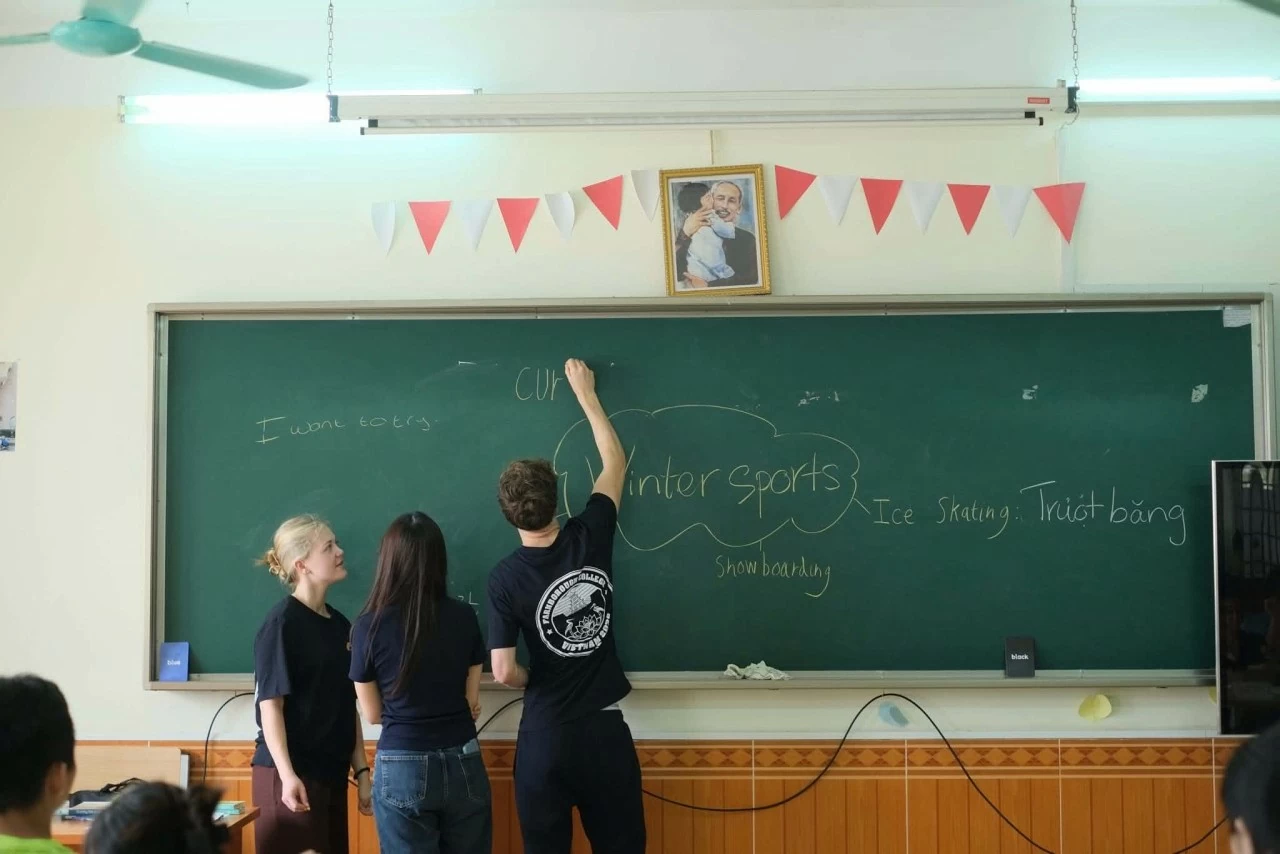 |
| Abigail Burke (left) and her friends discuss and prepare topics before English classes with hearing-impaired students. (Photo: Minh An) |
For many students from Farnborough College, this was their first visit to Vietnam. Yet what made them nervous was not the unfamiliar climate or cultural differences, but the prospect of teaching children with hearing impairments.
Abigail Burke, one of the international students, recalled that her first reaction was a mixture of excitement and anxiety. “I was really excited because it was an opportunity to learn about different approaches to teaching different groups of students. At the same time, I was worried about the language barrier and how we would communicate with the children”, she said.
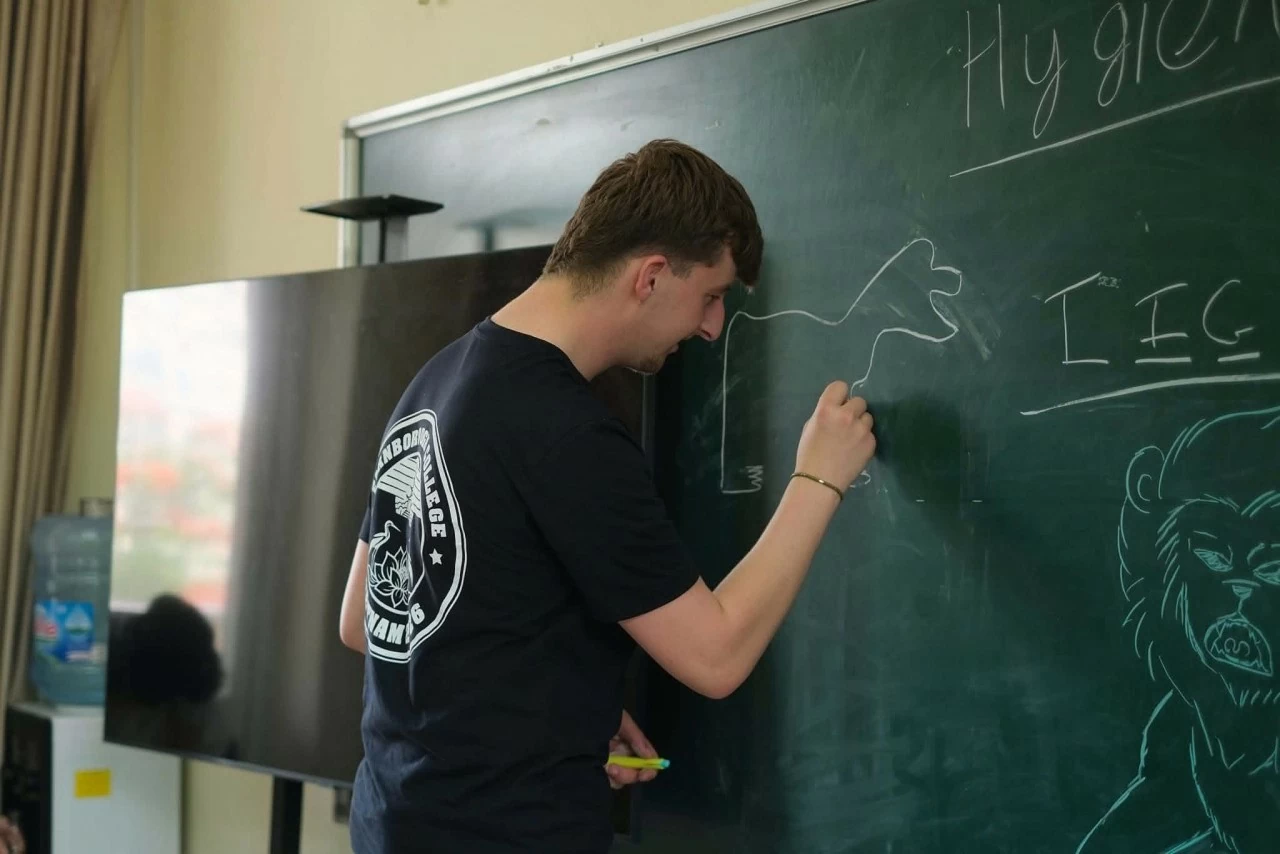 |
| Playful drawings on the blackboard became a tool that helped Charlie bridge the language gap with hearing-impaired students. (Photo: Minh An) |
Many members of the group shared similar concerns. Charlie Dawson, another member of the group, admitted that communication was what troubled him most before the trip.
“We speak English, while the students use Vietnamese and sign language. At first, I thought that would create a lot of difficulties”, Charlie said.
The first lessons looked very different from a typical language classroom. Instead of lengthy lectures or constant verbal interaction, communication relied on eye contact, gestures, visual materials and sign language.
“We had to learn to observe more carefully, use body language more effectively and be much more patient”, Abigail said.
When language was no longer the biggest barrier
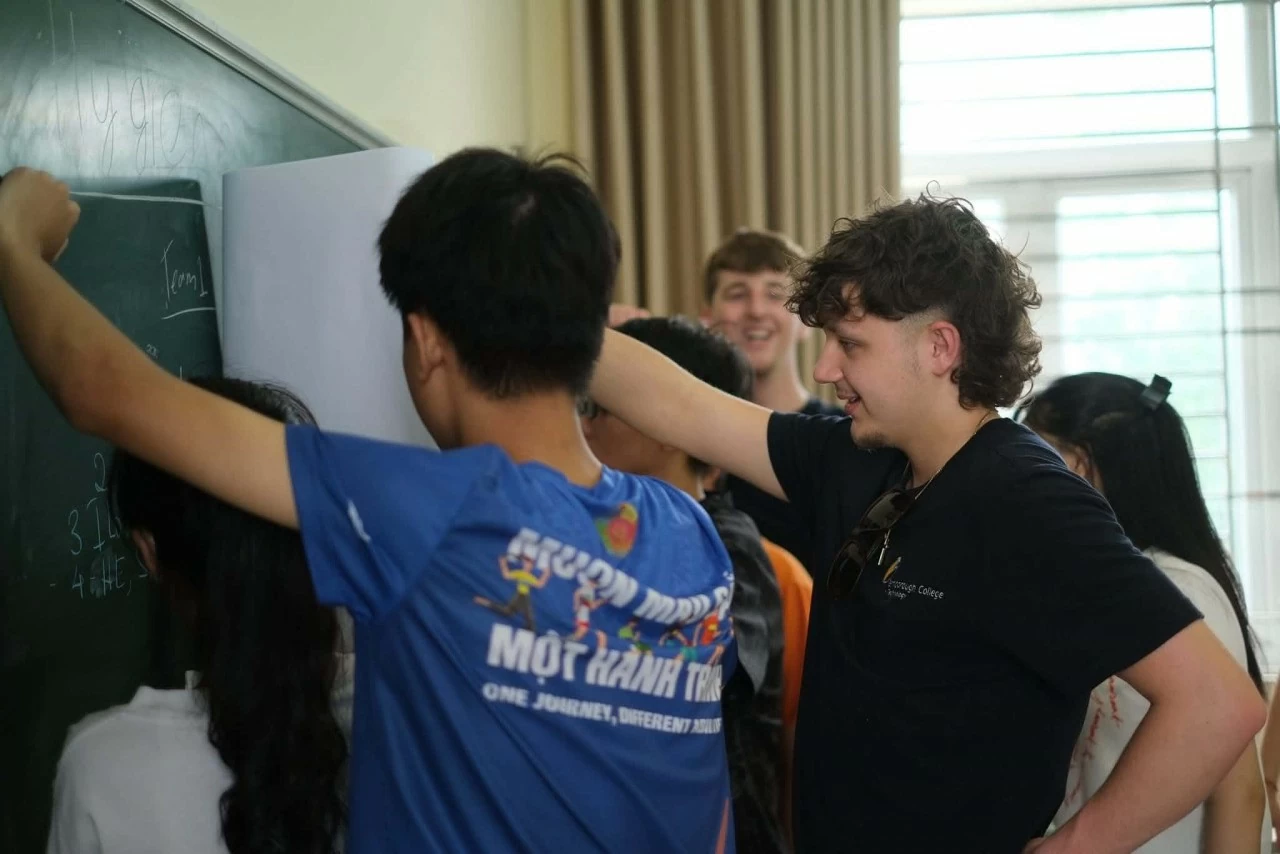 |
| Engaging classroom activities became opportunities for British students and hearing-impaired pupils to overcome language barriers, learning to listen through observation, patience and mutual understanding. (Photo: Ngoc Linh) |
After the initial awkwardness faded, the distance between the two groups quickly narrowed. Rather than relying entirely on interpreters, the British students began learning basic sign language gestures themselves. They used facial expressions, visual materials and body language to convey ideas and engage with the children.
Simple topics about colours, fruits and everyday objects gradually became bridges that brought them closer together.
One of the most enjoyable activities involved making clay models inspired by food. Under the children's creative hands, miniature loaves of bread, fruits and other playful creations appear.
“The children genuinely surprised me”, Abigail said. “They were incredibly creative and intelligent. I didn't expect them to know so much English already. Many of them could memorise vocabulary and write English words very quickly”.
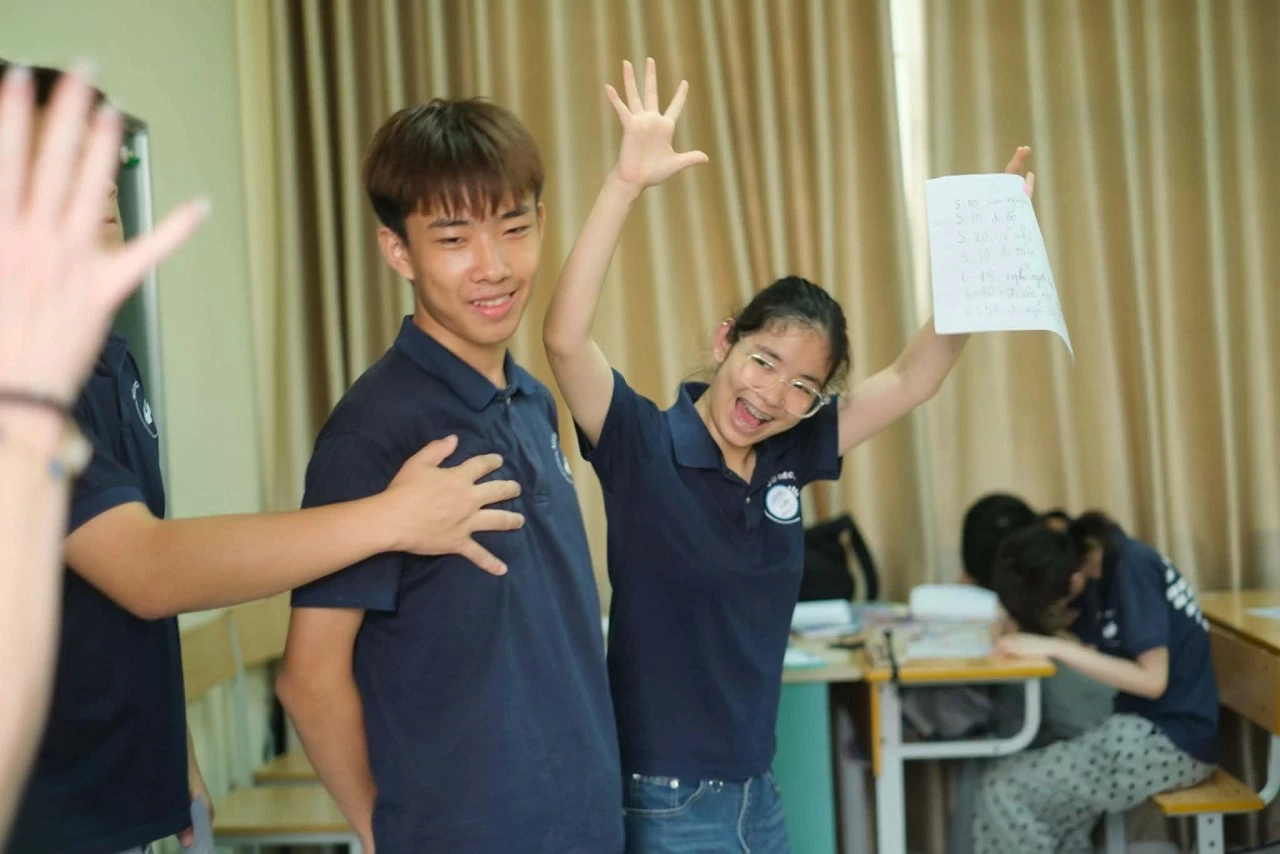 |
| Hearing-impaired pupils enthusiastically participate in engaging English-learning activities led by international students. (Photo: Minh An) |
The hearing-impaired students, in turn, warmly embraced their special guest teachers.
Hoang Thi Huong Giang, teacher of Class 11A for hearing-impaired students, said her students had eagerly anticipated the sessions with the international volunteers. “They told me they loved learning with the foreign teachers because the lessons were interesting, easy to understand and introduced them to many new words”, she said. “The students found them friendly and humorous, which made learning much more enjoyable”.
According to teacher Giang, learning a foreign language has always been particularly challenging for hearing-impaired students due to limitations in accessing spoken sounds. However, practical opportunities for communication like these inspire them to become more confident and motivated.
“Some students have expressed a desire to continue studying English to create more opportunities for themselves in the future. Some even dream of studying abroad or travelling overseas one day”, she added.
One hearing-impaired student shared that the classes had brought both joy and inspiration.
Connecting bridge across different cultures
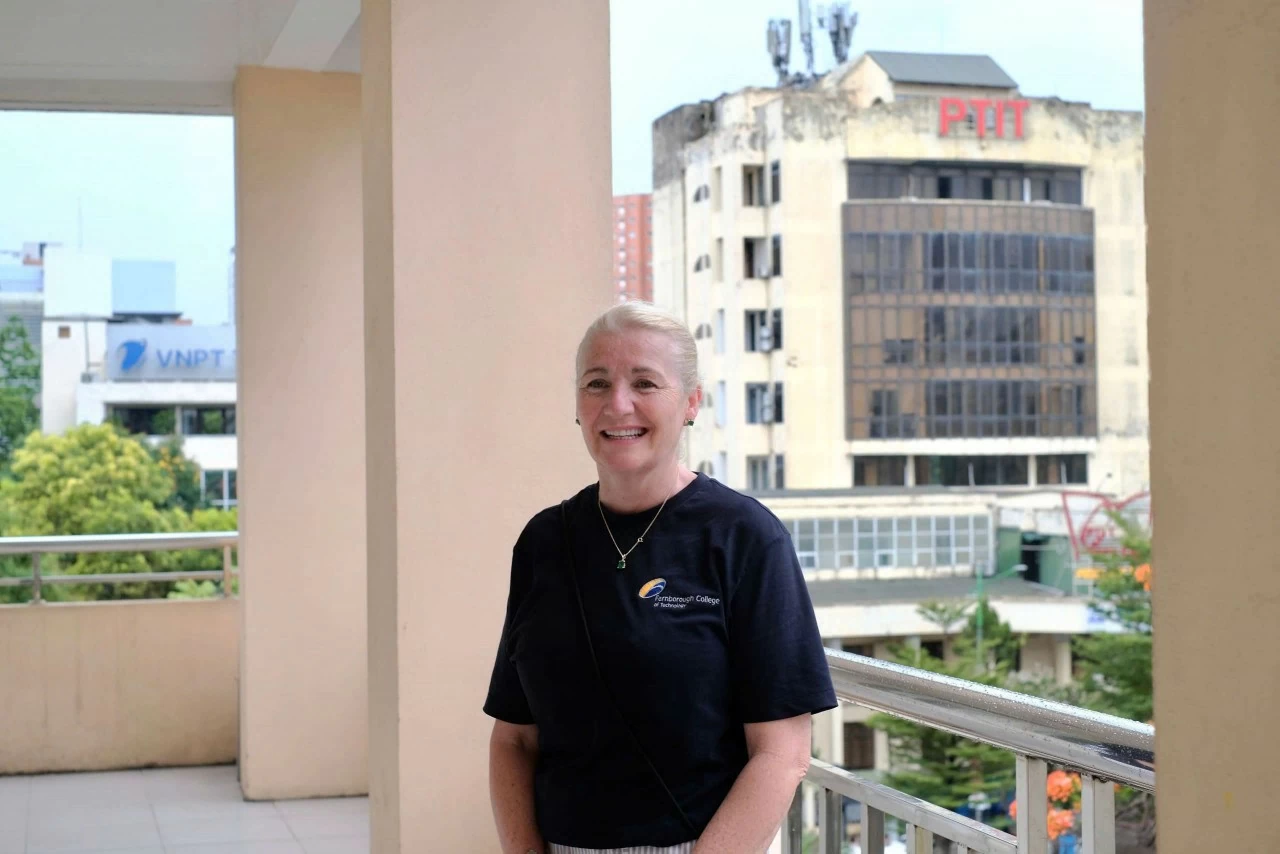 |
| Gwen Grace believes that learning experiences beyond the traditional classroom enable students to build confidence, foster independence and develop a deeper appreciation of cultural diversity. (Photo: Ngoc Linh) |
Gwen Grace, Assistant Principal of Farnborough College of Technology, shared that the greatest value of this field trip lay not in professional knowledge but in the opportunity for personal growth through meaningful experiences.
“We want our students to step outside the traditional classroom and experience the wider world”, she said. “Experiences like these help them mature and develop a broader perspective on life.”
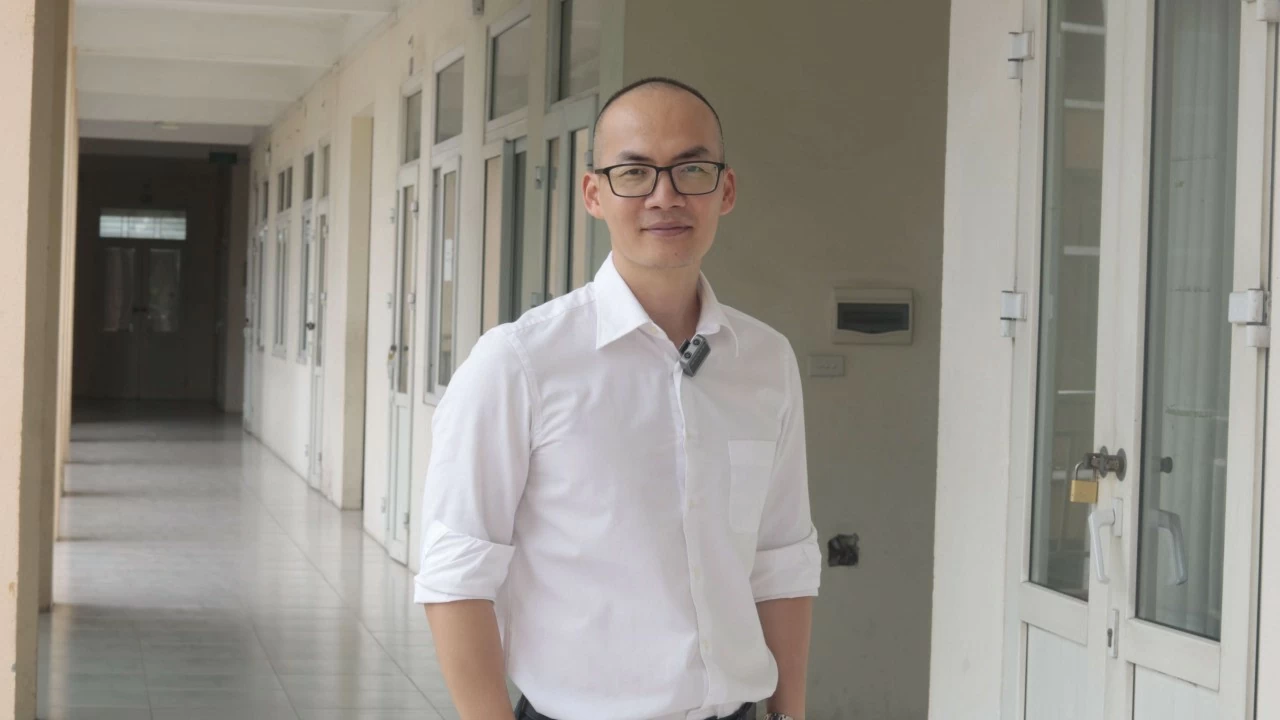 |
| Dao Khac Viet, Country Director of Projects Abroad Vietnam, hopes the programme will become a bridge connecting international students and hearing-impaired children, allowing both sides to learn from each other and grow through their differences. (Photo: Ngoc Linh) |
Meanwhile, Dao Khac Viet, Country Director of Projects Abroad Vietnam, explained that the programme was designed to combine educational experiences with community engagement. It allows international students to gain a deeper understanding of Vietnamese society while creating meaningful opportunities for hearing-impaired children to connect with people from different cultural backgrounds.
“We want international students not only to learn about Vietnamese cuisine, but also to gain a deeper understanding of Vietnamese society, especially the groups that face greater challenges in everyday life”, he said. “Hearing-impaired children want to communicate and to be recognised. Activities like this allow both sides to learn from others”.
As the three-day teaching programme came to an end, the British students left with far more than memories of Vietnam. They carried home lessons in empathy, patience and mutual understanding.
In those unique classrooms, differences in language, nationality and culture gradually faded away, replaced by a shared willingness to learn, communicate and connect. The experience served as a reminder that meaningful communication does not always require words.
| When students become 'creators of a green future': the Vietnam – Denmark mark at Discover Vietnam - Green Future Challenge 2026 On April 20, at Niels Brock Business College (Denmark), the program "Discover Vietnam – Green Future Challenge 2026 – Journey to Discover Vietnam – Challenge ... |
| Third Vietnam-Russia University Presidents’ Conference opens in Hanoi WVR - On May 22, the Third Vietnam-Russia University Presidents' Conference officially opened at the Hanoi University of Transport and Communications. |
| Consul General Dinh Hoang Linh attends international conference on educational equity in Thailand WVR - On June 14, the Vietnamese Consul General in Khon Kaen, Dinh Hoang Linh, attended and delivered a welcome speech at the 6th International ... |
| Art Exhibition 'Si tu 3 - Chuyen si tu': Honouring Vietnamese educational tradition through art WVR - In celebration of the 950th anniversary of the establishment of Van Mieu - Quoc Tu Giam, Vietnam's first university (1076-2026), the art exhibition ... |
| Advancing sport participation among secondary school girls in Vietnam The Vietnam National Institute of Educational Sciences (VNIES), in collaboration with Danson Solutions and supported by Nike Vietnam, organized the seminar “Current situation and solutions ... |