


Gen Z and the new language of gifting
No longer are expensive or flashy gifts necessary; today's youth are rewriting the language of gifting with genuine emotions and understanding. Each gift now serves not just as a token, but as a story to be told.
Latest
The Language of Emotion
Every October 20th, gift shops bustle with activity, but the atmosphere feels a bit different this year. Young people are no longer seeking expensive or luxurious gifts. Instead, they are drawn to small, personalised items. Each gift becomes a narrative, a sincere expression.
As October 20th approaches, a gift shop in Cầu Giấy District is lively and bustling, where the scent of wrapping paper mingles with conversations, creating a unique rhythm for the holiday. Linh, 26, a store employee, shares: “Every year, this time is busy, but this year, customers are much more selective. They don't just buy anything like before; they often talk about the person they want to gift and ask for suggestions for the most suitable gift.”
Having worked in this field for two years, Linh has noticed a significant shift in gifting trends. Previously, customers often sought "hot trend" items, but now they want their gifts to have a personal story. “Some choose a notebook because their friend loves writing, others pick a ceramic mug in their mom's favourite colour, and some request gift sets matching the recipient's clothing. They think more about emotions rather than monetary value,” Linh adds.
According to her, Gen Z customers make up the majority these days. They favour small gifts, priced at tens of thousands, but rich in meaning. These young individuals give gifts not just to "have a gift", but to express something—perhaps a thank you, an apology, or "I miss you". The gift has become more of an emotional language than a mere exchange.
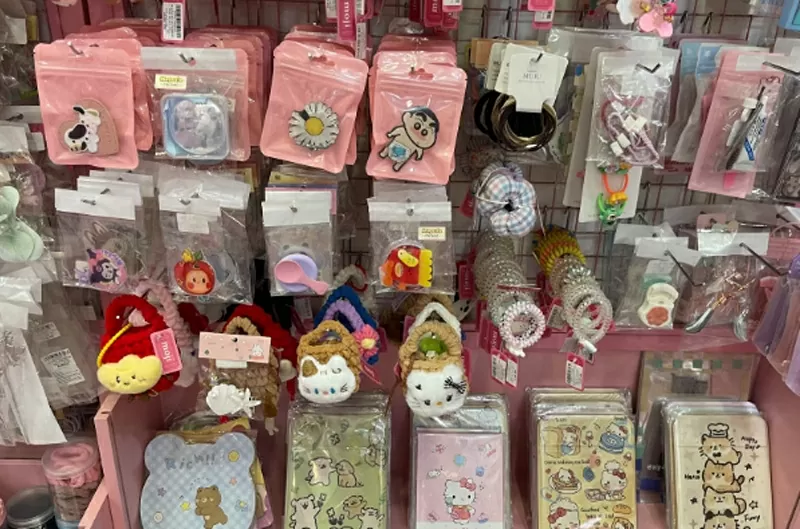 |
| Cute-style gift products are popular among young people (Photo: Do Quyen) |
Stories of how young people express their feelings gradually unfold in the gentle ambience of new paper scent and mingling laughter. In front of a colourful shelf, Tuấn Kiệt (19, a student at the University of Commerce) is choosing a notebook and cute-shaped sticky notes: “I'm looking for a suitable notebook for my sister. I don't want to give flowers like every year because they don't last long and aren't very practical. This year, I'm opting for practical items that are meaningful and have lasting value.”
At the checkout counter, Mai Anh (18, a student at Hanoi University) carefully selects a small silver music box and a blank white card, cheerfully saying: “I'm gifting this to my mom, but I don't want to write a message in advance. I leave the card blank so she can write back to me when she receives it. It's a way for us to share this gift.” She shares that last year she only sent a hasty message to her mom, but this year she wants to do something more gentle.
Not every gift is prepared to be given away. For many young people, choosing a gift is sometimes a way to converse with themselves. Minh Phương (20, a student at the Academy of Journalism) lingers in front of the scented candle shelf, carefully selecting her favourite scent. She isn't looking for a gift for a lover or family member, but wants to gift herself.
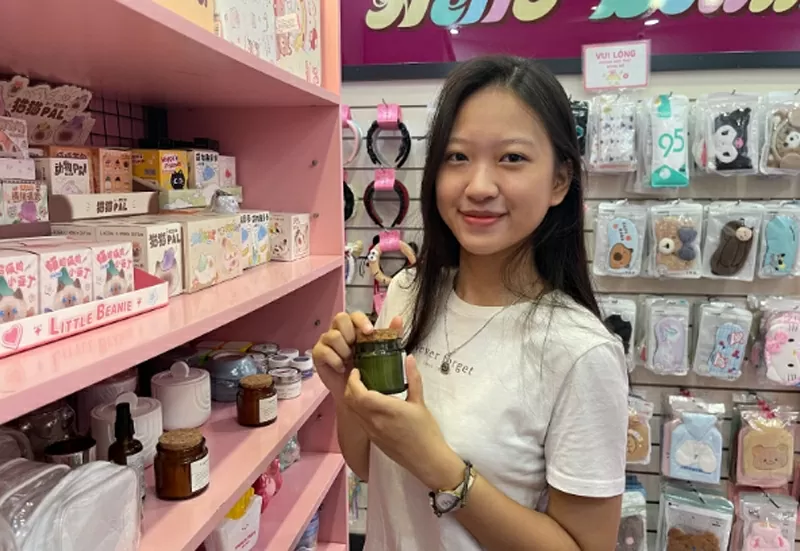 |
| Gifting oneself is Minh Phương's way of enjoying October 20th. |
“I call this a self-reward gift. October 20th is not just a time for someone to gift someone else, but also a moment to care more about oneself,” she smiles and shares.
From choosing gifts, wrapping them, to sending them, the younger generation is rewriting the language of care. No longer are there stereotypical gifts or formulaic wishes; they seek subtlety and personalisation, where each gift carries its own story. Perhaps the most noteworthy aspect of this October 20th season is not what gift is given, but the return of sincere emotions, in the simplest and most modern form.
The changing culture of gifting
From small street shops to online stalls, one thing is clear: The younger generation is redefining the concept of "gifting".
For them, a gift is not just an object to hand over, but a way to express emotions, personality, and individual thoughts. They choose gifts carefully, not for their expensive or cheap value, but because they convey what they want to express. Previously, gifting was often associated with ritualistic norms: A bouquet of roses for a lover, a box of cosmetics for mom, or a luxurious gift for a colleague. Now, Gen Z opts for simplicity. They are willing to make a card themselves, choose a small item with personal significance, or even gift themselves as a way to comfort and appreciate themselves. In this way of giving and receiving, gifts become an emotional language, no longer just a social courtesy.
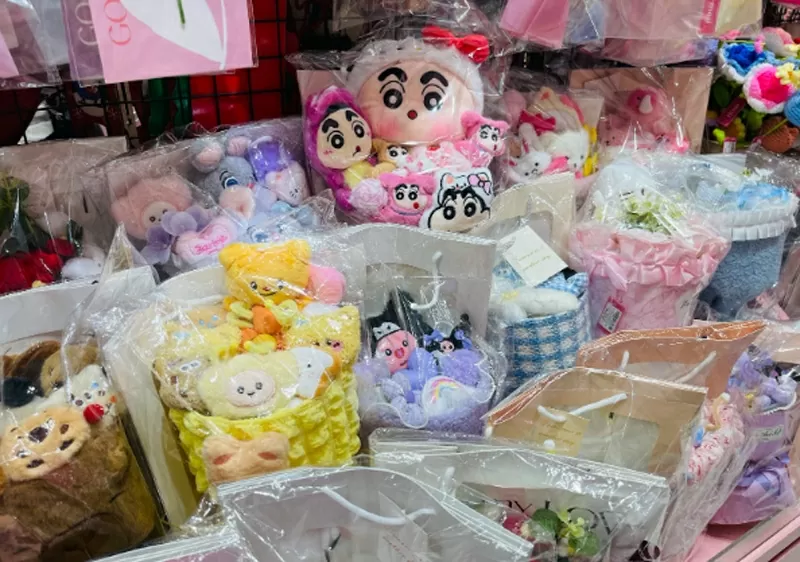 |
| Gifts with a "Gen Z" touch (Photo: Do Quyen) |
The change in gifting practices reflects a more minimalist aesthetic and reveals a different lifestyle of the younger generation: living true to their emotions, valuing meaning over form. For them, a gift is not to show off but to connect, not to impress but to share. Here, material value gradually takes a backseat, allowing emotions to be touched and care to be expressed subtly and sincerely. Perhaps this makes the gifting culture in this October 20th season warmer and more intimate.

| AI translation aims to break down language barriers at APEC Summit An artificial intelligence (AI)-powered interactive interpretation and translation system supporting the languages of all 21 Asia-Pacific Economic Cooperation (APEC) member states will be installed throughout ... |

| Training programme abroad wraps up, fostering Vietnamese language The two-week online course on methods of teaching Vietnamese to overseas children concluded on September 20. |
Tags: