


From Hung Kings Temple: Promoting Vietnam’s image through culture
WVR - Hung Kings Temple, or Den Hung in Vietnamese, is not only a site embodying the nation’s moral values but also a symbol of Vietnam’s soft power in its strategy to promote the national image, emphasised Bui Hoai Son, a National Assembly deputy and full-time member of the National Assembly’s Committee on Culture and Social Affairs. The World and Vietnam Report is pleased to introduce his article on promoting Vietnam’s image through culture.
Latest
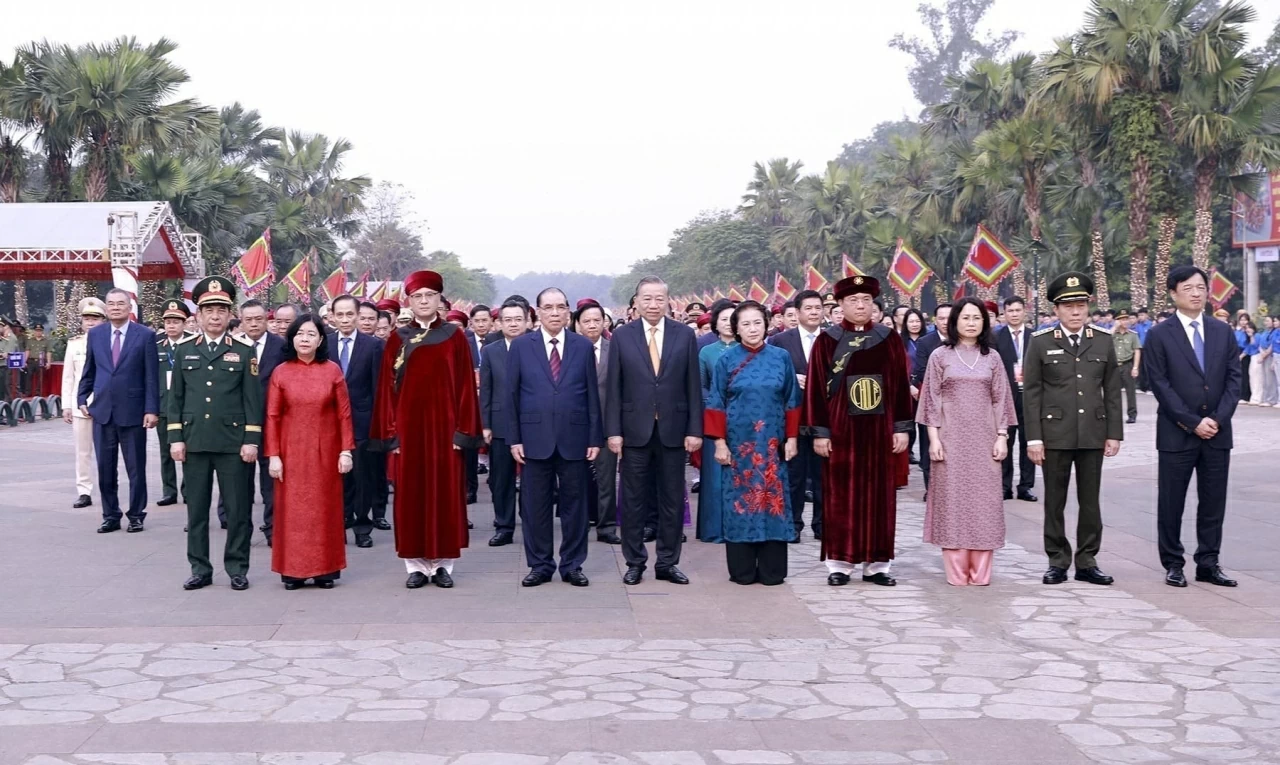 |
| General Secretary, President To Lam and other leaders, former leaders of the Party and State embark on a journey to Nghia Linh Mountain to offer incense in memory of the Hung Kings. (Source: VNA) |
Every Hung Kings Commemoration Day, millions of Vietnamese turn towards Nghia Linh Mountain as a return to the spiritual roots of the nation. However, in the context of increasingly fierce national image competition, Hung Kings Temple today is not only a place that embodies the moral principle of “When drinking water, remember its source”, but can also be seen as a special symbol of Vietnam's soft power.
When Resolution 80-NQ/TW set forth the requirement to build a strategy for promoting Vietnam's image abroad, using culture as the foundation, and when the Cultural Diplomacy Strategy to 2030 continues to emphasize linking culture with politics, economy, and foreign affairs, Hung Kings Temple offers a clearer direction: For the world to understand Vietnam more deeply, Vietnam must first tell its story with cultural depth.
Hung Kings Temple (Den Hung) – A cultural symbol representing Vietnam's identity
Not every heritage can become a national symbol on the diplomatic level. To achieve that, the heritage must encompass multiple layers of meaning: historical depth, community vitality, the ability to touch universal emotions, and the capacity to represent the core values of the nation.
Den Hung and the worship of Hung Kings is such a case. It is not just a spiritual destination or a major traditional festival, but a place where the memory of nation-building, the notion of common ancestors, and the spirit of Vietnamese community cohesion are crystallized. UNESCO inscribed the "Worship of Hung Kings in Phu Tho" on the Representative List of the Intangible Cultural Heritage of Humanity in 2012, acknowledging the annual gathering of millions to honour their ancestors.
This depth creates the special diplomatic value of Den Hung. Today’s world is not only interested in how a nation grows, how strong its technology is, or how large its trade is. What the world increasingly wants to know is what story the nation has to tell, what identity it has to recognize, and what cultural depth it has to make a difference.
In this context, Den Hung helps Vietnam convey a very clear message to the world: Vietnam is a nation with a long-lasting history, a tradition of ancestor veneration, deep community ethics, and a culture where the past is still alive in the present. These are messages that resonate far more than mere slogans.
More importantly, Den Hung is not a "closed" symbol. It is sacred enough to command respect, yet accessible enough for foreigners to approach through universal values such as gratitude to ancestors, community bonding, national memory, and the aspiration for longevity. This is a solid foundation to transform heritage into a national image asset. In other words, Den Hung is not only a place for Vietnamese to turn to but can also become a "cultural gateway" for international friends to enter the spiritual world of Vietnam.
This year, the Hung Kings Commemoration Day – Den Hung Festival and the Land of Ancestors Culture – Tourism Week take place from April 17 to 26, 2026 (from March 1 to March 10 of the Year of the Horse) with solemn ceremonies and a rich array of festivities. This structure also suggests a significant lesson for promoting national image: To be remembered by the world for a long time, it is not enough to have events; there must be symbols. For symbols to be vibrant, they cannot be mere displays; they must have cultural depth and community participation.
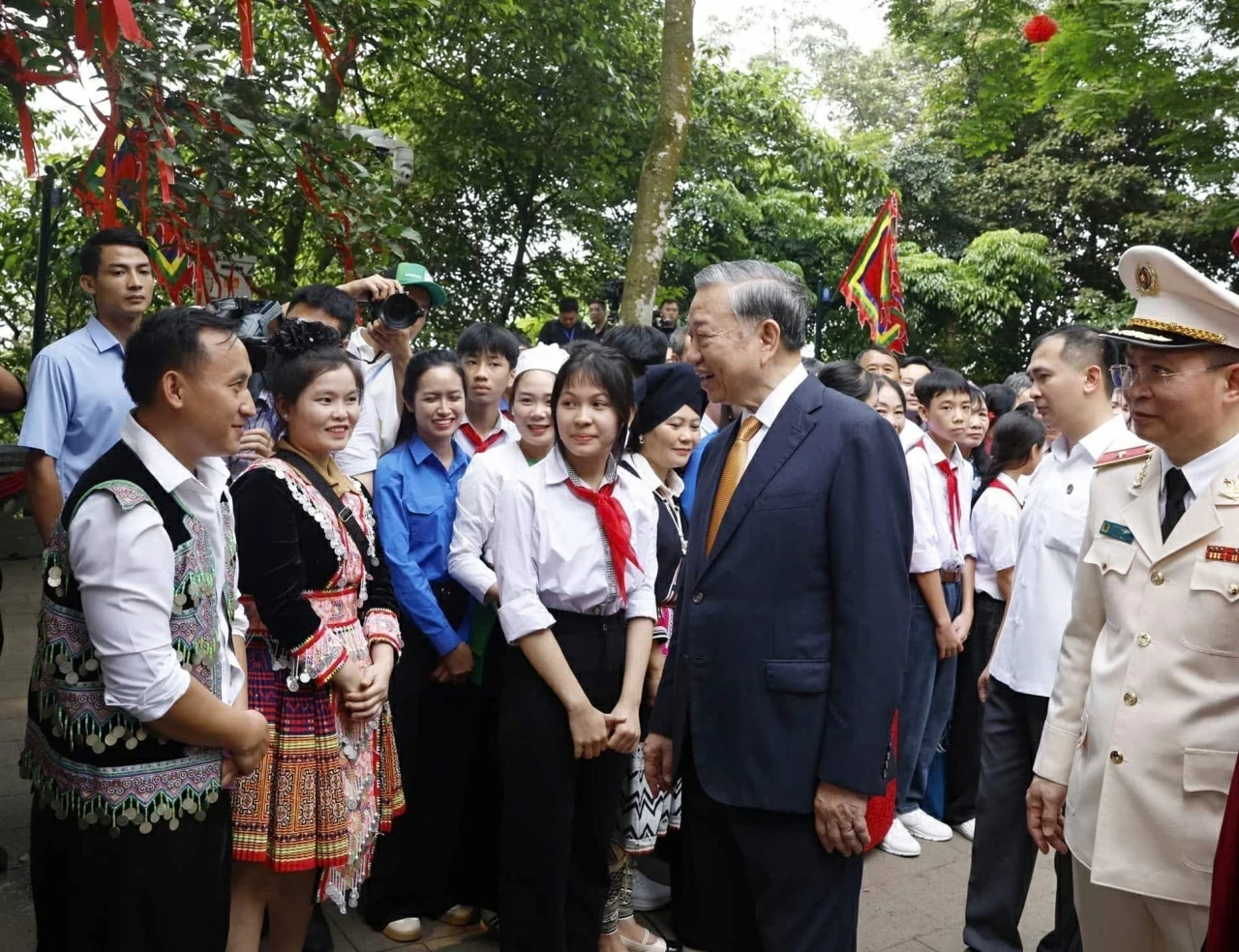 |
| General Secretary, President To Lam with the people at the Special National Historical Site of Den Hung. (Source: VNA) |
Promoting Vietnam's image through national storytelling
One of the longstanding limitations of many image promotion activities is the tendency to introduce individual events rather than telling the larger story of the nation. We can organize numerous cultural weeks, festivals, and promotional activities abroad, but without a coherent narrative, Vietnam's image can easily become fragmented: sometimes it’s cuisine, sometimes it’s ao dai, sometimes it’s landscapes, and sometimes it’s heritage.
All are valuable, but if not placed within a strategic storytelling framework, their impact will struggle to reach depth. This is also why Resolution 80-NQ/TW emphasizes the need to build a strategy for promoting Vietnam's image abroad, using culture as the foundational pillar.
From this perspective, Den Hung is a strong suggestion for how Vietnam should tell its story. From Den Hung, a comprehensive value system can be unfolded: Vietnam is a land of gratitude and ethics; a nation with continuous history and strong community consciousness; a place where tradition is not left behind but remains present in contemporary life; a people who connect their origins with the future. Such a story has much more depth than merely introducing Vietnam as a beautiful destination, an attractive market, or a rapidly growing economy.
The Cultural Diplomacy Strategy to 2030 also clearly defines that cultural diplomacy must simultaneously serve two goals: enhancing the nation's position and contributing to socio-economic development, while emphasizing the integration of cultural diplomacy with political diplomacy, economic diplomacy, and external information.
This means that cultural promotion is no longer an "ornamental" task but must become a strategic component of national diplomacy. From Den Hung, a very specific approach can be seen: using cultural symbols to tell the national story, using the national story to increase prestige, goodwill, and trust, thereby supporting tourism, trade, investment cooperation, people-to-people exchanges, and Vietnam's international standing.
It should be noted that in the current competition for soft power, what the world remembers is not who speaks more, but who has a clearer, more consistent, and richer story. The Republic of Korea succeeds not just because of K-pop, but because it tells a story of a creative, modern nation with a distinct cultural imprint. Japan does not just promote tourism but tells a story of a sophisticated, disciplined Japan that respects tradition and excels in innovation. Vietnam also needs such storytelling capability.
And one of the best starting points is original symbols like Den Hung, as it is where Vietnam's identity is most clearly, deeply, and irreplaceably manifested. This assertion is an inference from how Vietnam's policy documents emphasize using culture as the foundation for promoting the national image, combined with the international trend of considering cultural diplomacy as a pillar to enhance soft power.
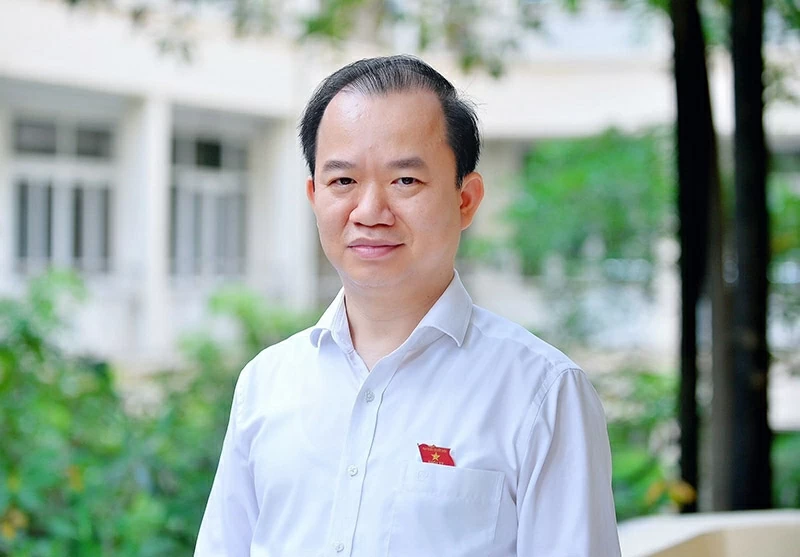 |
| National Assembly deputy. Bui Hoai Son. (Source: National Assembly) |
A strategy that Is deep, modern, and consistent
From a symbol rich in value like Den Hung to an effective national image promotion strategy is a journey that does not happen automatically. This gap is only bridged when we have a clear strategic mindset. First, there needs to be a shift from the mindset of "introducing heritage" to "building national image through heritage". These two approaches are not the same. Introducing heritage is about letting people know what we have. Building national image through heritage is about making the world understand who we are, believe in our values, and see why we are different.
With Den Hung, what needs to be told is not just the history of the festival or the rituals of worship, but the cultural philosophy of Vietnam that lies behind it: using origins as a foundation, community as a base, gratitude as an ethic, and the longevity of the nation as the highest value.
Secondly, the storytelling must be modernized. An ancient symbol does not mean it can only be told in old language. To reach the world, Den Hung needs to be conveyed through high-quality documentaries, multi-language digital platforms, digital exhibitions, creative products, international exchange programs, heritage education for the overseas Vietnamese community, as well as through selected cultural diplomacy events. The lesson here is to preserve the original value but innovate the language of communication.
Resolution 80 sets the requirement to develop cultural industries, apply science and technology, and digital transformation in culture; the Cultural Development Strategy to 2030 also sets the goal of building a digital cultural environment, enhancing creative capacity, and spreading cultural values through modern means. This is the policy foundation for symbols like Den Hung to step beyond borders in new forms.
Thirdly, Den Hung must be placed within a broader Vietnamese brand ecosystem. A symbol, no matter how strong, cannot single-handedly bear the entire task of national promotion. What is needed is to connect Den Hung with other layers of Vietnam's values: UNESCO heritage, literature and arts, cuisine, tourism, contemporary creativity, today's Vietnamese people, and the country's development achievements.
In this way, Den Hung will act as the "origin point" of the Vietnam story, while other expressions will enrich and modernize that story. This is also a way to promote Vietnam's image without falling into extremes: either too traditional without modern vitality or too modern at the expense of deep-rooted identity.
Ultimately, the decisive factor is consistency in perception. When a nation truly believes in its cultural values, it can make the world believe as well. Therefore, Den Hung is not just a story for the cultural sector or for Phu Tho alone. It is the story of the national image strategy, of cultural diplomacy, external information and communication, tourism, education, the overseas Vietnamese community, and more broadly, of the aspiration to elevate Vietnam's position in the new era.
Looking from Den Hung, one thing is very clear: Promoting Vietnam's image through culture should not start from what the world wants to hear about us, but from understanding deeply who we are. Once that is clear, Vietnam will have the confidence to tell the world the story of a nation rich in identity, humanity, resilience, and always moving towards the future from the deep roots of its origin.