

Following the Footsteps of the Uncle: Footprints without borders
WVR - The collection of narratives "Theo dau chan Nguoi" (Following the Footsteps of the Uncle) by Professor, Doctor, and writer Trinh Quang Phu, recreates the 30-year journey of Ho Chi Minh in his quest to save the nation through a writing style rich in documentation, emotion, and cultural depth. What makes this book special is that the author does not recount the historical story in a dry manner, but through the experience of retracing Ho Chi Minh's path, visiting places where he lived and engaged in revolutionary activities.
Latest
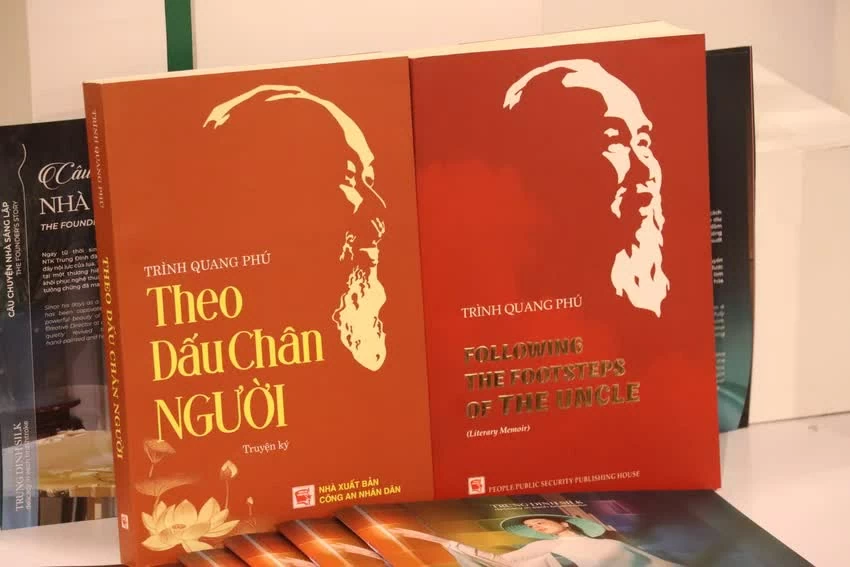 |
| The narrative "Theo dau chan Nguoi" (Following the Footsteps of the Uncle) by Professor, Doctor, and writer Trinh Quang Phu was released in August 2024. By October 2025, the book was reprinted for the ninth time and included an English version. (Source: Publisher) |
For over 25 years, writer Trinh Quang Phu has traveled multiple times to France, the UK, Russia, China, and the United States to gather materials, compare memories, and meet historical witnesses. He returned to some places dozens of times. These journeys were not only the documentation efforts of a writer but also resembled a dialogue through time between today and historical footprints, adding weight to the book.
Notably, Theo dau chan Nguoi demonstrates the cultural influence of President Ho Chi Minh that transcends ideological boundaries. The author shares that what moved him the most was that in many different countries, despite differing political systems, people still hold a special respect for Ho Chi Minh.
They take pride in the fact that their place once bore his footprints. This detail signifies that President Ho Chi Minh is not only a leader of Vietnam but also a cultural and ethical symbol with a broad appeal worldwide.
In the context of Vietnam increasingly valuing its national "soft power", spreading the image of President Ho Chi Minh through literature, narratives, and everyday stories has become an effective approach to engaging with international friends.
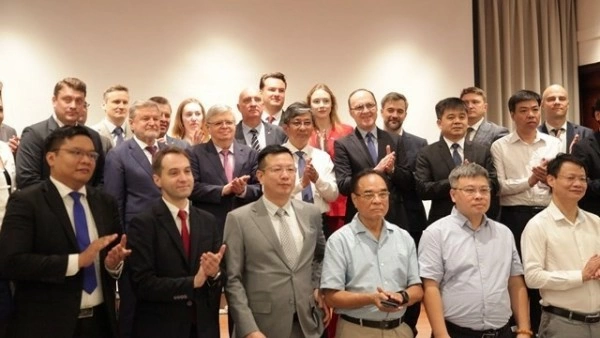
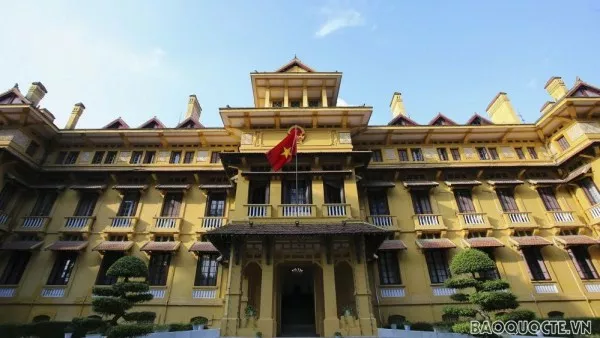
Recently, the Ministry of Foreign Affairs received 3,500 copies of Theo dau chan Nguoi from Professor, Doctor, and writer Trinh Quang Phu to distribute to Vietnamese Representative Missions abroad, Embassies, and Consulates General as a resource for foreign affairs.
According to Deputy Minister of Foreign Affairs Ngo Le Van, the book not only holds historical and literary value but also serves as a practical tool to promote Ho Chi Minh's ideology, style, and foreign policy to the world.
In fact, for many years, the image of Ho Chi Minh has always been a special "cultural address" in international life. From memorial houses in France, Russia, and China to monuments, street names, or commemorative activities in many countries, Ho Chi Minh's legacy has transcended national history to become part of humanity's memory of peace, national liberation, and the aspiration for independence.
Theo dau chan Nguoi adds another bridge for the international public to better understand Vietnam through the cultural portrait of Ho Chi Minh. The book's appeal also lies in its storytelling art.
As noted by Nguyen Quang Thieu, President of the Vietnam Writers' Association, the historical materials in the book are narrated with a genuine, simple yet emotionally rich voice, allowing readers to feel as if they are living in that era. Ho Chi Minh appears not only as a leader but also as a very approachable, ordinary, and humane figure.
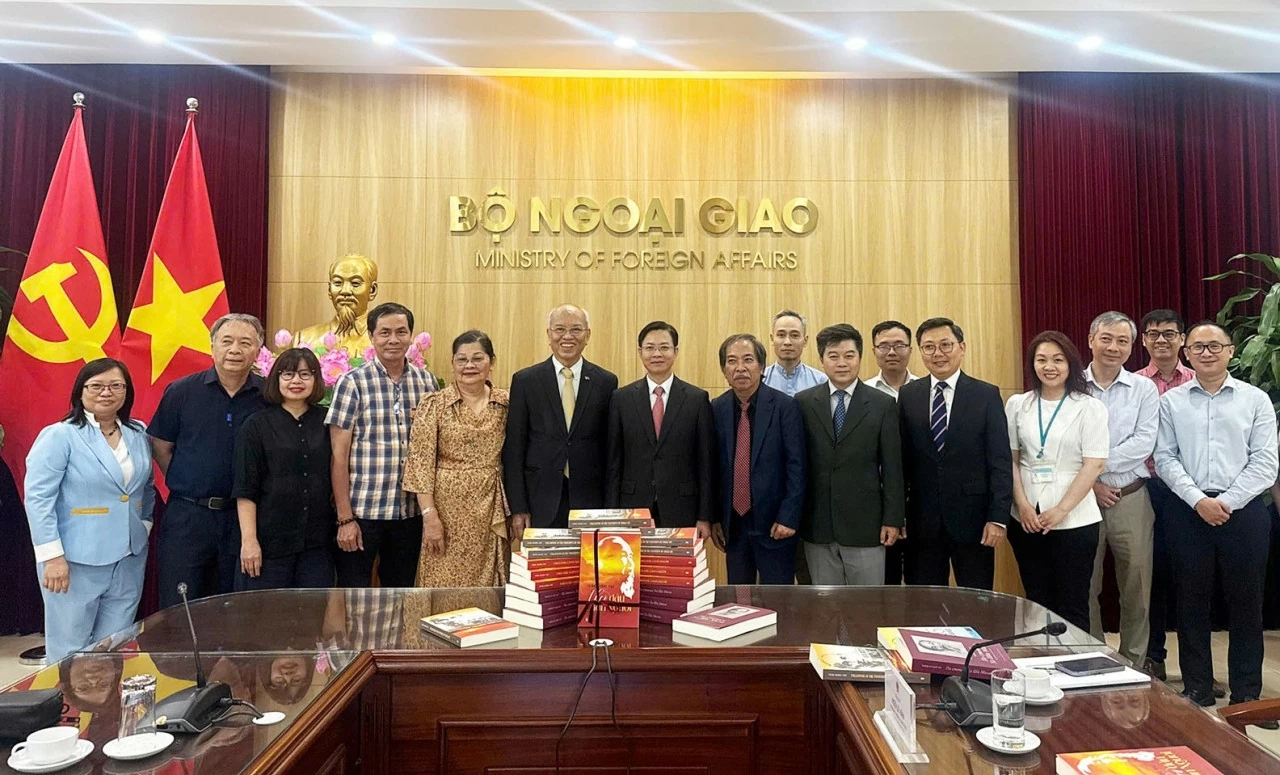 |
| The Ministry of Foreign Affairs received 3,500 copies of "Theo dau chan Nguoi" (Following the Footsteps of the Uncle) donated by Professor, Doctor, and writer Trinh Quang Phu (sixth from left) on May 12. (Photo: Thanh Long) |
In the literary flow about President Ho Chi Minh, perhaps the most challenging task is to refresh a topic that has become so familiar. However, writer Trinh Quang Phu has found his own approach, tracing life details, specific locations, and little-known stories to reconstruct the portrait of President Ho Chi Minh in a vast international space. Through this, he emerges as a person of cultural dialogue, understanding of the world, and the ability to connect nations through a great personality.
At the age of 86, after decades devoted to the subject of Ho Chi Minh, writer Trinh Quang Phu continues to aspire to translate his works into French, Spanish, or Portuguese to reach readers in Africa, South America, and Europe.
This aspiration shows that, for him, writing about Ho Chi Minh is not just a literary endeavor but also a persistent cultural diplomacy journey, aiming to bring the image of Vietnam closer to the world.