



Five decades of Vietnam–Thailand relations: From diplomatic ties to a comprehensive strategic partnership
WVR - The year 2026 marks a special milestone in the relationship between Vietnam and Thailand as the two countries celebrate 50 years of diplomatic relations.
Latest
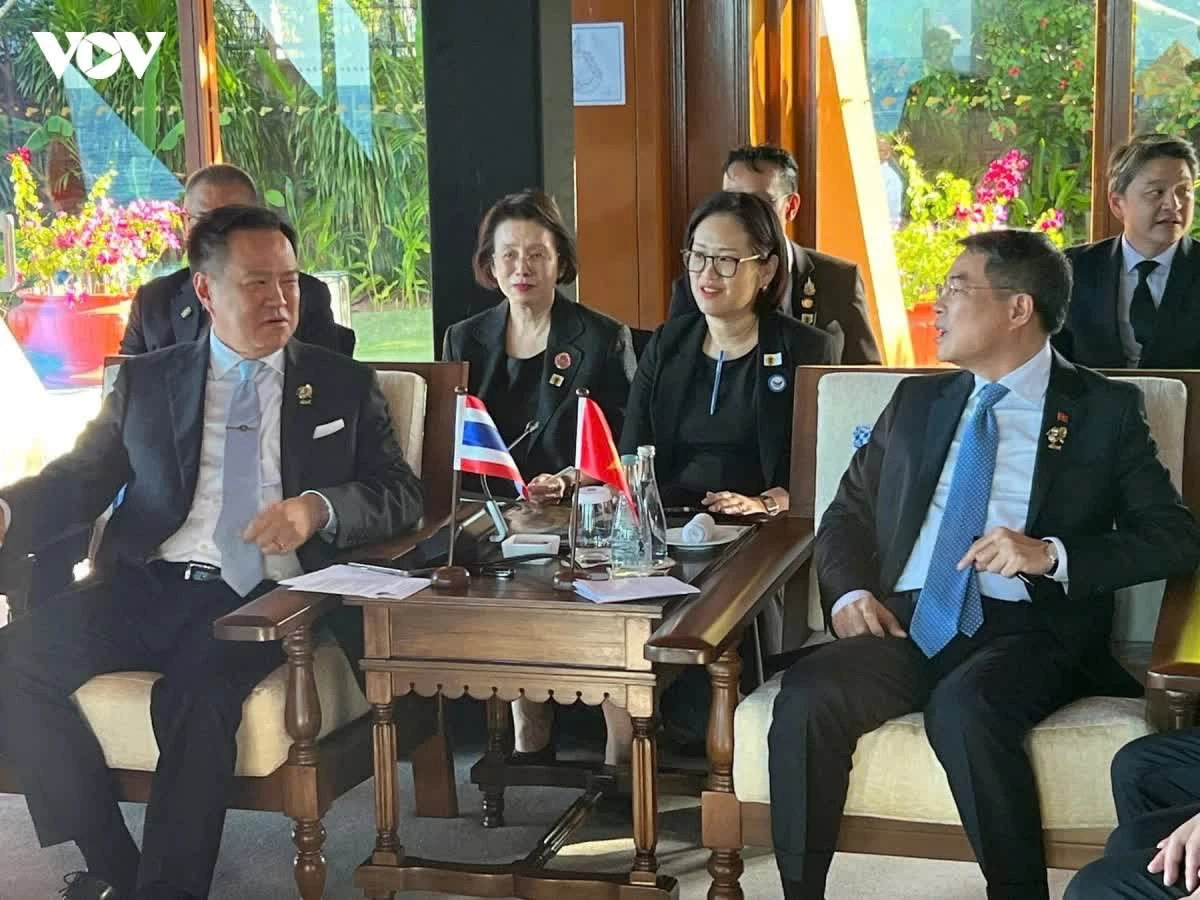 |
| Prime Minister Le Minh Hung meets Thai Prime Minister Anutin Charnvirakun on the occasion of the 48th ASEAN Summit, May 8, 2026. (Source: VOV) |
In the context of Vietnam-Thailand relations entering the framework of a Comprehensive Strategic Partnership, this represents the highest level of cooperation in Vietnam's foreign policy for key partners.
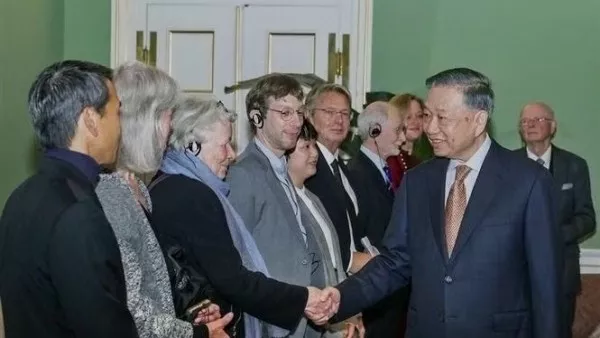
The upcoming official visit to Thailand from May 27-29 by General Secretary, President To Lam, and his spouse, along with a high-ranking Vietnamese delegation, carries significance beyond a typical diplomatic activity.
This visit is not only an opportunity for the senior leaders of the two countries to review outstanding cooperation results after half a century of diplomatic relations but is also expected to shape new strategic cooperation priorities for the next phase of bilateral relations.
The visit by General Secretary, President To Lam holds special significance as it takes place more than a decade after the historic visit by General Secretary Nguyen Phu Trong in 2013, a milestone that elevated Vietnam-Thailand relations to a Strategic Partnership.
If 2013 marked the beginning of a new cooperation phase, the upgrade to a Comprehensive Strategic Partnership in 2025 indicates that the relations between the two countries have reached a deeper and more substantive level after half a century.
The upgrade to a Comprehensive Strategic Partnership in 2025 is not merely symbolic but reflects the increasingly profound connection between the two countries amidst rapidly changing regional and global dynamics.
In an environment of intensifying strategic competition among major powers, supply chain disruptions, green transition, digital transformation, and the emergence of non-traditional security challenges, both Vietnam and Thailand recognize the need to enhance bilateral coordination not only for their own interests but also for ASEAN's centrality and adaptability.
The political-diplomatic relations between the two countries are currently at their best since the establishment of diplomatic relations in 1976. Over nearly 50 years, high-level visits and exchanges between the leaders of the two countries have occurred frequently and relatively balanced. These visits not only strengthen political trust but also create momentum for substantive cooperation across various fields.
Notably, the official visit to Vietnam by Thai Prime Minister Paetongtarn Shinawatra in May 2025 marked a significant turning point as the two sides officially upgraded their relationship to a Comprehensive Strategic Partnership, and the Prime Ministers co-chaired the fourth Joint Cabinet Meeting after years of hiatus.
The two countries agreed to implement a new cooperation framework based on three major pillars: Partnership for Sustainable Peace, Partnership for Sustainable Development, and Partnership for a Sustainable Future.
Defense-security relations between the two countries are also deepening. Both sides currently maintain Deputy Minister-level Defense Policy Dialogues and enhance coordination in combating transnational crime, cybersecurity, human trafficking, online fraud, and other non-traditional security challenges.
In the context of the Mekong region and Southeast Asia facing complex transboundary security issues, strengthening Vietnam-Thailand coordination is crucial for regional stability.
 |
| Thailand's tourism exhibition booth at the 17th Ho Chi Minh City International Tourism Fair in 2023. (Source: VNA) |
If political-diplomatic relations are the foundation of bilateral ties, the economy is currently the most important driving force in Vietnam-Thailand relations. In recent years, Thailand has maintained its position as Vietnam's largest trading partner within ASEAN.
In terms of trade, a year after establishing diplomatic relations, bilateral import-export turnover was modest, reaching only about USD 9.9 million by the late 1970s, but it increased to over USD 100 million by 1990. Bilateral trade surpassed USD 22 billion in 2025, a figure demonstrating impressive growth in bilateral economic cooperation.
Vietnam is currently pursuing a double-digit economic growth target for the 2026-2030 period, linked to industrialization, digital transformation, and green development strategies. Meanwhile, Thailand is implementing its National Strategy 2018-2037 and continues to promote the "Thailand 4.0" model. These development orientations are creating many strategic intersections between the two countries.
One of the prominent areas of cooperation today is investment. Thailand is among the top 10 largest investors in Vietnam and ranks second in ASEAN for direct investment in Vietnam. Beyond traditional sectors, renewable energy cooperation is emerging as a new highlight in bilateral relations.
In the context of both countries committing to net-zero emissions by the mid-21st century, Thai businesses are increasing investments in wind power, solar power, and energy infrastructure in Vietnam. This is seen as a sector with significant cooperation potential in the coming period.
On the multilateral front, Vietnam and Thailand are both active and responsible members of ASEAN as well as various Mekong sub-regional cooperation mechanisms. The two countries increasingly share many common strategic interests in maintaining peace, stability, and ASEAN's centrality amid current geopolitical shifts.
This cooperation is expected to become even more important in the future as Vietnam prepares to host APEC 2027 and Thailand assumes the ASEAN Chairmanship in 2028. These will be opportunities for the two countries to enhance coordination, promote regional initiatives, and affirm ASEAN's role in the evolving regional architecture.
A special aspect of Vietnam-Thailand relations is the profound foundation of people-to-people exchanges and cultural connections. The community of over 100,000 Vietnamese and people of Vietnamese descent in Thailand continues to play a crucial role as a bridge between the two countries. The Ho Chi Minh memorial sites in Udon Thani, Nakhon Phanom, and Phichit are not only historical symbols but also reflect the special depth of relations between the peoples of the two nations.
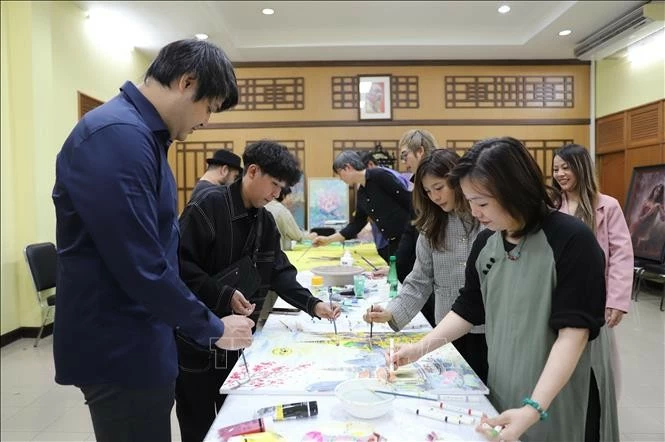 |
| On the afternoon of May 24, as part of the series of activities towards the 50th anniversary of Vietnam-Thailand diplomatic relations, Vietnamese Embassy in Thailand organized a cultural and artistic exchange program between artists from the two countries to strengthen friendship and promote cultural diplomacy between the two nations. (Source: VNA) |
Tourism, education, and local connectivity are also thriving. Currently, hundreds of flights operate weekly between localities in Vietnam and Thailand, reflecting the increasingly tight connection between the two economies and tourism industries. The "Multiple Countries - One Destination" initiative promoted by Thailand with Mekong countries, including Vietnam, promises to open new cooperation spaces for regional tourism and economic connectivity.
In the upcoming development era, the two countries need to continue maintaining regular high-level contacts, alongside maintaining the Joint Cabinet Meeting mechanism and soon developing an Action Program to implement the Comprehensive Strategic Partnership for the 2026-2030 period to concretize cooperation content.
Additionally, both sides need to coordinate more closely on regional issues such as maritime security, Mekong water security, combating transnational crime, and responding to non-traditional challenges.
Over 50 years since officially establishing diplomatic relations (1976-2026), Vietnam-Thailand relations have experienced ups and downs, from the establishment of official diplomatic relations five decades ago to now becoming one of the most dynamic and substantive bilateral relationships in ASEAN.
The continuous upgrading of the relationship framework from Strategic Partnership (2013), Enhanced Strategic Partnership in 2019, and more than a decade later to Comprehensive Strategic Partnership (2025) reflects the increasingly high level of political trust and the extensive intertwining of interests between the two countries.
In a region rapidly evolving amidst global changes, the strategic connection between Vietnam and Thailand will continue to be one of the key factors contributing to peace, stability, and sustainable development in Southeast Asia in the coming decades.