



Vietnam-Japan relations: A model of cooperation amidst international turbulence
WVR - The upcoming official visit to Vietnam by Japanese Prime Minister Takaichi Sanae from May 1-3 holds significant strategic importance, affirming that bilateral relations continue to be strengthened as a beacon of stable and substantive cooperation in Asia.
Latest
The world and the region are undergoing rapid changes, marking a strategic shift with fierce competition among major powers. The alignment of forces, armed conflicts, technological competition, and numerous non-traditional security challenges pose many risks but also present opportunities for each nation. In this context, the Vietnam-Japan relationship, built on a particularly solid foundation over decades, is entering a new phase with more room for deepening ties.
The upcoming official visit to Vietnam by Japanese Prime Minister Takaichi Sanae from May 1-3 holds significant strategic importance, affirming that bilateral relations continue to be strengthened as a beacon of stable and substantive cooperation in Asia.
High political trust, extensive cooperation
Since establishing diplomatic relations in 1973, Vietnam and Japan have elevated their relationship to a Comprehensive Strategic Partnership in 2023, the highest level in Vietnam's foreign relations hierarchy. Over the years, political trust between the two countries has consistently been maintained at a high level.
Regular dialogues between the senior leaders of both countries have created a profound foundation of political trust. Former Japanese Prime Minister Ishiba Shigeru made an official visit to Vietnam exactly one year ago. Meanwhile, Prime Minister Takaichi Sanae has held three meetings with Vietnamese leaders since taking office in October 2025.
Most recently, in April 2026, Prime Minister Takaichi had a phone conversation with General Secretary and President To Lam, as well as an exchange with Prime Minister Le Minh Hung at the expanded Asia Zero Emission Community (AZEC) Summit on energy autonomy, chaired by Japan.
The continuous maintenance of dialogue between the senior leaders of the two countries demonstrates the strategic priority and determination to strengthen and develop the solid relationship between Vietnam and Japan.
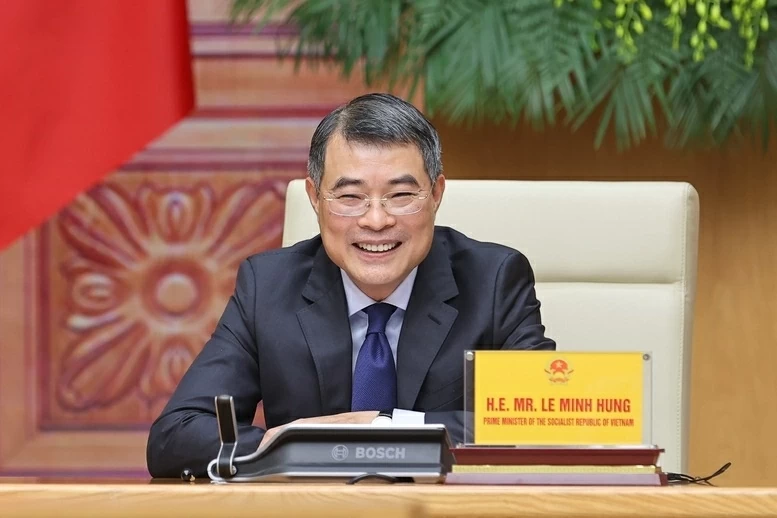 |
| Prime Minister Le Minh Hung attends the expanded Asia Zero Emission Community (AZEC) Summit on energy autonomy, chaired by Japanese Prime Minister Takaichi Sanae. (Source: VGP) |
Meanwhile, economic ties between the two countries are deepening, spanning multiple sectors. Japan continues to be a particularly important economic partner for Vietnam, ranking first in official development assistance (ODA), second in labor cooperation, third in tourism investment, and fourth in trade. In 2025, bilateral trade volume surpassed the $50 billion mark for the first time, while Japan's foreign direct investment (FDI) in Vietnam exceeded $3 billion, a 13% increase compared to 2024.
Local cooperation and social and people-to-people connections are also deepening, contributing to strengthening the Vietnam-Japan friendship. By the end of 2025, over 680,000 Vietnamese were living and working in Japan, ranking second in terms of foreign community size in the Land of the Rising Sun. There are currently over 110 cooperation agreements between localities of the two sides.
These factors have created a solid foundation for deepening bilateral relations, truly integrating the two countries comprehensively. Amidst the current complex international geopolitical fluctuations, the Vietnam-Japan relationship needs to continue innovating to adapt to the new era.
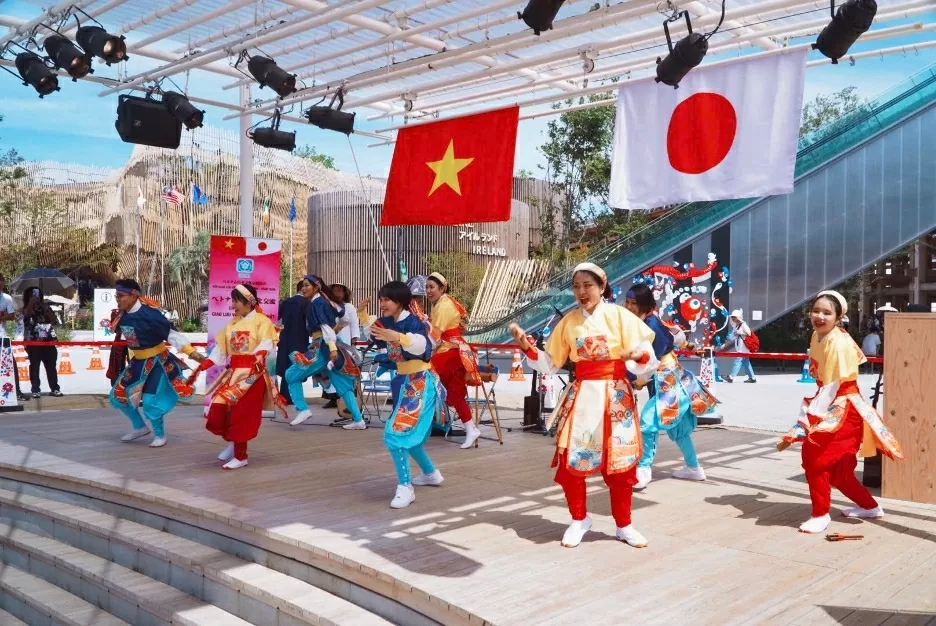 |
| Vietnam-Japan Heart-to-Heart Cultural Exchange Program at the Osaka Kansai Expo 2025 (Japan), August 2025. |
New era, new opportunities
The current global context is characterized by geopolitical fragmentation and global trade. International conflicts in various forms, strategic competition among major powers, particularly between the US and China, have increased the need for countries to diversify trade and investment partners.
The supply chain restructuring strategy and "China 1" approach of Japanese businesses have positioned Vietnam as a top priority partner, due to its market potential and alignment in development orientation.
In bilateral economic relations, Vietnam has asserted its position as a strategic production hub for many major Japanese corporations. Meanwhile, with its strengths in high technology, infrastructure, and supporting industries, Japan plays a crucial role in supporting Vietnam in technology transfer and management experience. This synergy creates a solid foundation for a mutually supportive relationship, driving close integration in the global supply chain.
Moreover, emerging trends such as digital transformation, green transition, and innovation are prompting both countries to transform their development models. These are new, untapped areas of cooperation with great potential. Therefore, both countries are facing favorable opportunities to enhance cooperation, jointly realizing strategic goals, and creating a sustainable and prosperous future.
The two countries have great potential to promote cutting-edge industries such as semiconductors, artificial intelligence (AI), and digital transformation. Cooperation in these fields extends beyond business connections. Comprehensive links between the government-business-university/research institute triad will be key to practically implementing bilateral projects, technology transfer, and training high-quality human resources.
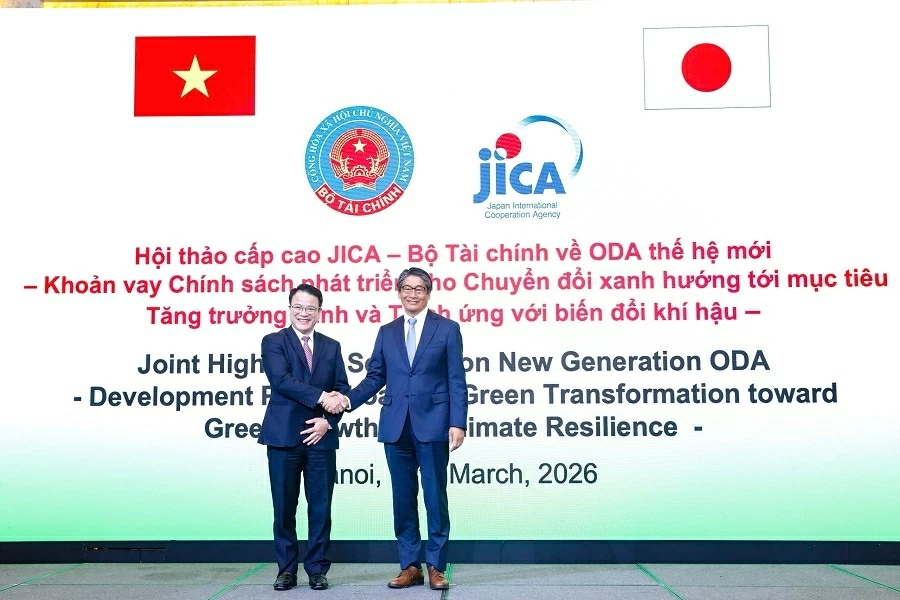 |
| Deputy Minister of Finance Tran Quoc Phuong and Japanese Ambassador to Vietnam Ito Naoki at the Workshop on Program Loans for Green Transition towards Green Growth and Climate Change Adaptation, March 2026. |
At the same time, strengthening supply chains and self-reliance in strategic industries is essential for both Vietnam and Japan. As a new production link and logistics center, Vietnam is an ideal partner for Japan's supply chain diversification strategy. This cooperative relationship will enhance the competitiveness of both sides amidst geopolitical fluctuations.
Vietnam is striving towards a net-zero emission target by 2050, identifying renewable energy development and green transition as strategic priorities. Increasing investment in renewable energy, green infrastructure, along with promoting climate finance mechanisms and sharing environmental technology, will help Vietnam realize its goals while creating new, more sustainable growth drivers for the future.
Beyond economic fields, security-defense cooperation also requires appropriate attention. Both sides need to continue enhancing cooperation to ensure maritime security and improve law enforcement capabilities at sea, maintaining a rules-based order. Additionally, expanding cooperation in non-traditional security areas such as humanitarian aid and disaster response, and climate change will contribute to building trust, establishing a more substantive and comprehensive relationship.
To realize the potential for cooperation, Vietnam and Japan need to quickly turn these opportunities into concrete results through prioritizing adjustments and implementing breakthrough policies. Both sides need to institutionalize extensive dialogue channels and bilateral policy coordination, identifying the private sector as the main driver to boost growth, synchronizing technical standards to create a tighter connection between the business communities of the two countries.
| On April 28, on the eve of the visit, major Japanese newspapers such as Kyodo, NHK, Asahi Shimbun, Nikkei, and The Japan Times simultaneously reported on Prime Minister Takaichi Sanae's visit to Vietnam. Most articles highlight the increasing importance of economic security cooperation with Vietnam amidst strong regional and global fluctuations, considering it a key link in realizing the Free and Open Indo-Pacific (FOIP) strategy. Furthermore, Japanese media assess that this visit is not merely a routine diplomatic activity but holds strategic significance in restructuring supply chains and ensuring energy stability for Japan, especially amidst tensions in the Middle East, export control measures, and global technological competition posing increasingly evident risks to Japan's import-dependent economy. More importantly, this is a positive and strategic step, not only to deepen bilateral relations but also to strengthen Japan's role in shaping a rules-based regional order, with Vietnam seen as a central partner in building a sustainable and flexible economic-security cooperation network in response to current global fluctuations. |