

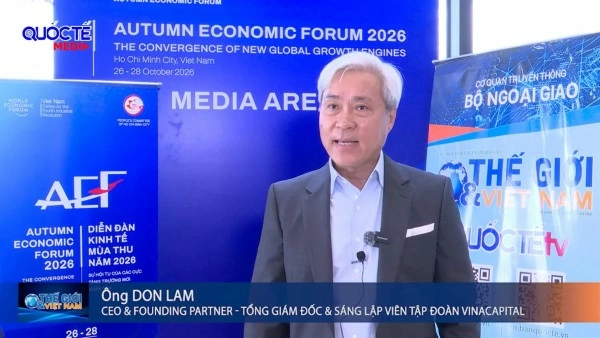


FD 2026: Experts offer recommendations for Ho Chi Minh City to capture global flows
WVR - As global supply chains take shape around new flows, Ho Chi Minh City is presented with an opportunity to emerge as a key logistics link in the region, with green development and international connectivity becoming increasingly distinct competitive advantages.
Latest
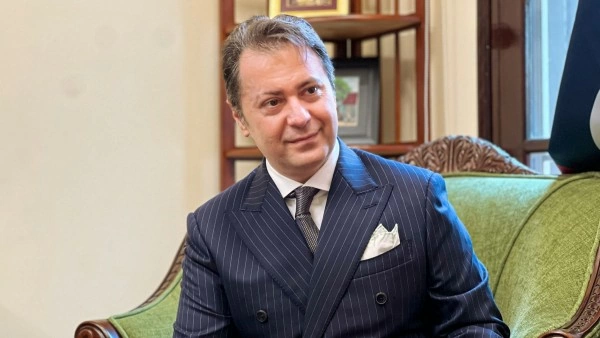
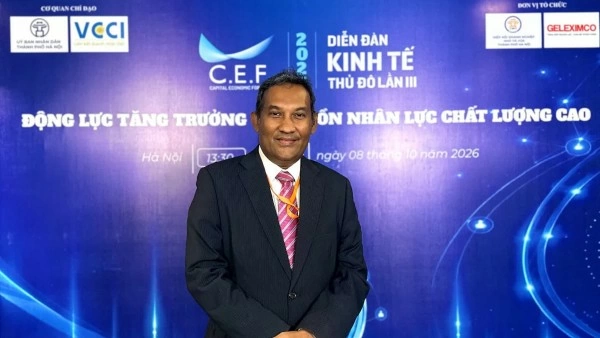
On the occasion of the recent Ho Chi Minh City Friendship Dialogue 2026 (FD 2026), Ms. Tan Shu Yee, Director of the International Business Division at the Singapore Business Federation (SBF), and Mr. Lee Duck Young, Director of the Ho Chi Minh City Office of the Incheon Port Authority (IPA), spoke to The World and Vietnam Report about opportunities to strengthen the city's role in global supply chains, develop green logistics and build sustainable maritime connectivity.
Building momentum for Ho Chi Minh City to become a regional logistics hub
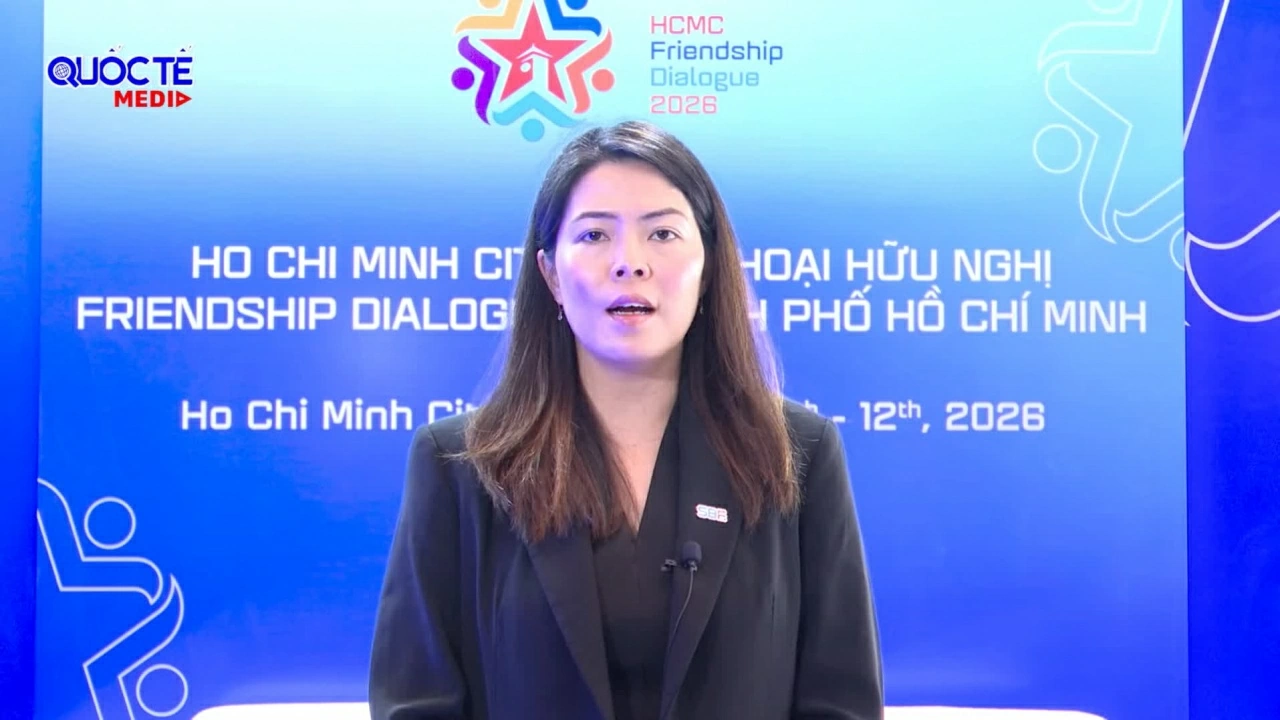 |
| Ms. Tan Shu Yee, Director of the International Business Division at the Singapore Business Federation (SBF), discusses opportunities for Singapore-Ho Chi Minh City cooperation in logistics development, green infrastructure and digital supply chains. (Photo: Thanh Long) |
As global supply chains undergo restructuring, manufacturing and logistics hubs across Asia are facing growing demands for greater connectivity, adaptability and sustainability.
With a dynamic economy, increasingly robust production capacity and continued investment in infrastructure, Ho Chi Minh City has an opportunity to strengthen its role in regional trade and logistics flows.
From the perspective of the Singaporean business community, this also provides room for both sides to expand cooperation. Ms. Tan Shu Yee, Director of the International Business Division at the Singapore Business Federation (SBF), said supply chain diversification is creating new opportunities for Singaporean companies to participate in and jointly develop new trade and logistics corridors with Ho Chi Minh City.
Such cooperation could contribute to building networks that are more resilient to fluctuations in the global economy.
| More from WVR |
 FD 2026: ‘Urban diplomacy’ drives growth momentum for Ho Chi Minh City FD 2026: ‘Urban diplomacy’ drives growth momentum for Ho Chi Minh City |
In practice, the presence of Singaporean companies in Vietnam's logistics sector has already produced several notable cooperation models.
The SBF representative cited YCH Group's Vietnam SuperPort project, which combines technology, automation and sustainable development solutions to build a more flexible and efficient logistics network.
According to Ms. Tan Shu Yee, such models demonstrate that Ho Chi Minh City-Singapore cooperation can go beyond traditional trade links towards the joint development of infrastructure and a logistics ecosystem.
Looking ahead, the head of SBF's International Business Division identified three areas with significant potential for cooperation, namely digital supply chains, port infrastructure and green logistics, as well as advanced cold-chain logistics solutions.
These are areas in which Singapore has strengths in technology, management and implementation experience, while Ho Chi Minh City has advantages in terms of market potential, connectivity and growing development needs.
To advance these opportunities, SBF will continue to serve as a bridge connecting Singaporean businesses with the Vietnamese market, with a focus on areas of growing interest such as green and digital transformation.
Through the Singapore Enterprise Centre in Ho Chi Minh City, trade promotion, business networking and partner-matching programmes are being carried out to help businesses on both sides gain a clearer understanding of market demand and identify concrete opportunities for cooperation.
Since the beginning of the year, SBF, together with partners such as UOB, has brought more than 18 Singaporean companies from various sectors to Ho Chi Minh City to explore the market and opportunities for cooperation.
As Vietnam accelerates its green and digital transitions, SBF hopes to continue working with local authorities, relevant agencies and the business community to identify emerging areas of demand, assess how Singaporean companies can contribute and promote substantive links with Vietnamese partners.
These developments are placing new demands on logistics systems to strengthen connectivity while meeting increasingly stringent standards for environmental performance and operational efficiency.
Going green to remain competitive
As logistics systems face growing demands to enhance competitiveness, greening seaports is becoming an increasingly important condition for logistics hubs seeking to adapt to new standards in international trade. Practical experience at Incheon Port also shows that this process requires changes in operational practices and approaches to emissions management.
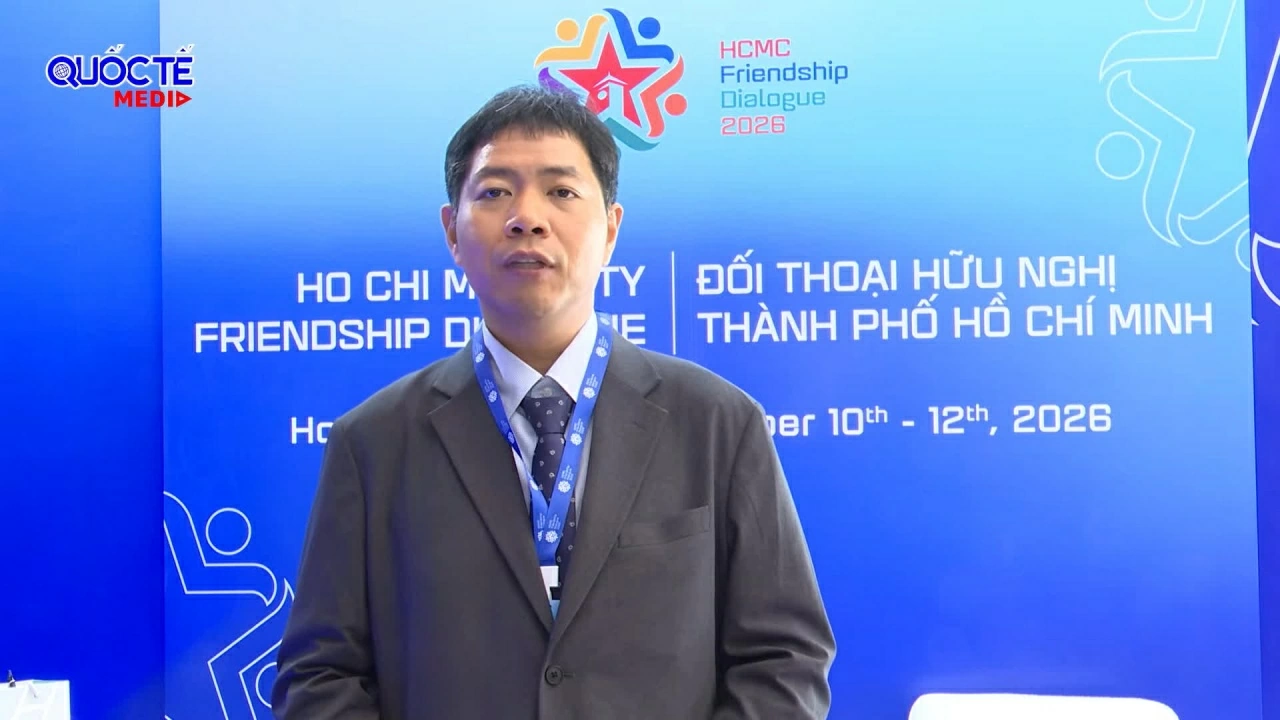 |
| Mr. Lee Duck Young, Director of the Ho Chi Minh City Office of the Incheon Port Authority (IPA), shares experience in greening seaports, managing emissions data and developing a green shipping corridor between Incheon and Ho Chi Minh City. (Photo: Thanh Long) |
According to Mr. Lee Duck Young, Director of the Ho Chi Minh City Office of the Incheon Port Authority (IPA), Incheon Port is implementing a comprehensive range of green solutions in response to increasingly stringent requirements for emissions reduction and decarbonisation.
Among these measures, the shore-side electricity system (AMP) is being continuously expanded, enabling vessels to use electricity from land while berthed instead of operating diesel generators, thereby reducing greenhouse gas emissions and air pollutants.
Incheon Port is also gradually converting key cargo-handling equipment, including terminal tractors and rubber-tyred gantry cranes, to low-emission solutions, with priority given to electrification.
For diesel-powered equipment that cannot yet be replaced, the port uses diesel particulate filters (DPF) to control emissions. In addition, a programme encouraging vessels to reduce their speed when entering and leaving the port has been introduced to lower fuel consumption and emissions.
| More from WVR |
 FD 2026: Harnessing momentum of cooperation, building a sustainable development foundation for Ho Chi Minh City FD 2026: Harnessing momentum of cooperation, building a sustainable development foundation for Ho Chi Minh City |
However, according to Mr. Lee Duck Young, investment in green equipment represents only one part of the transition.
As environmental regulations become increasingly stringent, the ability to measure, collect and manage carbon-emissions data will become an important factor in determining the competitiveness of seaports.
This is also an area in which Incheon is ready to share its experience with Vietnamese ports, thereby extending cooperation beyond infrastructure investment towards data-driven environmental management.
From this perspective, establishing a direct green shipping corridor between Incheon and the Ho Chi Minh City port cluster should begin with the two sides agreeing on a common data framework.
Rather than focusing solely on developing a technological platform, the parties need to clearly define the types of data to be measured, measurement standards, methods of data sharing and how the data will be used. Data on carbon emissions, green infrastructure, vessels and shipping routes can be connected to establish a common baseline, monitor progress and gradually reduce emissions along the entire route.
However, technology and data alone cannot create a green shipping corridor without a foundation of cooperation among the parties concerned. The Incheon Port representative stressed the particular importance of trust between people, as mutual confidence is essential for parties to be willing to share data and coordinate over the long term.
Therefore, building a common understanding of cooperation objectives and maintaining regular exchanges among regulators, businesses and experts need to proceed in parallel with the development of the data system.
In practice, Incheon Port has already established exchange relations with several specialised terminals in Ho Chi Minh City, including Saigon Newport Corporation (SNP), SP-ITC and Tan Cang - Cai Mep International Terminal (TCIT). According to Mr. Lee Duck Young, the next stage should move beyond individual relationships towards a cooperation mechanism at port-authority level, with a view to building a green port network between the two sides.
Combining Incheon's experience in green port operations with Ho Chi Minh City's actual conditions and capabilities could provide a basis for developing models suited to the specific characteristics of each port.
Against the backdrop of Ho Chi Minh City and the Cai Mep - Thi Vai port cluster undertaking a number of large-scale development projects, the Incheon Port representative said green considerations should be incorporated from the planning and design stages, rather than added only after infrastructure has been completed.
Integrating green infrastructure and data-management systems from the outset would enable ports to respond more proactively to international environmental requirements while improving operational efficiency.
Building on existing connections, Mr. Lee Duck Young expressed the hope that cooperation between Incheon and Ho Chi Minh City could continue to expand, eventually involving other major South Korean ports and creating a broader green cooperation network.
Accordingly, the roadmap could begin with building trust, agreeing on data standards and sharing information, before gradually turning data into substantive green shipping corridors.