


FD 2026: International experts share green transition experiences with Ho Chi Minh City
WVR - In the process of modern urban development, Ho Chi Minh City faces challenges similar to many cities worldwide: limited public spaces, increasing traffic, growing urban density, while the need to address climate change and reduce reliance on fossil fuels becomes more urgent.
Latest
Experiences from Leipzig (Germany) and the Kansai region (Japan) show that a green transition requires not only infrastructure investment but also changes in traffic organization, human resource development, and creating an environment for businesses to boldly invest in research, development, and technology application.
 |
| Mr. Tobias David, former Chief of Staff to the Mayor of Leipzig (Germany), in an interview with The World & Vietnam Report on the sidelines of the Ho Chi Minh City Friendship Dialogue 2026. |
Reclaiming Space for Citizens
According to Mr. Tobias David, former Chief of Staff to the Mayor of Leipzig, cities worldwide are addressing similar challenges regarding public spaces, traffic, and climate change. For Leipzig, the question is not only how to organize traffic but also how to build a livable city with clean air and safety for children to move freely.
In Europe, cities are required to develop a Sustainable Urban Mobility Plan (SUMP). Leipzig established this plan in 2018. In the 2030 Traffic Strategy, the city aims for 70% of trips to be made using environmentally friendly modes by 2030, with cars needed for no more than 30% of trips.
To achieve this goal, Leipzig has planned over 600 specific measures, from building sidewalks, expanding public transport, to developing bicycle lanes, with a budget of nearly 1.5 billion euros, and is currently implementing them.
According to Mr. Tobias David, one of the biggest challenges besides infrastructure investment is changing traffic behavior. The city needs to create convenient travel options while communicating to citizens to understand and use these methods. Leipzig prioritizes active transportation like walking and cycling, while enhancing the public transport system with new trams, electric buses, shared vehicle forms, and an efficient operating network.
The goal is for citizens to always trust public transport, walk, or cycle both day and night, thus reducing dependence on cars. This approach also helps redistribute public spaces more reasonably, allocating space for logistics and essential services.
Initial results show Leipzig is on the right track. A recent study indicates that by 2025, 69% of trips in the city are made by walking, cycling, or public transport, with walking accounting for 33%, cycling 20%, public transport 16%, and cars 31%.
Besides traffic, Leipzig also focuses on urban planning so that residents can access most destinations within their neighborhood within 15 minutes. Residential areas, shopping centers, schools, and public infrastructure are arranged to limit the need for long journeys. Mr. Tobias David believes this is a long-term process, requiring many measures and financial resources, but ultimately contributing to sustainable development and building a more livable city.
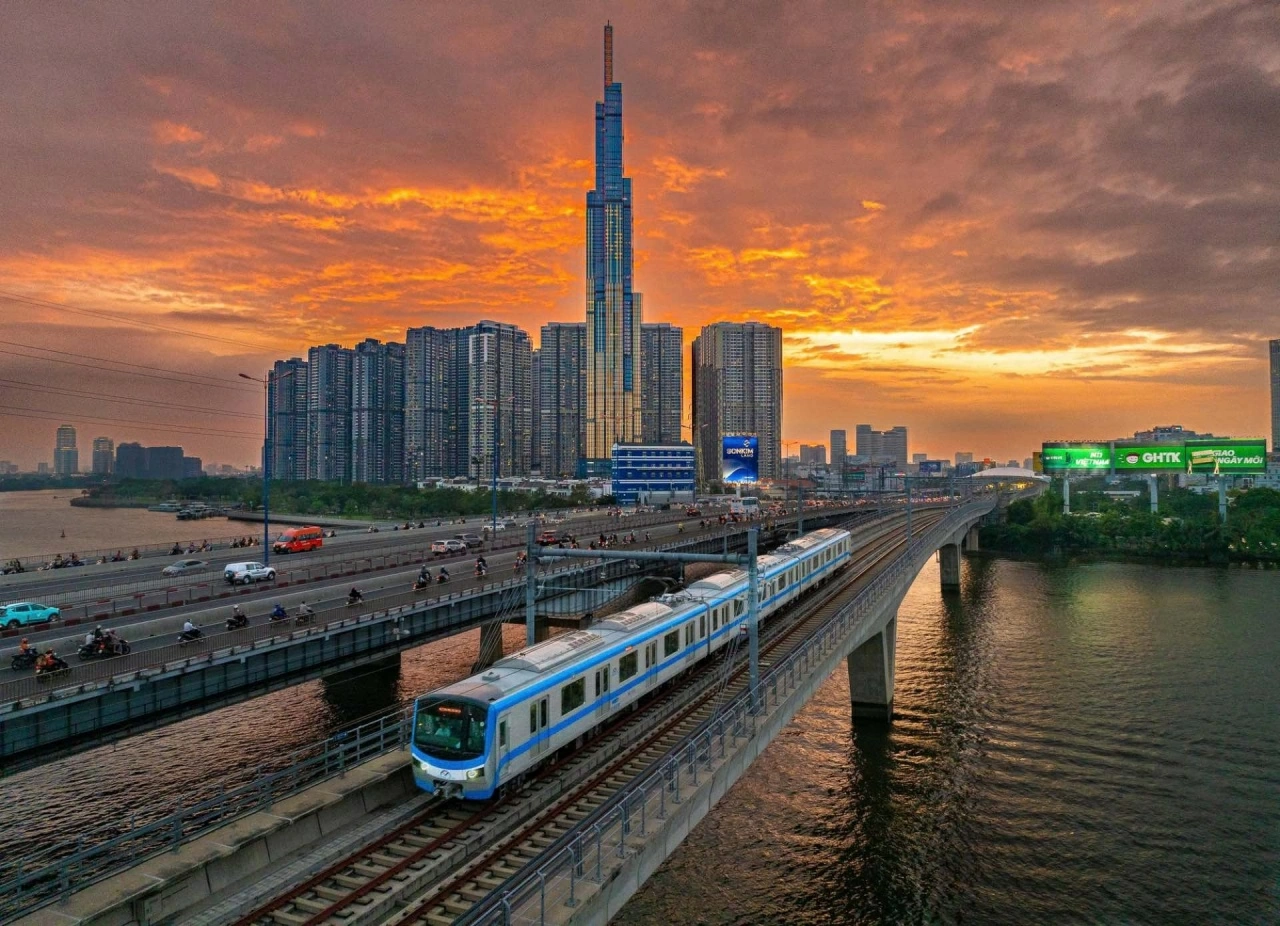 |
| The metro system promises to significantly contribute to making Ho Chi Minh City a modern, civilized, and sustainable urban area. (Source: VGP) |
From observations in Ho Chi Minh City, the German expert noted there is still room to improve pedestrian spaces. He believes that in some areas, sidewalks are not truly safe and crossing the street remains dangerous, especially for children. According to him, the city could become more livable by boldly reallocating public spaces, reducing areas for noisy, polluting cars and motorbikes, while increasing safe spaces for citizens and building a public transport system as the “backbone”.
Along with green infrastructure, the former Chief of Staff also emphasized the role of vocational training in the green transition process. According to him, Leipzig and Ho Chi Minh City can shift from student exchanges to building joint training programs aimed at future jobs. The key point of Germany's dual vocational training model is that the training program is not only designed by the education system. Businesses are also part of the training system. Trainees learn at vocational schools and receive training in real businesses, using real technology and solving real problems.
Based on this, Mr. Tobias David proposed that Leipzig and Ho Chi Minh City focus on several occupations directly related to the green transition, such as electric vehicle technology and charging infrastructure; mechatronics and industrial automation; renewable energy systems and energy storage; smart grids and building technology; environmental and water technology; digital logistics.
These programs can be developed between a Vietnamese vocational school, a training facility or business in Leipzig, and businesses on both sides. Notably, the training process can be designed internationally from the start. Trainees can spend most of their study time in Ho Chi Minh City but access German standards and technology; German businesses provide training modules and equipment; Leipzig businesses accept internships or advanced training; teachers from both sides regularly exchange and co-train.
Mr. Tobias David also particularly recommended implementing “trainer training” programs. According to him, to expand dual vocational training, it's not enough to train 50 trainees but to train teachers and business instructors capable of training the next 500 people.
He noted that Vietnam already has a good foundation for this direction as German-Vietnamese vocational training programs have demonstrated the ability to build programs with businesses, train to German standards, and incorporate green occupations into the curriculum, including energy, building technology, sanitation engineering, heating, and air conditioning.
Creating an Environment for Businesses to Invest in R&D and Green Transition
From the experience of the Kansai region, Ms. Keiko Murakami, Deputy Director of the Kansai Bureau of Economy, Trade and Industry (METI-Kansai), emphasized that to promote research and development (R&D), it is crucial to create an environment that makes it easier for businesses to test new technologies and implement demonstration projects.
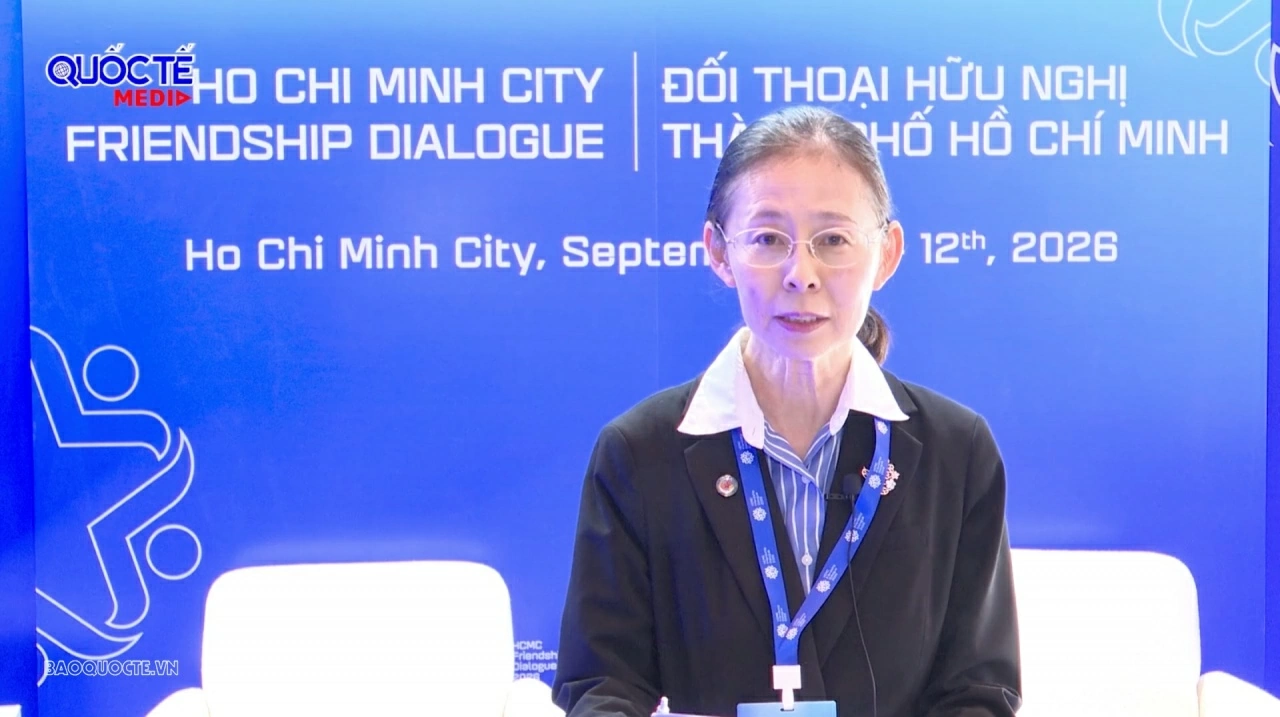 |
| Ms. Keiko Murakami, Deputy Director of the Kansai Bureau of Economy, Trade and Industry (METI-Kansai), in an interview with The World & Vietnam Report on the sidelines of the Ho Chi Minh City Friendship Dialogue 2026. |
One policy that METI-Kansai considers effective is the R&D support program. In Japan, the Go-Tech Program supports the R&D activities of small and medium-sized enterprises. Businesses receive support when conducting R&D projects in collaboration with universities and public research institutes operated by local governments.
Notably, support from the program can last up to three years instead of being limited to one year. During implementation, projects are evaluated; if results are not satisfactory, support may not continue. Projects are evaluated not only on technology but also on market potential and commercialization capability. According to Ms. Keiko Murakami, this approach helps public resources focus on projects with future development potential, aiming for practical application and commercialization rather than mere research.
For the green transition, another effective policy is supporting the introduction of advanced environmental technologies, energy-saving equipment, and renewable energy systems into newly built factories, business facilities, and public infrastructure. This can help reduce the environmental impact and energy consumption of industrial activities.
The cooperation experience between METI-Kansai and Binh Duong province was also mentioned by Ms. Keiko Murakami. In 2022, the two sides signed a cooperation document in the environmental field to improve the business environment and create market opportunities for Japanese businesses by introducing Kansai's environmental technology, along with Japan's management systems and regulations, to local government agencies and businesses actively addressing environmental issues.
Within this framework, METI-Kansai organized workshops in Binh Duong to introduce environmental and energy-saving technology from Kansai businesses. At the same time, local government agencies and industrial park developers were provided with a “Solution List” introducing technology, products, and systems from Kansai businesses that could contribute to building environmentally friendly industrial parks.
This list categorizes challenges in developing eco-industrial parks into groups such as green energy, resource recycling, water reuse, and pollution control; while introducing Japanese measures and technologies that can help address each issue. According to the expert, this experience shows that industrial development and environmental protection need to be implemented in parallel, promoting economic growth while addressing environmental challenges.
Additionally, regarding connecting Kansai's high-tech businesses with Ho Chi Minh City's innovation ecosystem, Ms. Keiko Murakami believes the most important factor is the presence of capable “coordinators”.
According to her, language, cultural, and business practice differences between Japanese and Vietnamese businesses, as well as between universities and research organizations, can prevent potential technologies and clear business needs from translating into specific cooperation. Therefore, individuals who understand both sides, capable of building trust and creating opportunities for new collaborative projects, are needed.
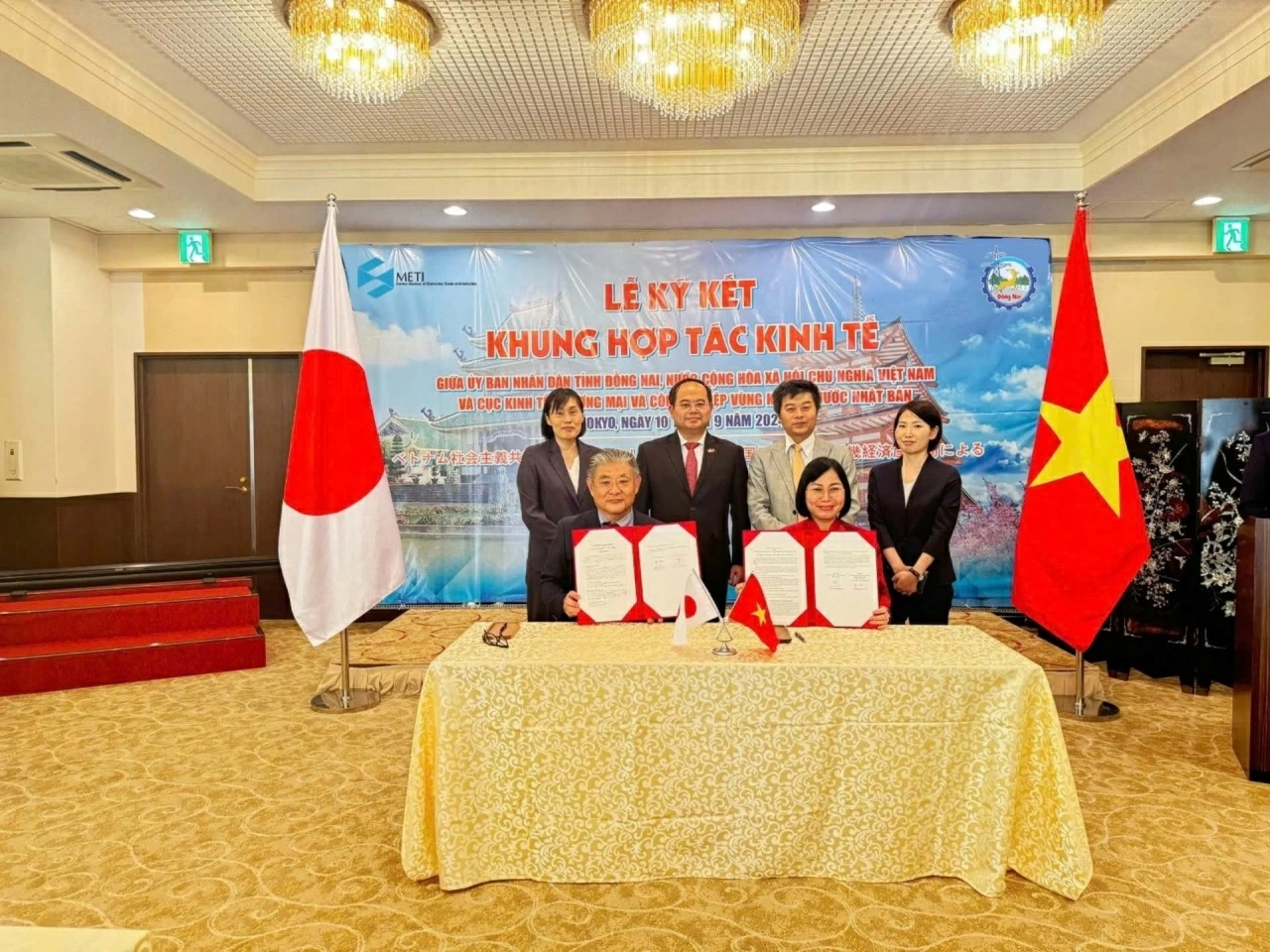 |
| In September 2024, in Tokyo (Japan), the People's Committee of Dong Nai province coordinated with the Vietnamese Embassy in Japan to organize the signing ceremony of the 5th Economic Cooperation Framework with the Kansai Bureau of Economy, Trade and Industry (METI-Kansai). (Source: Dong Nai Newspaper) |
Specifically, in cooperation with the People's Committee of Dong Nai province, METI-Kansai implemented a six-year program (from 2017 - 2022) to develop a team of coordinators capable of connecting Japanese businesses, Vietnamese businesses, universities, and research organizations. The program included regular advice from Japanese experts, online training, company visits, practical business connection activities, and study tours in Japan. Through this, trainees enhanced their ability to identify business needs, find potential businesses, and build professional networks.
As a result, more than 10 coordinators have been trained. In 2019, the Dong Nai Coordinator Group was established and now operates independently, actively promoting business connections and human resource exchanges between Japanese and Vietnamese organizations.
According to her, in the future, coordinators in Ho Chi Minh City can play a central role in promoting cooperation between Japanese and Vietnamese businesses, as well as connecting with universities and research organizations in joint research activities, pilot projects, and human resource development.