



Enhancing workforce quality to pave the way for growth
Developing a high-quality workforce must align with the actual demands of the labour market, enterprise management capabilities, and the requirements of each value chain.
Latest
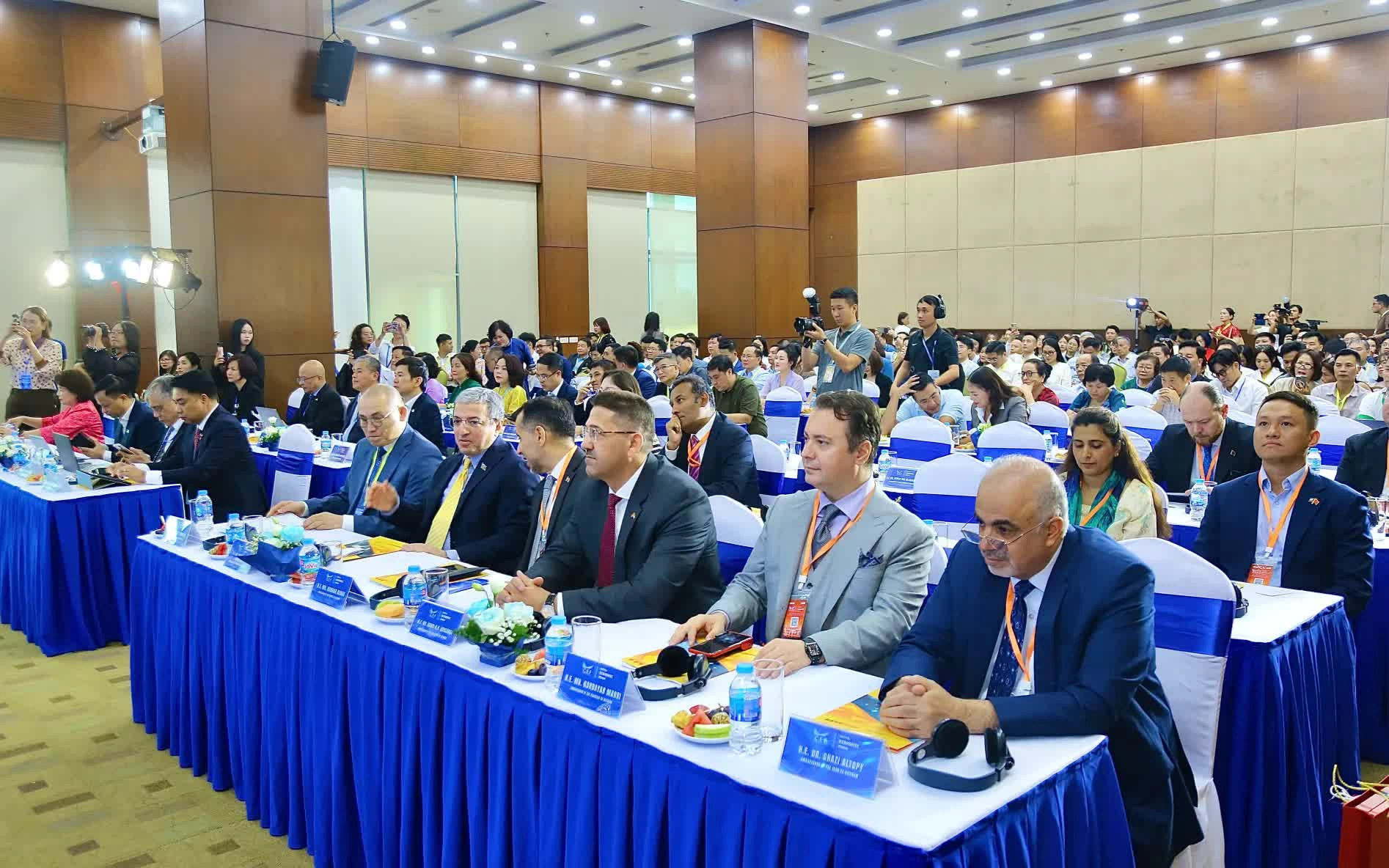 |
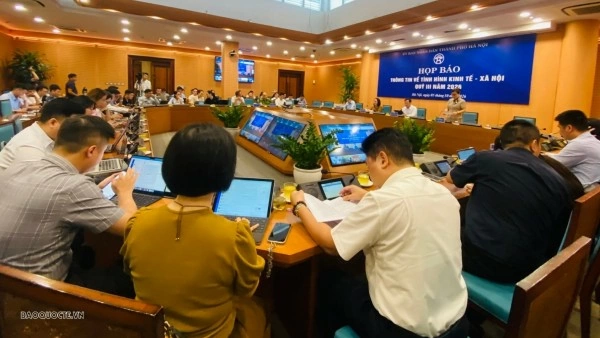
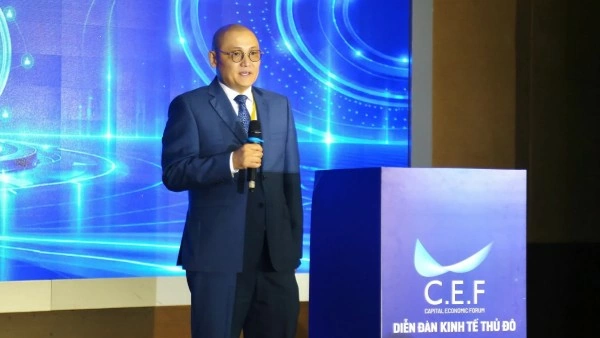
| Overview of the 3rd Capital Economic Forum. (Photo: Trung Anh) |
Within the framework of the 3rd Capital Economic Forum 2026 (CEF III 2026) themed “Growth Drivers from High-Quality Human Resources”, discussions focused on three main directions: (1) preparing a workforce that meets labor market demands, (2) enhancing enterprise management, finance, and mergers and acquisitions (M&A) capabilities, (3) developing technical human resources linked with production, value chains, and retail.
The approaches indicate that developing human resources must closely align with the actual needs of businesses, from readiness to work, management capabilities, and technical expertise.
Ensuring workers are truly “job ready”
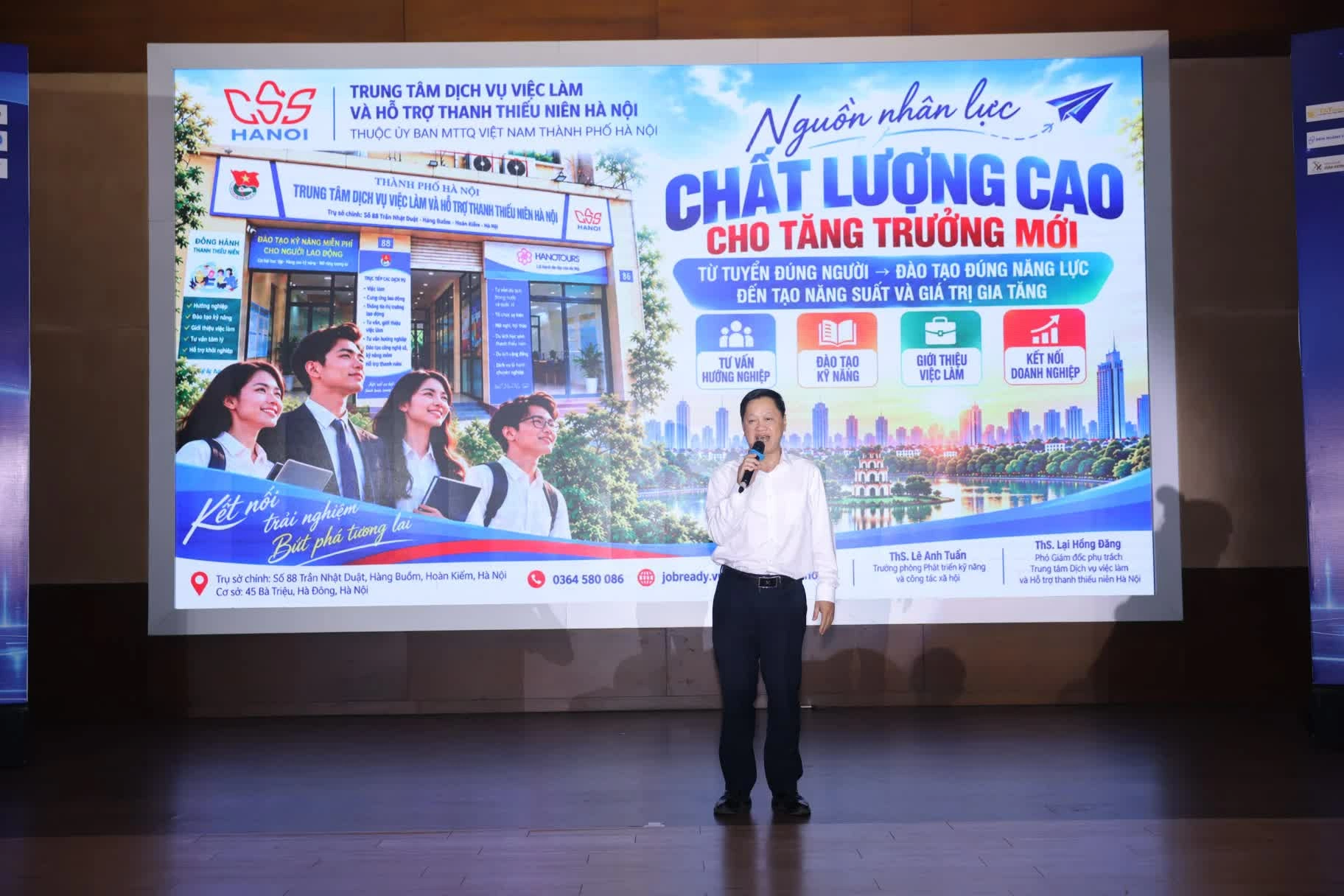 |
| Mr.. Lai Hong Dang, Deputy Director of the Hanoi Centre for Employment Services and Youth Support, presents the discussion titled “High-Quality Human Resources for New Growth”. (Photo: Organising Committee) |
Opening the discussion on “High-Quality Human Resources for New Growth”, Mr. Lai Hong Dang, Deputy Director in charge of the Hanoi Centre for Employment Services and Youth Support, focused on clarifying the human resource requirements for the capital's new development phase.
From practical experience supporting youth and connecting with businesses and the labour market, Mr. Lai Hong Dang argued that the quality of human resources should not be viewed solely through academic qualifications.
More importantly, workers need to be able to transform knowledge, skills, and attitudes into practical competencies.
From this perspective, Mr. Lai Hong Dang pointed out that the gap between business needs and workers' capabilities remains a bottleneck in the labour market.
Businesses have recruitment needs, but workers do not always fully understand the requirements of each position.
Meanwhile, the job search process increasingly demands higher skills, demeanour, and adaptability.
Therefore, according to Mr. Lai Hong Dang, it is necessary to create stronger connections among training, recruitment, and employment, thereby helping workers develop the competencies the market needs.
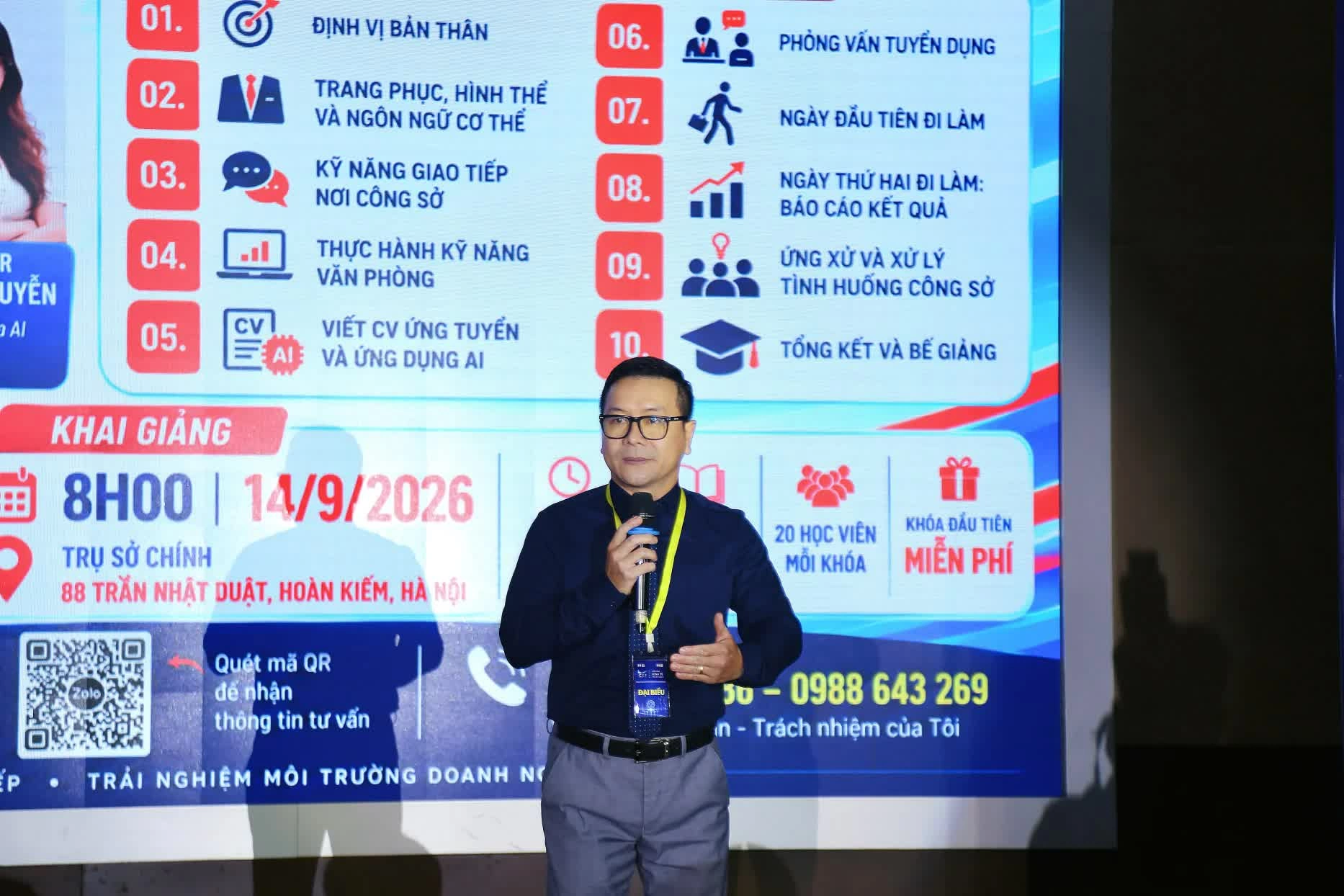 |
| Mr. Le Anh Tuan, Head of Skills Department, Hanoi Centre for Employment Services and Youth Support, introduces the Job Ready program. (Photo: Trung Anh) |
Following the presentation, Mr. Le Anh Tuan, Head of the Skills Department of the Centre, introduced the Job Ready program, designed to help young people better prepare for the corporate environment.
Specifically, the program incorporates workplace requirements into the training process, from time management, discipline, attire, to professional skills and attitudes.
After the training course, businesses meet directly, evaluate candidates, and discuss recruitment opportunities, creating a seamless connection process from skills preparation to job access for candidates.
Through this model, the demand for high-quality human resources is concretised from foundational competencies, closely aligned with the actual needs of businesses and the labour market.
Enhancing workforce quality to pave the way for growth
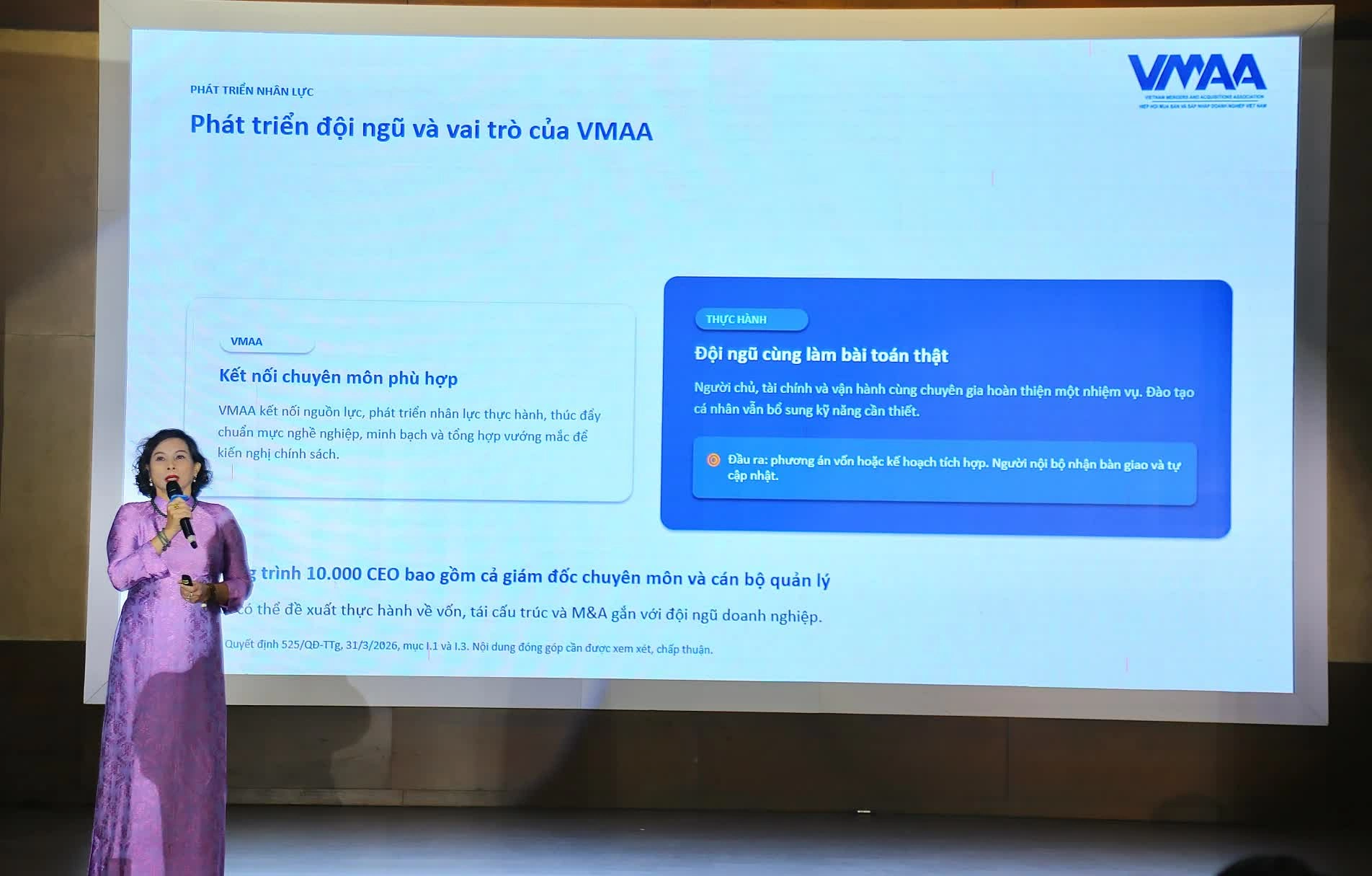 |
| Vice President and General Secretary of the Vietnam Mergers and Acquisitions Association (VMAA) Pham Thi Thuy Duong presents the discussion “Management, Finance, and M&A Human Resources”. (Photo: Trung Anh) |
Continuing the discussion on workers' responsiveness, Vice President and General Secretary of the Vietnam Mergers and Acquisitions Association (VMAA), Pham Thi Thuy Duong, shifted the focus to a business-level requirement: management capabilities and the ability to mobilise and allocate resources for growth.
For many businesses, especially small and medium enterprises, the current development challenge is linked to capital, management capabilities, and a team of experts to accompany them through transition phases.
In this context, restructuring should be seen as a step to enhance competitiveness and lay the foundation for business development, rather than only being implemented when businesses face difficulties.
In the practical M&A market, the Vice President and General Secretary of VMAA noted that the Vietnamese M&A market recently recorded a value of approximately 8.7 billion USD, with 367 announced transactions.
The scale and number of transactions indicate that demand for restructuring, investor seeking, and operational expansion is placing greater demands on management, finance, and consulting human resources.
Accordingly, VMAA aims to connect businesses' actual needs with experts, capital, and suitable human resources, thereby supporting them in choosing directions and enhancing operational efficiency.
In the context of expanding AI applications, the VMAA representative emphasised that AI is merely a tool to support business activities, while human thinking, learning, and adaptability need continuous development.
Human resources must accompany each link in the value chain
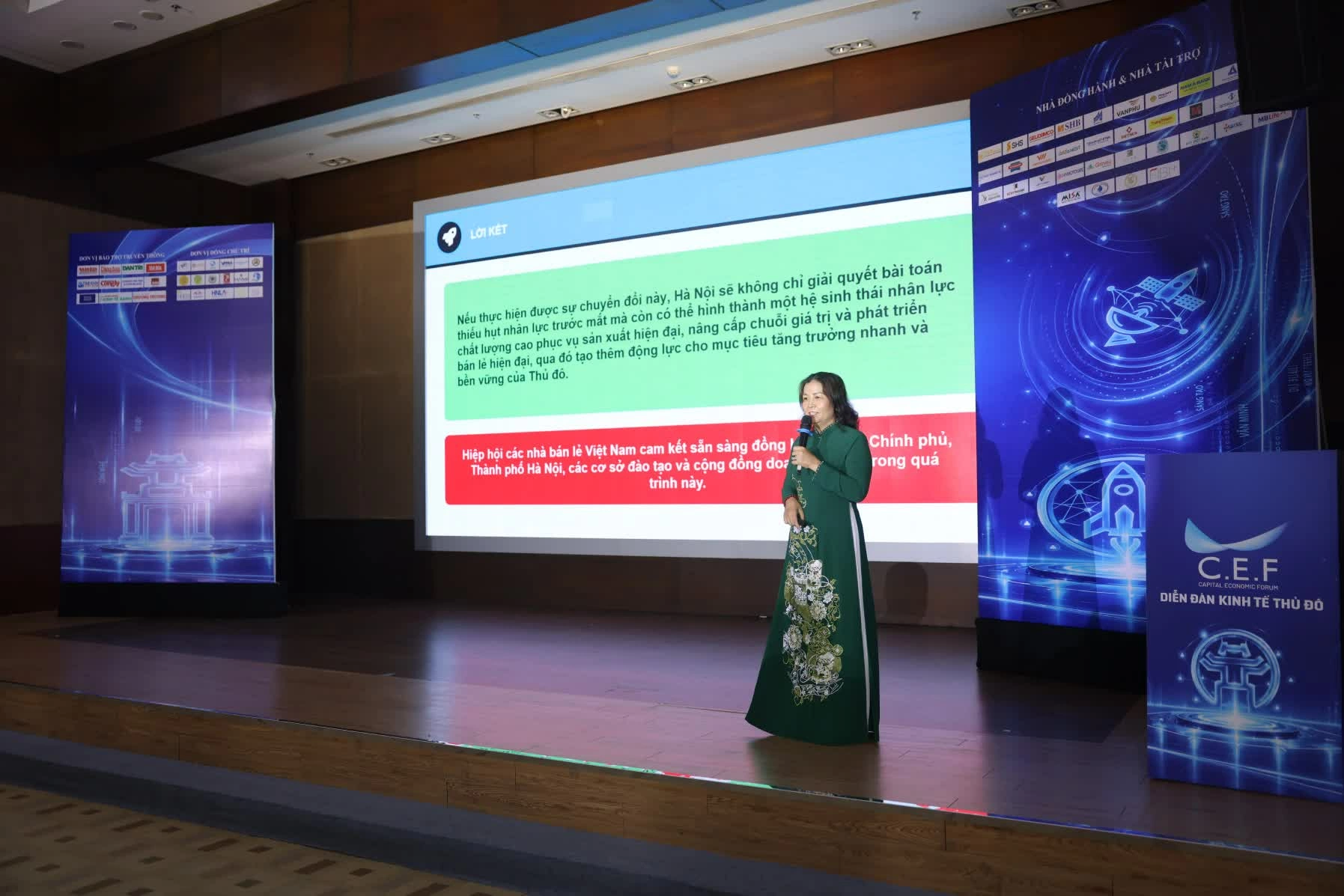 |
| Ms. Tran Thi Phuong Lan, President of the Vietnam Retailers Association, Honorary President of the Hanoi Handicraft and Village Association, presents the discussion “Technical, Production, and Value Chain, Retail Human Resources”. (Photo: Organising Committee) |
From the perspective of production, circulation, and market, Ms. Tran Thi Phuong Lan, President of the Vietnam Retailers Association and Honorary President of the Hanoi Handicraft and Village Association, raised the issue of developing human resources across the entire value chain.
A value chain can only operate effectively when each link is ensured with suitable human resources. A shortage of human resources at one stage can affect the productivity and competitiveness of the entire chain.
From this perspective, Hanoi needs to clearly identify foundational human resource fields for the 2026-2030 period, focusing on five groups: (1) technical human resources for modern production; (2) technology and data human resources; (3) supply chain management human resources; (4) modern retail human resources; and (5) business leadership and management teams.
On this basis, Ms. Tran Thi Phuong Lan suggested that training should shift strongly towards aligning with the actual needs of businesses and their respective value chains.
The training model should balance foundational knowledge and practical experience, aiming for a 70% knowledge component at training institutions and a 30% practice and experience component at businesses.
Businesses also need to be more deeply involved in program development, equipment investment, organising internships, and on-the-job training and recruitment.
On this foundation, ThS. Tran Thi Phuong Lan proposed that Hanoi focuses on seven task groups, including (1) developing a human resource program for capital growth in the 2026-2030 period, (2) establishing a human resource connection center between businesses and training institutions, (3) building a centralized human resource database, (4) supporting businesses in developing internal training centers, (5) organizing short-term training programs for workers, (6) enhancing foreign language and international skills training, and (7) establishing a mechanism for human resource orders.