



Driving Sustainability Forward: How PUMA and Vietnam Advance Together
The collaboration between PUMA and Vietnam is grounded in a strong, shared commitment to sustainability.
Latest
Vietnam’s national objectives, including its pledge to reach Net Zero by 2050, the Green Growth Strategy, and new regulations concerning renewable energy, water stewardship, and circularity, align closely with PUMA’s own Climate Science-Based Targets and Vision 2030 targets. Because both sides are working toward the same priorities, progress has accelerated across several environmental areas.
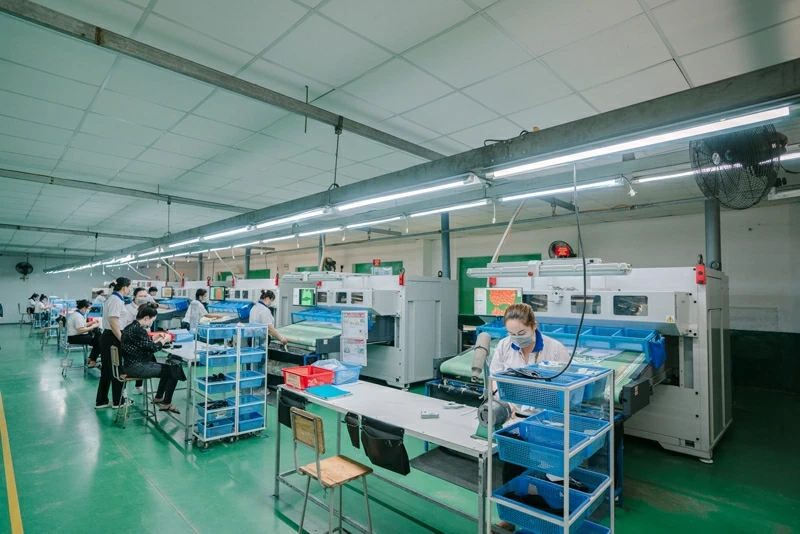 |
| Factory workers at one of PUMA’s Vietnam suppliers. |
Decarbonization and Renewable Energy
Vietnam has established a policy landscape that actively promotes the procurement of renewable energy, a critical element in PUMA’s decarbonization strategy. By 2024, suppliers in Vietnam were already sourcing 30 per cent of their energy from renewable sources. This figure surpasses PUMA’s global average of 27 per cent and reflects the speed at which Vietnam is building capacity for green growth and modernising energy systems within factories.
Water Stewardship and Chemical Management
The country has a national water resource management plan that supports the responsible use and protection of water. This plan is reinforced by strict requirements for wastewater monitoring and by mature regulatory systems overseeing chemical management and pollution control. One of Vietnam’s most distinctive regulatory features is its demand for digital wastewater monitoring. Factories must provide real-time discharge data to national platforms, a system that has contributed significantly to improving water quality across the country.
Environmental Partnerships
To expand its environmental impact, PUMA works closely with several international and local partners. Among them is the Vietnam Textile and Apparel Association (VITAS), an independent organisation that collaborates with both industry players and government ministries to support the advancement of the textile sector. Through policy dialogues, joint initiatives, and ongoing engagement, VITAS helps guide sustainable development within the industry. PUMA’s partnership with VITAS ensures that its perspective is included in the development of new strategies, policies, and guidelines. These collective efforts reinforce Vietnam’s growing reputation as a global leader in sustainable manufacturing.
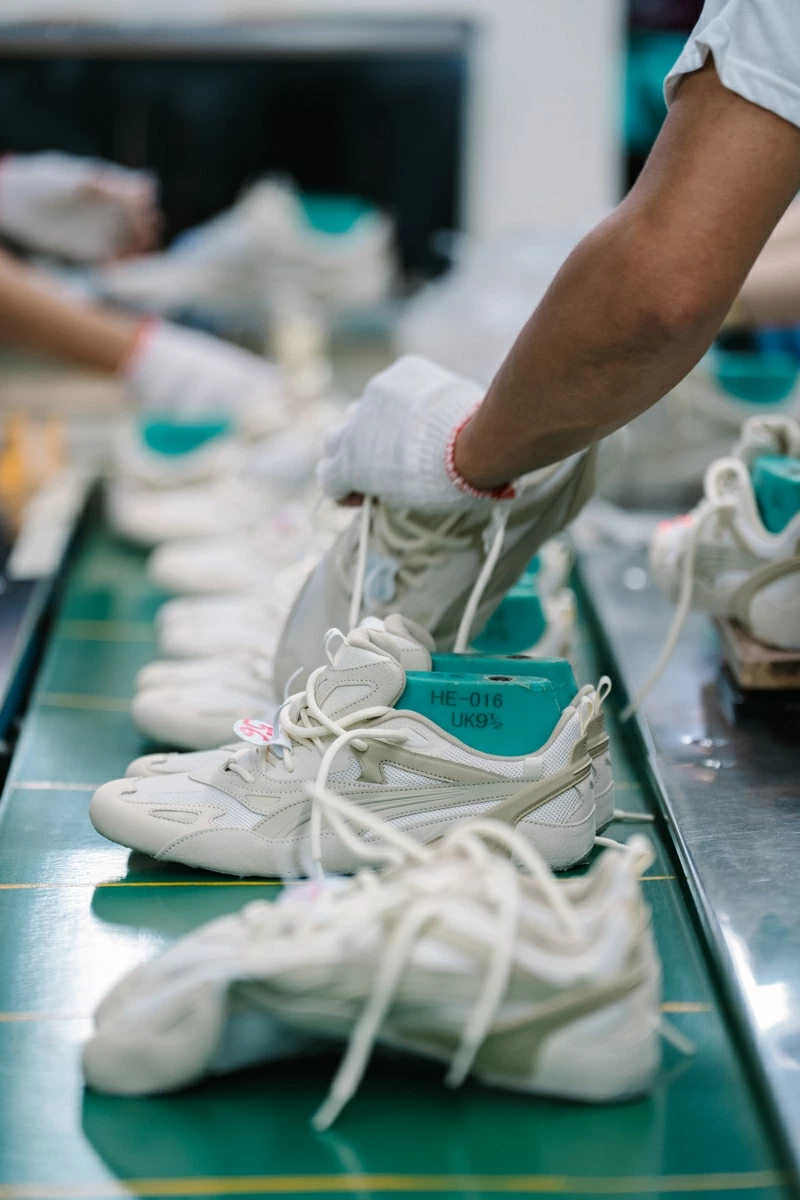 |
| PUMA sneakers are manufactured at a factory |
A Supply Chain Built for the Future
Vietnam is recognised as one of Asia’s most developed and forward-looking regulatory environments when it comes to sustainability. This foundation enables PUMA to strengthen a supply chain that is not only low-impact but also resilient and transparent. The country’s growing renewable energy sector is backed by national policies that encourage cleaner production. Its infrastructure is designed to support emissions reductions, and systems requiring digital reporting of environmental data enhance accuracy and accountability. Regulations promoting circularity, recycling, and responsible waste management are already firmly in place, and factories across the textile and footwear sector generally demonstrate a strong culture of compliance. PUMA has helped Vietnamese suppliers set climate targets, diversify their energy portfolios, and adopt international standards. Together, these efforts support a supply chain equipped to respond to future sustainability challenges.
Innovation in Motion: Vietnam’s Next Stage of Development
The 35-year partnership between Vietnam and the European Union highlights how policy alignment and technological advancement can transform global value chains. Vietnam plays a central role in PUMA’s transition toward more responsible production- not only as a key manufacturing location but as a country where innovation is actively reshaping environmental performance across the footwear, textile, and apparel industries.
Recent regulatory progress includes Vietnam’s introduction of the Direct Power Purchase Agreement framework, which allows suppliers to accelerate their use of renewable energy. Technological innovation is also advancing quickly. One of the most promising developments for PUMA is the electrification of process heat. PUMA is supporting feasibility studies for heat pump technologies in four Tier 2 textile factories, exploring how these solutions can replace traditional thermal systems and reduce emissions while enabling more efficient production.
At the regulatory level, Vietnam’s environmental protection law is driving a major shift toward digital oversight. Large textile factories must install systems that continuously measure and transmit wastewater discharge information directly to government platforms. This approach strengthens transparency and aligns with global benchmarks such as the ZDHC Wastewater Guideline. The result is cleaner water systems, more consistent compliance, and stronger environmental management across the industry.
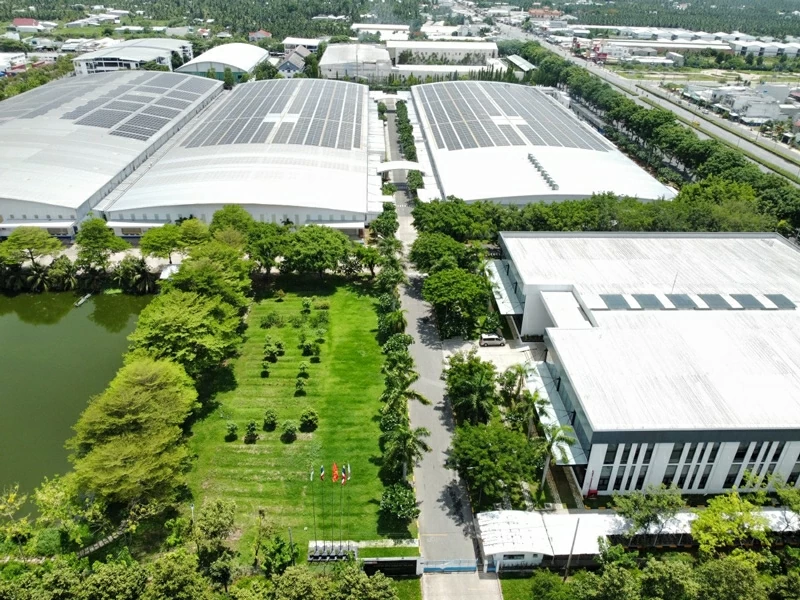 |
| Solar panels installed at one of PUMA’s Vietnam suppliers. |
PUMA’s work with Vietnam demonstrates that high performance and high environmental standards can advance side by side. It demonstrates that when governments, industries, and communities collaborate toward shared objectives, meaningful and lasting progress becomes achievable.

| Integrating social responsibility into every national brand for sustainability: Scholar WVR - According to Dr. Mac Quoc Anh, Member of the Central Committee of the Vietnam Fatherland Front, Party Secretary, Vice Chairman and General Secretary ... |

| Vietnamese business step up to advance responsible supply chains, ensuring migrant workers' rights WVR - On December 1 in Hanoi, business leaders, chambers of commerce, and civil society organizations gathered at the International Organization for Migration (IOM) 2025 ... |
Tags: