



Developing Gia Lai into a key destination that attracts domestic and international tourists
This year, Gia Lai is in the spotlight as it has been chosen to host the National Tourism Year. The locality aims to achieve a breakthrough by welcoming 15 million tourists and generating 35,000 billion VND in revenue, while striving to establish itself as a premier destination for both domestic and international visitors.
Latest
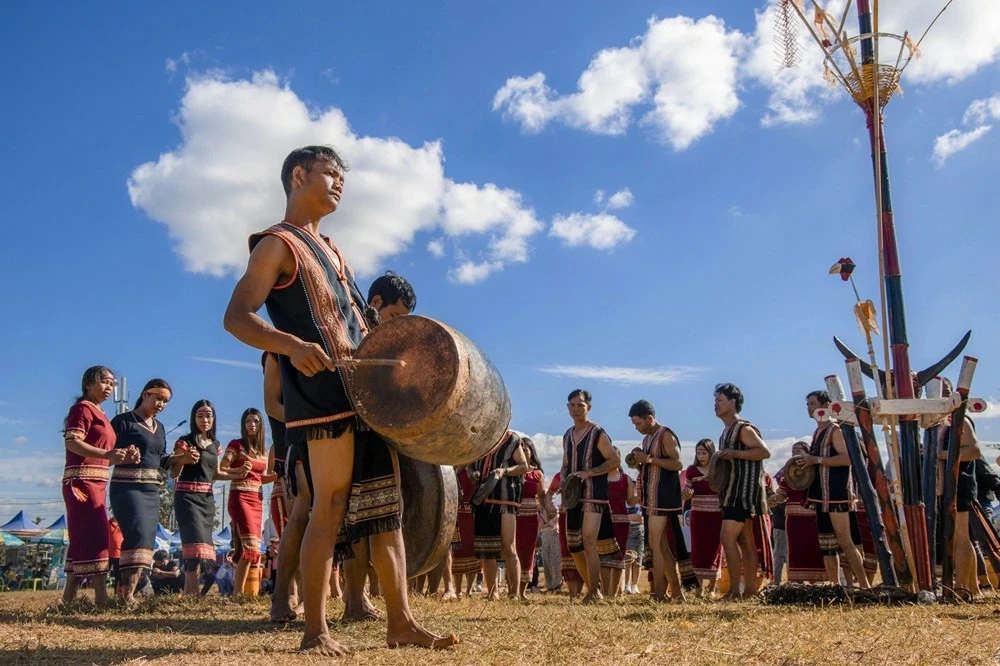 |
| Gia Lai boasts a remarkably diverse range of tourism and cultural assets. (Source: VGP) |
Being selected to host the National Tourism Year - Gia Lai 2026 is a great opportunity to showcase the newly expanded Gia Lai, created through the merger of two regions rich in cultural heritage: Binh Dinh and Gia Lai.
With the theme "Mountains Embrace the Sea," Gia Lai demonstrates the connection between the highlands and the coast, bridging traditional values and modern aspirations for development. These are also the values that define the province – a harmonious interplay between nature, culture, and development space.
Rich cultural values
After the merger, Gia Lai covers 21,500 km², making it the second-largest province in the country and occupying a strategic position as a gateway linking the Central Highlands with the South Central Coast. This important advantage helps to form inter-regional and inter-provincial tourism routes and strengthen connections across Vietnam and beyond.
Gia Lai boasts a remarkably diverse array of tourism and cultural assets, such as: Bien Ho Lake, Chu Dang Ya volcano, Kon Ka Kinh National Park - an ASEAN Heritage Park; the Central Highlands Gong Culture Space (a representative intangible cultural heritage of humanity inscribed by UNESCO in 2005), the Champa cultural relic system, and a 134 km long coastline.
It offers a distinctive cultural landscape where the coastal traditions of Central Vietnam blend with the rich heritage of the Central Highlands. The province currently has 196 historical sites, including 4 special national sites, 44 national sites, and 148 provincial sites.
The four special national sites are the Tay Son Thuong Dao historical complex, the Tay Son Tam Kiet shrine, Duong Long Tower, and the Roc Tung - Go Da historical site, which together form one of the most significant historical heritage corridors for the entire Central Highlands region.
Gia Lai is also home to rich performing arts traditions such as traditional opera (hat boi) and folk singing (bai choi) – intangible cultural heritage of humanity - as well as Binh Dinh traditional martial arts, with renowned martial arts schools and villages. Traditional festivals such as the Dong Da - Tay Son festival, the Chua Ba - Cang Thi Nuoc Man festival, the fishing festival, the new rice harvest festival, and the boat racing festival… reflect the province's vibrant spiritual and cultural life while enriching its tourism offerings.
With its abundant natural resources, Gia Lai boasts a diverse tourism landscape, harmoniously combining beach resorts in Quy Nhon and Ky Co - Eo Gió, the gong culture of the Central Highlands, exploration of the vast Kon Ka Kinh forest, and the Bien Ho lake...
Along with a synchronised transportation system comprising seaports, airports, highways, and border gates, it facilitates inter-regional connectivity, market expansion, and the development of diverse, in-depth tourism products.
The province has enormous potential for tourism development, not only in terms of resources but also in its ability to form value chains: from agriculture combined with tourism, smart tourism, to the development of world-class destinations.
This provides a strong foundation for tourism to become a key driver of the provincial economy, contributing to the goal of positioning Gia Lai as a new growth engine for the region.
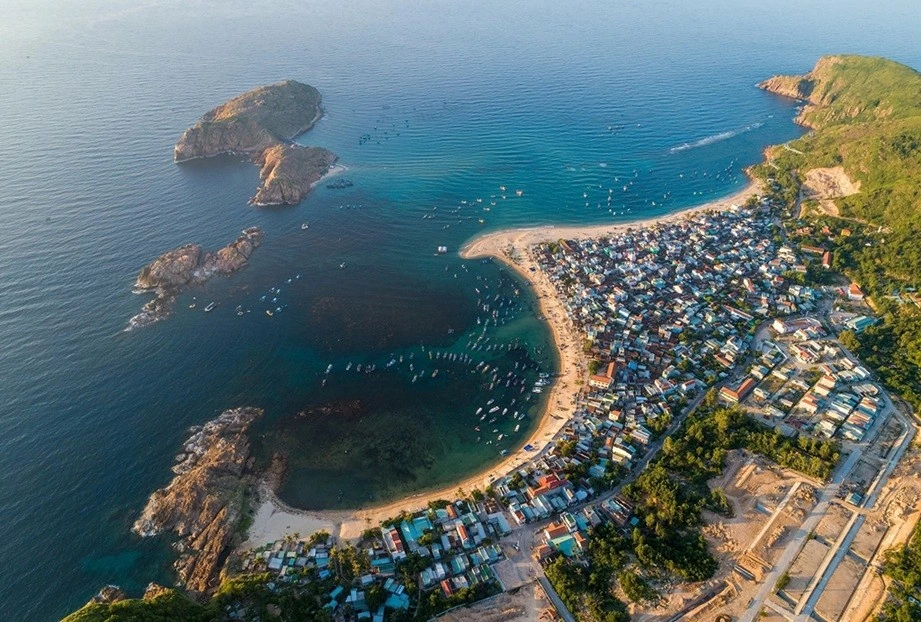 |
| With its potential for "golden forests and silver seas," Gia Lai province currently has a unique tourism ecosystem. (Source: VNE) |
Cultural diplomacy - a strategic lever
Cultural diplomacy is becoming a strategic lever for positioning the province's international profile and attracting more international visitors. Through close coordination with the Ministry of Foreign Affairs, the province actively promotes its image through Vietnam's overseas diplomatic missions. This strategy not only focuses on showcasing the province's tourism assets but also on attracting strategic investment in tourism infrastructure. This is part of a long-term strategy to transform Gia Lai's rich natural and cultural assets into sustainable drivers of economic growth.
Gia Lai's cultural diplomacy focuses on preserving and promoting the values of the Gong Culture Space, a UNESCO World Heritage Site. The province regularly organises large-scale festivals and international exchange events to bring local heritage closer to friends around the world. Projects to organise Drum Festivals, International Traditional Martial Arts Festivals, or percussion instrument Festivals are being studied to create distinctive, high-class cultural highlights. Connecting folk art with global entertainment trends helps Gia Lai create a unique impression in the hearts of foreign tourists.
Currently, Gia Lai is focusing its resources on exploiting potential international tourist markets. Japan and Korea are considered two key partners in the province's international cooperation strategy.
With Japan, the province has established cooperative partnerships with Izumisano City, Ashikaga City, Yoshino Town, and the Japan-Vietnam Friendship Association in Sakai. With Korea, the province has maintained a three-decade partnership with Seoul's Yongsan District.
Gia Lai also continues to strengthen traditional friendly relations with Attapeu, Champasak, Salavan, and Sekong provinces of the Lao People's Democratic Republic and Preah Vihear, Stung Treng, and Ratanakiri provinces of the Kingdom of Cambodia through delegation exchanges, human resource training, scholarships, medical support, promoting border trade, and coordinating border security.
Furthermore, Gia Lai is collaborating with European partners, including the French trade unions SFL and SEAFF, on clean water supply and wastewater treatment, and with the German corporation GEO to build a training centre for renewable energy human resources.
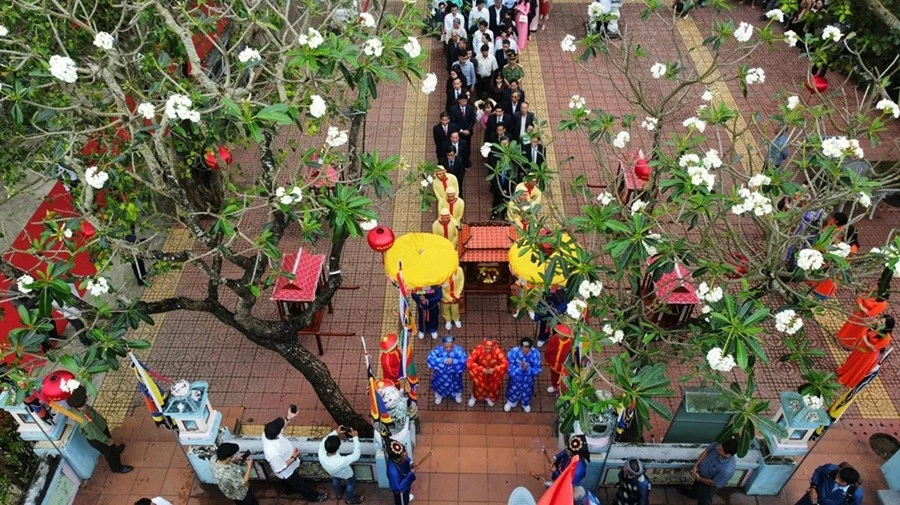 |
| The Ba Pagoda Festival - Nuoc Man Port City is a National Intangible Cultural Heritage. (Photo: Thanh Quan) |
The province is striving to develop preferential policies, support air connectivity, and increase the number of charter flights to facilitate travel. The presence of foreign businesses in the tourism ecosystem helps improve service quality to professional international standards. The long-term goal is to build a high-end tourism value chain that meets the demanding needs of high-spending customer segments.
Community-based tourism, closely integrated with the preservation of indigenous culture and traditional lifestyles, is also a key area that Gia Lai is focusing on developing. Visitors can immerse themselves in local life and experience authentic folk performances and traditional cultural activities. The harmonious relationship between local communities and nature is one of Gia Lai's greatest competitive advantages in the global tourism market. The power of cultural diplomacy will continue to expand international partnerships, enhance the province's global visibility, and position Gia Lai as a distinctive destination on the global tourism map.
Foreign relations contribute to enhancing soft power
Simultaneously, foreign affairs and international integration play a crucial role in expanding the development potential of Gia Lai's tourism industry. Through these efforts, the province has established strategic partnerships with many major international partners and leading tourism corporations. Leveraging the network of Vietnamese representative offices abroad has enabled Gia Lai to promote its image more effectively to international audiences. This provides a solid foundation for achieving the province's goal of making tourism one of its five key economic pillars.
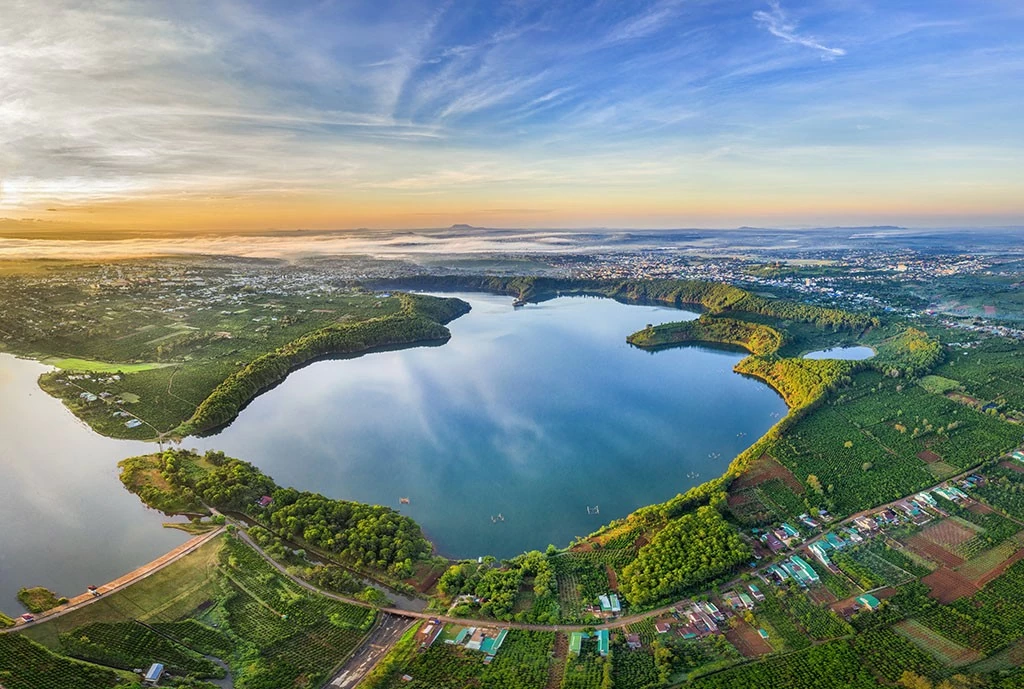 |
| T'Nung Lake. (Source: Vietnamtourism) |
The bridging role of foreign affairs is clearly demonstrated through its ability to attract foreign investment in infrastructure and high-end tourism projects. The province is actively coordinating with international partners to explore launching direct international air routes connecting Gia Lai with key overseas markets. Investment promotion forums not only attract capital but also facilitate the transfer of advanced management expertise and technologies. As a result, the province's tourism ecosystem continues to evolve, better positioning it to meet the expectations of discerning international travellers.
International integration also helps Gia Lai enhance its soft power by showcasing its unique cultural and natural heritage. Large-scale events such as National Tourism Year 2026 provide valuable opportunities to introduce the UNESCO-recognised Space of Gong Culture in the Central Highlands, Bai Choi folk singing, and Hat Boi (classical opera) to international audiences. These efforts not only raise Gia Lai's international profile but also contribute to the sustainable preservation and promotion of its cultural heritage.
| Quy Nhon receives 'ASEAN clean tourist city' title for the third time At the 45th ASEAN Tourism Forum, Quy Nhon (Gia Lai province) was once again honored as the “ASEAN clean tourist city 2026”, reaffirming its persistent ... |
| Press conference: 244 events, cultural and sports activities to take place in National Tourism Year - Gia Lai 2026 WVR - On the afternoon of March 5, in Hanoi, the Ministry of Foreign Affairs and the People's Committee of Gia Lai Province hosted an ... |
| Various cultural and tourism promotion activities by Miss Vietnam Business Contestants 2026 in Gia Lai WVR - Beyond celebrating the beauty, intelligence, and courage of Vietnamese businesswomen, the contest also contributes to promoting the image of Gia Lai – the ... |
| Miss Brand Vietnam 2026 accompanies National Tourism Year Gia Lai 2026 WVR - Hosting Miss Brand Vietnam 2026 is expected to contribute to promoting local culture, in conjunction with the National Tourism Year 2026 under the ... |
| Gia Lai expands development space, makes remarkable strides in attracting investment In less than six months, Gia Lai has nearly fulfilled its annual investment attraction target. By mid-June 2026, the province had attracted 161 investment projects, ... |


