



Deputy PM Le Tien Chau calls for reform of research commissioning mechanisms
WVR - On September 20, in Ho Chi Minh City, the University of Economics Ho Chi Minh City (UEH) held the 2026 Public Sector Partnership Connection Conference under the theme “From Partnership to Co-Creation”, aiming to move from individual partnerships towards multilateral collaboration to jointly identify challenges, develop solutions and create sustainable value and impact.
Latest
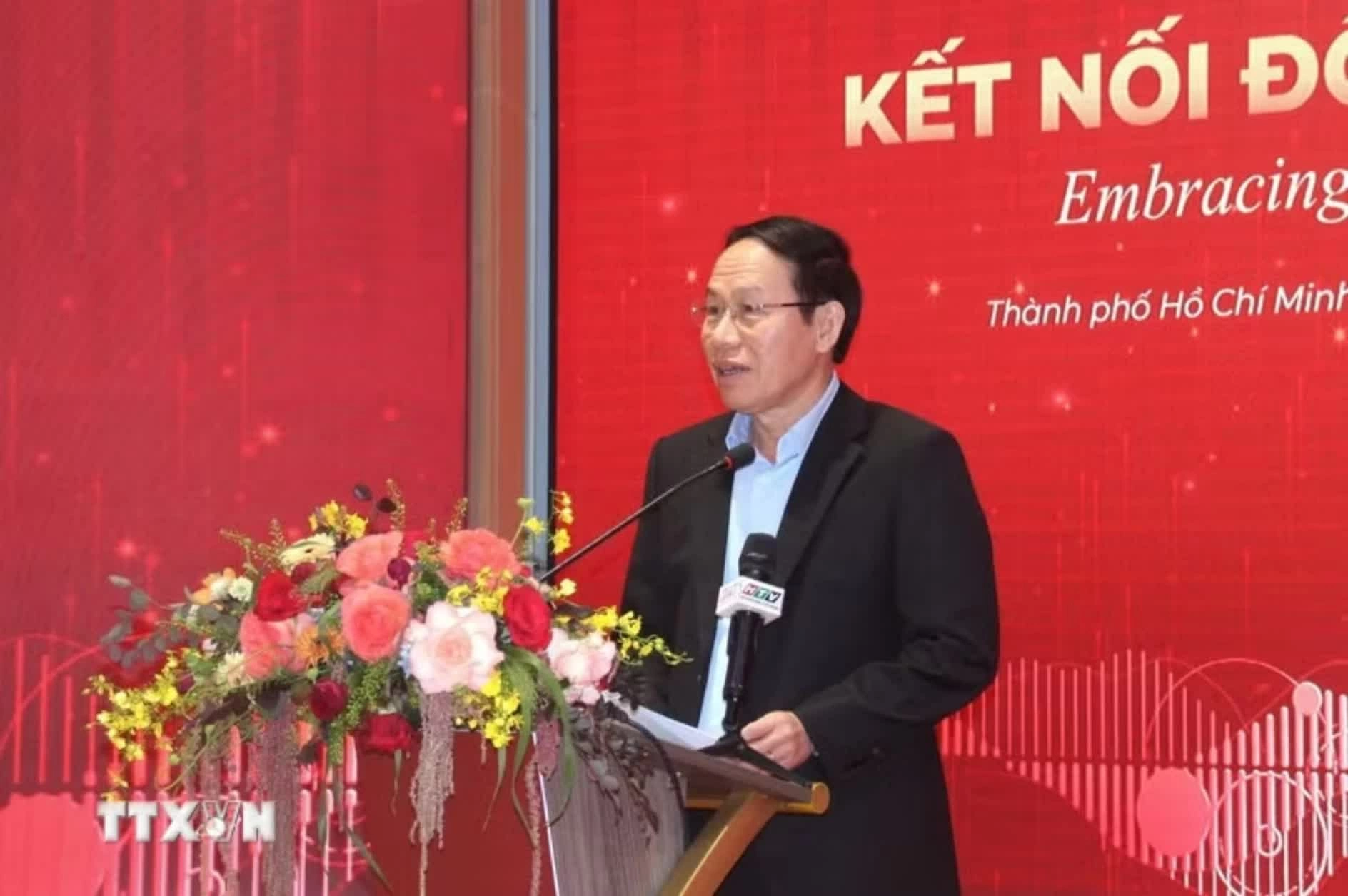 |
| Deputy Prime Minister Le Tien Chau speaks at the 2026 Public Sector Partnership Connection Conference. (Source: VNA) |
Deputy Prime Minister Le Tien Chau attended the conference and commended the achievements made by UEH. He called on the Ministry of Education and Training, drawing on the models and approaches developed by UEH and other higher education institutions, to urgently complete a proposal to improve the effectiveness of cooperation among the State, universities and businesses.
The focus should be on identifying and publicly presenting practical challenges, selecting suitable universities and research groups, establishing research commissioning mechanisms, mobilising resources, sharing data, coordinating research, and receiving and transferring research outcomes.
| More from WVR |
 Deputy PM Le Tien Chau receives Special Advisor to Japan-Vietnam Parliamentary Friendship Alliance Takebe Tsutomu Deputy PM Le Tien Chau receives Special Advisor to Japan-Vietnam Parliamentary Friendship Alliance Takebe Tsutomu |
The Deputy Prime Minister asked the Ministry of Education and Training to study and improve mechanisms for evaluating science and technology activities at higher education institutions, placing greater emphasis on research outputs, transferability, application and socioeconomic impact alongside academic criteria.
At the same time, the Ministry of Science and Technology should work with the Ministry of Education and Training, the Ministry of Finance and relevant agencies to review existing regulations and ensure a seamless process, from identifying practical challenges and formulating research tasks to selecting implementing institutions, allocating resources, conducting research, receiving and applying results, and evaluating outcomes.
Ministries, sectors and localities were asked to proactively identify major and complex issues as well as bottlenecks and obstacles emerging from practice, and mobilise universities, research institutes, experts and scientists to conduct research and propose solutions.
According to Deputy Prime Minister Le Tien Chau, research commissioning mechanisms should be reformed so that they start from the problem to be addressed and the expected output, while increasing competition and transparency and facilitating the participation of interdisciplinary and inter-university research teams.
He also called for efforts to prevent research tasks from being developed primarily on the basis of proposals from research institutions without clearly identifying potential users, which could result in research being completed without being put into practice.
In parallel, relevant agencies should review obstacles related to financial mechanisms, the receipt and sharing of data, intellectual property, technology transfer, commercialisation and the use of research results.
The Government has pledged to continue improving institutions and removing bottlenecks in university autonomy, science and technology financing mechanisms and data sharing, creating a favourable environment for higher education institutions, experts and scientists to realise their potential and make substantive and effective contributions to national development.
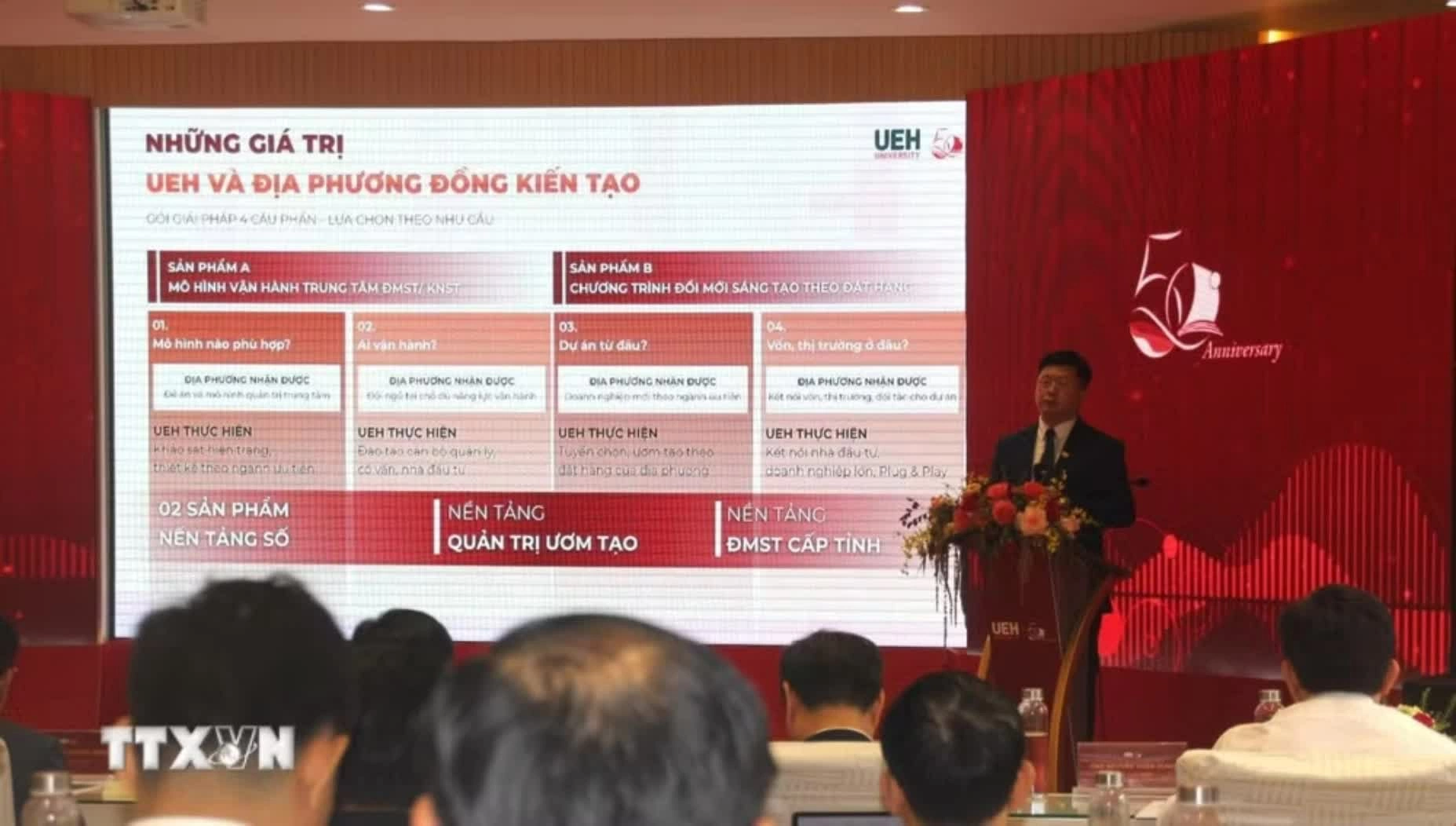 |
| An overview of the 2026 Public Sector Partnership Connection Conference. (Source: VNA) |
Deputy Prime Minister Le Tien Chau expressed his confidence that Vietnam's higher education institutions would play a pioneering role, open up new paths through knowledge, promote innovation through action and deliver practical results for the country.
Associate Professor and Dr Bui Quang Hung, Secretary of the UEH Party Committee and President of UEH, said 2026 holds special significance for the university as it marks its 50th anniversary, covering the period from 1976 to 2026.
| More from WVR |
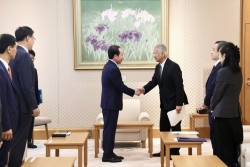 Deputy PM Le Tien Chau meets with Speaker of Japan's House of Representatives Mori Eisuke in Tokyo Deputy PM Le Tien Chau meets with Speaker of Japan's House of Representatives Mori Eisuke in Tokyo |
UEH has developed into a multidisciplinary and multi-sector university with a focus on research and sustainable development. It is ranked among the top 150 universities in Asia and the top 501 globally.
Over its 50-year history, UEH has identified solidarity, mutual care, dedication, community, pioneering spirit, co-creation, sustainability and internationalisation as its core values. These principles also underpin the university's education and academic research activities, as well as its mission to serve society and contribute to the development of local communities and the country.
Marking a transition from a multidisciplinary and sustainable university towards a co-creating university, UEH unveiled its Public Sector Partnership Connection Strategy for 2026-2030.
Under the strategy, the university will move from individual bilateral partnerships towards a multilateral co-creation ecosystem designed to generate value for a sustainable future. The model is based on jointly identifying problems, co-designing solutions, jointly implementing them and co-creating value.
The strategy is built around a five-component partnership model involving government, universities, businesses, communities and the natural environment, with the aim of mobilising resources to address major challenges facing regions and the country.
On the occasion, UEH also signed strategic cooperation agreements to strengthen public-sector partnerships, launched the UniverCity Innovation Hub for value co-creation within urban and regional innovation ecosystems, and introduced a digital platform connecting cooperation needs from the public sector.