






Citizen protection work: Always there when our compatriots need help
WVR - Citizen protection is a task of “countless forms and situations.” According to Deputy Foreign Minister Le Thi Thu Hang, amid mounting global instability that is increasingly uncertain and unpredictable, citizen protection work has become even more complex.
Latest
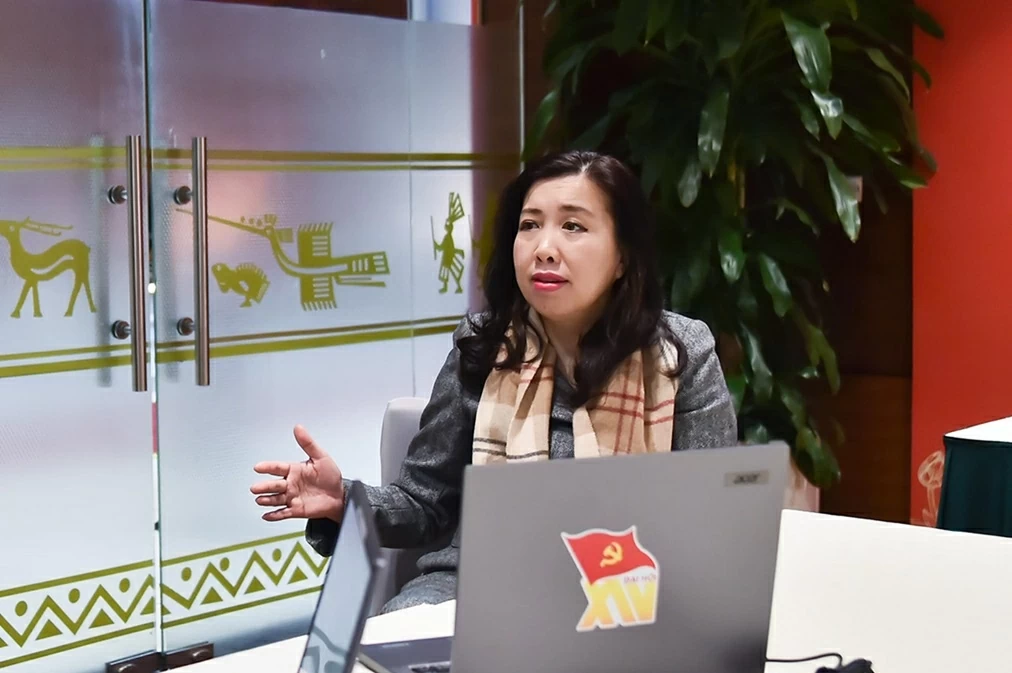 |
| Deputy Minister of Foreign Affairs Le Thi Thu Hang speaks in an interview with The World & Vietnam Report. (Photo: Quang Hoa) |
To ensure that every citizen protection case reaches a “happy ending,” each diplomat must, now more than ever, devote their utmost efforts, carry out their duties with both heart and mind, and regard the “call of our compatriots” as the highest and most sacred command, the Deputy Foreign Minister emphasised.
Could you share the most notable results of citizen protection work in 2025, especially as the global situation continues to evolve in a complex manner, with numerous conflict hotspots, instability, and growing non-traditional security challenges?
Citizen protection covers two main groups: first, Vietnamese citizens and legal entities abroad—Vietnamese studying, working, and laboring overseas; second, people of Vietnamese origin who reside abroad or hold foreign nationality. When referring to the Ministry of Foreign Affairs’ citizen protection work, the focus is primarily on those who retain Vietnamese nationality—Vietnamese citizens studying and working overseas.
It can be said that citizen protection has always been a central task and top priority of the Ministry of Foreign Affairs, especially in the current context where global and regional developments are extremely complex. Over the past year, conflict hotspots have intensified, while many new security challenges have emerged, directly affecting the safety of Vietnamese citizens living in those countries.
In addition, unexpected and hard-to-predict factors have placed significant pressure on this work. Extreme natural disasters in recent times have been highly unpredictable. Vietnamese citizens traveling or working abroad may be particularly vulnerable if they happen to encounter such harsh conditions. Another pressing issue is online fraud, with increasingly sophisticated methods, as perpetrators constantly seek ways to evade law enforcement measures.
These were among the prominent issues in 2025. Citizen protection, first and foremost, is about ensuring the security and safety of our citizens while they are abroad. Second, it aims to safeguard their legitimate rights and interests when risks arise. And third, when incidents occur, timely and effective response measures must be put in place.
Amid the challenges and requirements of the past year, the Ministry of Foreign Affairs’ citizen protection work has successfully fulfilled its tasks and objectives. In response to the outbreak of conflicts, timely plans were put in place—from warning citizens against traveling to dangerous areas to providing guidance on compliance with safety instructions.
In addition, 24/7 hotlines have been provided by the Consular Department of the Ministry of Foreign Affairs, and each Vietnamese diplomatic mission has its own hotline so that citizens can make contact whenever issues arise. Moreover, close coordination among competent authorities has been ensured. Within the Ministry of Foreign Affairs, the Consular Department serves as the focal point, working closely with relevant functional units and regional departments. Externally, coordination is carried out between the Ministry of Foreign Affairs and other forces, including the Ministry of National Defence and the Ministry of Public Security, particularly the network of Vietnamese representative missions overseas. These are the “frontline” units in citizen protection efforts.
When incidents occur, in addition to issuing warnings, close contact is maintained with community focal points while keeping communication channels open with host-country authorities to closely monitor developments. Plans to safeguard citizens’ lives are prepared at multiple levels. In many cases, citizens have had to be evacuated back to Viet Nam—most notably when conflict broke out between Iran and Israel, when timely plans were implemented to bring citizens home safely—or evacuated to areas unaffected by armed conflict and hostilities. At the same time, the safety and security of staff at representative missions were ensured, along with the protection of their assets and essential facilities. Over the past year, these tasks have been carried out very effectively.
Regarding online fraud, the Ministry of Foreign Affairs coordinated with relevant authorities to repatriate more than 500 people from neighboring countries. Despite the highly complex situations in those countries, close inter-agency coordination was maintained, with the Ministry of Foreign Affairs serving as the focal point and overseas representative missions as the “frontline” in engaging host-country authorities to bring citizens home safely.
Deputy Minister, in recent days, every Vietnamese carrying Vietnamese blood has been eagerly turning their thoughts toward the 14th National Congress of the Party—an event that carries great expectations for a happier and more prosperous Viet Nam. However, I believe that somewhere in the world, many sons and daughters of Viet Nam are still busy making ends meet or facing hardships and challenges in life. A happy Viet Nam will surely not leave them behind. In your view, when placed in the context of humanity and the bond among compatriots, what meanings does the mission of citizen protection carry?
In citizen protection work, there are indeed unfortunate and regrettable cases, such as citizens losing their lives in conflicts or in accidents abroad. In all such cases, we act promptly—from arranging funeral matters for the victims and supporting families to travel to the location, to making every possible effort to ensure the legitimate rights and interests of our citizens.
It can be said that in 2025, the citizen protection hotline recorded a high increase in the number of calls for assistance. Officers have worked with a 24/7 spirit, sparing no effort, regardless of distance or danger, including in conflict zones. Even when heads of representative missions and consular officers issue warnings and arrange for people to evacuate, they themselves must remain present in those very dangerous places. This is not only a matter of duty, but also of responsibility and humanity—not merely following orders from superiors, but answering the command of the heart.
In my view, for every officer engaged in citizen protection, it is necessary to go beyond the usual boundaries of responsibility to perform this special task well, meeting the aspirations of overseas Vietnamese as well as those of their families back home. Beyond fulfilling duties, it is a matter of conscience, of humanity, and of the enduring bond among compatriots.
In your view, Deputy Minister, amid the complex regional and global context ahead, what opportunities and challenges will citizen protection work face?
In reality, when the global and regional situation becomes more complex, citizen protection work primarily faces challenges. First and foremost, as a matter of course, unpredictable developments, armed conflicts, or internal instability in countries—causing social disruption and a breakdown of law and order—directly affect the lives, security, and safety of our citizens abroad. This lies at the very core of citizen protection work.
The second major challenge is the extremely rapid pace of developments, sometimes changing by the minute, which requires citizen protection efforts to be highly urgent, with timely and responsible decision-making. This places high demands on situation monitoring, close tracking, and analytical and forecasting skills—not only for the Consular Department, but also for the close, responsible coordination of the entire Ministry of Foreign Affairs. This includes coordination among regional departments, overseas representative missions, and smooth information sharing among relevant ministries and agencies, particularly the “trio” of Foreign Affairs, Public Security, and National Defence.
Another significant and equally important internal challenge is resources. Human resources—staffing at many overseas representative missions—are currently very limited, even in areas experiencing complex developments. This is compounded by difficulties related to logistics and means, especially when large-scale evacuations of citizens must be carried out.
Despite these multidimensional challenges, I would like to emphasize that we have established a very effective operating mechanism, regarded as a “key.” When necessary, the citizen protection system can be activated immediately, with the Consular Department as the core and under the direct direction of the Minister and the Ministry’s leadership. We have accumulated substantial experience from many real-life situations, particularly over the past year through citizen protection operations related to Ukraine, Iran, and Israel, with coordinated efforts on both the domestic and overseas fronts.
As you mentioned, the 24/7 citizen protection hotline can ring at any time, with very different stories each time. Given the “countless forms and situations” of citizen protection work, what kind of mettle and special qualities does this require of diplomats, Deputy Minister?
As I have said, citizen protection is not simply about “protecting” in a narrow sense; it must also encompass the capacity to grasp developments, analyze and forecast situations, and devise different scenarios and response plans. This is a critically important professional requirement. In addition, beyond a strong sense of responsibility and solid professional skills, officers must place their whole heart—their conscience and compassion—into every decision and action.
Behind the seemingly impersonal yet “telling” statistics on citizen protection are the images of many officers working tirelessly, going beyond routine responsibilities, standing on the front lines of danger to preserve the safety and peace of mind of our citizens in all circumstances. This not only demonstrates the determination and pioneering spirit of diplomatic “soldiers,” but also rekindles trust in humanity and the bond among compatriots amid danger and hardship.
In addition, over the past year we have also carried out protection work for fishermen and fishing vessels. Although the number of violations has decreased significantly, incidents that do arise often occur in distant or yet-to-be-delimited waters. When fishermen are detained on remote small islands, we are still able to be present in a timely manner—on the one hand supporting domestic authorities in addressing issues related to the Yellow Card, and on the other hand firmly engaging and closely following up to ensure that fishermen are treated humanely and that related cases are handled as promptly as possible. This helps safeguard the legitimate rights and interests of our citizens, coordinate the strict handling of violations, and protect the image and credibility of the country.
Deputy Minister, could this working spirit be seen as a vivid illustration of the principle that behind every diplomat stand the people and the Fatherland, as well as the spirit of dedication and service—“the Fatherland above all”—that many leaders have entrusted to diplomats in the new era?
I believe that the spirit of service to the Fatherland is a fine tradition of Vietnamese diplomats, nurtured and passed down by previous generations and veteran practitioners of diplomacy.
We can see images of diplomats “locking horns” in many historic negotiations, demonstrating their mettle and diplomatic resolve. We have also witnessed examples of diplomats who sacrificed their lives in the line of duty, along with many other forms of “silent sacrifice.” This is a precious tradition that must be inherited and further promoted, especially in the current context, as we strive to build a professional, modern, and innovative diplomatic service.
I believe that every officer engaged in citizen protection must firmly uphold such a spirit—a spirit of service, with the Fatherland always in their heart—so as to resolve every “problem” with a “happy ending,” bringing safety and peace of mind to Vietnamese citizens wherever they may be.
As we look ahead to the 80th anniversary of Vietnam’s Consular Service (1946–2026), what message and expectations do you have for citizen protection work in the time to come?
The Consular Department was among the earliest units established under the Ministry of Foreign Affairs, shortly after the Ministry itself was founded in August 1945. This underscores the fact that the protection of Vietnamese citizens and legal entities abroad has been a priority from the very beginning, reflecting the deep concern of the Party, the State, and the Government for the rights and interests of the people.
Eighty years marks a long journey intertwined with the nation’s history and that of the diplomatic service. Consular work has made significant contributions to safeguarding national and ethnic interests. Ultimately, those interests are embodied in the rights and legitimate interests of every Vietnamese citizen and legal entity overseas.
As we approach this 80-year milestone, we need to reflect on what has been done well in order to build upon it. At the same time, in a new context full of challenges, citizen protection work must adopt new approaches—becoming more accessible and closer to the people, firmly embracing the principle that “the people are the foundation,” placing citizens at the center, and further upholding the spirit of service.
In the new era, people are placed at the center of development and serve as the “red thread” running through citizen protection work. As the country takes steady steps toward opening a new future, what are your expectations for this special and profoundly meaningful task, Deputy Minister?
I believe that in the time ahead, as people’s needs for travel, tourism, study, and work abroad continue to expand and diversify, citizen protection efforts must be further strengthened.
First, this requires enhanced resources in terms of personnel, facilities, and financial capacity. Second, the concept of human security today extends beyond the traditional understanding of physical safety and personal security; it also encompasses security and safety in the digital environment. We must make greater efforts to minimize risks to our citizens in cyberspace, particularly from online fraud. I expect that ensuring the security and safety of our citizens will always be carried out at the highest possible level.
Vietnamese representative missions abroad must always be present in a timely manner. That presence not only offers citizens solutions to overcome moments of danger—serving as a “light at the end of the tunnel”—but also embodies the profound values of humanity and compatriot solidarity in times of hardship, so that happiness and peace of mind may be found everywhere. This is fully in line with the spirit and ultimate goal of the resolutions and orientations of the 14th National Party Congress.
Thank you very much, Deputy Minister.


