






Bac Ninh: Preparing a strategic "Leapfrogging" plan for workforce development, opening door to "eagles" of semiconductor industry
WVR - Bac Ninh is focusing on developing its semiconductor industry with the goal of becoming a leading semiconductor hub in Vietnam. The province has been attracting major players in the field while implementing preferential policies to build a comprehensive semiconductor ecosystem.
Latest
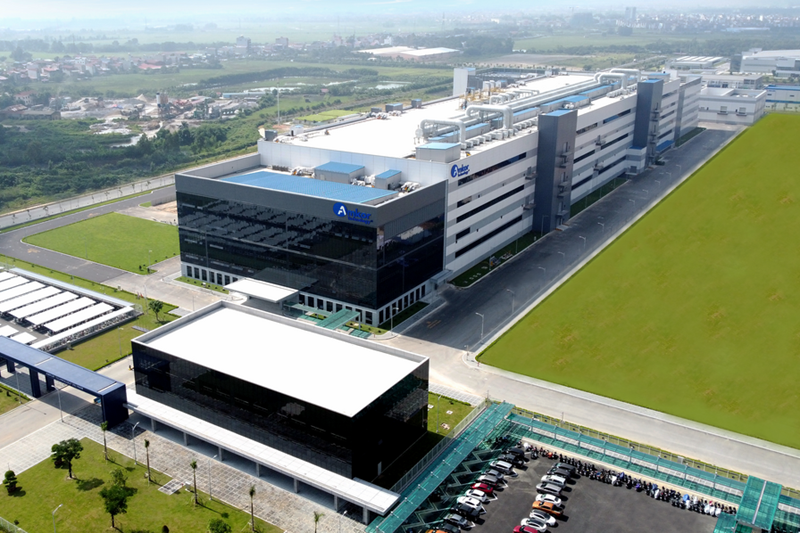 |
| Amkor Semiconductor Factory, Bac Ninh. (Source: VnEconomy) |
Attracting key projects in the semiconductor sector
With a strong foundation in large-scale electronics value chains and investment resources from semiconductor “eagles,” Bac Ninh is positioning itself as a new destination for high-tech industries. One prominent “eagle” is Amkor, a corporation jointly established in the United States and Republic of Korea. In late 2023, Amkor began investing in a semiconductor packaging and testing project at the Yen Phong II-C Industrial Park in Bac Ninh, with a planned total investment of 1.6 billion USD by 2035.
In addition, Bac Ninh has attracted several other significant semiconductor projects, such as Victory Giant Technology’s semiconductor equipment manufacturing facility in the VSIP Bac Ninh Industrial Park, and Micro Commercial Components’ project in Yen Phong I Industrial Park. The latter has a total investment of 90 million USD, entered pilot operation in Q1/2025, and plans further expansion in the coming years.
To build a semiconductor ecosystem, Bac Ninh also benefits from being a major electronics manufacturing center. In 2011, Samsung selected Bac Ninh as a hub for its smartphone production. The success of Korean electronics giant paved the way for a wave of supporting industry projects, gradually forming a strong electronics industrial ecosystem in the province.
Since then, Bac Ninh has continuously attracted numerous large-scale investment projects, becoming a vital link in the global supply chains of major tech firms such as LG, Canon, and Toshiba, etc.
 |
| Bac Ninh’s semiconductor ecosystem is still in its formative stage. (Photo: Shutterstock) |
Bac Ninh’s semiconductor ecosystem is still in its formative stage. Therefore, in order to achieve its goal of becoming a semiconductor industrial hub, the province must — and is already beginning to — move up the value chain within the industry.
A standout policy initiative is Bac Ninh's pioneering move to become the first province in Vietnam to issue a dedicated policy for developing high-quality human resources for the semiconductor sector. With a commitment of 1,000 billion VND (approx. 40 million USD) by 2030, the province aims to subsidize tuition for around 10,000 students. This bold step reflects both long-term vision and a strategic approach to “leapfrogging” in workforce preparation.
Bac Ninh’s goal is to train and supply a skilled talent pool for both the provincial and national semiconductor industries, covering all stages of the value chain — with particular emphasis on semiconductor design, packaging, and testing.
Beyond workforce policies, Bac Ninh is also rolling out a range of tailored investment incentives to attract high-quality capital, including to cut at least one-third of the processing time for investment procedures and giving priority to infrastructure stability, especially the power supply system, which is a critical factor for high-tech industries.
Aiming for over 1.5 billion USD in annual semiconductor revenue in Bac Ninh
Under its recently issued semiconductor industry development plan toward 2030, with a vision to 2045, Bac Ninh aims to become one of Vietnam’s strategic hubs for the semiconductor industry. The province seeks to build a modern ecosystem for the manufacturing of semiconductor components and integrated circuits, thereby enhancing national and global competitiveness.
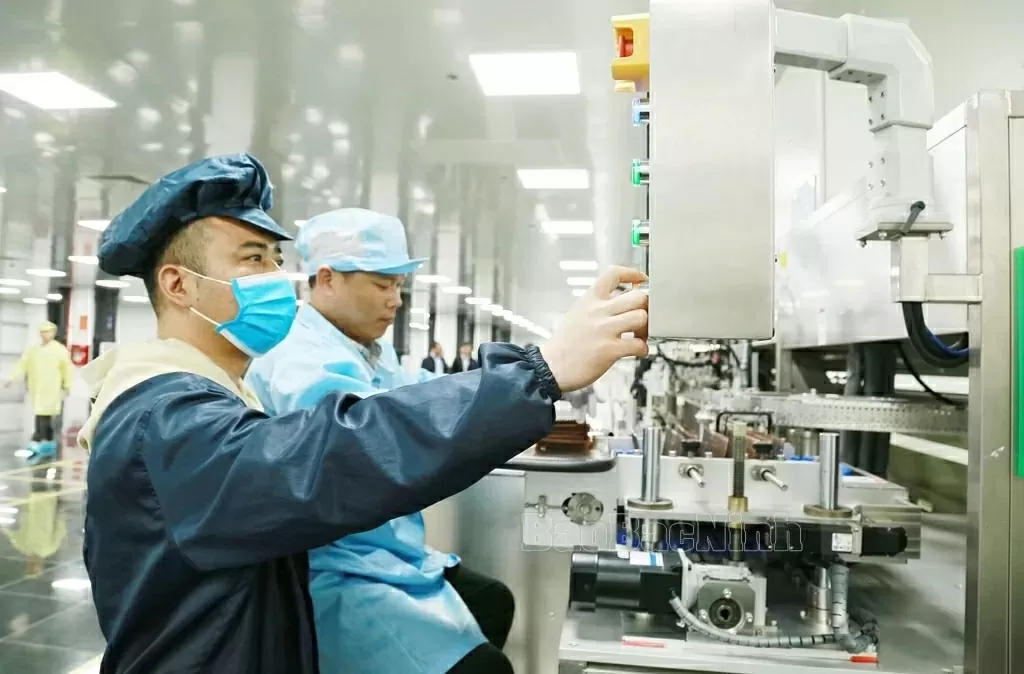 |
| Bac Ninh is the first locality in the country to implement a policy to support training of human resources for the semiconductor industry. (Source: Bac Ninh Newspaper) |
Over the next five years, Bac Ninh targets selective FDI attraction to establish at least 1–2 chip design enterprises, 1 semiconductor fabrication plant, and 5 packaging and testing facilities; develop specialized semiconductor products for specific sectors and industries.
Bac Ninh is striving to achieve annual semiconductor industry revenues of over USD 1.5 billion, with value-added rates between 10–15%; target over USD 35 billion in annual revenue in the broader electronics sector, with value-added rates of 10–15%. In terms of workforce development, Bac Ninh aims to train over 5,000 engineers and graduates in semiconductor-related fields, ensuring the right quantity and structure to meet industry demands.
By 2045, Bac Ninh envisions the formation of at least 30 chip design enterprises, 3 semiconductor fabrication plants, and 20 packaging and testing facilities, while also mastering research and development capabilities in the semiconductor sector.
The province targets over 10 billion USD in annual semiconductor revenue, with value-added contribution reaching 20–25%, and more than 100 billion USD annually in electronics industry revenue, also with 20–25% value-added The semiconductor workforce is expected to grow to over 10,000 qualified engineers and graduates, aligned with the industry's development needs.
To realize its human resource strategy, Bac Ninh will offer scholarships and low-interest loans to students in microchip engineering, expand STEM education from secondary to tertiary levels, and develop international-standard microchip training programs. It also plans to send lecturers abroad for specialized training.
On the infrastructure front, the provincial government will invest in dedicated IT zones, specialized industrial parks, and intelligent computing centers. In parallel, Bac Ninh will promote the development of green infrastructure and the use of renewable energy in chip production, ensuring the sustainable growth of its high-tech industries.