





APEC 2025: A more and more trustworthy Vietnam
Dr. Cu Van Trung, Director of the Institute for Policy and Social Issues Research, observes that over the past three decades, Vietnam has worked tirelessly to be recognized as an active and responsible member of the Asia-Pacific region.
Latest
 |
| Dr. Cu Van Trung, Director of the Institute for Policy and Social Issues Research. (Photo: NVCC) |
As the leading economic cooperation mechanism in the Asia-Pacific, APEC has brought Vietnam significant strategic, financial, trade, and investment benefits, contributing significantly to Vietnam’s socioeconomic development?
Looking back nearly 30 years since Vietnam joined APEC in 1998, the Asia-Pacific region and APEC have consistently been top priorities in Vietnam’s foreign policy, defence, and economic development strategies. For Vietnam, APEC cooperation has been a key driver of market access, investment attraction, technology transfer, and national competitiveness enhancement. Vietnam’s economic growth and international integration over the past three decades affirm that joining APEC was a timely and visionary decision by the Party and the State.
The Asia-Pacific remains one of the most dynamic growth centres in the world, holding strategic geo-economic and geopolitical importance. It is a global hub for growth, economic integration, and political influence. APEC, with its 21 member economies - including major players such as the US, China, and Japan, and nine G20 members - represents about 38% of the world’s population, contributes 61% of global GDP, and accounts for 47% of international trade.
As the region’s leading economic cooperation mechanism, APEC continues to pioneer efforts in trade liberalisation, investment facilitation, and regional connectivity, while playing a vital role in global economic governance, implementing the UN Sustainable Development Goals (SDGs) to 2030, and addressing shared global challenges.
Entering the 2030s and 2040s, amid rapid and profound transformations driven by the Fourth Industrial Revolution, APEC is evolving toward more practical cooperation that benefits both people and businesses. Given its strategic importance, Vietnam views APEC as a premier economic collaboration and engagement platform.
How has Vietnam’s mark been reflected on the 27-year journey of joining APEC?
Since becoming an APEC member, Vietnam has made active, responsible, and practical contributions across all areas of cooperation, leaving a lasting impression. These contributions reflect Vietnam’s consistent policy of being a trustworthy friend and accountable partner within the international community.
Under Vietnam’s host, both APEC Economic Leaders’ Meetings - in Hanoi (2006) and Da Nang (2017) - achieved remarkable success, delivering strategic results for the Forum and regional economic cooperation.
At APEC 2006, Vietnam introduced the Hanoi Action Plan, advancing the Bogor trade and investment liberalisation goals. In 2017, Vietnam proposed an initiative to develop APEC’s post-2020 vision, forming the APEC Vision Group and, ultimately, the adoption of the Putrajaya Vision 2040.
This demonstrated Vietnam’s longterm, comprehensive, forwardlooking approach to APEC cooperation. In addition, Vietnam remains one of APEC’s most active members in proposing initiatives and cooperation projects - nearly 150 projects to date - covering diverse areas such as human resource development, e-commerce, food security, women’s economic empowerment, rural-urban development, marine waste reduction, and climate change adaptation.
These initiatives strengthen APEC cooperation in alignment with member priorities and directly serve Vietnam’s national socioeconomic development goals. With respect for each member’s legitimate interests and in line with national priorities, Vietnam has strived to act as a responsible, proactive participant in the region. This dynamism reflects Vietnam’s spirit of cooperation and portrays the image of a sensitive, evolving, and forward-moving economy - one increasingly recognised and respected on the global stage.
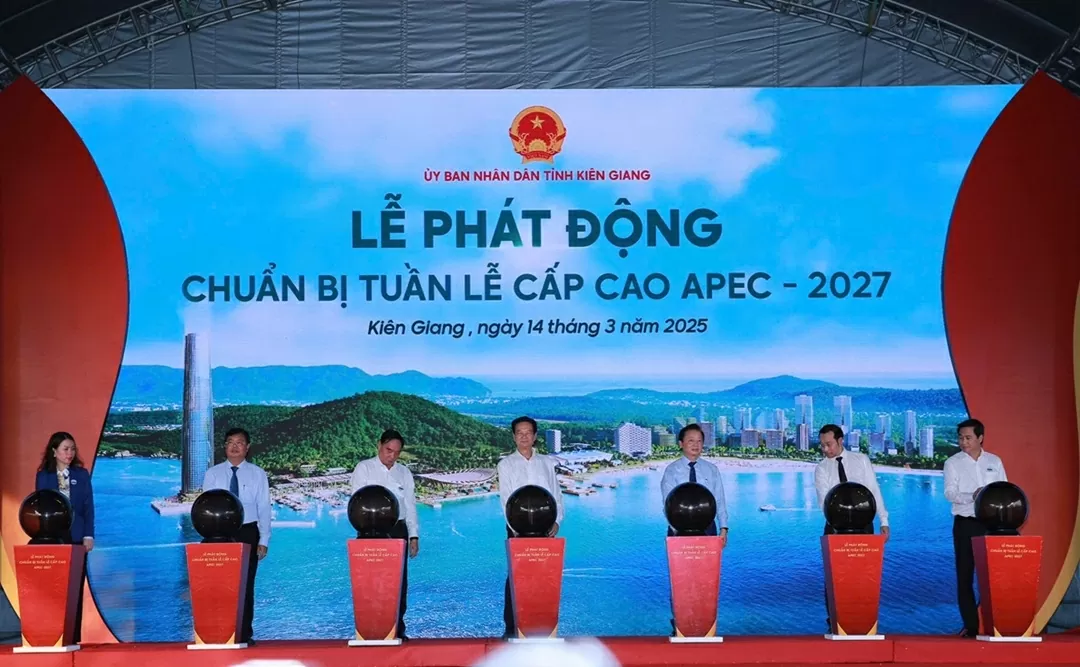 |
| Delegates perform the launching ceremony to prepare for the APEC 2027 summit week. (Photo: Đinh Nam) |
Based on its achievements and contributions, how can Vietnam take advantage of cooperation in APEC to create breakthroughs in green growth and digitalisation in the new development context?
Vietnam has identified the digital economy and sustainable development as key drivers of future growth. In recent years, Vietnam has adopted essential policies such as Resolution No. 57-NQ/TW on science, technology, innovation, and digital transformation, and Resolution No. 68-NQ/TW, positioning the private sector as a pioneering force in technology development, green transition, and circular economy.
With nearly 30 years of APEC experience, Vietnam can leverage this foundation to enhance competitiveness, foster innovation, and build a supportive business ecosystem. Some of the key measures being pursued include:
First, improving institutions and policies to encourage enterprises to adopt new technologies, advance digital and green transformation, and simplify administrative procedures. Tax, land, and financial incentives will help businesses confidently transform and enter high-tech, knowledgebased sectors.
Second, expanding access to preferential credit allows businesses to secure financing for digital technology, renewable energy, and circular economy projects. Supported by statebacked guarantees, green and digital credit programs will ease financial burdens.
Third, investing in highquality human resources and establishing expert networks to advise enterprises on strategy, green technologies, and social–environmental impact assessments. This improves management capacity and enables Vietnamese firms to meet increasingly strict international standards.
Fourth, developing at least 1,000 pioneering enterprises in science and technology, innovation, supporting industries, and hightech manufacturing. These leading firms will drive the digital and green transformation while spreading sustainable development models throughout the business community.
Thus, pioneering enterprises will enjoy special mechanisms on capital, land, and tax incentives, as well as support for building brands and connecting to international markets. Thereby forming a network of pillar enterprises capable of pulling, leading, and supporting Vietnam’s startup and innovation ecosystem.
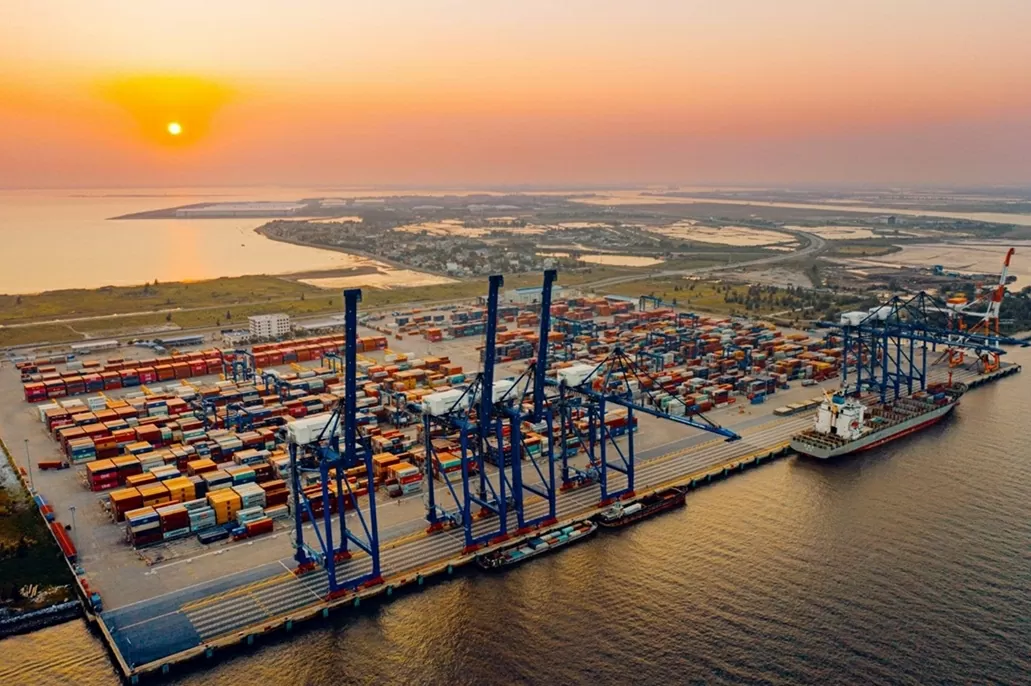 |
| Vietnam has proven to be a centre of trust, neutrality, and credibility, capable of fostering reconciliation, harmony, and peace among diverse communities and interests in the region. (Nguồn: Vneconomy) |
What should Vietnam do to “participate" and “lead” in areas of strength in APEC?
On July 28, at the ceremony announcing the establishment of the Vietnam National Committee for APEC 2027, Prime Minister Pham Minh Chinh reaffirmed Vietnam’s steadfast foreign policy of independence, self-reliance, diversification, and multilateralization - being a good friend, reliable partner, and responsible member of the international community, committed to peace, stability, cooperation, and development.
He also reiterated Vietnam’s “four no’s” national defence policy and the goal of building an independent, self-sustaining economy that actively integrates into the global system substantively and effectively, combining national strength with the power of the times.
Meanwhile, Korean Ambassador to Vietnam Choi Young Sam noted that Vietnam successfully hosts an APEC summit roughly every decade - a testament to its leadership role in promoting peace, stability, and shared prosperity across the Asia-Pacific. Selecting Phu Quoc as the host city for APEC 2027 further demonstrates Vietnam’s clear strategic vision.
For decades, Vietnam has proven to be a centre of trust, neutrality, and credibility, capable of fostering reconciliation, harmony, and peace among diverse communities and interests in the region.
The idea of “leadership” should thus be seen as a positive signal - a form of soft power that reflects Vietnam’s capacity to forge lasting connections and its growing influence within the international community. This recognition stems from what Vietnam has contributed - and continues to strive for - as it earns deeper trust and respect on the world stage.
Thank you, Dr. Trung!


