




Vietnam and APEC: Not only participating, but leading
WVR - APEC 2025 is set to spotlight the levers that will define the Asia-Pacific region’s competitiveness in the coming decade: green recovery, digital transformation (including artificial intelligence – AI), renewable energy, energy security, semiconductors, human resources, and comprehensive cooperation.
Latest
 |
| Prof. Dr. Andreas Stoffers. (Photo: Courtesy by author) |
This year’s host, the Republic of Korea, has chosen the theme “Building a Sustainable Future: Connect - Innovate - Prosper” - a vision that aligns perfectly with the region’s current priorities. The host’s approach to organizing group discussions on energy, digital affairs, small- and mediumsized enterprises (SMEs), human resource development, and education also reflects a practical and action-oriented mindset.
Vietnam’s positive outlook
For Vietnam, all the themes being discussed at APEC 2025 directly relate to its development priorities and growth priorities.
First, green recovery and energy security. Stable and affordable energy is the foundation of industrial upgrading - a vision laid out in Resolution No. 70- NQ/TW on national energy security to 2030, with a vision toward 2045. The APEC Energy Ministerial Meeting (EMM) in Busan offers Vietnam the chance to collaborate with like-minded partners on issues such as power grids, liquefied natural gas (LNG), storage, and renewables.
Second, digital transformation and AI. The Digital Ministerial Meeting (DMM) in Incheon is closely linked to Vietnam’s new Law on the Digital Technology Industry, which will take effect from January 1, 2026. The law establishes a legal foundation for AI, blockchain, and digital assets - a crucial step that gives investors confidence to expand operations in these cutting-edge fields.
Third, semiconductors and deep tech. APEC’s programs on connecting and supporting Small and Medium-sized Enterprises (SMEs) hosted in Jeju are suitable for Vietnam’s strategy to move up the global value chain through services like chip design support, testing, and packaging.
APEC 2025 providesVietnam with an opportunity to link its local talent pool with multinational corporations’ R&D activities, fostering technology transfer and boosting innovation capacity. Fourth, human resources. The APEC Ministerial Meeting on Education and Human Resource Development (HRD), also held in Jeju, complements Vietnam’s education reform agenda - focusing on practical skills, dual vocational training, and largescale digital literacy.
Fifth, comprehensive cooperation. APEC’s cooperative model encourages building practical alliances - such as Korea’s “Jeju Initiative” for startups, or dialogues on digital health and AI. Vietnam actively participates in these frameworks, proposing ready-to-launch projects and partnerships with other APEC economies.
With such strong alignment between APEC’s agenda and its national priorities, Vietnam comes to APEC 2025 with a confident, forward-looking attitude. Vietnam enjoys solid economic growth, an extensive network of free trade agreements (FTAs), and an ambitious reform drive reflected in new resolutions such as Nos. 57, 59, 66, 68, 70, and 71. Vietnam is deepening innovation, expanding international integration, modernizing regulations, and positioning the private sector at the heart of its economy.
The world needs to “hear Vietnam more clearly”
Despite these strengths, execution and consistency remain crucial tests for Vietnam. Another challenge lies in international communication; the world still doesn’t “hear clearly enough” what Vietnam is building.
From my perspective, Vietnam should focus on implementing the new Law on the Digital Technology Industry. This means quickly issuing decrees and guidelines, operating regulatory sandboxes for digital finance, cross-border payments and data services, and clearly defining data protection and AI risk management rules to ensure responsible expansion.
Vietnam should also leverage APEC’s energy agenda to attract investment in power grid modernization, stable baseload energy, and electricity storage. Investors are looking for bankable power purchase agreements (PPAs), transparent pricing, and credible implementation roadmaps.
At the same time, Vietnam must accelerate human capital development. Closer coordination between APEC’s HRD and Education meetings and Vietnam’s Resolution No. 71 could generate fresh momentum - especially in expanding dual vocational programs, integrating AI and data skills into training curricula, and professionalizing technology transfer offices so that R&D efforts yield real revenue for businesses and the economy.
 |
| Closer coordination between APEC’s HRD and Education meetings and Vietnam’s Resolution No. 71 could generate fresh momentum. (Source: Thanh Nien) |
In parallel, Vietnam can use APEC’s finance meetings to advance its green taxonomy, ESG disclosure phases, and carbon credit platforms - essential groundwork for the two upcoming financial centers planned in Ho Chi Minh City (international) and Da Nang (domestic).
Finally, Vietnam should develop a strategic international communication plan. For instance, Vietnam could publish an annual report titled “Vietnam Capital Markets and Innovation Outlook” and build a professional media strategy inspired by successful models such as Malaysia’s MIDA or Thailand’s Board of Investment (BOI).
An opportunity to “move faster”
The Asia-Pacific region is increasingly marked by divergent interests and approaches among economies, which only heightens the value of reliable, neutral partners. Vietnam’s “bamboo diplomacy” is flexible yet principled, interest-based yet respectful - it fits this context perfectly. Seizing this moment, Vietnam has four practical directions to “move faster” within APEC cooperation.
First, about Finance and Standards. Vietnam can work with Republic of Korea and Singapore to develop a unified green finance taxonomy and a roadmap for climate risk disclosure aligned with global standards. It could also contribute to a policy framework based on the Digital Technology Industry Law - governing tokenized deposits and real-world assets, ensuring robust oversight and consumer protection.
Second, Energy Security. Vietnam can deepen cooperation with Japan, Repulic of Korea, and Australia on energy logistics, LNG, digitalized power grids, and energy storage - using APEC energy meetings to present a pipeline of bankable projects aligned with Resolution 70’s roadmap.
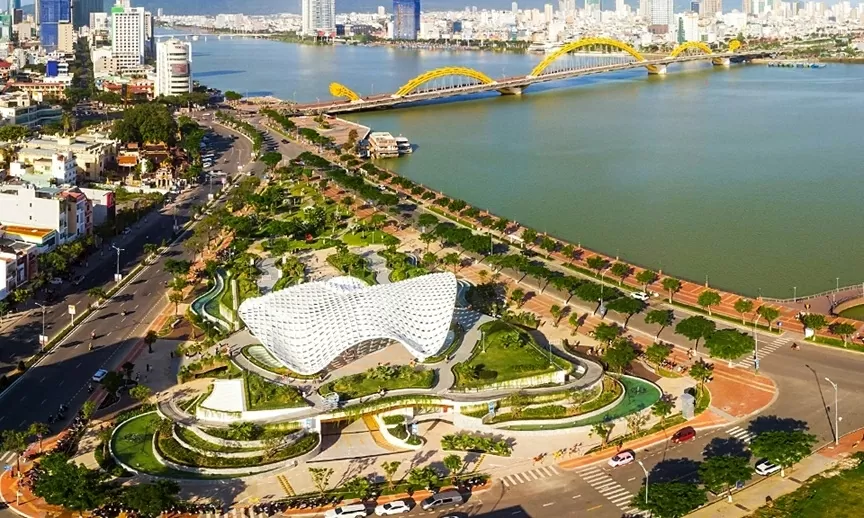 |
| For Vietnam, all the themes being discussed at APEC 2025 directly relate to its development priorities and growth priorities. (Source: VNE) |
Third, High-Quality Workforce Mobility and Development. Vietnam could create APEC branded dual vocational and applied master’s programs, setting a regional skills benchmark. The German dualtraining model offers a valuable reference to help Vietnamese graduates become some of the most “work-ready” tech professionals in the region.
Fourth, expand the scale of Startups. Vietnam should connect its founders with the APEC Startup Alliance and Korea’s “Jeju Initiative”, fostering a regional innovation and resource-sharing network. At the same time, Vietnam should refine regulations on venture capital, listing pathways, and exit mechanisms to create a more favorable environment for startups. With a stronger legal foundation and regional ties, Vietnamese startups could scale within Vietnam, instead of relocating to hubs like Singapore or Hong Kong (China) for funding and growth opportunities.
After nearly a decade living and working in Vietnam in banking, development, and academia, I have seen firsthand that Vietnam can “move fastest” when it unlocks and empowers the dynamism of its enterprises - especially the private sector. APEC 2025 offers a perfect stage for Vietnam to make its mark. I believe that if Vietnam brings ready-toimplement projects and a sharp communication strategy to the table, Vietnam will not only participate in APEC 2025 - it could well lead the region into the future.
| President Luong Cuong to attend 32nd APEC Economic Leaders’ Week in RoK WVR - President Luong Cuong will lead a high-ranking Vietnamese delegation to attend the 32nd Asia-Pacific Economic Cooperation (APEC) Economic Leaders’ Week and conduct bilateral ... |
| APEC Economic Leaders’ Week 2025: Establishing a comprehensive cooperation framework for digital transformation and AI WVR - On the afternoon of October 28, Deputy Minister of Foreign Affairs Nguyen Minh Hang gave a press interview ahead of President Luong Cuong's ... |
| President Luong Cuong leaves Hanoi to attend 32nd APEC Economic Leaders' Week and conduct bilateral activities in RoK WVR - On the morning of October 29, at the invitation of the President of the Republic of Korea Lee Jae Myung, President Luong Cuong ... |

| President Luong Cuong arrives in Busan to attend APEC Economic Leaders' Week in RoK WVR - President Luong Cuong and the high-level Vietnamese delegation arrived at Gimhae Military Airport in Busan, marking the start of their program for the ... |
| President Luong Cuong meets with U.S. President Donald Trump and other APEC Leaders in the RoK WVR - On October 29, on the occasion of attending the APEC Economic Leaders' Week 2025 in Republic of Korea, President Luong Cuong met with ... |


