







AI can power Vietnam’s move into high-value fashion manufacturing
According to Professor Rajkishore Nayak from the Fashion Enterprise program and Ms Corinna Joyce, Interim Deputy Dean of Learning and Teaching and Program Manager for Fashion Enterprise at the School of Communication and Design, RMIT University Vietnam, for Vietnam, a leading exporter of clothing and textiles globally, the rise of AI presents a strategic choice: stay locked into low-cost, labour-intensive production, or leverage AI to move towards smarter, and more sustainable manufacturing.
Latest
According to the two experts, global brands increasingly expect their suppliers to be transparent, data‑driven and compliant with tightening environmental and social standards. AI can help Vietnam meet those expectations and secure a stronger position in the fashion value chain.
AI gives us the ability to monitor production systems more clearly and respond more quickly. If we use it meticulously, it can help us reduce waste, improve compliance and move beyond a pure cost‑based advantage.
Producing smarter, faster and more sustainable
Fashion’s longstanding problem is overproduction – making more garments than customers need. AI‑based forecasting models can analyse sales histories, market trends and external factors to help brands and manufacturers plan closer to real demand.
When brands share better demand signals with suppliers, both sides win. AI‑assisted forecasting means fewer last‑minute changes, fewer cancelled orders and less excess inventory that ends up discounted or destroyed.
AI can also benefit original design manufacturers (ODMs) by accelerating product development. Instead of spending weeks refining concepts and designs, companies can quickly generate design options, enabling factories to focus on reviewing and developing samples.
“AI will change the nature of office and decision-making work by automating repetitive tasks, while workers increasingly focus on supervision, problem-solving, and higher-value activities,” said Ms Doan Ngoc Gia Han, Sales Executive from MN Inter-Fashion Vietnam.
For Vietnam's garment and textile sector, these improvements can translate into greater productivity, shorter lead times and stronger responsiveness to market demand.
| Vietnam's Electricity Authority and Global Energy Alliance strengthen cooperation to advance energy transition |
The efficiency gains also have environmental benefits such as lower resource use and reduced carbon emissions.
AI-assisted design development can significantly cut the waste associated with design iterations, prototyping and sample approval. In dyeing and finishing, AI‑driven monitoring systems can optimise chemicals, heat and water consumption. In cutting rooms, optimisation algorithms can improve marker efficiency and reduce off‑cuts. In logistics, AI can suggest more efficient routing and inventory management.
These technologies help Vietnam meet stricter environmental expectations without sacrificing competitiveness. They also contribute to national goals on cleaner production and resource efficiency.
Ms Tran Thi Thu Thao, the founder of local fashion brand Mame, commented: “For fashion SMEs like ours, AI provides the ability to turn creativity into action faster. This supports smarter design development and more informed material selection while reducing waste and improving efficiency”.
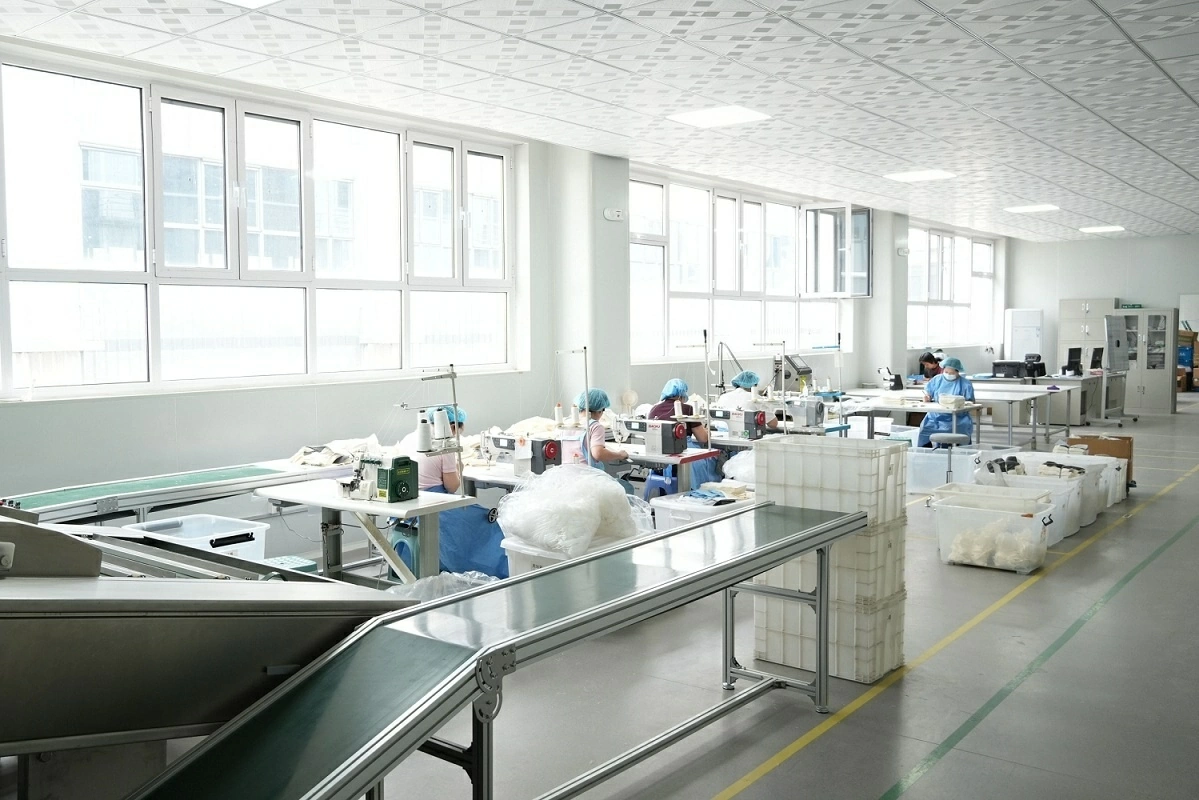 |
| Vietnam's textile and garment industry stands at a crossroads between maintaining its traditional production model and leveraging AI to move towards smarter, more sustainable manufacturing. (Source: Pexels) |
Widely applied in production
Traceability has become a central requirement in the global fashion supply chain. Buyers want to know where materials come from, which factories produced their orders and whether standards were met along the way. AI, combined with sensors and digital platforms, can help create this visibility.
Traceability used to mean stacks of paperwork. With digital systems and AI, manufacturers can track key steps and flag anomalies much faster. That builds trust with brands, regulators and ultimately consumers.
Some customers now expect real‑time information about the progress of their orders. By digitising processes and using AI to flag inconsistencies, manufacturers can respond more quickly and provide better evidence of their compliance.
For Vietnam, the ability to offer credible traceability is becoming a differentiator. Suppliers that can provide reliable data on origin, processes and compliance will be better placed to secure long‑term partnerships and move into higher‑value segments.
| Ao dai Fashion Week 2026: Honouring Vietnamese heritage on the international fashion stage |
As AI spreads through manufacturing, job content is changing. Some repetitive planning and data entry tasks are shrinking, but new responsibilities are emerging around system oversight, data quality and cross‑functional coordination.
Manufacturing and supply‑chain roles are increasingly hybrid. Employers want people who understand how manufacturing works and are comfortable using digital tools and questioning the outputs of automated systems.
As workforce requirements are changing across the industry, educational institutions play an increasingly important role in preparing graduates for AI-enabled workplaces.
There is a clear expectation that graduates in all disciplines, including fashion and textiles, can engage with data‑driven processes. For us, that means giving students opportunities to work on real business challenges that involve forecasting, traceability or sustainability reporting, and helping them build the confidence to work alongside AI.
A chance to move up the value chain
AI will not automatically transform Vietnam’s fashion sector, and it can introduce risks if adopted uncritically. But combined with existing manufacturing strengths and a growing emphasis on digital skills, it offers a chance to move beyond a low‑cost positioning.
Designers and managers who can work with digital tools, planners who understand data patterns and technicians who can interpret AI‑generated insights are already in short supply. If Vietnam invests in these capabilities, we can compete on innovation and trust, not just price.
Moreover, the key question for Vietnam is no longer whether AI will enter the factory, but how the country prepares its people and systems.
The real opportunity is to make Vietnamese manufacturers indispensable partners in an AI‑enabled supply chain. If we get the skills, governance and collaboration right, AI can help Vietnam climb the value ladder rather fast and build on existing momentum.
| ASEAN Food Fair in Mozambique: Connecting communities, spreading the spirit of kindness WVR - On August 22, in the capital city of Maputo, the Embassy of Vietnam in Mozambique, in collaboration with the embassies of Indonesia, Thailand, ... |
| Resolution No. 23-NQ/TW marks a new shift in Overseas Vietnamese affairs: Deputy FM Le Thi Thu Hang WVR - On the occasion of the issuance of Resolution No. 23-NQ/TW by the Politburo concerning the work with overseas Vietnamese in the new context, ... |
| FM Le Hoai Trung: Advancing Vietnam-Singapore comprehensive strategic partnership in a more substantive and effective manner WVR - The official visit to Singapore and co-chairing of the first Vietnam-Singapore Strategic Dialogue by Standing Member of the Communist Party of Vietnam (CPV) ... |
| Vietnam, Myanmar seek breakthroughs in economic cooperation: Foreign Minister Le Hoai Trung WVR/VNA - On August 26, Minister of Foreign Affairs Le Hoai Trung held meetings with Myanmar President Min Aung Hlaing and Speaker of Pyithu Hluttaw ... |
| PM Le Minh Hung welcomes Indian Minister of State for External Affairs, deepening Enhanced Comprehensive Strategic Partnership WVR/VNA - Vietnam always supports India in promoting its increasingly important role on the international stage, including as the host of BRICS in 2026, Prime ... |
(TGVN)