


AEF 2026: Digital transformation, green manufacturing and innovation - drivers of Vietnam’s sustainable growth
WVR - As digital transformation and the green transition reshape the global economy, Vietnam needs to improve production efficiency, ensure energy security and promote innovation.
Latest
Green energy and advanced manufacturing to boost competitiveness
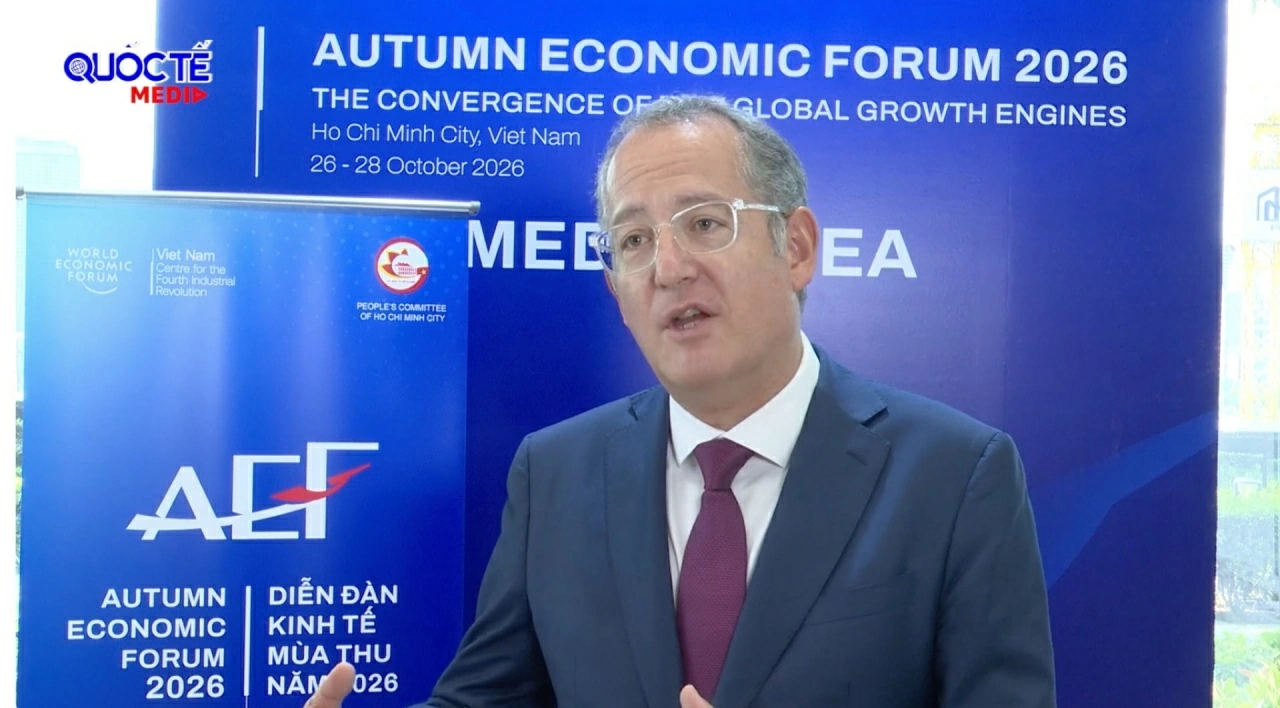 |
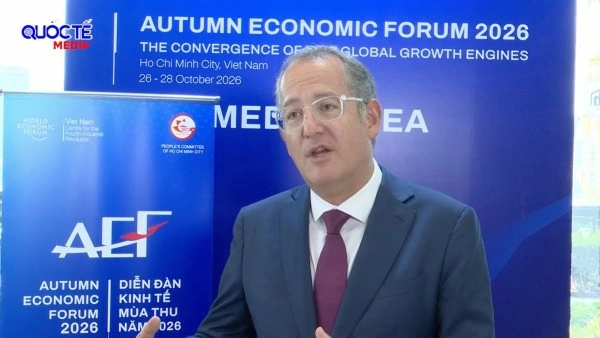
| Mr Denis Depoux, Global Managing Director of Roland Berger, Vietnam, speaks to The World and Vietnam Report on the occasion of the Autumn Economic Forum 2026. (Photo: Thanh Long) |
According to Mr. Denis Depoux, Global Managing Director of Roland Berger, Vietnam, the relationship between energy security, technology and emerging growth drivers is undergoing a fundamental transformation.
The development of renewable energy and energy storage technologies is enabling the expansion of distributed power sources that complement centralised generation systems. When effectively integrated, the two models can help strengthen energy security. Meanwhile, digitalisation and artificial intelligence (AI) are making it possible to forecast electricity demand and generation, as well as balance supply and demand in real time, ushering in a new phase of the energy transition.
For Vietnam, the expert said traditional industries should not be overlooked, as manufacturing remains an area with considerable investment potential. The priority is to improve economic efficiency and energy use. Advanced manufacturing can raise productivity and profit margins while reducing energy consumption, CO₂ emissions and other pollutants. In addition, semiconductors, integrated circuits and energy storage are promising areas given their potential to improve efficiency across industry and energy systems.
To attract investment projects with higher added value, Mr. Depoux stressed the need to accelerate energy project implementation, streamline licensing procedures and shorten the time required to connect projects to the power grid. Energy is essential to both existing manufacturing industries and emerging sectors such as data centres and digitalisation. Electricity service providers must therefore operate efficiently and make decisions swiftly.
Another important factor is improving energy efficiency, which is increasingly becoming a new benchmark for industrial competitiveness. With manufacturing accounting for 37% of Vietnam’s GDP, the country needs to ensure access to low-carbon electricity, from renewable and nuclear power to hydrogen-based electricity generation in the future. As more countries and consumers place greater emphasis on low- or zero-emission products, the development of green factories powered by clean electricity will become increasingly important.
Regarding Ho Chi Minh City, the Global Managing Director of Roland Berger, Vietnam, said the city should focus on strengthening its role as a service hub supporting Vietnam’s integrated supply chains and connecting them with Asia and the wider world. According to Mr. Depoux, manufacturing accounts for 37% of Vietnam’s GDP, while the share could reach nearly 80% when services supporting production are included. This provides a foundation for the city to expand services that support manufacturing and logistics.
To realise this vision, Ho Chi Minh City needs to attract both investment and talent, while enhancing its appeal as a place to live. The experience of cities such as Shanghai shows how a strong industrial base can serve as a springboard for expanding services supporting manufacturing and logistics, before developing into hubs that attract talent and foster emerging sectors. Efforts to attract skilled people should extend beyond engineering to education, culture and other fields, alongside improvements in the city’s quality of life.
Meta pledges support for Vietnam’s digital economy
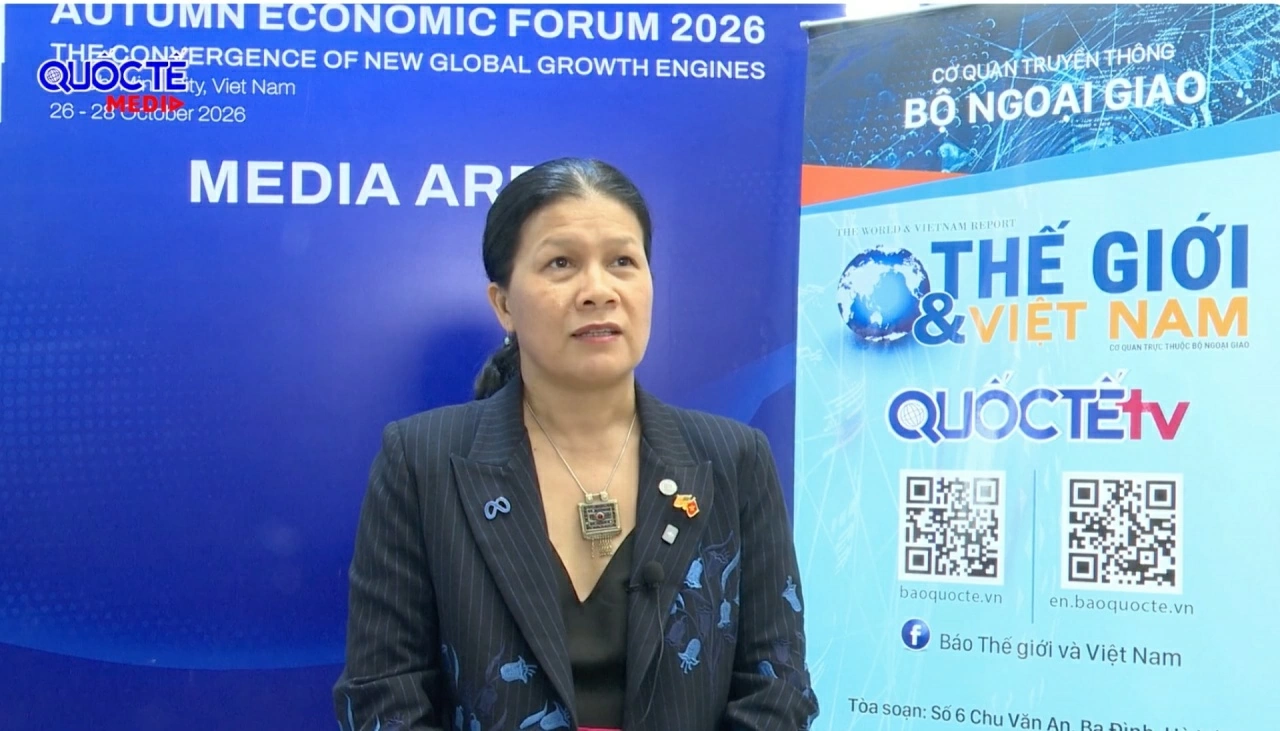 |
| Ms. Nguyen Thi Thu Thao, Meta’s Director of Public Policy for Vietnam, Laos, Cambodia and Myanmar, speaks to The World and Vietnam Report on the occasion of the Autumn Economic Forum 2026. (Photo: Thanh Long) |
For her part, Ms. Nguyen Thi Thu Thao, Meta’s Director of Public Policy for Vietnam, Laos, Cambodia and Myanmar, said Vietnam was one of the technology giant’s most important markets in Southeast Asia and the Asia-Pacific region.
Vietnam’s innovation and AI ecosystem is developing rapidly. Over the past five years, Meta has maintained a strategic partnership with the National Innovation Centre (NIC) under the Vietnam Innovation Challenge programme. This programme is a notable example of Vietnam-US cooperation in technology and innovation.
In the lead-up to APEC 2027, Meta is developing a programme focused on innovation and AI, with priority given to training micro, small and medium-sized enterprises (MSMEs) to use AI tools across Meta’s platforms. The aim is to help businesses, particularly household businesses and one-person enterprises, engage more effectively with customers, manage their operations more efficiently and increase revenue.
Alongside the digital economy, Meta is also implementing programmes in digital diplomacy, digital culture and digital education. These initiatives aim to help Vietnamese diplomatic missions overseas strengthen their presence and engagement with international communities; apply AI to bring Vietnam’s cultural values and heritage closer to the public; and train teachers to use AI tools in lesson preparation and to improve student engagement. According to Ms Nguyen Thi Thu Thao, these initiatives demonstrate how global technology companies can work alongside the Vietnamese Government through public-private partnerships.
On policies to attract high-tech investment, the Meta representative said Vietnam should continue to improve its regulatory framework and enhance cooperation between the Government and domestic and foreign businesses. As Vietnam pursues its goal of double-digit economic growth, sustaining this momentum will require increasingly effective coordination among all stakeholders.
Another priority is to support around five million small and micro-enterprises so that they can make a more active contribution to the economy. Ms. Thao affirmed that this was also part of Meta’s commitment to supporting business groups that continue to face significant disadvantages.
She noted that, to maintain its appeal to foreign investors, policies must be developed through consultation and the exchange of experience with domestic and international businesses, while also being implemented effectively. This process must ensure online safety and security while creating favourable conditions for innovation. Striking this balance is a key challenge, with state agencies playing an important role in building an environment that protects the public while enabling both domestic and foreign businesses to grow.
Ms. Thao also reaffirmed Meta’s commitment to supporting the Vietnamese Government in this area, contributing to stronger public-private partnerships and enabling digital technologies to make a more effective contribution to the country’s economic development goals.