




AEF 2026: PM Le Minh Hung holds a dialogue with WEF Managing Director Stephan Mergenthaler on positioning Vietnam for global future
WVR - On the morning of October 28, at the high-level plenary session within the framework of the Autumn Economic Forum 2026 (AEF 2026) in Ho Chi Minh City, Prime Minister Le Minh Hung joined a dialogue with World Economic Forum (WEF) Managing Director Stephan Mergenthaler on positioning Vietnam for the global future.
engaged in a direct dialogue with Mr. Stephan Mergenthaler, Executive Director of the World Economic Forum (WEF).
Latest
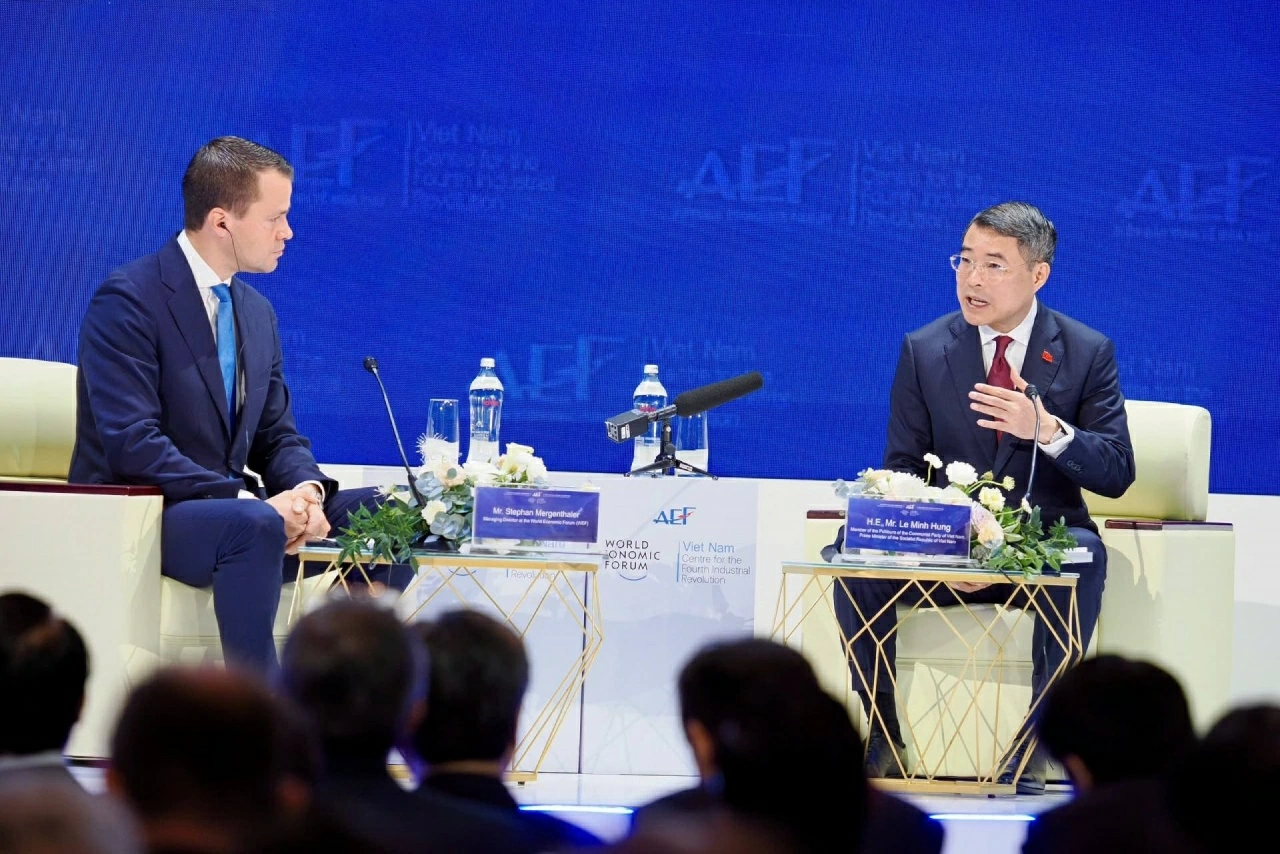 |
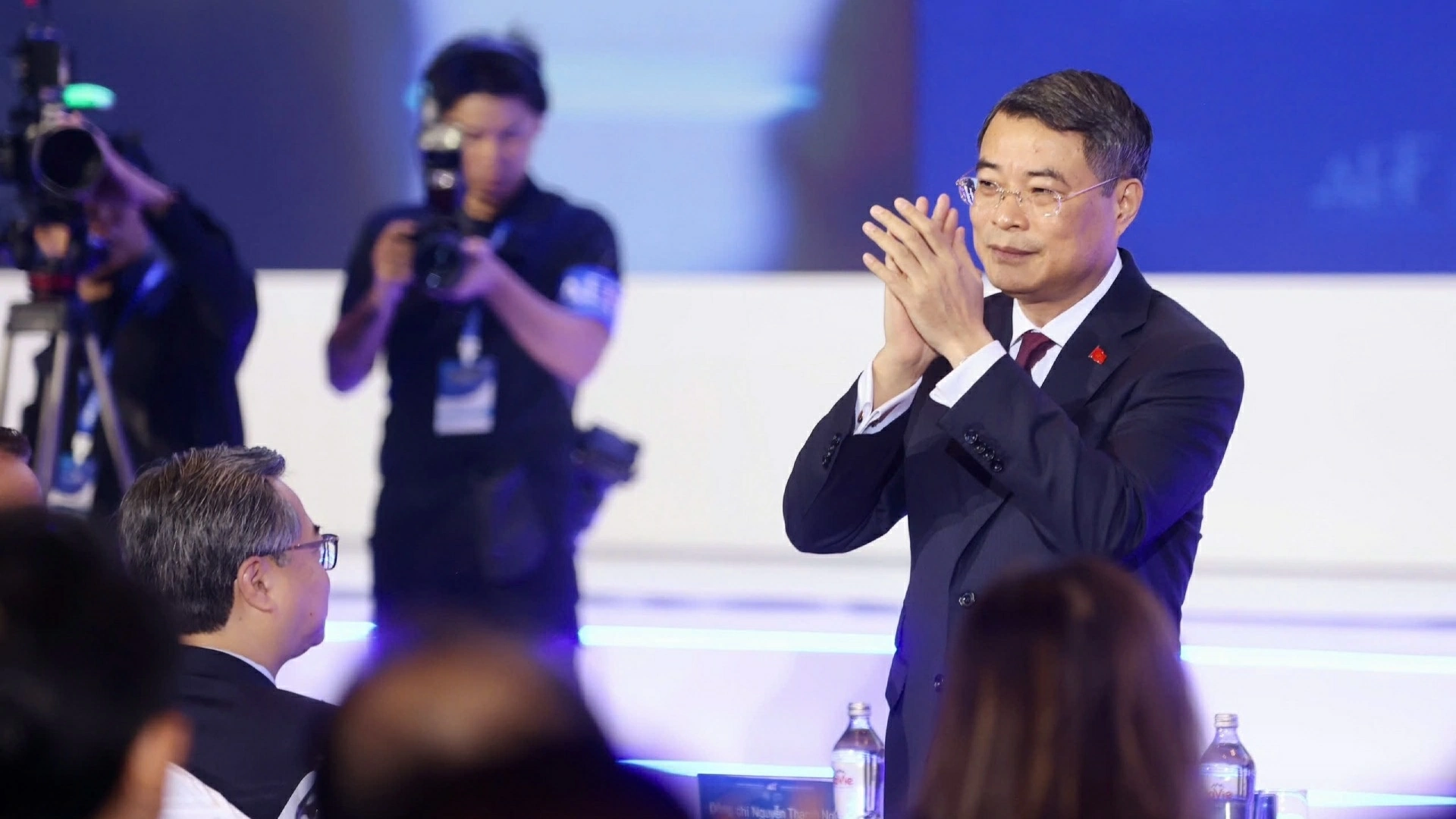
| Prime Minister Le Minh Hung engaged in a dialogue with World Economic Forum (WEF) Executive Director Stephan Mergenthaler. (Source: Organizing Committee) |
The dialogue provided a platform for the Vietnamese Prime Minister and a senior WEF leader to discuss shifts in the global economy, emerging growth drivers and opportunities for cooperation in a new phase of development.
Global shifts and their impact on Vietnam's development trajectory
In response to the first question from the WEF representative about how Vietnam perceives the global shift with economic fragmentation, technological competition, and the reshaping of supply chains, Prime Minister Le Minh Hung noted that, overall, the world is entering a phase of profound transformation. The balance of power continues to shift, promoting a trend towards multipolarity and multi-centers. Strategic competition among major countries is increasing and expanding into economics, technology, data, energy...
“We observe that globalization continues, but it is being reorganized according to new trends. We see more fragmented developments and increasing demands for security, autonomy, and resilience. Therefore, we recognize that the rapid and robust development of science, technology, and artificial intelligence is fundamentally changing production methods, management, and the allocation of advantages and development resources,” stressed the Head of the Vietnamese Government.
From these shifts, the Prime Minister outlined three new challenges, closely interconnected, that Vietnam and many countries are facing:
First, the challenge of global common mechanisms and regulations. According to Prime Minister Le Minh Hung, with the current development trend, it is clear that international common mechanisms and regulations have not kept pace with the rapid changes and developments of the situation. Therefore, the Prime Minister believes that international mechanisms and institutions also need to be adjusted accordingly.
Second, the growth model based on traditional drivers has revealed its limitations, especially for developing countries like Vietnam. This forces countries to seek new development and growth models. This is also a challenge that Vietnam is facing.
Third, strategic trust is declining while competition is increasing. Therefore, it is necessary to innovate models, methods of cooperation, investment, and coordination to jointly build and reinforce trust. “Development and cooperation are impossible if we do not strengthen and build strategic trust,” emphasised the Prime Minister.
From this reality, the development capacity of each country will increasingly be determined not only by scale or inherent advantages but also by resilience, the level of strategic autonomy, and the ability to create new growth drivers. This requires simultaneously diversifying markets, partners, and supply sources; shifting strongly towards a growth model based on science, technology, innovation, and productivity; enhancing the quality of institutions, governance, and forecasting capabilities; thereby proactively adapting to changes, seizing opportunities, and enhancing position in the emerging landscape; thereby proactively adapting to changes, seizing opportunities to enhance quality, value, and position.
Besides, the profound and epochal challenges and changes in the global and regional situation are profoundly and rapidly impacting every nation. Therefore, recently, Vietnam has proactively identified and faced these challenges and self-planned policies, directions, and strategies with the determination to bring Vietnam into a new development phase. The strategic decisions that Vietnam is implementing include:
First, focusing on strengthening strategic autonomy associated with proactive, positive, comprehensive, deep, synchronized, and effective international integration. This is one of the strategic policies that Vietnam is implementing and will resolutely implement in the coming time.
Second, fundamentally and comprehensively renewing the country's development model, including the growth model. Vietnam takes science and technology, innovation, national digital transformation as the foremost breakthrough and the main driver to develop modern production forces, enhance productivity, quality, efficiency, added value, and competitiveness of the economy.
Third, focusing on breakthrough institutional reform associated with enhancing national governance capacity.
It can be said that, in recent times, proactively identifying and facing challenges, as well as proactively planning and implementing strategic decisions, shows that Vietnam is very proactive in adapting to the rapid changes occurring internationally and regionally.
“We strongly wish to cooperate, develop, and strongly support efforts to promote globalization, multilateralization, and innovate institutions, methods of cooperation, and global governance for common benefits,” affirmed the Head of the Vietnamese Government.
At the same time, according to Prime Minister Le Minh Hung, as the situation becomes more volatile, countries, including Vietnam, must be proactive in strategy, strengthen internal resources, autonomy, and expand cooperation. In this, Vietnam will continue to be a friend, a reliable partner, and a responsible member of the international community, as well as a stable, safe destination for partners and investors.
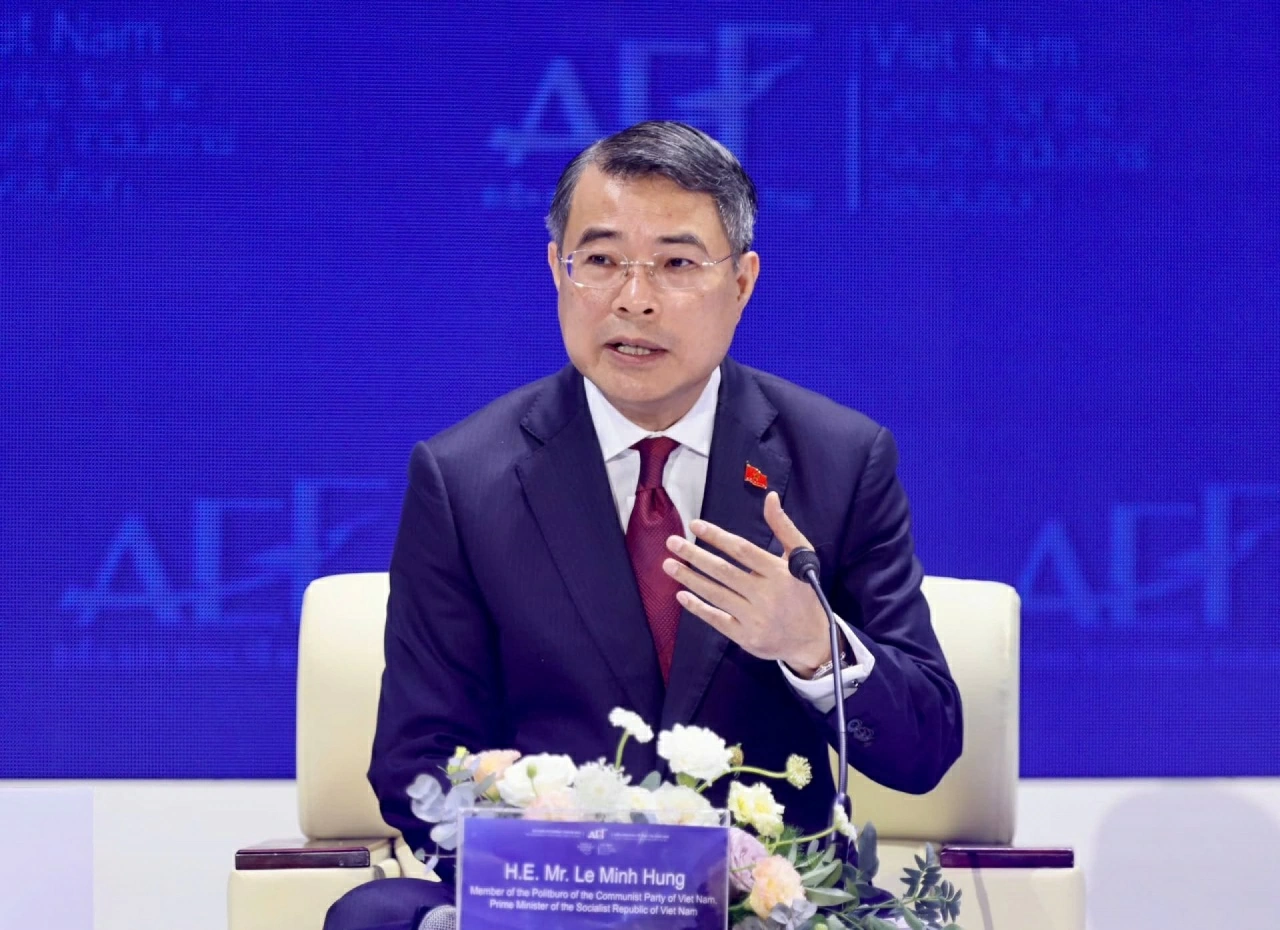 |
| Prime Minister Le Minh Hung speaks at the dialogue. (Source: Organizing Committee) |
Creating new growth drivers
In response to the second question about building resilience capacity, Prime Minister Le Minh Hung stated that, in an uncertain world, a nation's resilience is not only the ability to withstand shocks but, importantly, the ability to adapt, recover, and proactively, creatively renew itself to develop even more strongly after those shocks and changes. An economy may overcome immediate, temporary difficulties, but it will still be very vulnerable to subsequent changes and shocks.
As a highly open economy, directly affected by external shocks, Vietnam not only focuses on addressing short-term impacts but has been proactively building and implementing long-term, strategic development pathways; enhancing autonomy, resilience based on several factors such as:
First, determining to steadfastly pursue the goal of political-social stability and firmly consolidating the macroeconomic foundation as a prerequisite. Vietnam will continue to successfully achieve this goal to strengthen the trust of the people, the domestic business community, as well as foreign investors and partners. Vietnam's macroeconomic policies will continue to be managed flexibly to ensure a solid stable foundation, as well as ensure major balances, energy security, and food security.
The Prime Minister added that currently, Vietnam's public debt is only about 34-35% of GDP. This allows the S-shaped country to have a “financial cushion” to support the people and businesses when shocks occur, while still having the capability and financial capacity to continue investing in strategic infrastructure or priority development goals. Vietnam is clearly determined to achieve this.
In addition, Vietnam identifies that shocks can come quickly and have direct impacts, so it is necessary to focus on enhancing forecasting capacity, early warning, the ability to plan and implement timely, appropriate policy responses.
Second, Vietnam will prioritize building institutions, completing the legal framework, regulations according to international standards and practices in a synchronized, modern manner; thereby creating breakthroughs for sustainable growth, enhancing modern national governance capacity, and creating development.
In the first nine months of 2026, the Vietnamese Government has drastically reduced administrative procedures and business conditions. Prime Minister Le Minh Hung cited the assessment of the Vietnam Chamber of Commerce and Industry, stating that the Government's reduction of administrative procedures and business conditions has saved 53% of time and 55% of compliance costs for people and businesses. This has been highly appreciated by the business community both domestically and internationally.
Third, Vietnam will prioritize implementing strategic breakthroughs in infrastructure, especially transportation infrastructure, seaports, energy, and other essential infrastructures; while strongly promoting science and technology, gradually mastering technology, creating favorable conditions to enhance competitiveness, quality, and efficiency of the economy, as well as Vietnamese enterprises.
Fourth, renewing and enhancing the quality and effectiveness of education and training, prioritizing higher education, vocational education and training to meet the needs and changes of the labor market and new industries.
Fifth, Vietnam will continue to strengthen foreign relations and diversify relationships, thereby contributing to expanding development space.
Notably, the Prime Minister affirmed that Vietnam defines autonomy not as isolation, but as enhancing self-determination while expanding development space through proactive, deep, and effective international integration. Vietnam will also continue to diversify markets, partners, capital sources, technology, energy, supply chains, effectively exploit free trade agreements; strengthen balanced, stable, mutually beneficial relations with partners; and actively participate in multilateral mechanisms.
Moreover, an open foreign policy will help Vietnam disperse risks, continue to leverage external resources, maintain cooperation channels when the international environment fluctuates; thereby both increasing resilience and enhancing the country's position.
“In summary, Vietnam determines that with political-social stability, macroeconomic stability as the foundation, development institutions as a breakthrough, technology as a driver, enterprises as the center, high-quality human resources as an important condition, open foreign relations create space and resources for development, Vietnam not only withstands shocks better but also proactively transforms challenges into opportunities for fast, sustainable, and inclusive development, for the benefit of Vietnam and its partners,” shared Prime Minister Le Minh Hung.
Positioning Vietnam in the global future
Prime Minister Le Minh Hung noted that in the new global economic architecture, with the current development trends and context, Vietnam aspires to gradually shape its position as: (i) An emerging digital technology industrial center, energy center, and green agricultural production center of the region and the world; (ii) A crucial, reliable link in regional and global supply and value chains; (iii) A significant contributor to regional and global growth through modern institutions, governance, competitiveness, and high-quality human resources.
And to achieve that position, Vietnam has strengths such as:
First, Vietnam has strengths in geostrategic location; stable politics, macroeconomics; and is a growth highlight in the region and the world. In a volatile world, Vietnam's political and macroeconomic stability is a significant advantage. At the same time, the S-shaped country maintains positive growth prospects, among the highest growth rates in Asia, and increasingly participates deeply in important supply chains in international trade.
Additionally, the geostrategic location in the dynamic Asia-Pacific, along with an open network of trade agreements and diverse economic relations with many important partners, lays the foundation for Vietnam to become a convergence point between markets, supply chains, capital flows, and technology ecosystems. This is also a significant advantage in the context where businesses increasingly value the diversity, resilience, and connectivity of value chains.
Second, Vietnam is transitioning to a new development phase with strategic vision, major goals, high determination, and decisive actions at a time when the global economy is also undergoing strong restructuring. As global capital flows and supply chains shift towards digitalization, green, and high-tech, Vietnam is also accelerating the renewal of its development model, taking science and technology, innovation, and digital transformation as the driving force.
Third, Vietnam has a broad internal foundation to both receive and contribute to new growth networks. Vietnam's population exceeds 100 million, with abundant human resources, a tradition of valuing education, good skills, the ability to learn and adapt quickly, a production base proven through many years of participating in global value chains; a large, dynamic market, along with diverse potential in agriculture, marine economy, strategic minerals, renewable energy, and biodiversity.
The combination of people, production capacity, market, and resources creates an important foundation for Vietnam not only to receive investment and technology but also increasingly to participate in creating value, technology, and new growth drivers.
Foreign relations – A crucial, regular task in the new era
Amidst increasingly fierce major power competition, Prime Minister Le Minh Hung affirmed that Vietnam is steadfast in its foreign policy of independence, self-reliance, resilience, multilateralization, diversification; being a friend, a reliable partner, and a responsible member of the international community, based on international law and the United Nations Charter.
Specifically, according to the Head of the Vietnamese Government, strategic autonomy means that in the face of rapidly changing, complex international situations, Vietnam determines that it needs to strengthen its internal capacity to maintain self-determination, proactively choose cooperation methods that align with national interests and respect the legitimate interests of partners.
“Vietnam is ready to cooperate with all countries based on mutual respect, equality, and mutual benefit. Regardless of how the world and international situation change, we remain steadfast in the goal of firmly protecting independence, sovereignty, maintaining a peaceful, stable environment, and creating the most favorable conditions for national development. At the same time, this is also an important basis for Vietnam to contribute more responsibly and proactively to common regional and international issues for peace, cooperation, and development,” emphasised Prime Minister Le Minh Hung.
Besides, to ensure strategic autonomy, Vietnam determines that it must rely on internal resources, enhance the country's resilience, especially the competitiveness of the national economy. Vietnam also continues to support the development of the domestic business community, promote science and technology, innovation, protect national security, energy security, food security, environmental security, human security; diversify essential supply chains, enhance resilience to external changes.
At the same time, Vietnam continues to proactively integrate deeply into the international community. The Prime Minister mentioned that Vietnam has now signed 18 free trade agreements, so it needs to expand markets, diversify partners, and attract resources in capital, technology, and knowledge for development. The goal of the S-shaped country is not only to participate more deeply in global value chains but also to enhance endogenous capacity and gradually master technology, creating higher added value for the economy.
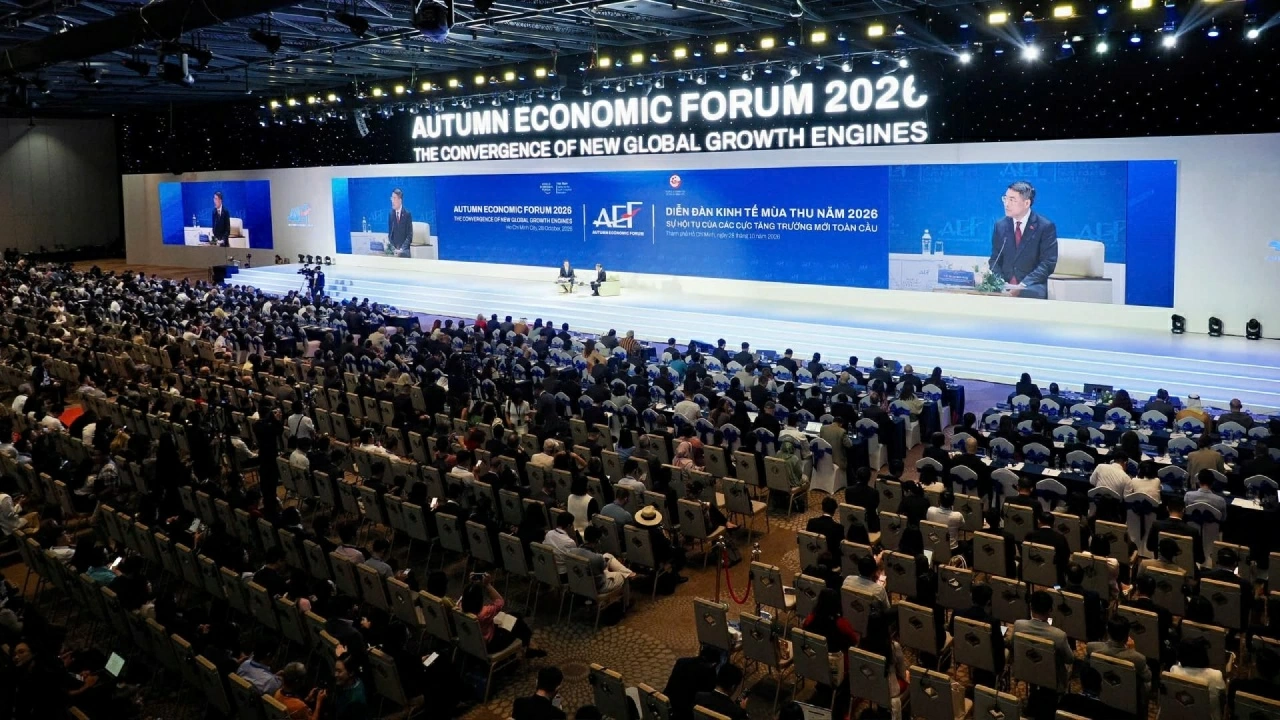 |
| Overview of the dialogue. (Source: Organizing Committee) |
From Participation to Co-Creation
In response to the question about Vietnam's commitments to international partners such as WEF, governments, and the global business community, Prime Minister Le Minh Hung pointed out, clearly, we all deeply understand that the world is going through a pivotal moment, with foundational transformations in every sector, every field.
Therefore, the mindset of cooperation also needs to change: From coordinated implementation to strategic companionship; from exploiting opportunities to creating opportunities; from sharing benefits to sharing responsibilities and shaping the future.
In this spirit, Vietnam hopes that partners will not only come to Vietnam to seek opportunities but also jointly plan and materialize new ideas, solutions, and development drivers into specific projects and products; while sharing responsibility and persistently pursuing until the final result.
With governments, Vietnam hopes to: (i) Cooperate to strengthen a peaceful, stable environment and expand new development drivers, thereby linking long-term strategic vision and interests; (ii) Jointly build open, fair, sustainable cooperation frameworks, especially in economic, trade, investment, infrastructure connectivity, and promote cooperation in science and technology, especially in key industrial sectors; (iii) Jointly shape new cooperation frameworks and standards for the benefit of people and businesses, so that the achievements of development are directly transformed into an increasingly better quality of life for all people.
With the global business community, the S-shaped country calls for: (i) Businesses not only to bring capital but also to share technology, knowledge, management experience, train human resources, promote innovation, especially in key industrial sectors; (ii) International corporations to support Vietnam in enhancing productivity, developing the industrial ecosystem, strengthening linkages, and supporting Vietnamese businesses to participate more deeply in global value chains; (iii) Emphasize corporate social responsibility, business activities must be associated with environmental protection and improving the quality of life of people so that the success of each business accompanies Vietnam's development.
On this occasion, the Prime Minister suggested that WEF continue to actively support the Vietnamese Government and businesses in the process of transforming the development model. Vietnam is ready to become a Strategic Partner of WEF in the region to jointly promote new ideas and initiatives; as well as implement innovative models and methods; bringing benefits to Vietnam, the region, and the world.
From “Investing in Vietnam” to “Investing with Vietnam”
Vietnam is not only an investment destination but also a long-term development partner; not only seeking to receive capital and technology but also wishing to cooperate with partners to jointly develop and create a common future of peace, stability, prosperity, and sustainability.
This is the message that Prime Minister Le Minh Hung conveyed to the international community, partners, and businesses at the Autumn Economic Forum 2026.
According to the head of the Government, Vietnam is renewing its development model, strongly shifting towards growth based on productivity, science, technology, and innovation. Especially, with the spirit of shifting from “investing in Vietnam” to “investing with Vietnam”, the Prime Minister hopes that international businesses and investors will strengthen linkages with domestic enterprises, research institutes, and universities; jointly develop technology, human resources, and supplier networks. The growth of Vietnamese enterprises will create more capable partners, contributing to enhancing the efficiency, adaptability, and competitiveness of the production and business network that we participate in together.
For its part, the Prime Minister affirmed, Vietnam will continue to steadfastly pursue the goal of maintaining macroeconomic stability, perfecting institutions, enhancing law enforcement quality, developing infrastructure and human resources; protecting the legitimate rights and interests of businesses and investors; maintaining dialogue, listening, and timely addressing difficulties and obstacles within its authority, to ensure effective implementation of cooperation commitments.
“Vietnam very much hopes that your success, the investor community, will accompany the development of our country,” emphasised Prime Minister Le Minh Hung.