


Vietnamese Embassy in Russia implements science and technology diplomacy: Ambassador Dang Minh Khoi
WVR - Ambassador Dang Minh Khoi affirmed that the Vietnam-Russia relationship is highly trustworthy, serving as a crucial foundation to promote technology transfer cooperation, especially amid complex international changes.
Latest
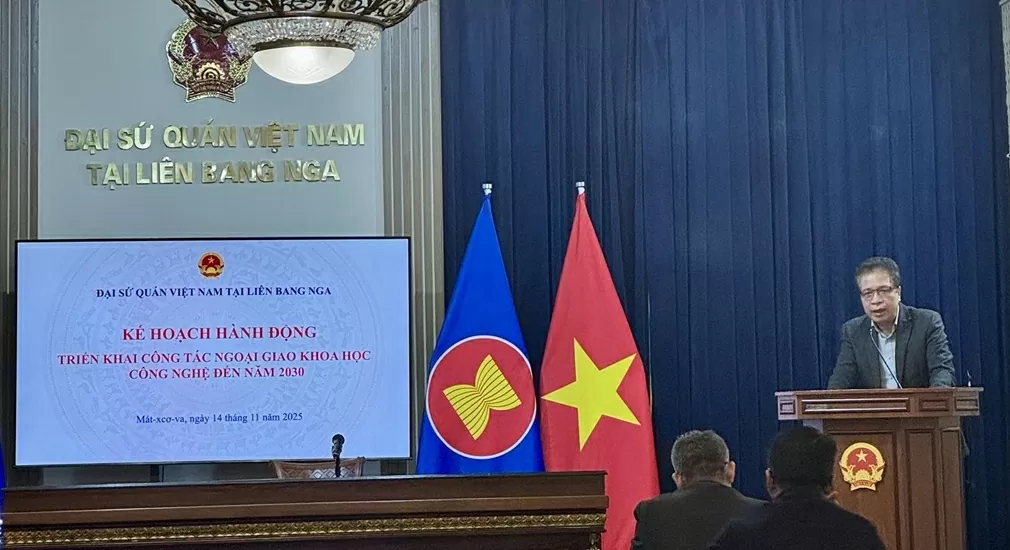 |
| Vietnamese Ambassador to Russia Dang Minh Khoi emphasized that science and technology are currently identified as key drivers for fundamental breakthroughs in national development. (Source: Vietnamese Embassy in Russia) |
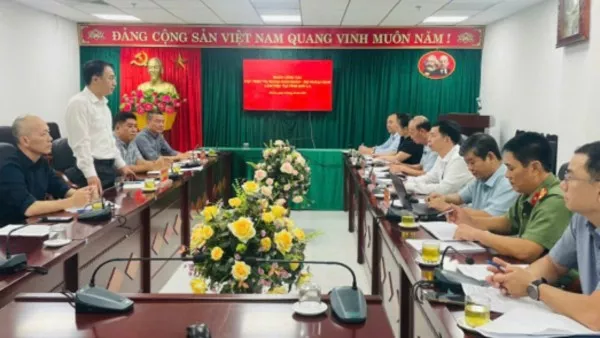
In line with Resolution 57-NQ/TW on breakthroughs in science and technology development, innovation, and national digital transformation, on November 14, the Vietnamese Embassy in Russia organized a working session to implement the Action Plan on Science and Technology Diplomacy by 2030 of the Ministry of Foreign Affairs.
During the session, Minister Counselor Doan Khac Hoang presented the key points of the plan, emphasizing three overarching principles: Flexibility, proactiveness, and creativity in task implementation; selective adoption of advanced scientific and technological achievements; and encouraging the synchronized participation of the state, enterprises, and the scientific community, ensuring that the people are the central beneficiaries.
In Vietnam's international cooperation strategy on science and technology, Russia, along with other developed nations, is a top-priority partner. Therefore, science diplomacy in Russia holds strategic significance and requires comprehensive evaluation to enhance advisory effectiveness for the government and relevant ministries.
Head of the Science and Technology Department of the Embassy Nguyen Ngoc Anh provided an overview of Russia's science and technology development strategy and the progress of bilateral cooperation in this field. Nguyễn Ngọc Anh highlighted that Russia is a traditional and reliable partner of Vietnam in key sectors such as energy, nuclear technology, aerospace, basic research, new materials, biomedical sciences, and information technology.
According to Nguyen Ngoc Anh, this long-term cooperation significantly contributes to strengthening technological sovereignty, protecting national interests, and ensuring Vietnam's equal standing in bilateral cooperation projects.
In Russia, alongside a network of renowned research institutes, many leading universities play a pivotal role in research and development (R&D) activities, especially those selected to participate in the national priority program "Priority". Annually, Vietnam sends a considerable number of students, graduate students, and PhD candidates to Russia under various scholarship programs. This group represents the next generation of scientific personnel for the country, with opportunities to access modern laboratories early and participate in national, regional, and international research projects.
According to a report by the Head of the Education Department of the Embassy, Mai Nguyen Tuyet Hoa, Vietnamese students in STEM fields currently account for about 30% of the total Vietnamese students in Russia. This is an encouraging figure that should be maintained and promoted as bilateral relations between the two countries develop favorably, contributing to building a high-quality scientific and technological workforce for Vietnam in the future.
In his directive speech, Vietnamese Ambassador to Russia Dang Minh Khoi emphasized that science and technology are currently identified as key drivers for foundational breakthroughs in national development. Russia, as one of the world's leading countries in basic research and science and technology, possesses many strengths that Vietnam needs to fully recognize and effectively utilize. According to the Ambassador, understanding the role, potential, and advantages of scientific and technological cooperation with Russia will help Vietnam expand access to advanced knowledge and exploit cooperation potential effectively.
The Ambassador also affirmed that the Vietnam-Russia relationship consistently maintains a high level of trust, creating a favorable foundation to promote technology transfer cooperation, especially amid complex international changes. He believes that Vietnam can turn challenges into opportunities, thereby gaining deeper access to technological fields where Russia excels.
Regarding priority areas for research and government consultation, Ambassador Khoi identified key sectors including energy and civilian nuclear technology, space and satellite technology, basic sciences, defense industry, biotechnology and pharmaceuticals, information technology... Additionally, scientific and technological cooperation should be linked with high-quality human resource training, considering it a key and regular task.
The Ambassador also praised the achievements of Russian science applications, including the Covid-19 vaccine and several cancer treatment drugs recently licensed by the Vietnamese Ministry of Health. Russia's university system and Academy of Sciences have consistently ranked among the world's leading research institutions, making them important partners for Vietnam.
The working session not only initiated the implementation of the Action Plan on Science and Technology Diplomacy but also opened new approaches to promote specific cooperation initiatives with Russia. As a result, science diplomacy activities in the area will be more systematically organized, contributing to making science and technology a substantial pillar in Vietnam-Russia relations.
(Source: Embassy of Vietnam in Russia)