


Border boarding schools to help deepen Vietnam’s relations with neighbouring countries: Spokesperson Pham Thu Hang
WVR - The construction of 248 inter-level boarding schools in land border communes is expected to foster people-to-people exchanges and deepen cooperation between Vietnam and neighbouring countries, Spokesperson of the Ministry of Foreign Affairs Pham Thu Hang said.
Latest
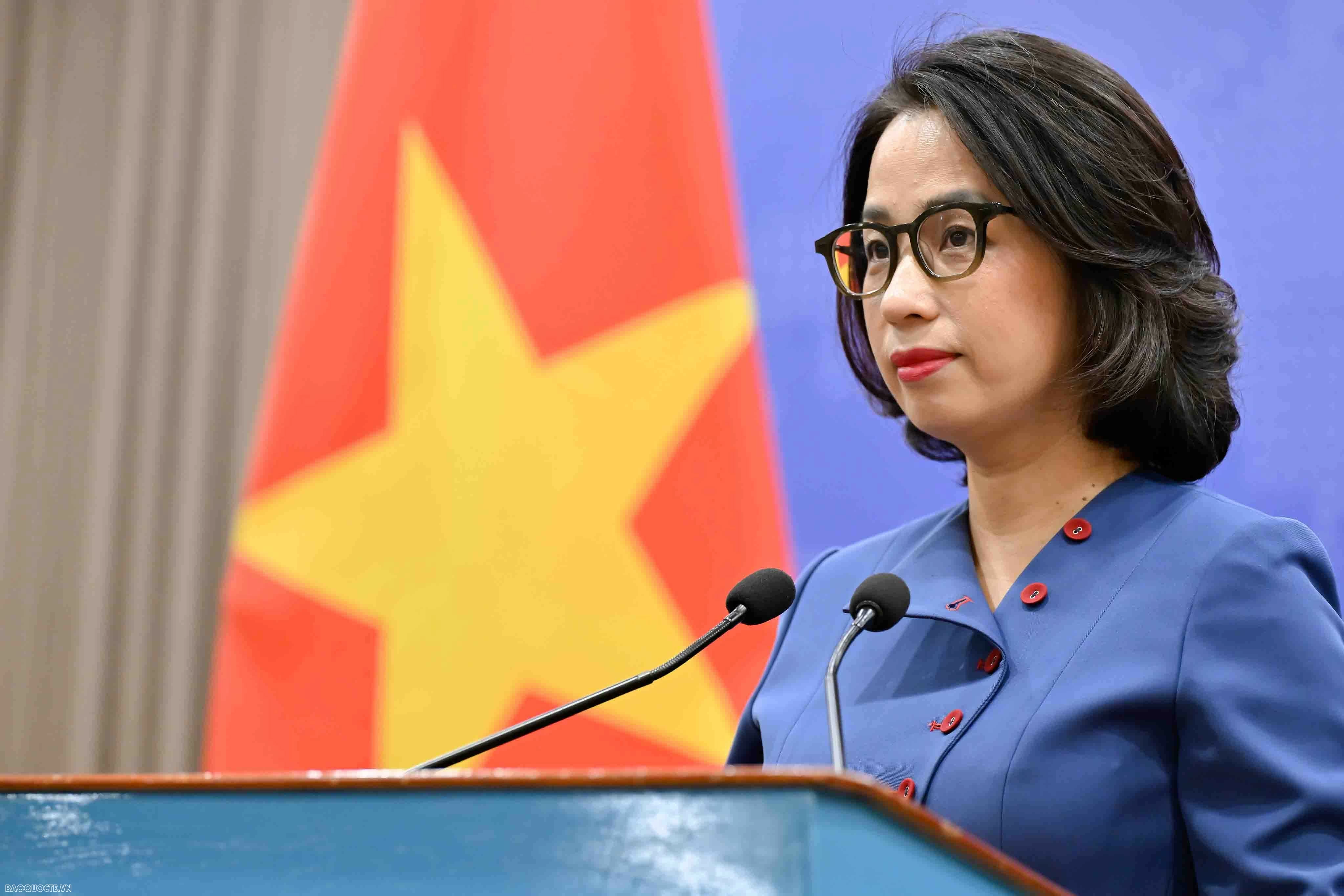 |
| Spokesperson of the Ministry of Foreign Affairs Pham Thu Hang stated that the construction of inter-level boarding primary and secondary schools in 248 land border communes is a strategic policy with profound humanitarian significance. (Photo: Nguyen Hong) |
On the afternoon of July 9, at the regular press conference of the Ministry of Foreign Affairs, Spokesperson Pham Thu Hang evaluated the significance of this policy from a foreign affairs perspective. She emphasised its role in promoting people-to-people exchanges, strengthening trust, and maintaining a peaceful, stable, and cooperative environment in border areas with neighbouring countries. She also highlighted the specific foreign relations impacts that this school system is expected to bring in the near future.
According to Spokesperson Pham Thu Hang, the Politburo recently agreed on the policy to invest in the construction of inter-level boarding primary and secondary schools in 248 land border communes.
“This is a strategic policy with profound humanitarian significance, reflecting the attention of the Party and the State of Vietnam to the needs of residents in border, remote, and disadvantaged areas. It is one of the key tasks in socio-economic development and the implementation of Vietnam's ethnic policies. Through this, it aims to improve the material and spiritual life of people in border areas, contributing to strengthening Vietnam's national defense and security,” the Spokesperson of the Ministry of Foreign Affairs said.
According to the Spokesperson, the first phase of the project, covering 100 schools, is being actively implemented and remains on track for completion in time for the 2026-2027 academic year.
Quoting Party General Secretary and President To Lam, Spokesperson Pham Thu Hang said the schools will serve as "soft markers" for border education, contributing to training human resources and boosting sustainable socio-economic development in border areas.
The schools are also expected to help promote exchanges and cooperation among border localities, as well as between Vietnam and neighbouring countries, foster mutual understanding and trust, create a solid social foundation for border management and protection through peaceful measures, and reinforce a peaceful and stable environment and long-term cooperation between Vietnam and its neighbours based on mutual respect for independence, sovereignty, territorial integrity and legitimate interests, the Spokesperson emphasised.