

Vietnam's diplomatic position in the new era: Proactively shaping global rules
The recent participation of General Secretary, President To Lam at the United Nations General Assembly, combined with activities in the U.S. and Canada, was an opportunity to affirm Vietnam's foreign policy; demonstrating our transition from a nation "accepting the rules" to one contributing to shaping global rules.
Latest
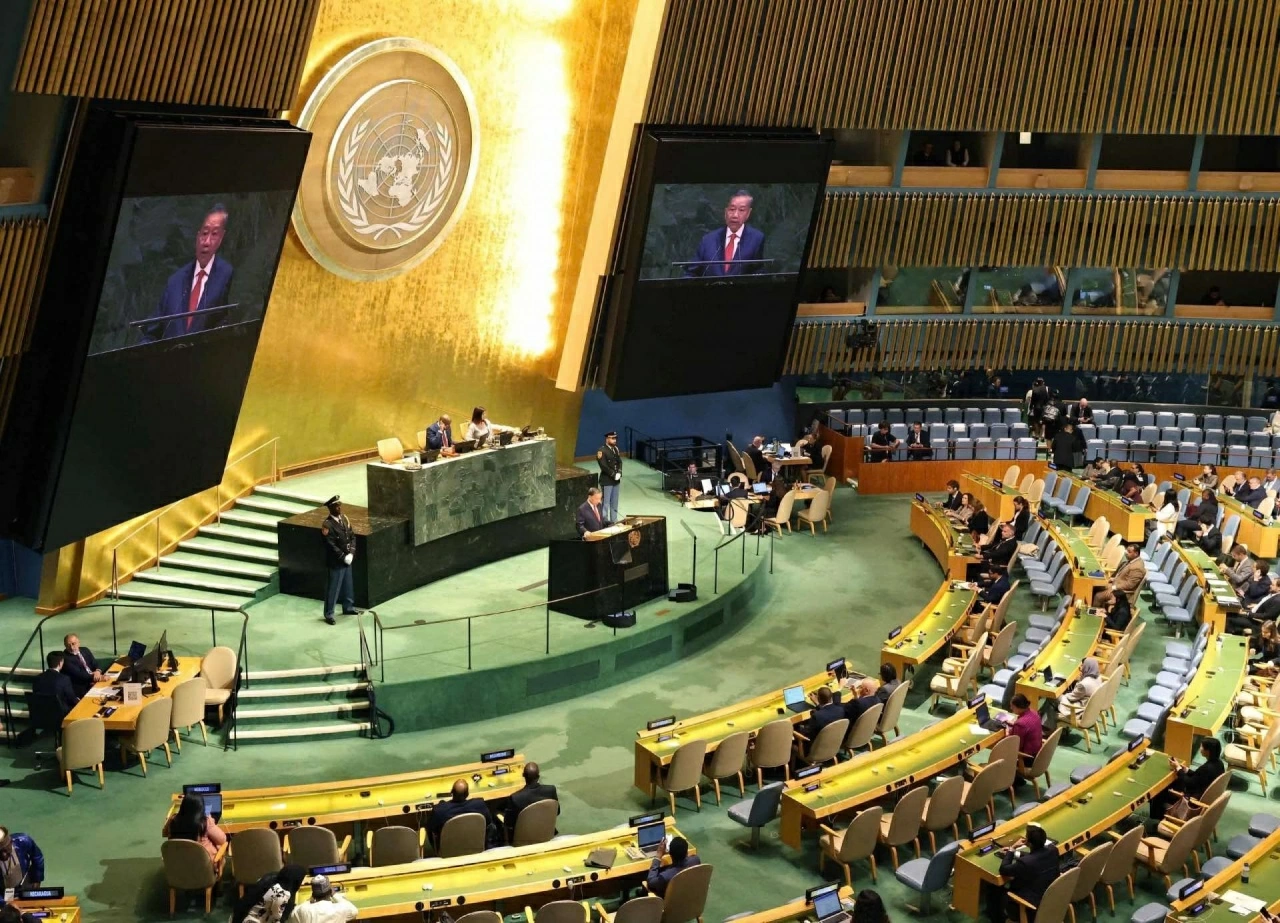 |
| General Secretary, President To Lam speaks at the High-Level General Debate of the 81st United Nations General Assembly, September 22. (Photo: VNA) |
This is the assessment of Ambassador, Dr. Ton Sinh Thanh, former Vietnamese Ambassador to India, senior lecturer at the Diplomatic Academy of Vietnam, in a conversation with a reporter from The World and Vietnam Report about the highlights of General Secretary, President To Lam at the United Nations (UN) – the largest multilateral “playing field” on the planet.
Managing differences based on international law
On September 22, speaking at the UN General Assembly, General Secretary, President To Lam delivered a very practical message: “Building trust is not about eliminating differences, but about responsibly managing differences based on the UN Charter and international law.” Evaluating this message, Ambassador Ton Sinh Thanh stated that it is extremely meaningful, especially in the current context of a polarized and divided world with increasing differences.
According to Ambassador Ton Sinh Thanh, the current issue is not how to completely eliminate differences, but how to handle these differences and disputes. The message from General Secretary, President To Lam clearly stated that differences cannot be resolved by force but must be addressed through dialogue and responsibly managed. This is the way to help prevent conflicts from occurring.
Ambassador Ton Sinh Thanh emphasized that it is important to accept the existence of differences while managing them, even in territorial disputes. Such disputes can only be resolved based on international law, including the UN Convention on the Law of the Sea (UNCLOS), and not through the use of force. This is also a stance that Vietnam has repeatedly affirmed.
According to the diplomat, this message also carries another important significance. By accepting differences and identifying international law as the basis for resolving disputes, Vietnam does not side with any party and does not allow itself to be dependent on any party. Vietnam only stands on the side of international law and the UN Charter.
This approach helps Vietnam maintain independence and autonomy, or as it is currently termed, “strategic autonomy”.
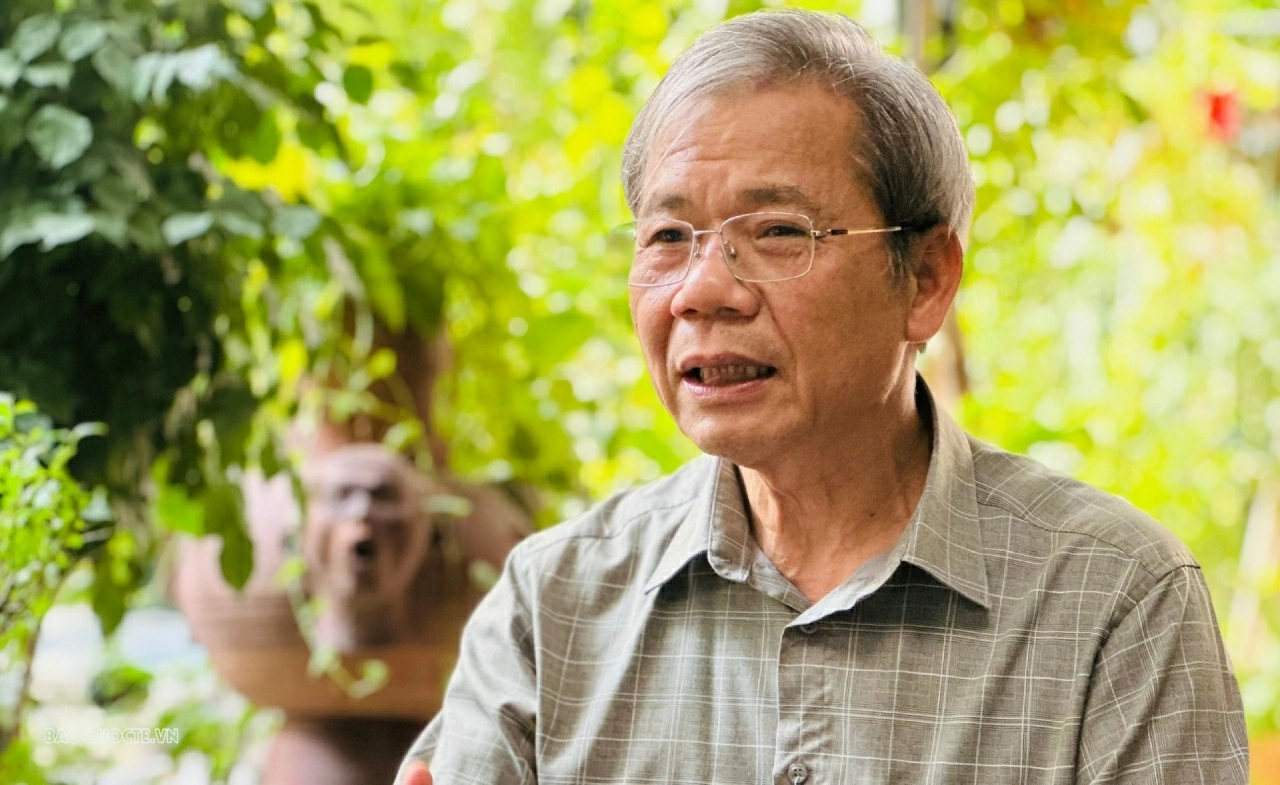 |
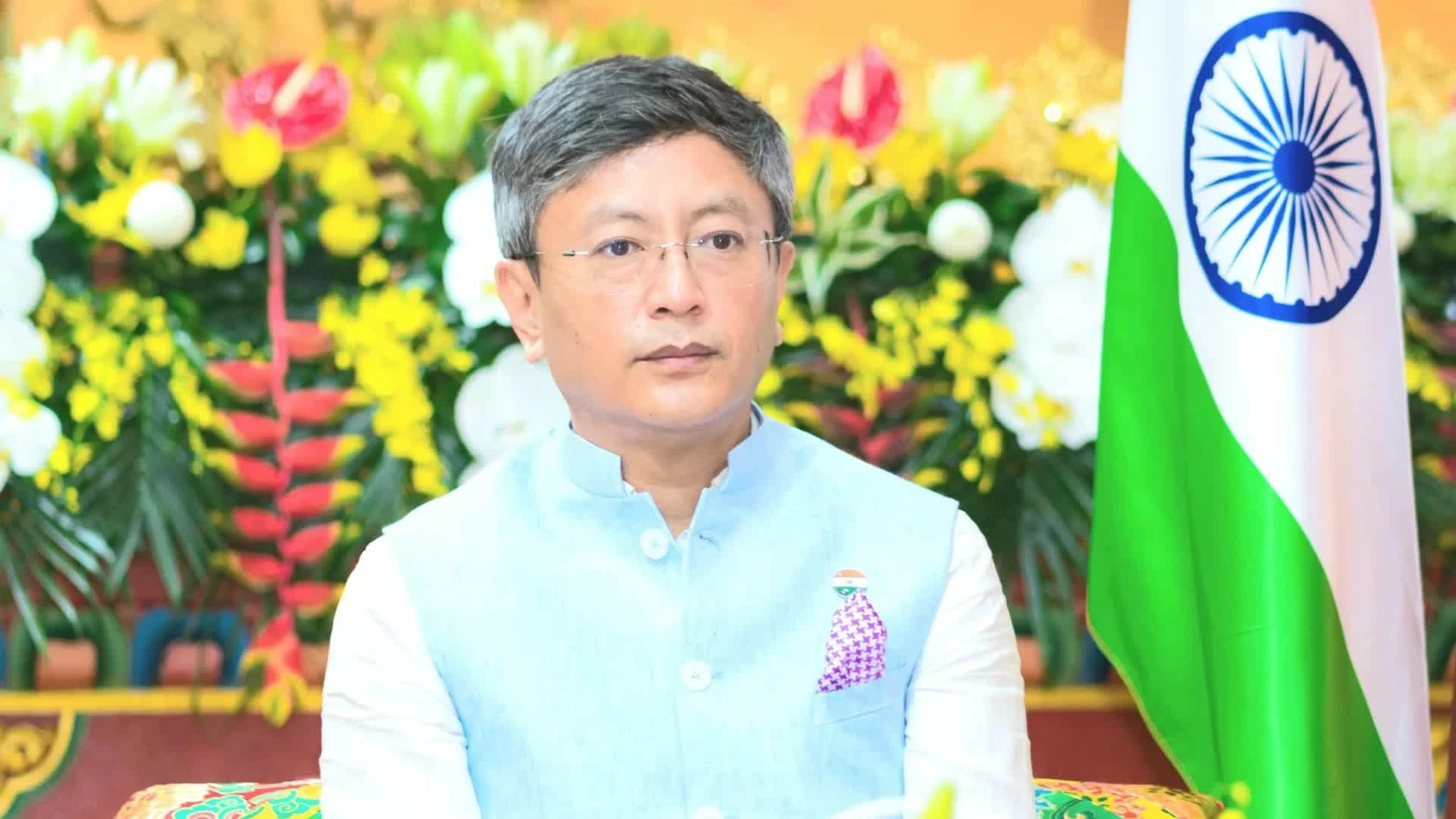
| Ambassador, Dr. Ton Sinh Thanh, former Vietnamese Ambassador to India, senior lecturer at the Diplomatic Academy of Vietnam. (Photo: Ngoc Anh) |
From participation and compliance to proactively shaping the rules
Discussing the shift in Vietnam's foreign policy thinking, especially through proposals on technology governance, digital transformation, green transition, and digital sovereignty, Ambassador Ton Sinh Thanh noted that this is a clear manifestation of the change from the mindset of “accepting and complying with the rules” to proactively participating in shaping the rules.
In his speech at the UN, General Secretary, President To Lam proposed four major orientations for the UN. Among them, the orientation on technology governance, especially artificial intelligence (AI), towards technology serving humanity, being inclusive, and ensuring national sovereignty, clearly reflects the shift in Vietnam's thinking.
Previously, Vietnam mainly participated in and complied with established rules, but now Vietnam has proactively put forward views and proposals to participate in shaping new rules, especially in areas of international concern such as technology.
Ambassador Ton Sinh Thanh affirmed that this transformation is entirely consistent with the Party's orientation as reflected in recent resolutions, starting with Directive No. 25 of the Secretariat on enhancing multilateral diplomacy, Resolution No. 59 of the Politburo on international integration in the new situation, as well as the Party's 14th Congress Resolution. These documents all emphasize the requirement for Vietnam to transition from the position of a nation participating and accepting the rules to a position of contributing and shaping the rules in international relations.
In fact, Vietnam has gradually demonstrated this transformation at many international forums. Vietnam has introduced many initiatives or co-sponsored initiatives with other countries on global issues, including the environment, ensuring the rights of women and children, and many other issues.
From this perspective, Vietnam's contributions to multilateral mechanisms not only stop at participation but increasingly show a proactive role, thereby demonstrating Vietnam's transition from a nation accepting the rules to one participating in shaping the rules.
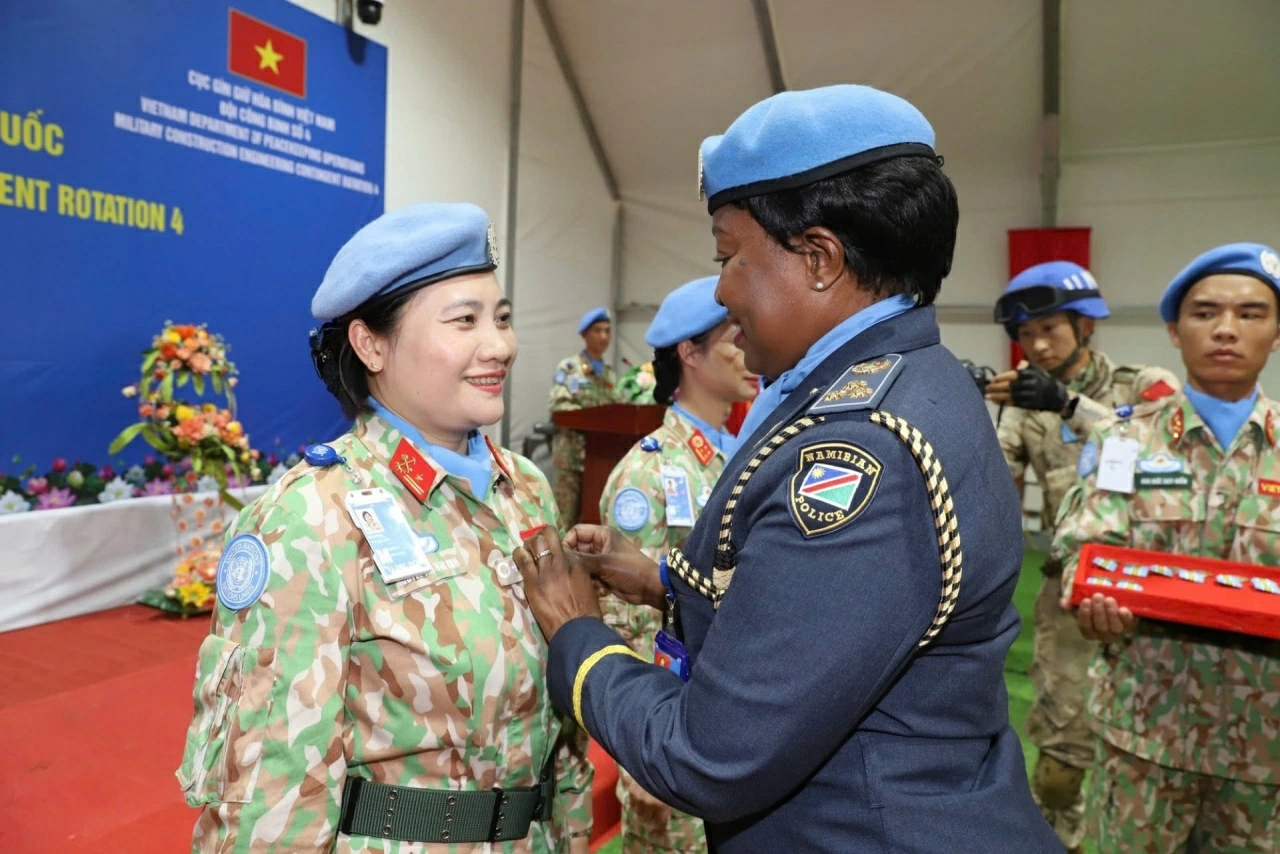 |
| The United Nations Interim Security Force for Abyei awarded the “United Nations Peacekeeping Medal” to 184 officers and staff of the 4th Engineering Team and individual officers on duty at the Mission, recognizing the contributions of Vietnam's peacekeeping forces, July 2026. (Photo: Peacekeeping Department) |
Reflecting on nearly 50 years since Vietnam joined the UN in 1977, Ambassador Ton Sinh Thanh assessed that Vietnam's multilateral diplomacy has matured rapidly. Initially, Vietnam participated in the UN as a nation receiving aid to rebuild the country after the war, but now, we have transitioned to a position of a nation contributing to the UN and the international community, both in resources and experience.
This transformation became more evident after the end of the Cold War, especially from the 1990s, when Vietnam gradually engaged more deeply in multilateral institutions such as ASEAN, APEC, and several other mechanisms. Along with expanding participation, Vietnam has increasingly assumed many leading roles in these mechanisms.
The Ambassador cited that in ASEAN, Vietnam has chaired the organization multiple times, in 1998, 2010, and 2020. In APEC, Vietnam has twice hosted and chaired high-level meetings in 2006 and 2017, and will continue to host APEC in 2027.
At the UN, Vietnam has twice been elected as a non-permanent member of the Security Council and has served as the President of the Security Council. These contributions, according to the Ambassador, show that Vietnam is increasingly demonstrating a more proactive role in multilateral diplomacy.
Not only contributing ideas and experience, Vietnam is also increasingly contributing resources to international activities. The Ambassador mentioned Vietnam's participation in the UN peacekeeping forces, sending numerous officers and soldiers to participate in peacekeeping missions in South Sudan and several other African countries.
For Ambassador Ton Sinh Thanh, these are concrete manifestations showing the maturity of Vietnam's multilateral diplomacy over nearly 50 years.
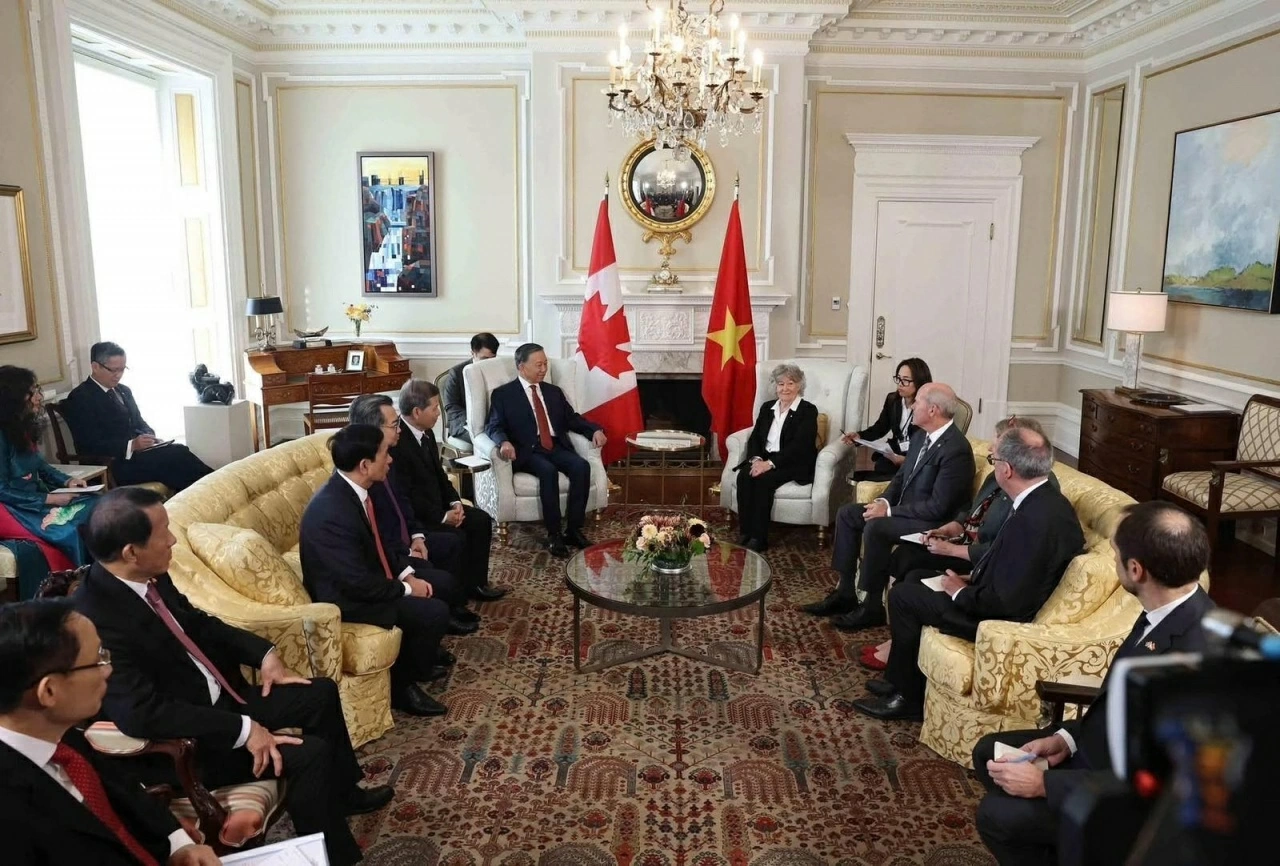 |
| On September 24 (local time), at the Canadian Governor General's Residence, within the framework of a State visit to Canada, General Secretary, President To Lam met with Canadian Governor General Louise Arbour after the solemn State welcoming ceremony. (Photo: VNA) |
Head-of-State diplomacy expands development resources
Discussing the role of head-of-state diplomacy in the context of increasingly vibrant high-level foreign activities of Vietnam, Ambassador Ton Sinh Thanh stated that head-of-state diplomacy has always held an important position, as the head of state is the highest responsible person for foreign affairs.
| More from WVR |
 With the new position and strength, Vietnam wishes to contribute more proactively and substantively to the United Nations: Ambassador Do Hung Viet With the new position and strength, Vietnam wishes to contribute more proactively and substantively to the United Nations: Ambassador Do Hung Viet |
Historically, foreign activities were primarily conducted through representatives, from envoys to ambassadors, due to limitations in transportation and scientific-technological conditions. However, along with the development of science and technology, increasingly convenient transportation, and the requirements of the international situation, head-of-state diplomacy has been growing strongly worldwide as well as in Vietnam.
In particular, one of the advantages of head-of-state diplomacy is the ability to build personal relationships and direct trust between leaders. High-level meetings can create stronger commitments and help directly resolve difficult issues that may not be addressed at lower levels.
Besides practical effectiveness, head-of-state diplomacy also has high symbolic value. When a nation's foreign policy is conveyed to the international community at the highest level, that message can create greater influence and attraction.
From this perspective, the Ambassador believes that the recent participation in the UN General Assembly, combined with activities in the U.S. and Canada by General Secretary, President To Lam, was an opportunity to affirm Vietnam's foreign policy; demonstrating our transition from a nation “accepting the rules” to one contributing to shaping global rules.
The mission also provided an opportunity for Vietnamese leaders to directly engage with high-level leaders, heads of state, U.S. and Canadian leaders, as well as elites in the U.S. Through this, Vietnam has more opportunities to promote cooperation fields and open up new resources for national development.
Looking more broadly at foreign activities recently, the diplomat noted that this is a period of very vibrant diplomatic activities, not only reflected in the overseas visits of Party and State leaders but also in Vietnam's reception of many high-level foreign delegations.
This also reflects Vietnam's efforts to strengthen foreign relations in the spirit of Resolution No. 59 of the Politburo on promoting international integration, in line with the Party Congress's direction on enhancing diplomatic activities.
The Ambassador emphasized that in the phase of accelerating development, the country not only needs to promote internal resources but also needs to take advantage of external resources. Therefore, Vietnam needs to continue expanding and strengthening foreign activities, while enhancing diplomatic activities. This is demonstrated by specific actions, including increasing foreign activities, both through Vietnamese leaders visiting other countries and welcoming leaders and international friends to Vietnam.

| Vietnamese 'to he': Shaping heritage, carrying the soul of Vietnam to the world WVR - Amidst the whirlwind of modern technology and mass-produced toys, to he - a rustic folk doll made from glutinous rice powder - quietly ... |

| From UNESCO to Vietnam: The Journey of a Global Educational Vision Few UNESCO reports continue to be cited as a guiding compass for global education three decades after their publication. Learning: The Treasure Within is one ... |
| 33rd Diplomatic Conference: Turning strength and position into resources for development WVR - The 33rd Diplomatic Conference is the first of its kind following the 14th National Party Congress, as the nation enters a new phase ... |
| Vietnam proactively and positively contributes at the 18th BRICS Summit WVR - Ahead of Prime Minister Le Minh Hung's visit to India and participation in the 18th BRICS Summit from September 12-13, Deputy Minister of ... |
| Vietnam Union of Friendship Organizations proactively adapts, enhances people-to-people diplomacy in new phase WVR - On September 14 in Hanoi, the Vietnam Union of Friendship Organizations held the 7th National Congress for the 2026-2031 term. Ms. Bui Thi ... |