




With the new position and strength, Vietnam wishes to contribute more proactively and substantively to the United Nations: Ambassador Do Hung Viet
On the occasion of General Secretary, President To Lam attending the High-Level Week of the 81st United Nations General Assembly, Ambassador Do Hung Viet, Head of the Permanent Mission of Vietnam to the United Nations, shared with the World and Vietnam Report the significance of the session and Vietnam's participation with contributions to multilateral cooperation within the United Nations framework.
Latest
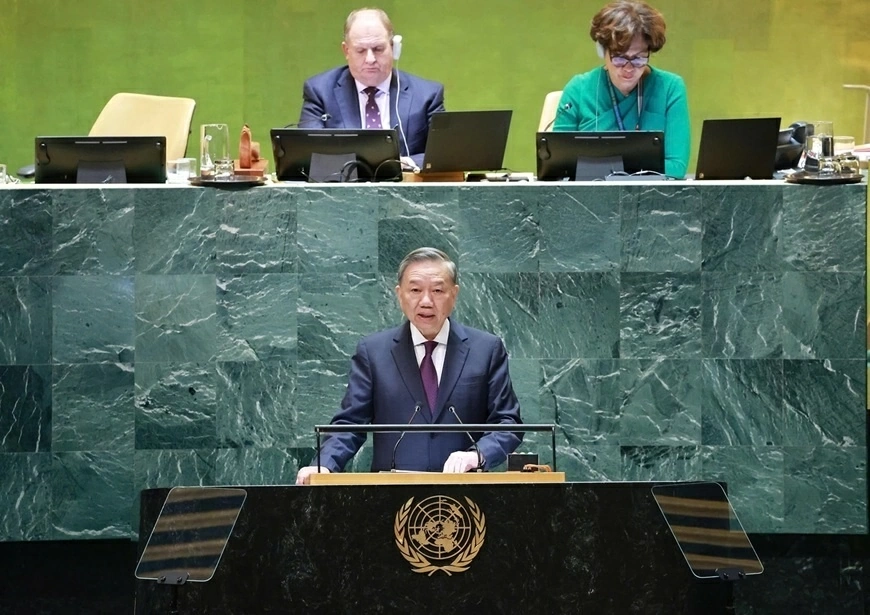 |
| General Secretary, President To Lam speaks at the High-Level General Debate of the 79th United Nations General Assembly in September 2024. (Photo: Lam Khanh) |
The 81st United Nations General Assembly has the theme “Restoring Trust, Guiding Transformation: An Effective United Nations for All.” Could the Ambassador share insights on the main highlights of this year's High-Level Week?
It can be said that the 81st United Nations General Assembly takes place amid profound global changes. Many conflicts continue to persist. Climate change, natural disasters, pandemics, and new challenges posed by the rapid development of science and technology, especially artificial intelligence, are directly impacting people's lives, livelihoods, and the development of nations.
Additionally, the progress in achieving the Sustainable Development Goals remains slow; resources for development continue to decline significantly. In 2025 alone, official development assistance decreased by over 23%, while global military spending rose to a record nearly $2.9 trillion.
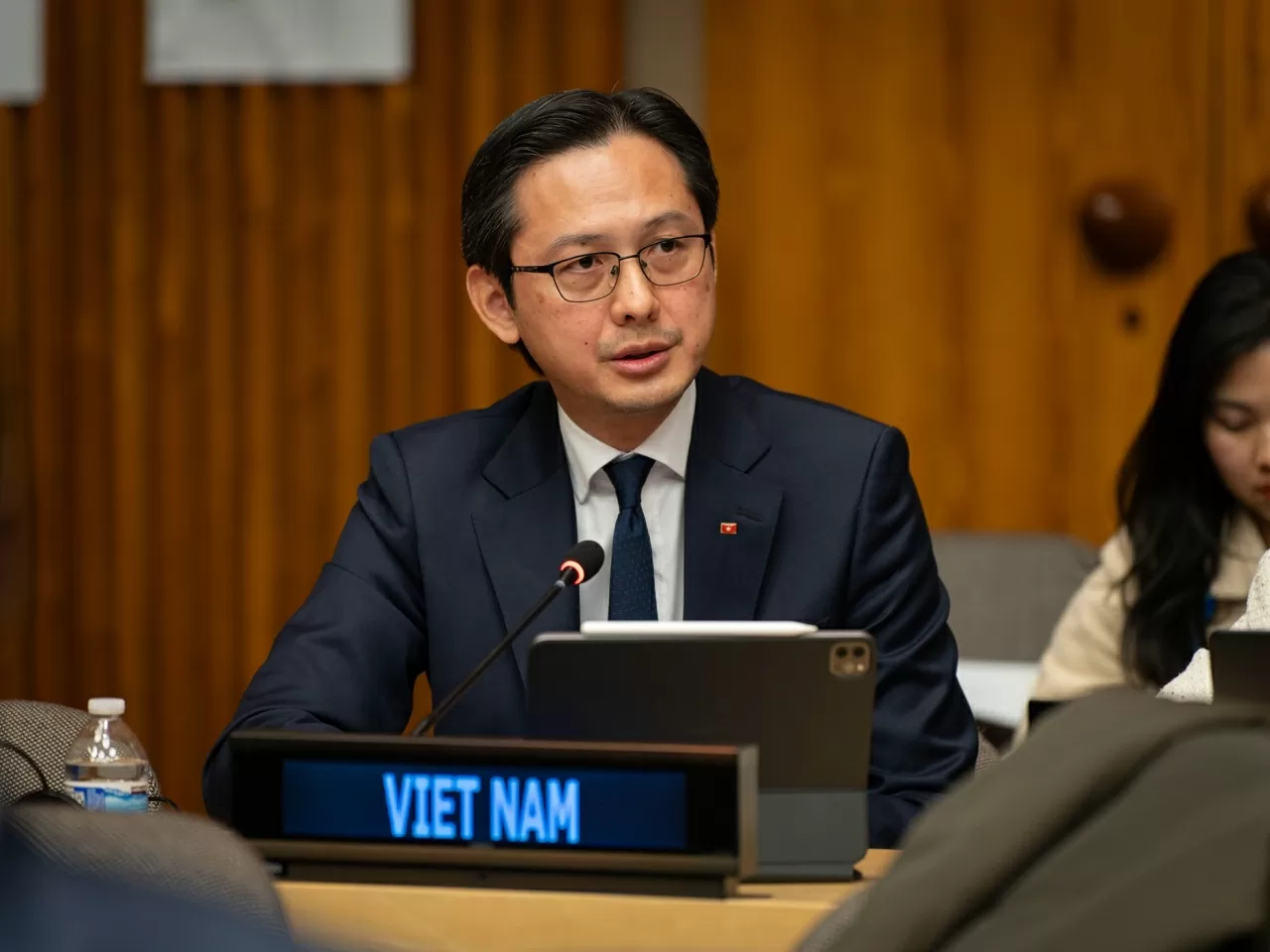 |
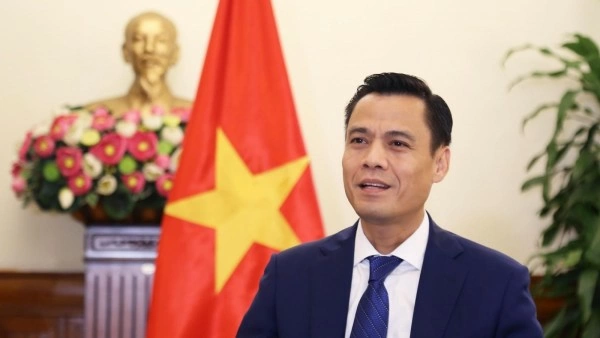
| Ambassador Do Hung Viet, Head of the Permanent Mission of Vietnam to the United Nations. (Photo: Chu Van) |
Meanwhile, differences in interests, unilateral actions, and manifestations undermining international law are increasing suspicion, reducing strategic trust, and hindering dialogue and cooperation.
However, in this context, the need for international cooperation and the role of the United Nations become even more apparent. No country, large or small, can solve common challenges alone. The United Nations remains the largest forum for countries to maintain dialogue, seek common ground, build cooperative frameworks, and act together to address global challenges.
Therefore, the theme “Restoring Trust, Guiding Transformation: An Effective United Nations for All” is very appropriate and timely. It involves restoring trust in the United Nations, in multilateralism, and in the ability of countries to maintain dialogue, cooperation, respect for the fundamental principles of international law, mutual respect, and jointly address common issues. This trust must be reinforced by fulfilling commitments and achieving specific, practical results.
This is even more significant as the United Nations itself is entering an important transition phase. The UN80 initiative continues to be implemented, aiming for a more streamlined, cohesive, and effective United Nations system.
Alongside this, the process of selecting the 10th Secretary-General is entering a decisive phase, preparing for leadership transition and the organization's future direction. It can be said that, along with global changes, the United Nations is also facing the need to innovate to better adapt and meet the expectations of member states.
This year's High-Level Week program also clearly reflects these concerns. In addition to the High-Level General Debate, leaders will participate in and discuss at many significant events, including topics on the right to development, climate change and just transition, sea level rise, pandemic prevention and response, as well as nuclear disarmament.
These are all very practical issues, directly related to peace, security, development, and people's lives. This is also an opportunity for United Nations member states to exchange, propose solutions to common challenges, and shape the United Nations' cooperation priorities in the coming time.
 |
| Ambassador Do Hung Viet and United Nations Secretary-General António Guterres, June 20, 2025. (Photo: Chu Van) |
General Secretary, President To Lam will lead the high-level Vietnamese delegation attending the High-Level Week of the 81st United Nations General Assembly. Could the Ambassador elaborate on the significance of this mission and the message Vietnam wishes to convey on this occasion?
The participation of General Secretary, President To Lam in the High-Level Week of the United Nations General Assembly first affirms our Party and State's emphasis on multilateralism and the central role of the United Nations. This also consistently reflects Vietnam's independent, self-reliant, resilient, peaceful, friendly, cooperative, and developmental foreign policy, diversifying and multilateralizing its external relations.
The participation of the General Secretary, President, and the high-level Vietnamese delegation at the world's largest multilateral forum is even more significant as this year marks the first year of implementing the 14th Party Congress Resolution, heralding a new era of development for the country.
In the new phase, foreign affairs and international integration are identified for the first time as “crucial, regular” tasks; the major requirement is to maintain a peaceful, stable environment, open up more cooperation opportunities, and connect Vietnam more deeply with the new global development trends, while elevating Vietnam's contributions to global politics, the world economy, and human civilization.
At the United Nations General Assembly, the General Secretary, President will deliver an important speech, expected to emphasize the message of strengthening trust and joining hands to ensure that major global shifts open up more opportunities for peace, cooperation, and development, aiming for a fairer and more humane international order.
This is the message from a nation that has endured decades of war, division, blockade, and embargo, thus deeply understanding the values of peace, independence, and self-reliance. It is also the message of a Vietnam that is undergoing a strong transformation, confidently stepping into the era of national resurgence.
Towards the strategic goals for 2030 and 2045, Vietnam is striving to leverage new drivers from science and technology, innovation, digital transformation, and high-quality human resources; while prioritizing investment in people, culture, social equity, and environmental harmony. These priorities align well with the major agendas of the United Nations, opening up many avenues for Vietnam to enhance cooperation, share experiences, and tap into knowledge, technology, and resources for development.
Conversely, with its new position and strength, Vietnam also wishes to contribute more proactively and substantively to the common work of the United Nations. We not only seize opportunities from international cooperation but are also ready to share and contribute to the common responsibility, so that all people and nations can enjoy the fruits of peace, cooperation, and development.
It can be said that this is the image Vietnam wishes to continue affirming at the United Nations: an independent, self-reliant, peace-loving country; confidently stepping into a new development phase, open to the world and ready to accompany and contribute to the common efforts of the international community.
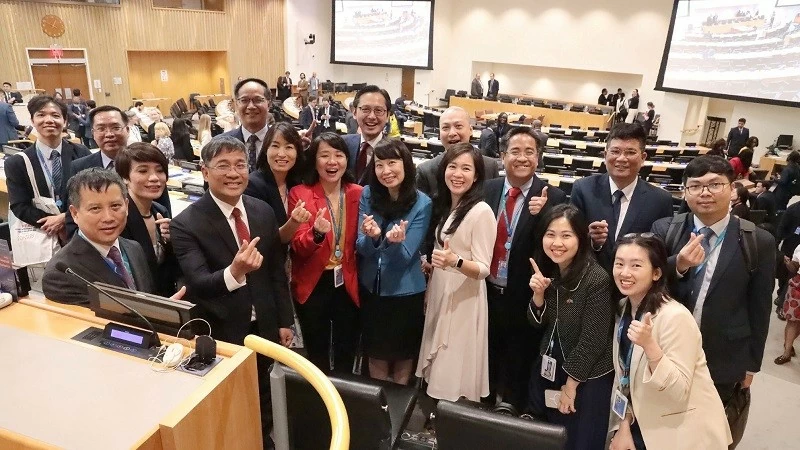 |
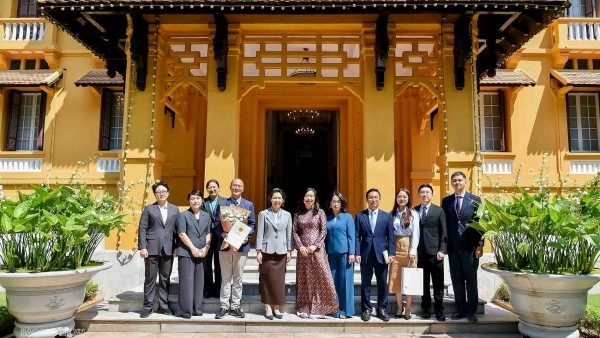
| Associate Professor Dr. Nguyen Thi Lan Anh, Deputy Director of the Diplomatic Academy, Vietnam's candidate, was elected as a Judge of the International Tribunal for the Law of the Sea (ITLOS) for the 2026–2035 term with the highest votes in the Asia-Pacific region. (Photo: Chu Van) |
How does the Ambassador assess the development of Vietnam's multilateral diplomacy in recent times, especially Vietnam's increasingly substantive initiatives and contributions at the United Nations, thereby contributing to the implementation of the 14th Party Congress's foreign policy?
The most evident development in Vietnam's multilateral diplomacy recently is our deeper participation and increasingly substantive contributions to the international community's common activities. Currently, Vietnam is increasingly trusted to take on greater responsibilities, while proactively proposing initiatives and contributing to building common frameworks and standards.
This can be seen through many recent milestones: From hosting the opening ceremony of the Hanoi Convention on Cybercrime to being re-elected to the Human Rights Council and, for the first time, having a Vietnamese expert elected as a Judge of the International Tribunal for the Law of the Sea (ITLOS), all with the highest votes in the Asia-Pacific region.
In 2026, Vietnam will also, for the first time, assume the role of President of the Review Conference of the Treaty on the Non-Proliferation of Nuclear Weapons (NPT). In a process of paramount importance to global security and strategy, which is very challenging, complex, and still has many differences, Vietnam's efforts to maintain dialogue, seek common ground, and promote cooperation have been recognized and highly appreciated by countries.
Most recently, the United Nations General Assembly adopted a resolution designating 2027-2036 as the International Decade for Culture for Sustainable Development, with 103 countries co-sponsoring. This is an initiative initiated by Vietnam and promoted by a core group over the past year at multilateral forums, from UNESCO to the United Nations General Assembly, and has received widespread support from countries.
This initiative is a concrete implementation of our Party and State's major policies on the role of culture and people in national development. From a national priority, Vietnam has, together with partners, developed it into a common United Nations cooperation framework for a decade, thereby contributing to elevating culture to a more deserving position in the global development agenda.
In my view, this is a vivid example showing that multilateral diplomacy is a practical bridge between Vietnam's development priorities and the world's common concerns, while also opening up space for us to access international knowledge, experience, and resources for national development.
There is a common point in the results and achievements recently achieved: Vietnam chooses issues that are linked to its interests, strengths, and values, while also addressing the common concerns of the international community. In this process, we value listening, dialogue, reconciling different concerns, and persistently seeking common denominators. I think this is one of the reasons why Vietnam's initiatives, proposals, and candidacies are increasingly receiving broad consensus and support.
On a broader scale, this is also a very specific and substantive way to implement the foreign policy of the 14th Party Congress. Multilateral diplomacy is increasingly closely aligned with the country's development process, spreading Vietnam's stories, values, and aspirations, contributing to meaningful contributions to the international community, while also opening up more cooperation opportunities to serve the country and its people practically.
Thank you, Ambassador!