





33rd Diplomatic Conference: Turning strength and position into resources for development
WVR - The 33rd Diplomatic Conference is the first of its kind following the 14th National Party Congress, as the nation enters a new phase of development. The conference theme highlights a significant shift: “Promoting the pioneering role and fulfilling the crucial, regular tasks of Vietnam's foreign affairs in the new era.”
Latest
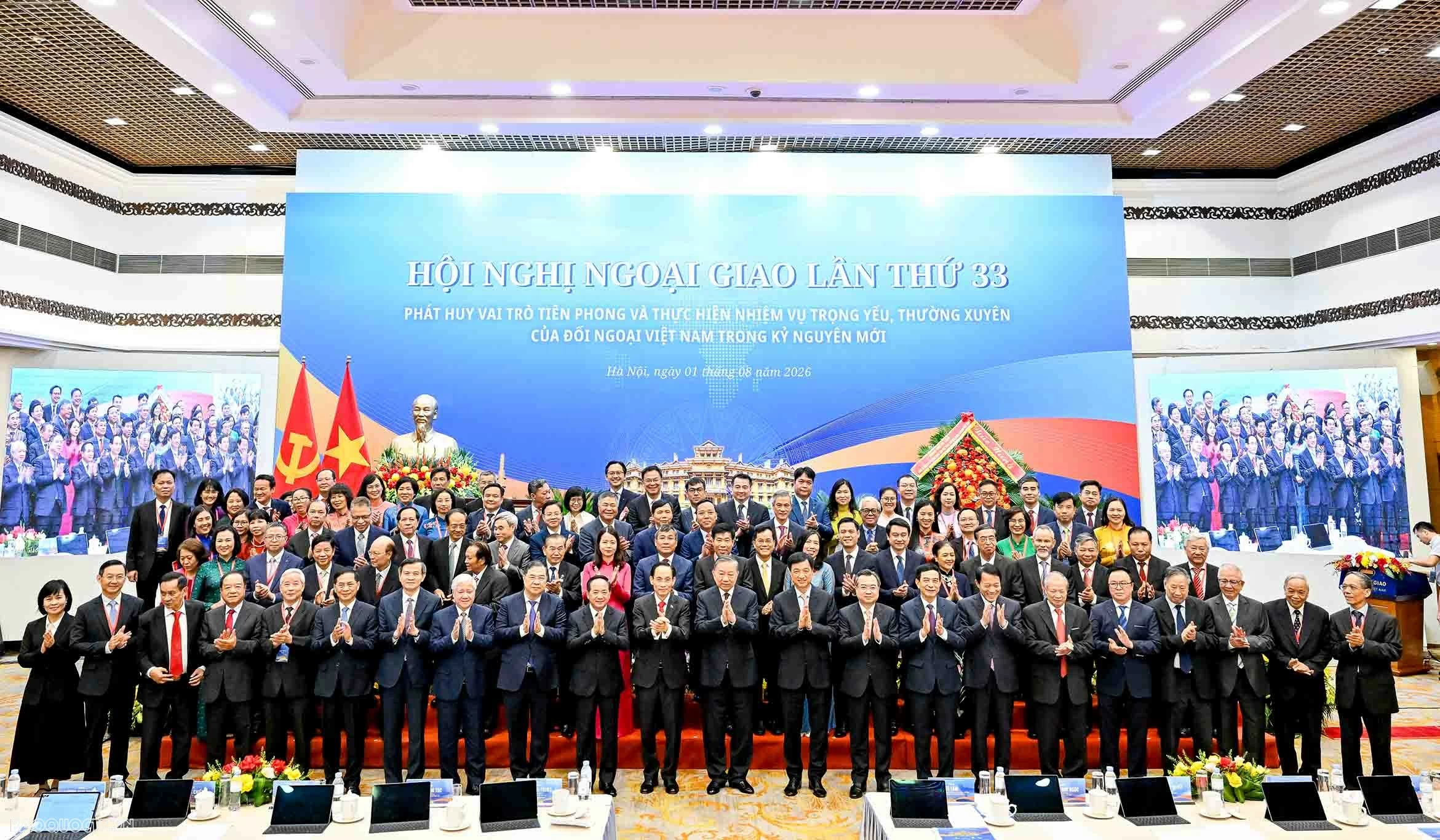 |
| General Secretary, President To Lam takes a photo with delegates attending the opening of the 33rd Diplomatic Conference. (Photo: Nguyen Hong) |
The 33rd Diplomatic Conference is also the first after the 14th National Party Congress, as the country enters a new phase of development. The conference theme highlights a significant shift: “Promoting the pioneering role and fulfilling the essential, regular tasks of Vietnam's foreign affairs in the new era.”
Foreign affairs in a New Mindset
The 32nd Diplomatic Conference (December 2023) focused on foundational tasks such as deepening relations with other countries, enhancing multilateral diplomacy, boosting economic diplomacy, and supporting citizens, localities, and businesses. These orientations laid the groundwork for foreign affairs to continue playing a pioneering role, contributing to maintaining a peaceful, stable environment and leveraging external resources for development. Nearly three years later, the 33rd Diplomatic Conference took place over a week (from August 1-7), with 18 sessions.
At the opening session, General Secretary, President To Lam emphasised: “The 33rd Diplomatic Conference must help the entire foreign affairs system clearly see what has been done, what is still slow; unify priority tasks, coordination methods, and the results needed after the Conference.
Today, diplomacy is not only measured by the number of visits, meetings, or signed documents. A partnership must be transformed into projects, investments, trade, science, technology, tourism, education; an agreement must be brought to life; an international opportunity must become a resource for national development.”
If the 32nd Diplomatic Conference focused on building a comprehensive, modern, and strong diplomacy, the 33rd sets higher demands: Leveraging existing positions and networks to achieve concrete results for the country. After 40 years of Renovation, Vietnam's position and strength have been increasingly elevated, with expanded foreign relations and deep international integration. Therefore, diplomacy must not only pave the way and maintain a peaceful, stable environment but also proactively connect new resources for development. If the 32nd Conference was about laying the foundation, the 33rd is about turning that foundation into tangible results.
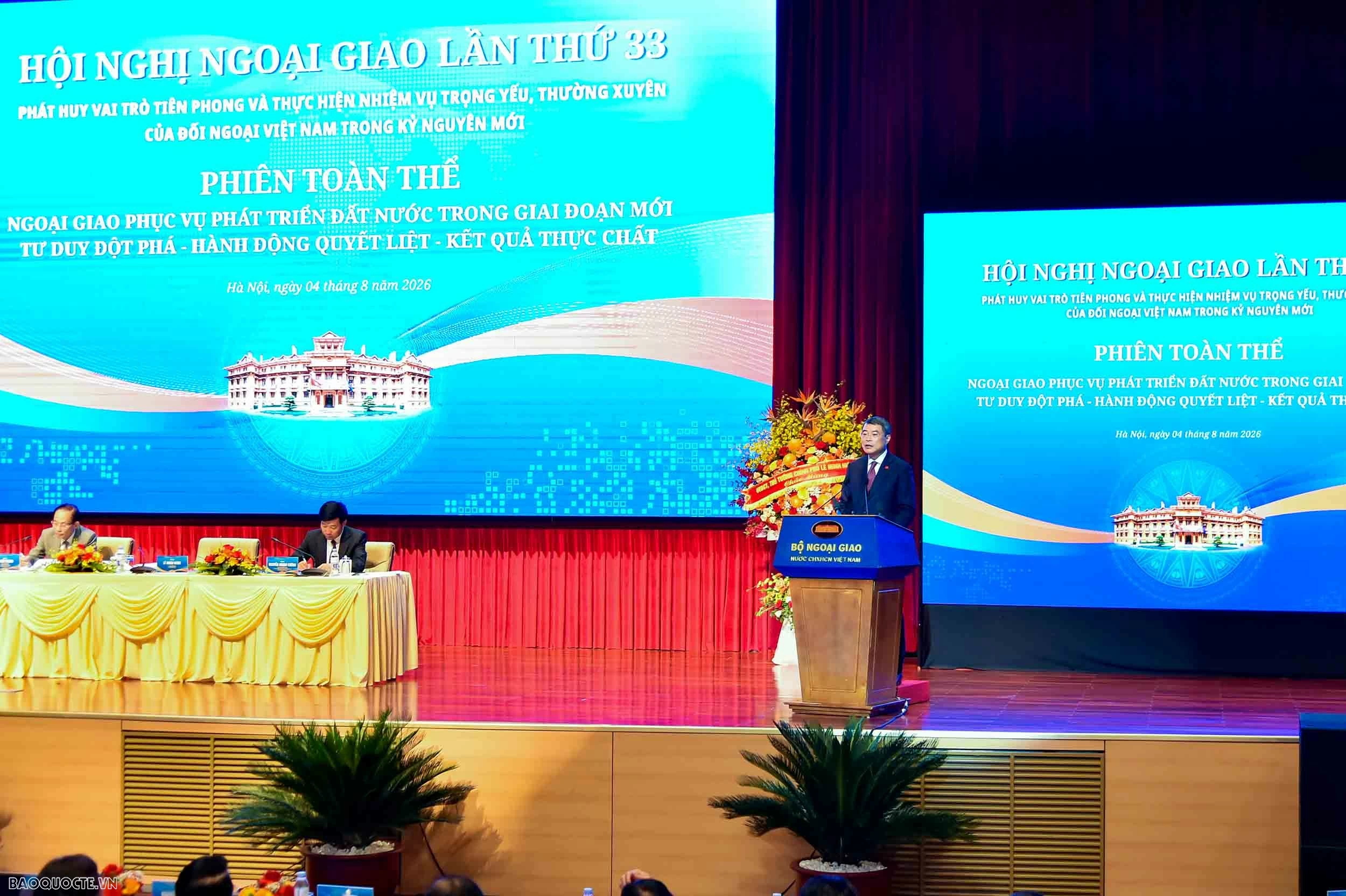 |
| Prime Minister Le Minh Hung delivers a directive at the Plenary Session. (Photo: Quang Hoa) |
Not just opening doors, but bringing opportunities home
One of the highlights of the 33rd Diplomatic Conference is the consistent emphasis on diplomacy serving national development throughout the sessions. The plenary session on August 4, themed “Diplomacy Serving National Development in the New Phase – Breakthrough Thinking, Decisive Action, Concrete Results,” focused on enhancing the role of foreign affairs in growth, renewing development models, and improving national self-reliance, resilience, and competitiveness.
This indicates that economic diplomacy faces new demands. It is not just about seeking markets, attracting investment, or promoting trade in the traditional sense, but also deeply engaging in areas that create new competitive capacities for the economy. Science and technology, innovation, digital transformation, green transition, energy, finance, data, knowledge, and high-quality human resources are becoming new cooperation spaces.
Diplomacy must help Vietnam better access these resources, while also helping international partners understand the needs, potentials, and areas where Vietnam can cooperate. This is the point that makes the difference in thinking.
In his directive at the session, Prime Minister Le Minh Hung clearly stated: “A high-level visit, a bilateral meeting, or a cooperation agreement will not be the end point of foreign affairs activities. Its value lies in what is created afterward: A project implemented, a market expanded, a technology transferred, a supply chain connected, a locality gaining more resources, or a Vietnamese enterprise gaining more opportunities to enter the international market.”
The figures at the 33rd Diplomatic Conference clearly show this movement. During 2024-2025, Vietnamese Representative Missions abroad have conducted over 1,200 activities promoting trade, investment, and tourism; supported over 550 local connection activities, and contributed to the signing of approximately 230 international cooperation agreements.
The noteworthy aspect is not just the scale, but how diplomacy is increasingly measured by concrete effectiveness: a relationship can open up a market, a business trip can create a project, a well-implemented agreement can bring jobs, technology, and capital. This is how the potential and strength of foreign affairs are transformed into resources for development.
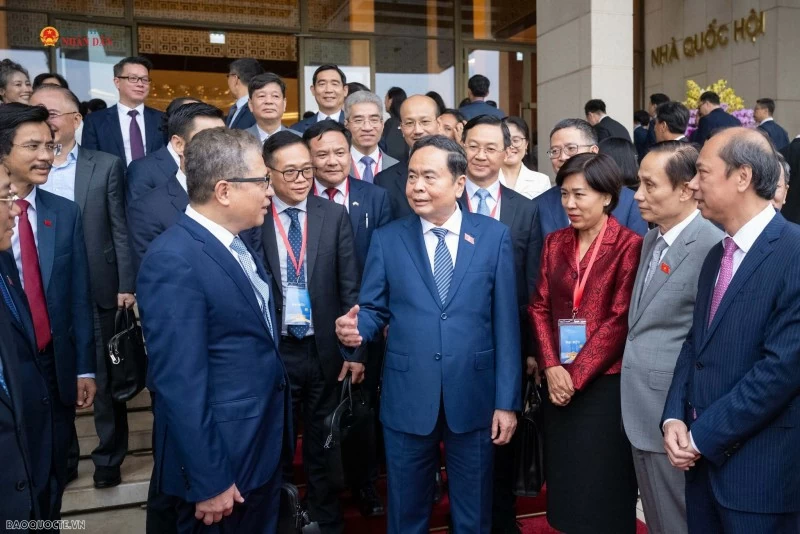 |
| National Assembly Chairman Tran Thanh Man works with the delegation of the Ministry of Foreign Affairs and Heads of Vietnamese Representative Missions abroad on the occasion of attending the 33rd Diplomatic Conference. (Photo: Chu Van) |
Localities and enterprises enter the diplomatic space
Viewing the 33rd Diplomatic Conference solely as an event for the Foreign Ministry would not capture the full scope of the event. Within the conference framework, the 22nd National Conference on Local External Affairs, themed “Enhancing Local External Affairs, Effectively Mobilizing International Resources for Development,” saw the participation of over 500 delegates from central, local, foreign affairs agencies, and Vietnamese Representative Missions abroad.
This demonstrates that international integration in the new phase is not just a central government matter. Each locality needs to proactively seek development space, from expanding markets and attracting investment to accessing technology, knowledge, and human resources. When clearly identifying what they have, need, and can cooperate on, local foreign affairs will no longer be just supportive activities but become part of the locality's development strategy.
Within the 33rd Diplomatic Conference, the session “Diplomacy Supporting the Business Community” created a connection space between foreign affairs agencies and the business community. This is a practical approach, as businesses directly bring Vietnamese goods, services, capital, and technology to the world, while Vietnamese Representative Missions abroad have advantages in information, relationships, and market understanding. Diplomacy aiming to serve development needs to closely accompany businesses, while businesses aiming to expand need a strong enough diplomacy to support them.
A noticeable point at the 33rd Diplomatic Conference is the attention of high-level leaders and the participation of central, local agencies, and businesses. General Secretary, President To Lam attended and delivered a directive at the opening session. Prime Minister Le Minh Hung attended and directed the plenary session on diplomacy serving development.
National Assembly Chairman Tran Thanh Man held a closed meeting with the Ministry of Foreign Affairs leadership and Heads of Vietnamese Representative Missions abroad. Standing Member of the Secretariat Tran Cam Tu attended and spoke at the plenary session on Party and people's diplomacy. This attention shows that foreign affairs are being viewed not as a standalone field but as an integral part of the country's major objectives.
Notably, the 33rd Diplomatic Conference included a session between the Ministry of National Defense, Ministry of Public Security, and Ministry of Foreign Affairs, along with sessions on Party diplomacy, people-to-people diplomacy, science and technology, diplomacy serving development, Party building, and sector building.
In the context of increasing international competition across fields such as technology, trade, supply chains, energy, data, and human resources, foreign affairs require close coordination among forces, levels, and sectors. This also highlights the scope of the 33rd Diplomatic Conference: Not only discussing foreign affairs but also connecting fields, entities, and resources both domestically and internationally.
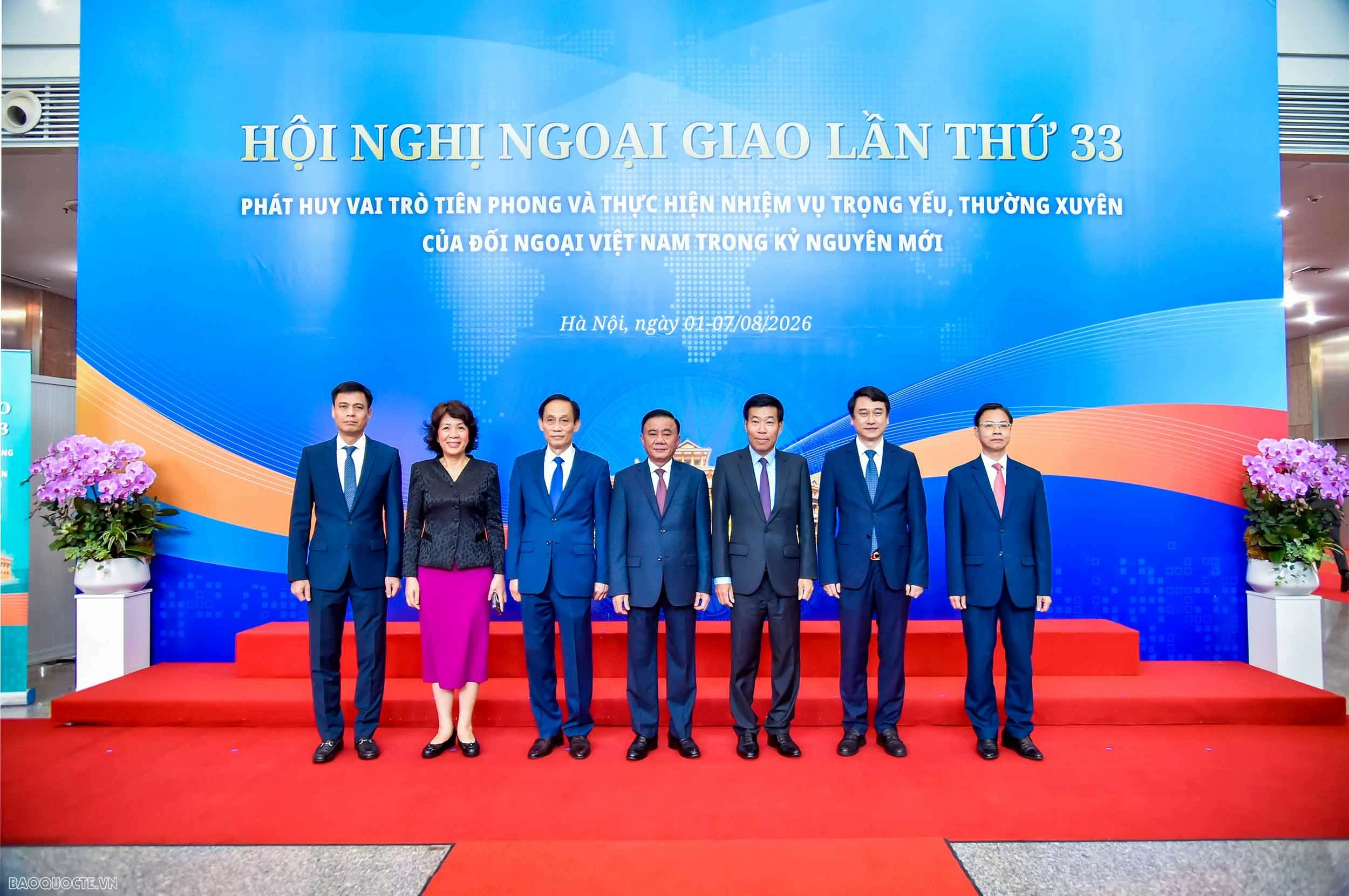 |
| Standing Member of the Secretariat Tran Cam Tu takes a photo with the Ministry of Foreign Affairs leadership. (Photo: Chu Van) |
From position to resources, from policy to product
Perhaps the most notable message after the 33rd Diplomatic Conference lies in the word “substantive”. On August 7, at the closing session, Politburo Member, Minister of Foreign Affairs Le Hoai Trung called for promptly concretizing the Conference results into tasks, products, and clear timelines. This is also a test for the Foreign Ministry after the conference. A successful conference is not only evaluated by the number of sessions, presentations, or agreed-upon assessments. The ultimate value must lie in the movements following the conference.
The 33rd Diplomatic Conference is seen as a transitional milestone: From the achievements of the previous phase to a higher new demand. In the new era, this is the important measure of pioneering diplomacy: “Looking one step further, acting one step faster, and most importantly, turning each relationship into an opportunity, each opportunity into a resource, and each resource into a concrete result for national development.”


