



Vietnam demonstrates commitments to integration in deeds, not just words: Ambassador of Singapore
WVR - Ambassador of Singapore to Vietnam Jaya Ratnam emphasized that Singapore and Vietnam share the ambitions of ASEAN, working hard to make ASEAN a more seamless and competitive single market to attract businesses and investments.
Latest
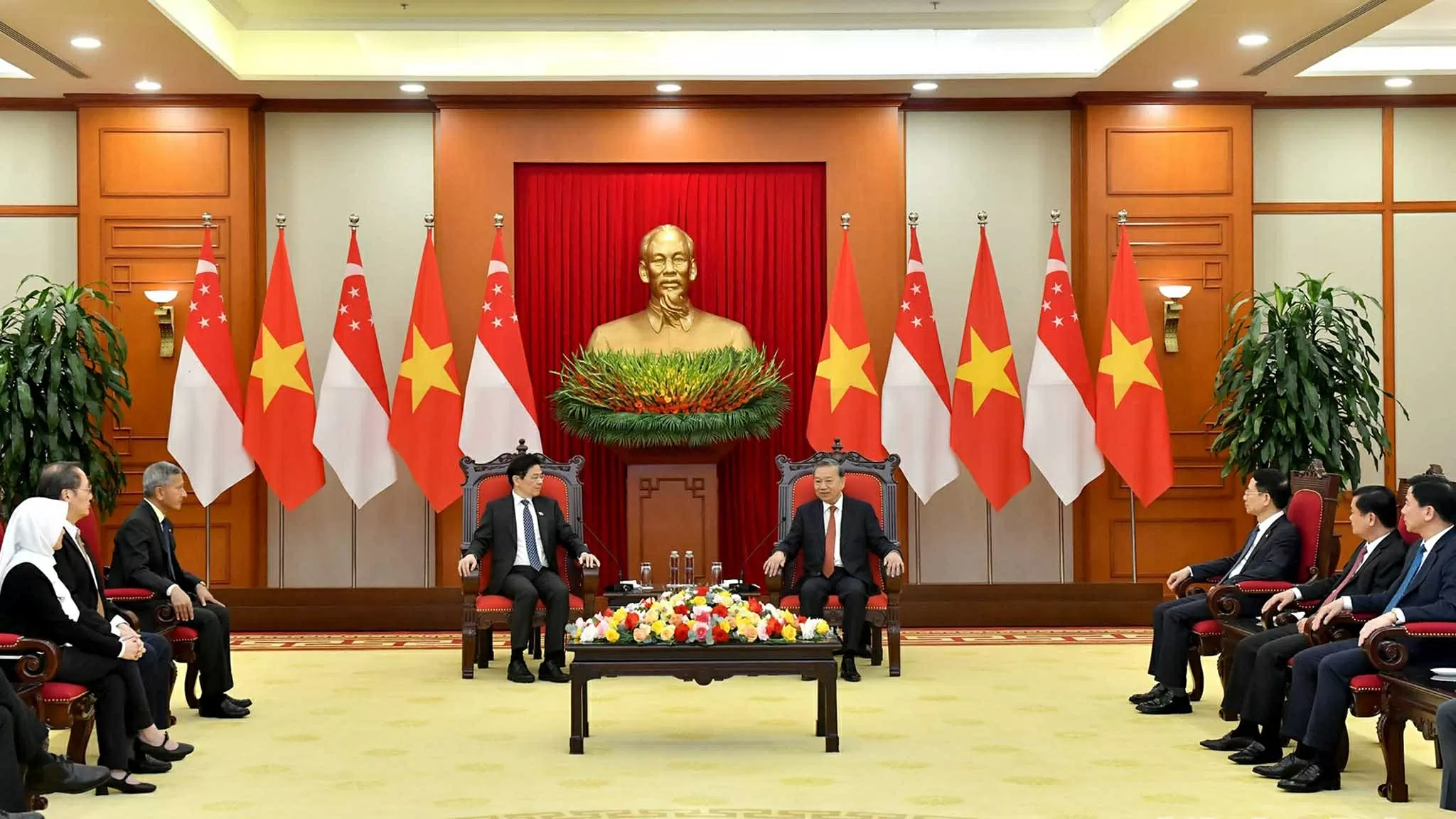 |
| General Secretary To Lam received Prime Minister of Singapore and Secretary-General of the People's Action Party (PAP) Lawrence Wong during his official visit to Vietnam on March 26. (Source: Nhan Dan) |
Becoming an official member of ASEAN is a significant milestone in Vietnam’s regional and international integration journey. How do you assess Vietnam’s contributions to ASEAN’s development over the past 30 years?
Today, we do more than mark another year of Vietnam’s membership of ASEAN. We commemorate over three decades of growth, friendship and peace. Vietnam’s entry into ASEAN fundamentally transformed Vietnam, and united Southeast Asia.
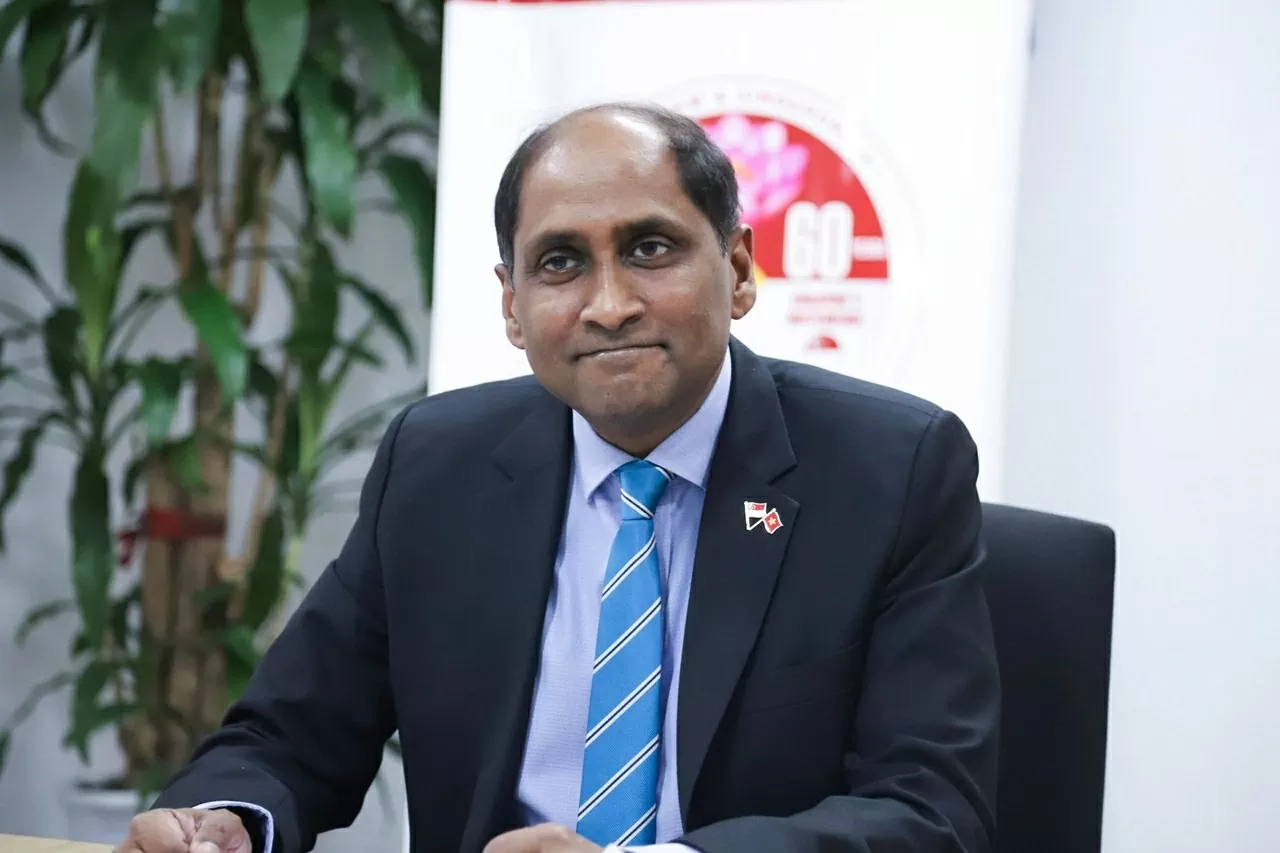 |
| Ambassador of Singapore to Viet Nam Jaya Ratnam. (Photo: Anh Duc) |
In these 30 years, we have witnessed not just the evolution of a ASEAN as an organization, but the transformation of an entire nation and the blossoming of a bilateral relationship between Singapore and Vietnam that continues to flourish.
Vietnam has played a key and principled role to ensure ASEAN Centrality. ASEAN has been given top most priority in Viet Nam’s foreign policy and, proactively pushed ASEAN to take a leading role to deal with pressing regional and global issues. Viet Nam has consistently demonstrated its commitment to regional integration in deeds, not just words. Let me give you three recent examples.
First, Vietnam’s leadership role was especially evident during Vietnam's ASEAN chairmanship in 2020, which established important mechanisms to help our region cope with the COVID-19 crisis collectively.
Second, like COVID-19, climate change is another issue that can only be tackled through our collective efforts. Viet Nam and Singapore have made our position clear: we remain fully committed to effective climate action. We have been collaborating closely on developing the ASEAN Power Grid, which will help our region to transition faster to green energy, draw in new investments, create better jobs, and strengthen our collective energy security.
Third, Vietnam has been a stalwart defender of a rules-based international order and international law at a time when the global order has come under severe stress. Singapore and Vietnam are both members of the Comprehensive and Progressive Agreement for Trans-Pacific Partnership and Regional Comprehensive Economic Partnership and are the only two ASEAN countries with a free trade agreement with the European Union.
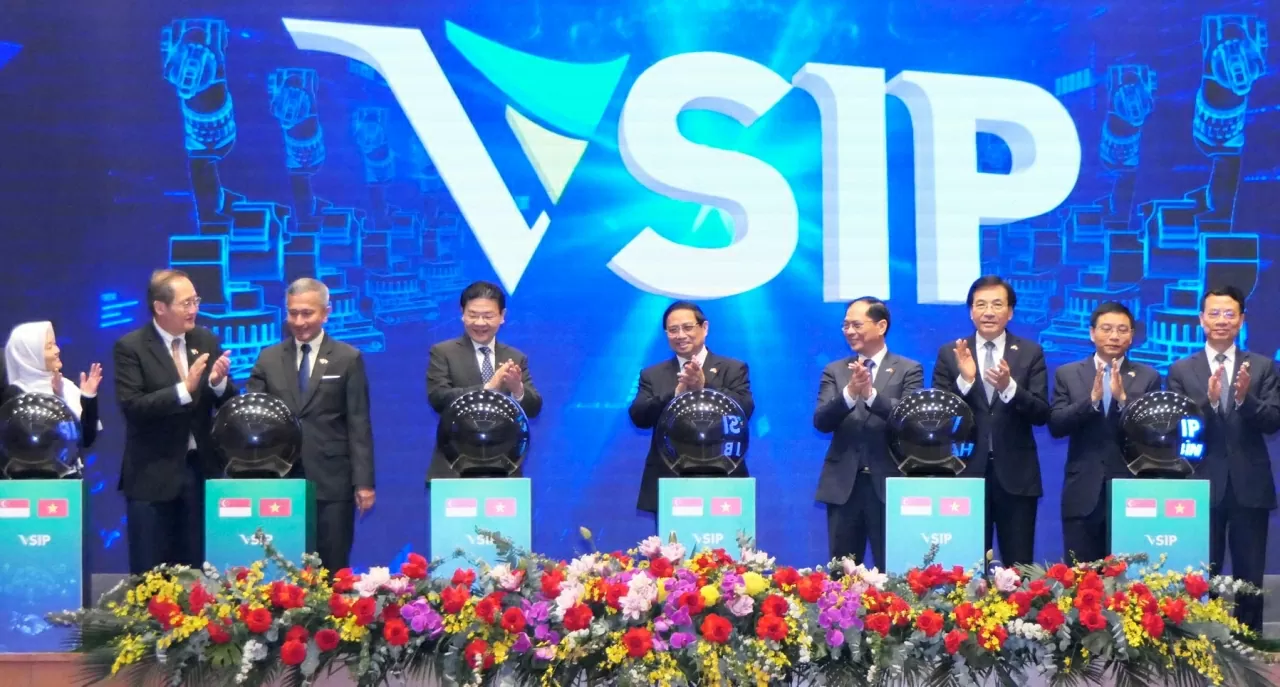 |
| Prime Minister Pham Minh Chinh and Prime Minister of Singapore Lawrence Wong attended the groundbreaking ceremony for the VSIP Thai Binh Industrial Park project on March 26. (Source: VNA) |
2025 marks a key transition for ASEAN with the new milestone of ASEAN Community Vision 2045. In your opinion, what are Vietnam’s role and position in this important phase of ASEAN’s development?
ASEAN is not just a regional organisation - it is a community that is still evolving. Like Vietnam, we do not take what ASEAN have achieved thus far for granted. In particular, the next decade will be critical.
So as we commemorate Vietnam’s 30th anniversary of joining ASEAN, this is time for reflection – to look back on how far we have come, and importantly to chart our way forward in a rapidly changing world.
All of us in ASEAN are facing a very difficult and uncertain external environment. But we have faced and overcome adversity before. As long as we stand together, we can face the future with confidence.
When Vietnam joined ASEAN in 1995 bringing our region together for first time in our long history, our leaders knew we were better off facing challenges together rather than alone.
As S Rajaratnam, Singapore’s first Foreign Minister, put it, if ASEAN does not hang together, we will hang separately. Singapore Prime Minister Lawrence Wong highlighted that individually, each ASEAN country may be limited in scale. But together we have considerable weight.
ASEAN’s economic integration has come a long way. By 2030, we are projected to be the fourth largest global economy. How can we achieve this? The key lies in closer integration amongst our ASEAN economies. The story of ASEAN over the last 30 years is progressive integration, investment, and bringing down trading barriers.
Singapore and Vietnam share these ambitions for ASEAN. We are working hard to make ASEAN a more seamless and competitive single market – one that attracts businesses and investments looking for alternatives in a more fragmented global economy.
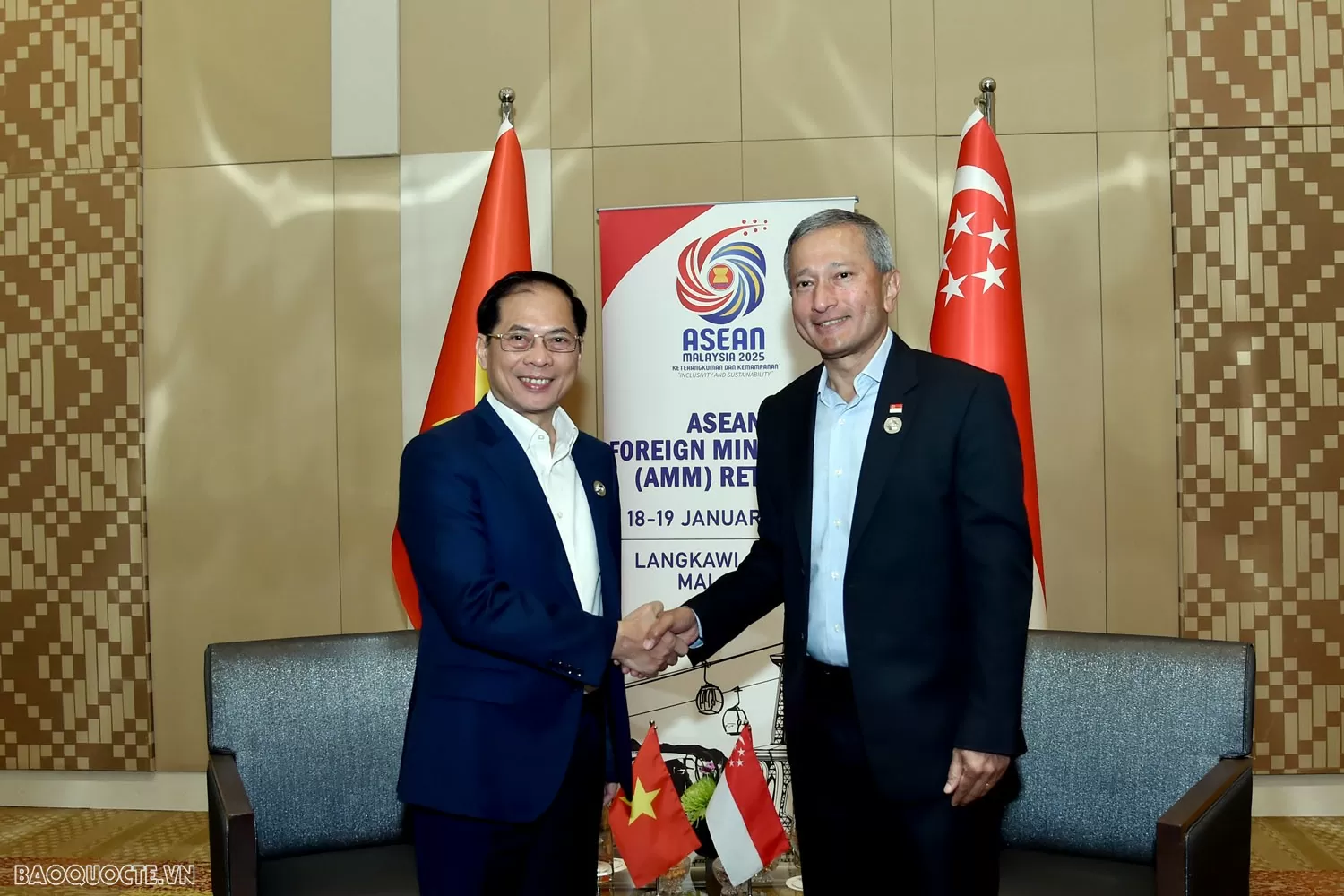 |
| On January 19, Deputy Prime Minister and Minister of Foreign Affairs Bui Thanh Sơn met with Singaporean Minister for Foreign Affairs Vivian Balakrishnanin Malaysia, on the sidelines of the ASEAN Foreign Ministers’ Retreat. (Photo: Quang Hoa) |
Looking ahead, how do you foresee the Comprehensive Strategic Partnership between Singapore and Vietnam contributing to the realization of the ASEAN Community Vision 2045?
As we move forward, our bilateral partnership with Viet Nam is poised to grow even stronger. In just a few weeks, Singapore will celebrate SG60, our 60th year of independence. Vietnam celebrates its own 80th Independence Day soon after. For Singapore and Vietnam, the imperative to work together has never been stronger.
Against such a backdrop, our relationship was elevated to a Comprehensive Strategic Partnership (CSP) earlier this year. Our CSP is Singapore’s first with an ASEAN country and one of only three that Singapore has with countries worldwide, which reflects the importance we place on our bilateral relationship.
Under General Secretary To Lam’s leadership, Vietnam is embarking on a “new era of ascendancy, with an emphasis on sustainable development, green growth, and digital transformation. Our CSP sets out how we will work together to leverage on our respective complementarity and synergy in strategic areas like defence and security, combatting transnational crime, as well as deepen cooperation in emerging areas including renewable energy, carbon credits, subsea cable connectivity, food security and the digital economy amongst others.
All this aligns not just with Singapore’s own priorities but also ASEAN’s own aspirations. From an ASEAN perspective, these collaborations envisaged under our CSP could have relevant lessons for how to do cross-border collaboration that provides competitive advantage by pooling our complementary strengths.
Already, we are working on several pilot projects on carbon credits, renewable energy as well the digital economy amongst others that can serve as pathfinders for future ASEAN collaborations.
Thanks the Ambassador!