


UNESCO Extends Congratulations on the Politburo’s Issuance of Resolution No. 80-NQ/TW on Cultural Development
WVR - According to UNESCO, Resolution 80 is a particularly significant document, reflecting a shift in development thinking, where culture is not merely a supplementary field but one of the four equal pillars of sustainable development, alongside the economy, society, and the environment.
Latest
As the international community enters the Decade of Culture for Sustainable Development (2026–2035), the United Nations Educational, Scientific and Cultural Organization (UNESCO) acknowledges and congratulates the Politburo of the Communist Party of Vietnam on the issuance of Resolution No. 80-NQ/TW on cultural development.
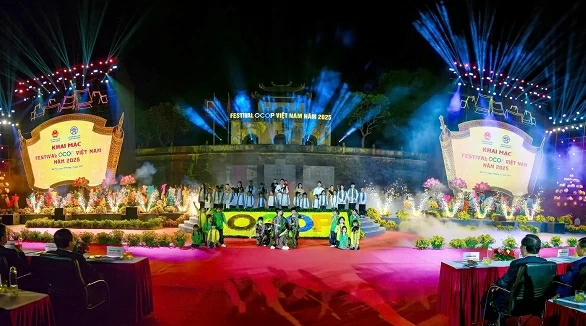 |
| According to UNESCO, by emphasizing humanistic values, centering on people, and preserving cultural identity, Vietnam is promoting a development approach that both harnesses internal strengths and actively integrates internationally. |
This is a particularly significant document, reflecting a shift in development thinking, where culture is not merely a supplementary field but one of the four equal pillars of sustainable development, alongside the economy, society, and the environment.
This orientation of Vietnam aligns with UNESCO's common vision and efforts to make culture an independent Sustainable Development Goal in the global agenda post-2030.
According to UNESCO, Resolution 80 was issued just before the 14th National Congress of the Party – a crucial congress shaping the national development vision to 2045 and the socio-economic development strategy to 2030.
This demonstrates that international commitments have been clearly integrated into the strategic national policy-making process. Resolution 80 outlines a policy roadmap for structural innovation in the cultural sector, aiming to mobilize social resources, promote the creative economy, and protect cultural diversity.
This document continues Vietnam's long-standing tradition of valuing culture, while also providing a policy framework to address the challenges and opportunities of the digital era and the volatile global context.
In the context of increasing geopolitical instability, the need to enhance dialogue and connection between cultures becomes more urgent. UNESCO acknowledges Vietnam's identification of culture as a “regulatory system” for rapid and sustainable development, thereby contributing practically to the collective effort to strengthen global peace.
By emphasizing humanistic values, centering on people, and preserving cultural identity, Vietnam is promoting a development approach that both harnesses internal strengths and actively integrates internationally.
UNESCO reaffirms its commitment to continue cooperating with Vietnam in realizing this vision, while also affirming the role of culture as a key driver in promoting equity, prosperity, and social cohesion on a global scale.