






National Assembly Election 2026: Ballots and responsibility for the nation's future
WVR - Each ballot is a choice for the nation's future. Voting is not only a right but also a civic responsibility. When voters thoroughly research candidate information and vote with careful consideration, they contribute to shaping the quality of the National Assembly and People's Councils' activities for the next five years.
Latest
On March 15, 2026, voters nationwide will cast their ballots to elect deputies for the 16th National Assembly and People's Councils at all levels for the 2026–2031 term. Each voter's ballot not only reflects the people's sovereignty but also plays a decisive role in determining the quality of the elected bodies' activities in the upcoming term.
Ahead of the election, Deputy Nguyen Thi Viet Nga, Deputy Head of the Hai Phong City National Assembly Delegation, shared her views on the requirements for National Assembly deputies in the new development phase of the country.
 |
| Deputy Nguyen Thi Viet Nga. (Source: National Assembly) |
A time of special significance
The election of deputies for the 16th National Assembly and People's Councils at all levels for the 2026–2031 term takes place in a context that is particularly significant in terms of politics, institutions, and the country's development orientation. This election is organized right after the success of the 14th National Congress of the Party.
Amidst the nationwide implementation of strategic resolutions on scientific and technological development, innovation, digital transformation, international integration, institutional improvement, and private economic development, these major orientations provide a clear ideological foundation and action program for the country's next development phase.
Additionally, the election occurs as the state apparatus is being streamlined for greater efficiency and effectiveness. The merger, administrative boundary adjustments, and reform of local government models are being implemented in many places. These changes require the elected deputies to have a new governance vision and the ability to adapt to a rapidly evolving institutional environment.
Another important factor is that the country is entering a new development phase with aspirations for higher and better quality growth, based on innovation and high-quality human resources.
This necessitates selecting deputies with the capability to participate in institutional building, power oversight, and making crucial national decisions.
Conversely, the new development context also creates favorable conditions for the election process. The political awareness of the people is increasingly heightened; the demand for transparency, accountability, and the effectiveness of elected bodies is becoming clearer. The development of digital technology also facilitates the widespread and transparent dissemination of candidate information.
It can be said that this is a favorable time to continue improving the quality of deputies, thereby enhancing the quality of the National Assembly and People's Councils' activities at all levels.
Raising the standard of deputies
One notable aspect of this election is the clear and higher requirement for the quality of deputies. In the context of the country transitioning strongly to a development model based on science and technology, innovation, and the digital economy, deputies need not only passion but also the ability to analyze policies, legal understanding, and the capacity to engage in the legislative process with a modern mindset.
Alongside this, the process of negotiation and candidate introduction is increasingly conducted rigorously and transparently, with the participation and supervision of the Vietnam Fatherland Front Central Committee and voters. Publicizing candidates' action programs and increasing voter interactions before the election are significant steps to ensure genuine democracy in the selection process.
| “Enhancing the quality of deputies, strengthening voter trust, and building an active, people-oriented, and effective National Assembly is a major expectation for the election of deputies for the 16th National Assembly and People's Councils at all levels for the 2026–2031 term.” |
To improve the quality of deputies, I believe several important factors should be emphasized. Firstly, ensure a reasonable structure without being mechanical. Gender, age, or regional structure is necessary to ensure broad representation; however, the decisive factor must be the candidate's capability and reputation.
Secondly, prioritize practical criteria. Deputies should not only understand the law but also social life; they should not only have the ability to speak but also the capacity to act and pursue issues to the end.
Thirdly, enhance early and remote screening. The introduction and negotiation process should be conducted genuinely, avoiding formality, ensuring that those included in the candidate list are truly deserving and capable of contributing to the activities of the elected bodies.
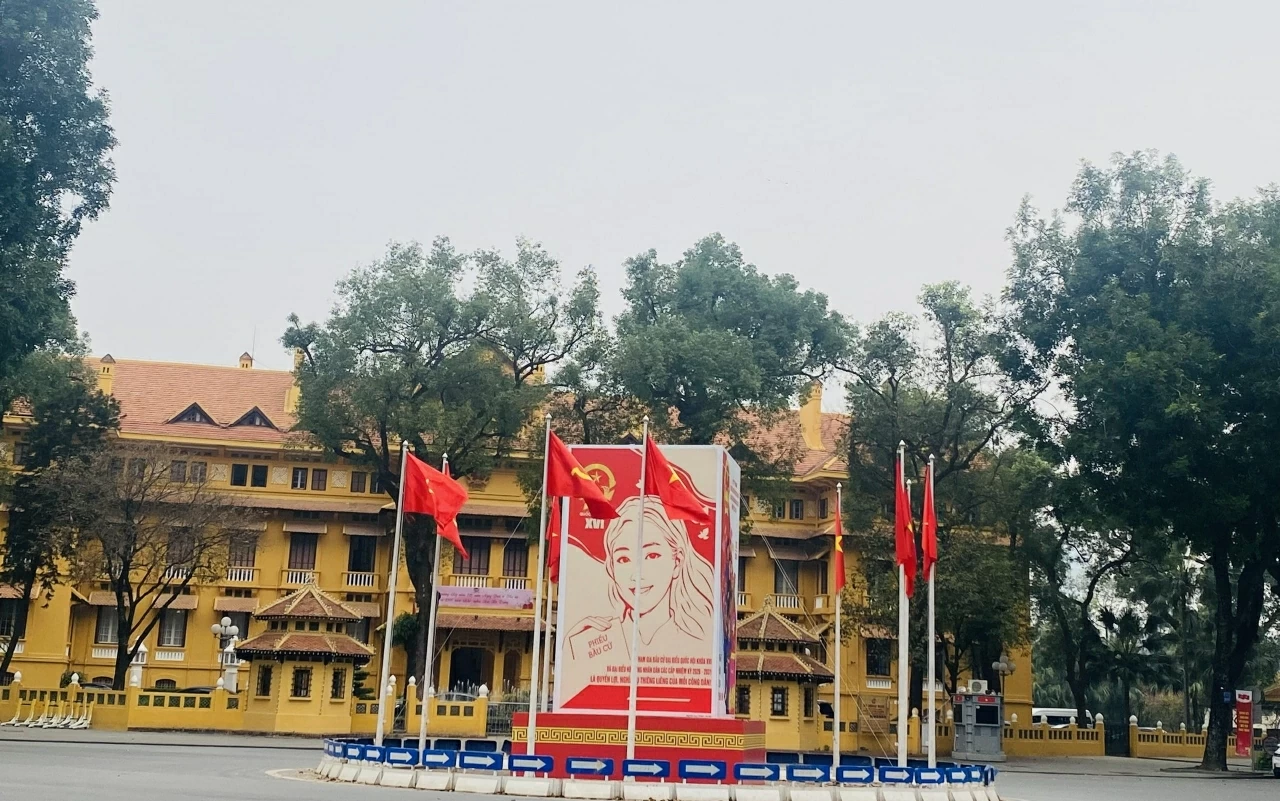 |
| The election of deputies for the 16th National Assembly and People's Councils at all levels for the 2026–2031 term takes place in a context that is particularly significant in terms of politics, institutions, and the country's development orientation. (Photo: Nguyet Anh) |
Bravery, responsibility, and connection with voters
For deputies to truly represent the people, I believe three important factors are essential: bravery, responsibility, and connection with voters.
Bravery is first and foremost about daring to speak, debate, and defend viewpoints for the common good. Parliamentary activities require frankness and a high sense of responsibility. If deputies only make general statements or avoid difficult issues, their representative role will become blurred.
Responsibility is demonstrated by pursuing voters' petitions to the end. Deputies should not just raise issues and leave them but need to oversee the resolution process and return to voters to inform them of the results.
Connection with voters is also particularly important. Deputies need to regularly interact and listen to the people, not only during scheduled meetings but also in everyday life. When deputies truly live in the rhythm of social life, their voice in parliament will accurately reflect the people's sentiments and aspirations.
Moreover, the operational mechanism of deputies needs to continue being improved to enhance accountability to voters, ensure transparency in activities, and allow voters to evaluate deputies' performance.
From a personal quality perspective, I believe four core values should be prioritized. First is integrity – a prerequisite for a people's representative. Deputies must be clean, not influenced by personal or group interests.
Next is capability. Deputies need legal knowledge, policy analysis ability, debating skills, and the ability to work in a professional parliamentary environment. Third is dedication. Deputies must have the aspiration to contribute and a spirit of serving society, not viewing this as merely an honorary position. Finally, they must be close to the people, know how to listen, understand, and honestly convey the people's voice.
When these qualities are present, deputies will not only fulfill their duties as prescribed but also contribute to building sustainable trust in society.
Expectations for the new term National Assembly
As the country enters a new development phase, the 16th National Assembly will bear a significant yet honorable responsibility. First, the National Assembly needs to continue playing a pivotal role in perfecting the development institution, creating a legal framework that is open, stable, yet flexible enough to meet the demands of an economy rapidly transitioning to a model based on science, technology, innovation, and the digital economy.
Laws should not only manage but also become a driving force for development, unlocking resources and inspiring the entire society's aspiration to rise. Alongside this, the new term National Assembly needs to continue enhancing the quality of oversight activities in a more substantive and effective manner, with clear accountability. In a context where public trust is invaluable, each decision of the National Assembly should be considered from the long-term national interest and the specific life of the people.
Another important expectation is that the National Assembly will become increasingly closer to the people, listen more to the people, and act more decisively for the people. Promoting the application of digital technology and digital transformation in the National Assembly's activities not only enhances work efficiency but also expands channels for receiving public opinions, ensuring that voters' voices truly influence policy.
Each ballot is a choice for the nation's future. Voting is not only a right but also a civic responsibility. When voters thoroughly research candidate information and vote with careful consideration, it is also when we contribute to shaping the quality of the National Assembly and People's Councils' activities for the next five years.
I believe that, with a strong political tradition and increasingly high civic awareness, Vietnamese voters will choose truly deserving deputies – those with enough heart, vision, and bravery to accompany the country into a new development phase.