







ASEAN holds Special Meeting on Middle East situation, calls for peaceful solutions
WVR - On March 13, ASEAN Foreign Ministers held a special online meeting to discuss recent tensions in the Middle East and to coordinate responses to potential impacts on the ASEAN region.
Latest
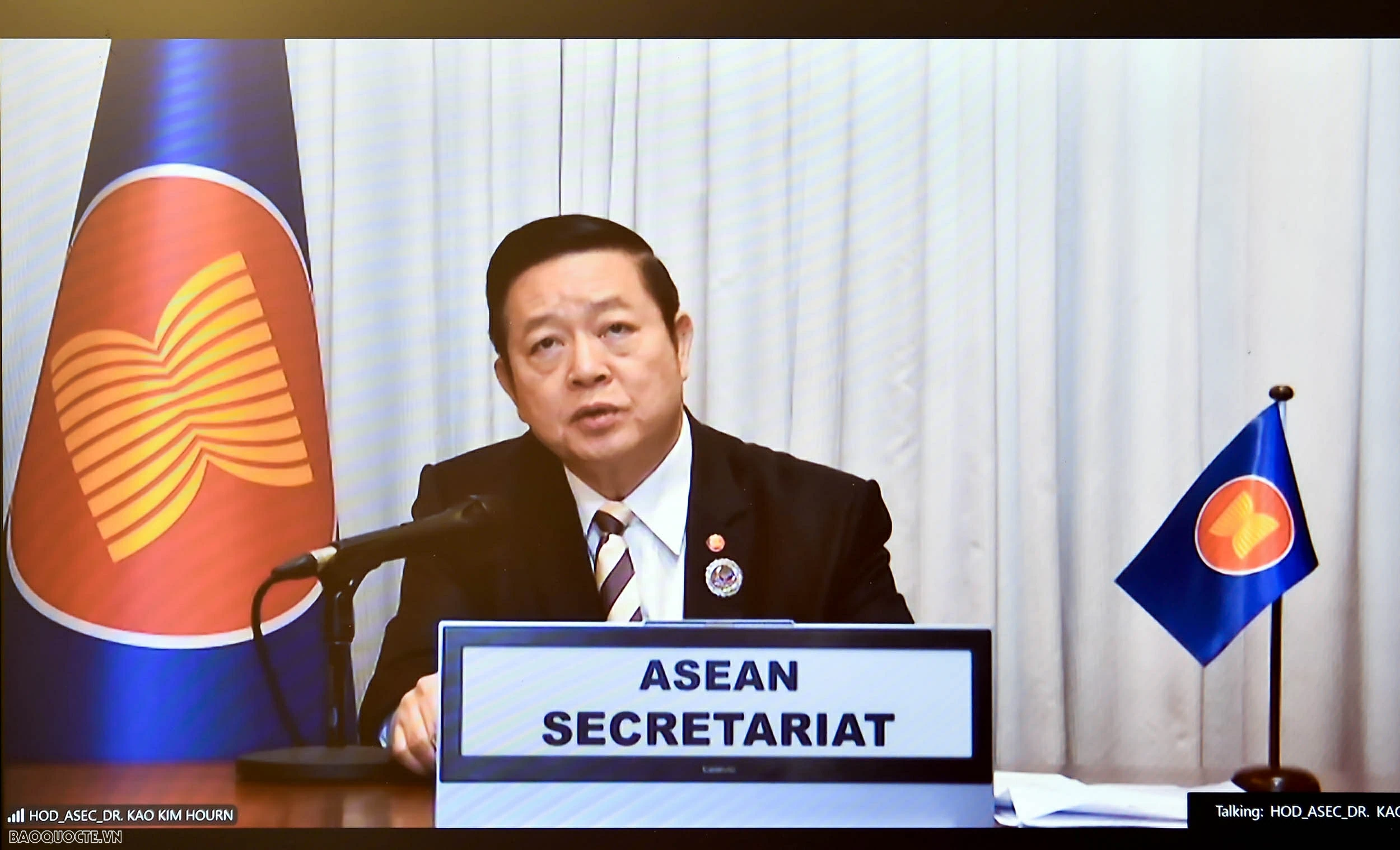 |
| ASEAN Secretary-General Kao Kim Hourn speaks at the meeting. (Photo: Quang Hoa) |
During the meeting, the ministers expressed deep concern over the escalating conflict in the Middle East following attacks by Israel and the United States on Iran on February 28, 2026, as well as Israel's attack on Lebanon.
These developments have led to retaliatory attacks by Iran on several countries in the region, including Bahrain, Jordan, Iraq, Kuwait, Oman, Qatar, Saudi Arabia, Syria, and the United Arab Emirates.
According to the ministers, this escalating cycle not only increases tensions in the Middle East but also poses a serious threat to civilian safety and negatively impacts peace and stability in the region and globally.
In response, ASEAN Foreign Ministers called on all parties involved to strictly adhere to international law, particularly the United Nations and its Charter. The meeting emphasized the need to immediately cease hostile actions and urged all parties to exercise maximum restraint to avoid steps that could exacerbate the situation. The ministers affirmed that dialogue and diplomacy should remain the primary means to address disagreements and work towards peaceful, sustainable solutions.
The meeting also reaffirmed the fundamental principle in international relations of resolving disputes through peaceful means, respecting the sovereignty and territorial integrity of nations in accordance with international law. Additionally, the ministers stressed the obligation to protect civilians and civilian infrastructure in armed conflicts, in compliance with international law and relevant United Nations Security Council resolutions.
Another important topic discussed by the ministers was the safety and welfare of ASEAN citizens living and working in conflict-affected areas. Member countries reaffirmed their commitment to closely coordinate to support and protect citizens in emergencies, based on ASEAN's consular cooperation mechanisms.
This includes guidelines for consular assistance by ASEAN missions in third countries for citizens of other member states and guidelines for providing emergency assistance in crisis situations. The ministers also acknowledged the effective support and coordination among member countries in protecting citizens in recent times.
Beyond security and humanitarian aspects, the meeting also focused on the impact of the Middle East conflict on the global economy. The ministers noted that instability in this region could significantly affect the global energy market as well as international maritime and aviation routes.
In this context, ASEAN emphasized the importance of maintaining a stable, seamless, and reliable global energy supply chain and ensuring the operation of maritime trade routes to minimize disruptions to the flow of energy and essential goods, including food and commodities.
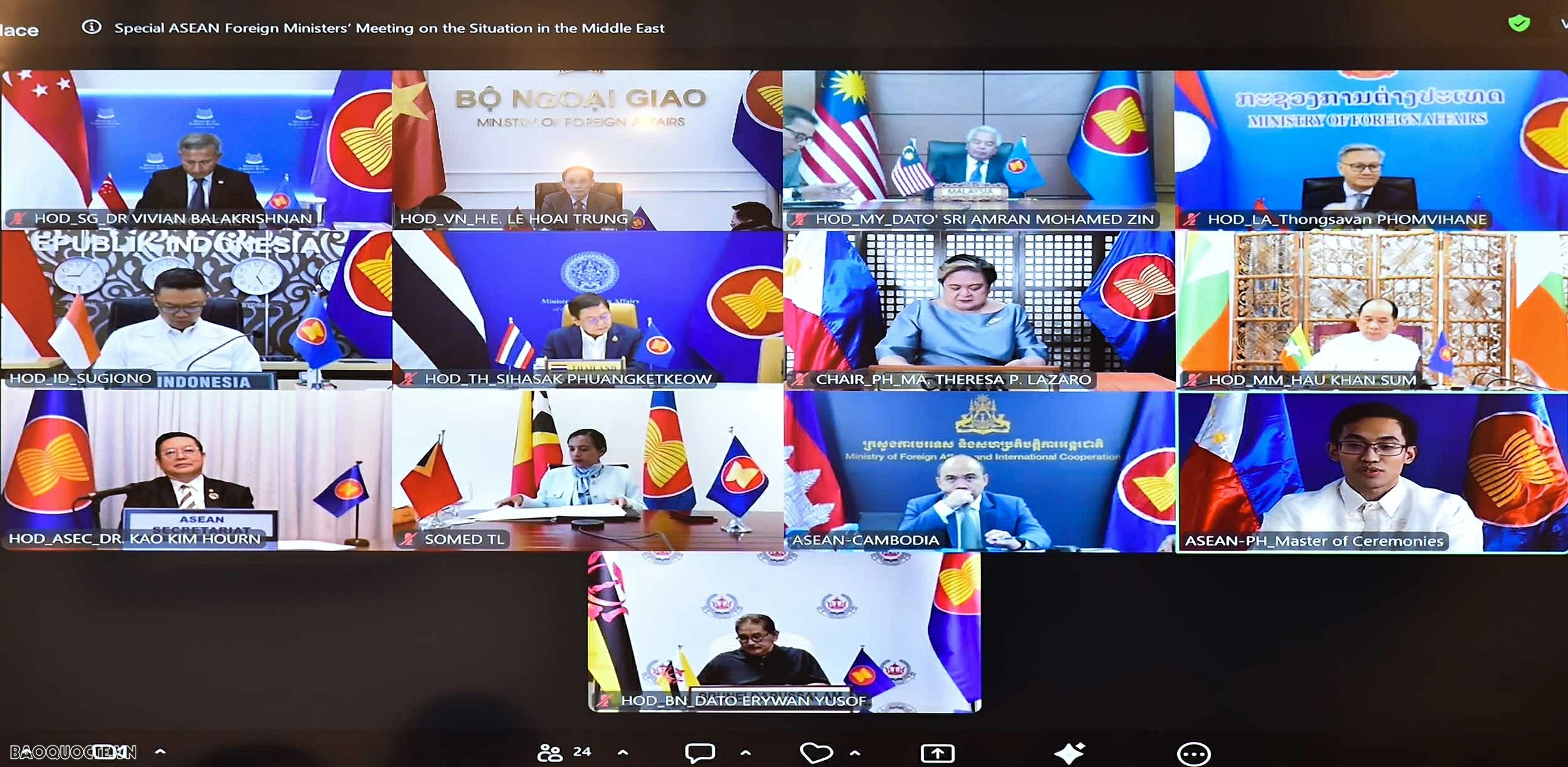 |
| ASEAN Foreign Ministers participate in a special online meeting to discuss recent tensions in the Middle East and coordinate responses to potential impacts on the ASEAN region. (Photo: Quang Hoa) |
The ministers agreed that enhancing energy security and strengthening the resilience of ASEAN economies is an urgent requirement amid global uncertainties. The meeting highlighted the role of ASEAN solidarity, promoting regional economic integration, and enhancing policy coordination among member states to mitigate spillover effects on macroeconomic and financial stability, including supply chains, living costs, and people's livelihoods.
To improve the region's adaptability to external shocks, the ministers emphasized the importance of strengthening regional connectivity, enhancing cooperation in the energy sector, and promoting supply diversification, including renewable energy and alternative energy sources. ASEAN will also continue to promote trade facilitation, improve logistics connectivity, and strengthen supply chain resilience to ensure stable access to essential goods at reasonable prices.
The meeting also called for effectively leveraging ASEAN's existing cooperation mechanisms to enhance consultation, information sharing, and coordinated action among member countries. This includes important initiatives such as the ASEAN Petroleum Security Agreement (APSA), the Enhanced Memorandum of Understanding on the ASEAN Power Grid (APG), and the Trans-ASEAN Gas Pipeline (TAGP) project.
The ministers agreed to strengthen coordination among ASEAN's relevant sectoral bodies in areas such as economy, finance, transport, food, agriculture, and energy to enhance the region's preparedness and resilience to global fluctuations.
Furthermore, the ministers emphasized the need to promote deeper cooperation within the ASEAN Economic Community framework to maintain ASEAN's position as a reliable hub for trade, investment, and production networks amid changing international economic and geopolitical environments. The meeting also welcomed the ASEAN Economic Ministers' Joint Statement on enhancing ASEAN's economic resilience in response to recent economic and geopolitical developments.
The ministers also affirmed the importance of strengthening cross-pillar cooperation among the ASEAN Political-Security Community, ASEAN Economic Community, and ASEAN Socio-Cultural Community to more effectively address emerging geopolitical and geo-economic challenges.
Concluding the meeting, ASEAN Foreign Ministers emphasized their shared commitment to maintaining regional peace, stability, and prosperity based on adherence to international law, while affirming that dialogue and diplomacy remain the primary means to resolve current conflicts and tensions. The ministers agreed to continue closely monitoring developments in the Middle East and enhancing coordination to effectively address potential impacts on the ASEAN region.


