




UNFPA Representative: Population policies start by listening to the youth
WVR - Mr. Matt Jackson, UNFPA Representative in Vietnam, said population policies in the new era should place young people at the center, focusing on removing socio-economic barriers so they can make informed decisions about education, employment, marriage and childbearing.
Latest
Mr. Matt Jackson spoke to The World & Vietnam Report on the occasion of the meeting marking World Population Day on July 11 in Hung Yen, held under the theme "Realizing the hopes and aspiration of young people - today and for the future."
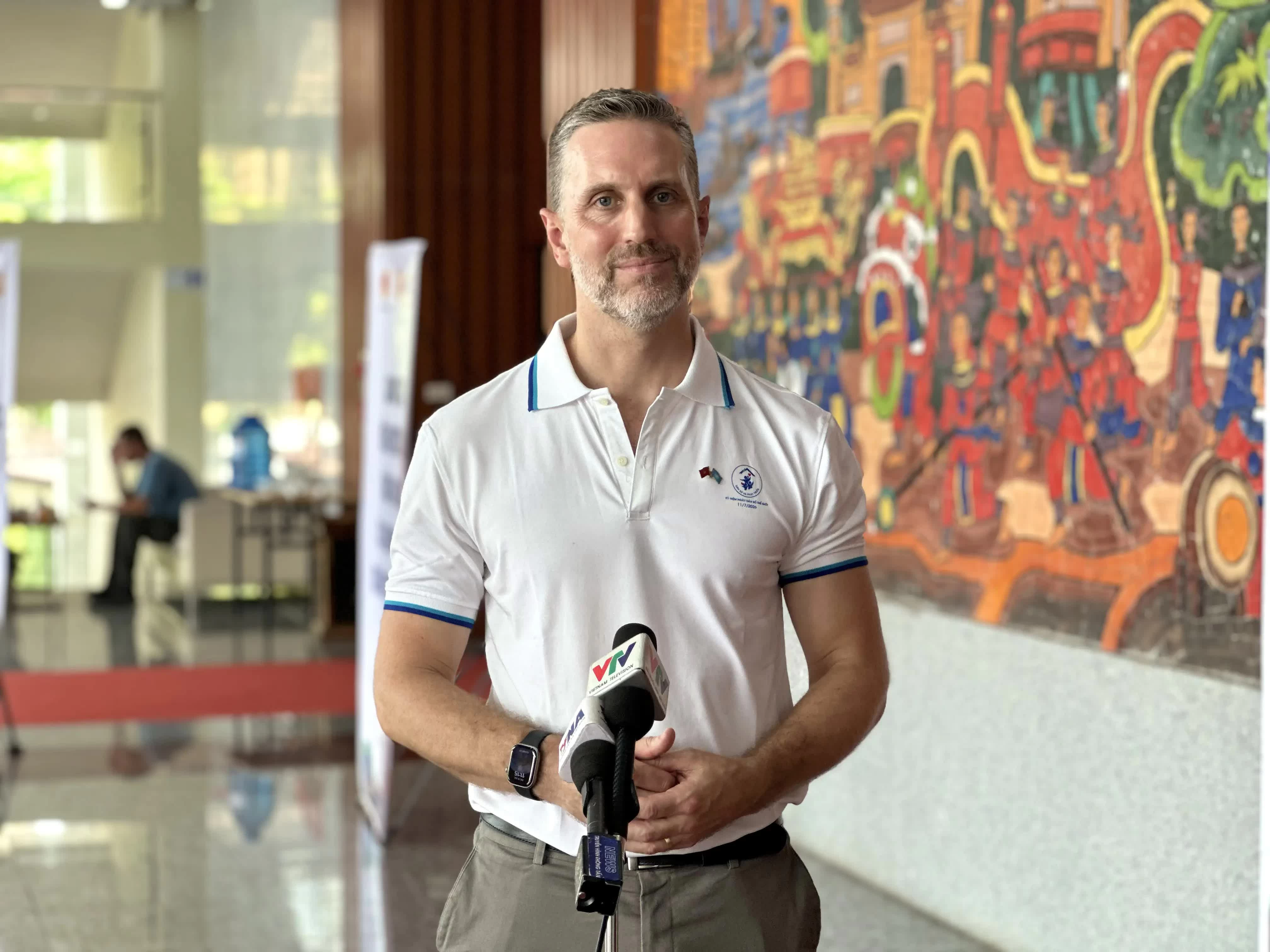 |
| Mr. Matt Jackson, UNFPA Representative in Vietnam, speaks with The World & Vietnam Report. (Photo: Trung Anh) |
With this year's theme, what does placing young people at the heart of the message mean at a time when many countries, including Vietnam, are experiencing profound demographic changes?
Demographic transitions are taking place across much of the world, and Vietnam is no exception. As the country enters a period of rapid population ageing, many people tend to focus only on the challenges that lie ahead.
However, the findings of the 2026 Demographic Future Survey, released by UNFPA this week, paint a more hopeful picture. One of the strongest messages from the survey is that young people continue to believe in the future. They have aspirations, ambitions and a genuine desire to build fulfilling lives, even though they are fully aware of the pressures and obstacles standing in their way.
Through the survey, we asked several fundamental yet important questions: Do young people still want to get married? Do they still want to have children? For years, there has been a widespread perception that younger generations are turning away from marriage and parenthood.
Yet what they told us reveals a very different reality. Contrary to common assumptions, young people still hope to find the right life partner, build a family and consider two children to be the ideal family size.
The problem is that socio-economic barriers prevent many from turning those aspirations into reality. Many respondents said they would only consider marriage after securing stable employment, gaining access to affordable housing and feeling financially capable of supporting family life.
They also want to continue pursuing their careers after becoming parents. As a result, affordable childcare services have become an essential condition. When childcare costs are too high, they become a major factor influencing decisions about whether to have children.
Many young people also shared that finding a suitable partner has become increasingly difficult. That is why the priority should not be to judge their choices, but to listen carefully to their voices, understand the challenges they face and work with policymakers to remove those barriers.
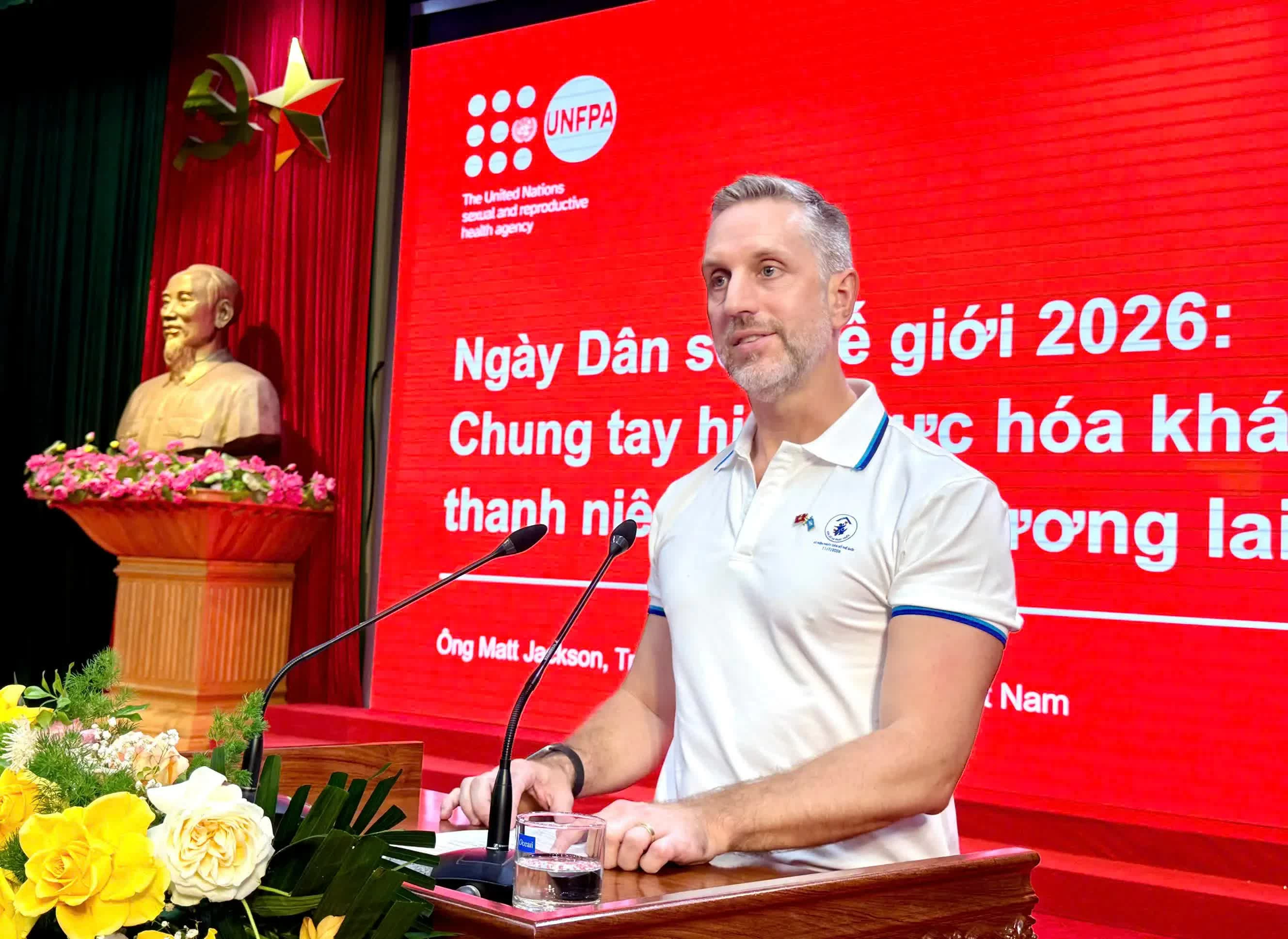 |
| Mr. Matt Jackson presents the findings of the 2026 Demographic Future Survey at the World Population Day meeting on July 11. (Source: UNFPA) |
In your view, what conditions should population and development policies create so young people have the opportunities, information and support they need to make informed decisions about education, employment, marriage and childbearing in line with their aspirations and life plans?
I believe every population and development policy must begin with people. We use data not simply to track demographic trends, but more importantly to understand people's lives and the stories behind the statistics.
That is precisely why studies such as UNFPA's 2026 Demographic Future Survey are so valuable. They allow us to hear directly from young people, understand what they hope for and identify the conditions they need to shape their own future.
This survey covered more than 108,000 young people across 73 countries and territories, including around 21% of respondents from the Asia-Pacific region and more than 1,650 participants in Vietnam.
Its scale provides a rich evidence base that enables us to compare demographic trends across countries while identifying both shared challenges and differences in the living conditions of young people under different development contexts.
One notable finding is that young people in many countries regard education as the most important foundation for their future. They want to complete their studies before entering the labour market, then secure stable jobs that match their qualifications and provide sufficient income.
Only after these basic conditions are met do they feel confident enough to establish long-term relationships, get married and start families. At that stage, affordable childcare services become another decisive factor that directly affects childbearing decisions.
For that reason, I believe population policymaking should go hand in hand with expanding development opportunities for young people across every aspect of life. That means creating more opportunities in education, employment, housing and social protection so they can make informed choices about their future.
For Vietnam, this is particularly important as rapid urbanisation continues to draw many young people to large cities in search of better opportunities.
Development opportunities and quality jobs therefore should not be concentrated solely in urban centres. They also need to be expanded to local communities and rural areas so young people have more choices and can build their future where they truly want to live.
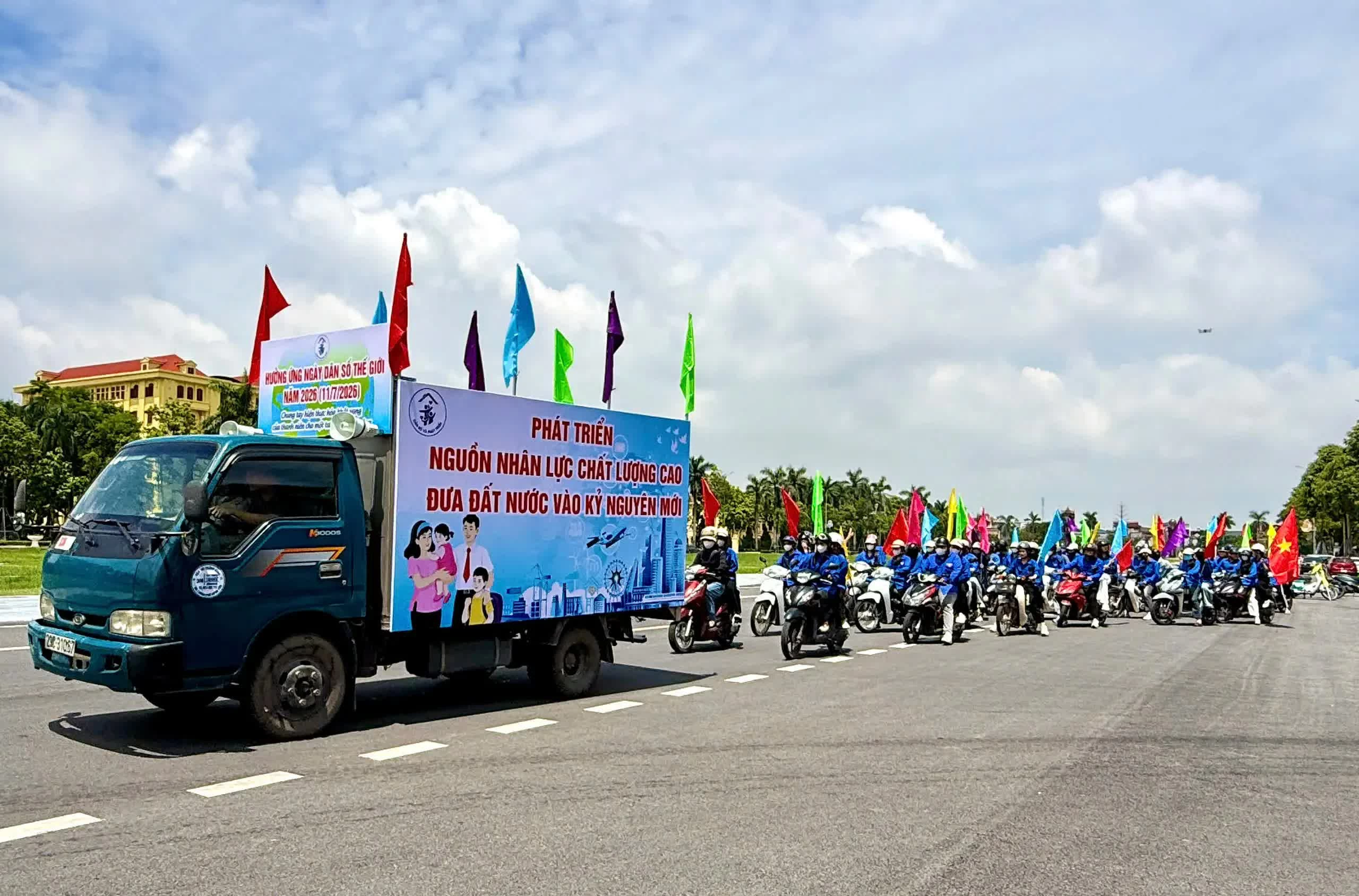 |
| Hundreds of youth union members and students joined a parade through the streets of Hung Yen Province. (Source: UNFPA) |
Based on your experience working with many countries on population issues, what message would you like to share with Vietnamese young people so they can make responsible decisions about marriage, childbearing and reproductive health while contributing to a balanced demographic structure and sustainable development?
On World Population Day 2026, the first message I want to send to young people in Vietnam is very simple: we are listening to you. Behind every decision young people make are real pressures and real barriers.
I would also like to thank everyone who participated in UNFPA's 2026 Demographic Future Survey. Their responses have given us invaluable insight into both the aspirations and the challenges facing today's younger generation.
I hope young people will continue to engage actively in public life, speak up about the issues that matter to them and contribute to shaping policies that directly affect their future. What may seem like small individual actions can ultimately drive meaningful progress for society as a whole.
I also have a message for policymakers: truly listen to young people and create opportunities for them to participate in designing policies that affect their own lives. After all, no one understands the needs and challenges of young people better than young people themselves.
The survey also shows that, beyond employment, housing and childcare costs, young people face many other challenges.
In many countries, same-sex couples wish to marry and adopt children but still lack an appropriate legal framework to protect their rights. Many young couples hope to access affordable infertility treatment but continue to encounter significant barriers. Young people with disabilities likewise need greater support and better access to reproductive healthcare services so they can build families if they choose to do so.
These issues unfold against a backdrop of rising housing prices and persistently high childcare costs, highlighting how decisions about marriage and childbearing are closely shaped by people's real living conditions.
Once again, I want to emphasize that only when the voices of young people are genuinely heard and reflected in public policies can we create an environment where they feel confident to make the life choices they want and fulfil their aspirations.
| Together with Vietnam, building an environment where every woman and girl can live free from violence: UNFPA Representative WVR - According to the United Nations Population Fund (UNFPA) Representative in Vietnam Matt Jackson, Vietnam has taken significant steps in recent years to strengthen ... |
| Vietnam-UNFPA partnership translates into tangible gains for women, girls, and young people WVR - The visit to Vietnam by Dr. Aleksandar (Sasha) Bodiroza, Regional Director for Asia and the Pacific ad interim of the United Nations Population ... |

| Launching project to strengthen prevention and response to violence against women and girls in Quang Ninh WVR - On February 4, UNFPA in Vietnam in collaboration with Quang Ninh Department of Health, with financial support from the Korea International Cooperation Agency ... |
| Enhancing support for gender-based violence victims through Trauma-Informed Care On March 26, in Hanoi, UNFPA, the United Nations Population Fund, organised an international workshop on strengthening the Trauma-Informed Care (TIC) approach in providing services ... |

| Free Periodic Health Check-ups: Putting citizens at the centre and a shift from 'treatment' to 'prevention' WVR - The long-term impact of Directive No. 17/CT-TTg will extend beyond the healthcare sector, significantly affecting the quality of human resources and national development ... |


